


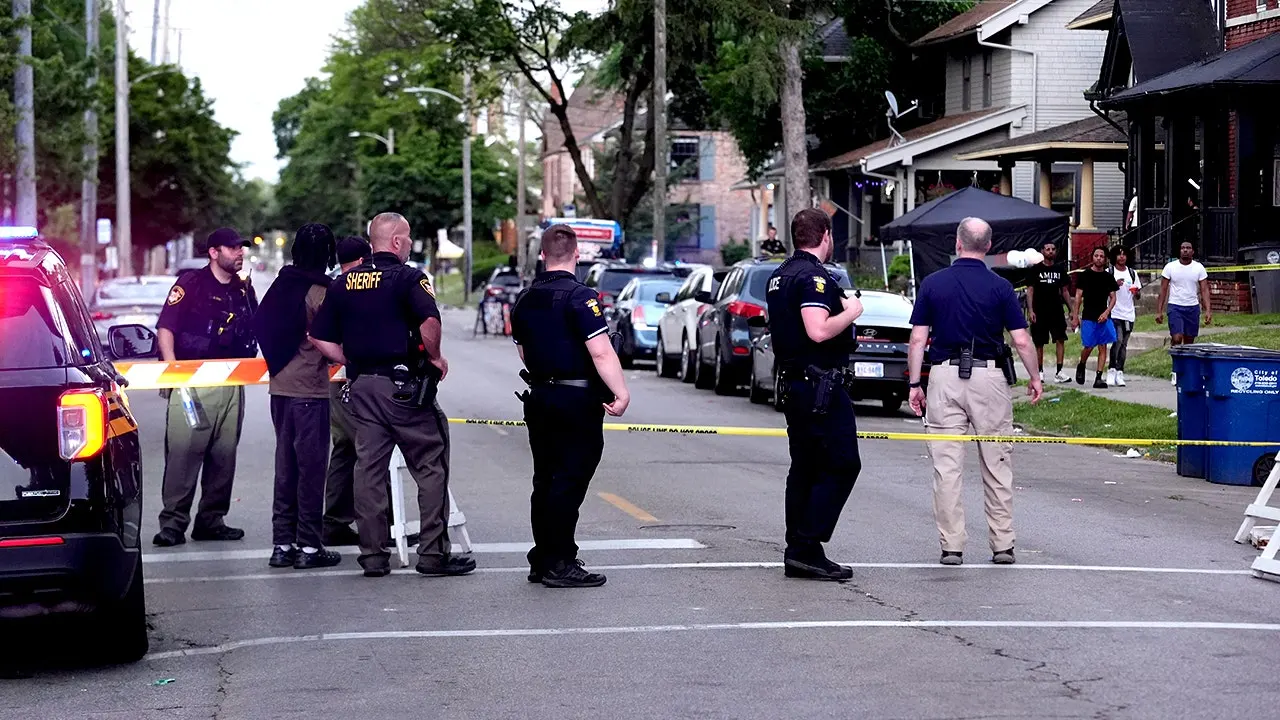
On a warm, sunlit Saturday afternoon, the tree-lined streets of Toledo, Ohio’s historic Old West End were alive with the vibrant energy of its annual neighborhood festival. This beloved weekend gathering—famous for its elegant Victorian architecture, live musical performances, local food vendors, and open house tours—served as a joyous celebration of community, heritage, and summer warmth. Families, local artists, and visitors of all ages walked the sidewalks, sharing laughter and enjoying the peaceful atmosphere of a neighborhood that prides itself on close-knit ties. However, at approximately 5:37 p.m., this idyllic scene was suddenly shattered by the terrifying sound of gunfire. What had been a sanctuary of neighborhood pride instantly devolved into a chaotic scene of panic, as innocent bystanders fled for cover, and a day meant for joy was violently interrupted by a senseless act of hostility.
The immediate human cost of the tragedy became painfully clear as emergency responders rushed to the scene to find twelve individuals suffering from gunshot wounds. The victims of this sudden outburst of violence spanned several generations, reflecting the diverse crowd that had gathered for the festival; the youngest wounded was a mere 14 years old, while the oldest was 61, though the majority of those injured were young adults in their early twenties. While the medical community breathed a collective sigh of relief when Toledo police confirmed that all twelve victims were stable and gradually improving, the physical recovery is only the beginning of a much longer journey. The emotional and psychological trauma of surviving such an ordeal—the sudden transition from laughter to terror—leaves deep, invisible scars on the victims and their families, forever altering their relationship with the spaces they once felt safest in.
In the wake of the shooting, a tense and intensive manhunt entered its third consecutive day as local law enforcement worked tirelessly to identify and apprehend those responsible. Toledo Deputy Chief Joseph Heffernan revealed to a anxious public that investigators believe the violence erupted not from a targeted mass attack, but from a reckless shootout between at least two gunmen who showed a complete and callous disregard for human life by firing at each other in a crowded public venue. To piece together the chaotic minutes leading up to and during the gunfire, the Toledo Police Department has actively bypassed traditional investigative barriers, reaching out directly to the community’s heart. They have earnestly urged festivalgoers to review their personal photos, selfies, and background videos, hoping that a captured digital memory might hold the crucial clue—a face, a vehicle, or a suspicious movement—that could identify the suspects and bring them to justice.
This violence struck a deeply raw nerve for Lucas County Prosecutor Julia Bates, who transformed her official legal response into a powerful statement of personal grief and righteous anger. Vowing that justice’s response would be “swift and strong,” Bates openly shared her personal heartbreak, reminding the public that prosecutors are not just detached legal entities, but neighbors who walk the same streets as the victims. “I’ve felt outrage before, but this is personal; this is my home, these are my friends and neighbors, and it is not OK,” she declared, capturing the collective grief of a community violated. Her words highlighted a profound truth: when violence spills into a community festival, it is not merely a violation of local laws, but a direct attempt to tear down the mutual trust, safety, and shared peace that define a neighborhood’s identity.
The tragedy in the Old West End underscores a growing and deeply concerning national anxiety regarding the safety of public spaces, where communities gather to share art, food, and culture. When community members can no longer walk through a neighborhood festival without fear of crossfire, a fundamental societal promise is broken. This event changes the way parents look at local parks, the way youths navigate public events, and the way older generations connect with their hometowns. The challenge now facing Toledo, and indeed many communities across the country, is how to preserve the open, welcoming nature of these cultural festivals while protecting citizens from the reckless actions of a select few who prioritize personal disputes over human life.
As the search for the perpetrators continues, the city of Toledo is attempting to reclaim its narrative of peace, unity, and resilience, refusing to let fear define its future. Authorities have kept open avenues for cooperation, reminding the public that anyone with information—no matter how small or seemingly insignificant—can call or text Crime Stoppers at 419-255-1111 to leave anonymous tips. By choosing to stand together, support the recovery of the twelve survivors, and assist the police in their investigation, the residents of Toledo are sending a powerful message that their community cannot be easily broken. Ultimately, it is this shared determination, the strong bonds of neighborly love, and the refusal to succumb to fear that will heal the Old West End and ensure that its historic streets remain a place of celebration, safety, and warmth for generations to come.