



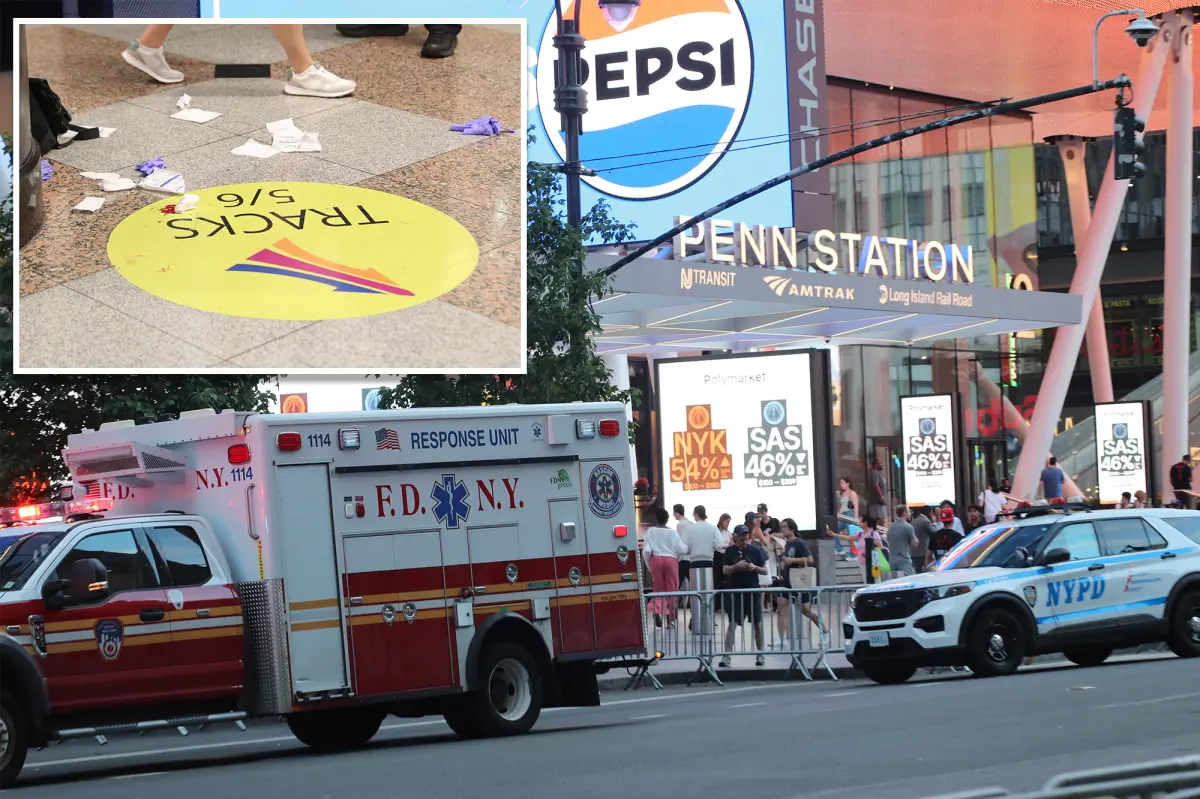
Penn Station is far more than a mere transit hub; it is the subterranean powerhouse of New York City, a sprawling labyrinth where millions of individual lives briefly entwine in a daily dance of routines. On any typical Sunday evening, the station hums with a very specific, slightly bittersweet energy. It is the end of the weekend, a time when college students lug laundry-filled suitcases back to their dorms, long-distance couples share lingering goodbyes on the platforms, and weary workers mentally brace themselves for the imminent arrival of Monday morning. The air is thick with the scent of cheap pizza, the heavy hum of exhaust, the clanging of train bells, and the steady, collective murmur of thousands of voices echoing off the concrete subterranean walls. Inside this familiar cavern, citizens find comfort in the predictable rhythm of schedules and delay announcements, relying on the unwritten social contract that keeps a crowded public space safe and functional. No one descending the steps into the station last Sunday night could have anticipated that this delicate social fabric was about to be violently torn apart. In a matter of seconds, the mundane commuter hub transformed from a sanctuary of ordinary transit into a terrifying arena of survival, proving once again how fragile our shared public spaces truly are.
The terror erupted without warning shortly after 7:13 p.m., piercing through the heart of the busy Midtown terminal and instantly shattering the calm of the evening rush. An unidentified assailant embarked on a sudden, frantic stabbing rampage, striking indiscriminately at unsuspecting commuters who were simply trying to make their way home. The auditory landscape of the station flipped in a fraction of a second; the usual background hum was violently drowned out by sharp, blood-curdling screams of terror and warning that echoed through the corridors. A wave of collective panic, primal and fast-moving, swept through the concourse like wildfire. Bystanders who had been scrolling on their phones or waiting in line for transit tickets suddenly found themselves in a desperate footrace for survival, dropping personal belongings and pushing through turnstiles as they fled. The visceral confusion of the moment turned familiar corridors into chaotic bottlenecks, as human survival instincts overrode all order. Commuters scrambled blindly down stairs and toward any available exit, frantic to escape an invisible threat that seemed to lurk in the very shadows of the station they navigated every day.
When the immediate dust of the frenzy settled, five innocent people lay wounded, their lives forever altered by a stranger’s inexplicable violence in a place they should have been safe. First responders from the FDNY bravely navigated against the tide of panic, rushing down into the station to locate and treat the bleeding victims amidst the lingering chaos of the evacuation. The emergency crews worked with practiced, urgent efficiency, stabilizing the injured before rushing them to Bellevue Hospital, a historic sanctuary for the city’s most critically traumatized patients. Of the five victims, one individual faced a harrowing battle for their life, having sustained severe, deeply critical wounds that demanded immediate emergency surgery. Two others suffered moderate injuries that carried deep physical and psychological trauma, while the remaining two were treated for minor physical wounds, though the invisible scars of such an ordeal will undoubtedly take much longer to heal. Each of these five individuals is not just a statistic in a police report, but a person with a story—a parent, a child, a coworker—whose quiet Sunday journey was violently interrupted, leaving them to face a long and painful road to physical and emotional recovery.
As waves of panic continued to ripple outward through the streets of Manhattan, transit officers and New York City police officers ran directly toward the danger, demonstrating the quiet bravery that keeps the city functioning. Within minutes of the initial attack, officers successfully intercepted the suspect, subduing them on the terminal floor before any more lives could be shattered. A photograph captured by an eyewitness and quickly circulated on social media showed a tense scene: a heavy circle of law enforcement officers pinning the suspect to the cold, dirty tiles of the station floor. This swift intervention undoubtedly prevented further tragedy in one of the most heavily trafficked transit hubs in the world. Authorities later revealed that the suspect, who thin lines of system failures have often left unnamed, is believed to have been suffering from a profound emotional and psychological disturbance. This tragic detail adds another layer of sorrow to the event, highlighting a persistent crisis of untreated mental illness that spills over onto city subway platforms, leaving both the afflicted and the public vulnerable to sudden, devastating failures of the social safety net.
The immediate emotional impact of the attack on the public psyche was captured vividly in the digital realm, where shocked witnesses became the eyes and ears of a frightened city in real-time. The commuter who posted the photograph of the suspect being apprehended penned a hauntingly brief caption that resonated deeply online: “This guy stabbed somebody in Penn Station. People were flooding out of the station.” That vivid image—people flooding out—captures the raw, liquid nature of mass panic, evoking scenes of a human tide washing over the exits in a desperate search for safety and fresh air. For the millions of New Yorkers who rely on public transit as their primary lifeline, such an event is a deeply personal violation of their daily routines, sowing seeds of doubt where there was once comfort. It serves as a reminder that the subterranean pathways of the city, which usually harbor the quiet solidarity of commuters sharing space, can instantly become spaces of vulnerability, leaving everyone who takes a train a little more watchful, a little more guarded, and deeply shaken.
In the long hours that followed the attack, police tape sealed off portions of Penn Station, and forensic investigators worked diligently under the harsh fluorescent lights, collecting evidence to reconstruct the timeline of this terrible event. Though the physical debris was eventually cleared away, the blood washed from the tiles, and the trains resumed their rhythmic arrivals and departures, the memory of the violence will not quickly fade from the collective memory of the city. New York is a resilient metropolis, a place that prides itself on rising from tragedy with unbroken resolve, yet every incident of this nature leaves a scar on the collective soul of its citizens. As the investigation continues and the five victims begin their slow, difficult journeys of healing in hospital beds, the city is left to grapple with the complex challenge of securing its public spaces while cultivating compassion. Penn Station will continue to welcome millions of travelers every day, but the hope remains that through better safety, systemic mental health support, and community vigilance, the station can once again become the secure, ordinary harbor of transition it was always meant to be.