


Nothing quite captures the quintessential spirit of the American summer like the great open road. There is a nostalgic, almost restorative magic to packing a trunk, rolling down the windows, and chasing the horizon as the landscape transforms from rolling countryside to quiet suburban expanses. Yet, as miles accumulate, so too does the inevitable rumble of hungry stomachs, turning the eyes of travelers toward the glowing neon signs of roadside diners and local drive-thrus. This year, however, the timeless romance of the road trip is met with a sobering reality: persistent inflation and a climbing cost of living have forced many households to reconsider how and where they spend their hard-earned dollars on dining out. Feeding a family or a group of friends on a cross-country journey has evolved from a spontaneous roadside indulgence into a calculated exercise in budgeting. Fortunately, a comprehensive food study offers a practical, modern road-trip survival guide for those looking to satisfy their hunger without emptying their wallets. In its highly detailed US Pizza Index, the online lending platform NetCredit has mapped out the economic landscape of America’s favorite comfort food—pizza. By analyzing prices across food delivery platforms like Grubhub and DoorDash for a standard medium-cheese pizza from the nation’s ten largest pizza chains, NetCredit surveyed 180 cities across the country, capturing data from the 100 most populous American cities and the three largest metropolitan areas in every single state. The resulting data provides a surprisingly vivid picture of where travelers can expect to stretch their food budgets the furthest, and where they will need to prepare for serious menu sticker shock.
For travelers routing their journeys through the American heartland, there is incredible news for both their appetites and their bank accounts. The study reveals that the Midwest and parts of the South remain the undisputed sanctuaries of affordable, comforting meals, with Indiana proudly earning the title of the most budget-friendly state in the country for a cheese pie. In the Hoosier State, a hot, fresh medium-cheese pizza costs a remarkably modest average of $13.96. Feeding the family here feels like a throwback to gentler economic times, allowing travelers to enjoy a classic meal without the accompanying side order of buyer’s remorse. This affordability extends throughout the surrounding regions, where agricultural abundance, lower overhead costs, and a cultural emphasis on value keep pizza prices low. Right on Indiana’s heels is Alabama, where a medium pie averages just $14.04, followed closely by the Great Lakes beauty of Michigan at $14.32. Traveling slightly westward into the equestrian landscapes of Kentucky yields an average pizza price of $14.64, while the wide-open prairie state of Kansas rounds out the top five most affordable states at an even $15.00. These states present a welcoming haven for budget-conscious road trippers, proving that you can still find a warm, satisfying meal that respects the boundaries of a family budget. Passing through these states, stopping at a local parlor or chain outlet feels less like a financial compromise and more like a hard-won victory for the wallet.
Conversely, those dreaming of coastal getaways, pristine beaches, or majestic mountain ranges must prepare their finances for a dramatically different reality. The further you travel toward the edges of the map, the higher the “pizza tax” becomes, culminating in the tropical paradise of Hawaii, which NetCredit identified as the most expensive state in the nation for a cheese pizza. In the Aloha State, customers must shell out a staggering average of $19.70 for a single medium-cheese pie—a price tag that is a whopping 41% higher than what you would pay for the exact same meal in Indiana. This sharp inflation is largely a product of geography and economics; because Hawaii is an isolated island chain, nearly every fundamental pizza ingredient, from the high-gluten flour and yeast to the mozzarella cheese and tomato sauce, must travel thousands of miles across the Pacific Ocean on cargo ships to reach restaurant kitchens. However, geographic isolation is not the only culprit driving up prices. California, despite its massive agricultural industry, ranks as the second most expensive state at a hefty $18.85 per pizza, driven upward by high labor costs, expensive real estate, and steep commercial utilities. Beyond California, the trend of costly pizza continues in the remote, rugged frontier of Alaska, where a pie averages $18.60. Meanwhile, urban epicenters like Illinois and New York sit tied at $17.87, and the coastal enclave of Rhode Island follows closely behind at $17.76. In these areas, treating the kids to a casual Friday night pizza has transformed from an effortless chore-free evening into a carefully considered luxury.
When we zoom in from the state level to examine individual metropolitan areas, the divide between affordable urban centers and high-cost cities becomes even more pronounced, painting a fascinating picture of municipal economics. For city dwellers and urban explorers, Houston, Texas, stands tall as the absolute champion of pizza affordability among major American cities, boasting an incredibly friendly average price of just $14.42 for a medium-cheese pie. Houston’s vast, sprawling geography, highly competitive food scene, and lack of stringent zoning laws keep commercial rents reasonable, allowing pizza establishments to pass those operational savings directly onto their hungry patrons. Following closely behind Houston in the affordability rankings are Charlotte, North Carolina, at $14.50, and the vibrant, music-filled city of Austin, Texas, at $14.64, establishing a clear southern and southwestern dominance in the budget-friendly category. On the flip side of the urban spectrum, California dominates the list of the most expensive cities for pizza, claiming five of the top six spots nationwide. San Diego leads the pack with a breathtaking average price of $20.76 for a single medium pie, closely trailed by the Silicon Valley hub of San Jose at $20.02, and the entertainment capital of Los Angeles at $19.84. Honolulu, Hawaii, disrupts California’s geographic monopoly slightly by claiming the fourth spot at $19.70, but the message remains clear: if you are craving a slice of cheese pizza under the warm coastal sun of Southern California or the palms of Hawaii, you must be prepared to pay a premium.
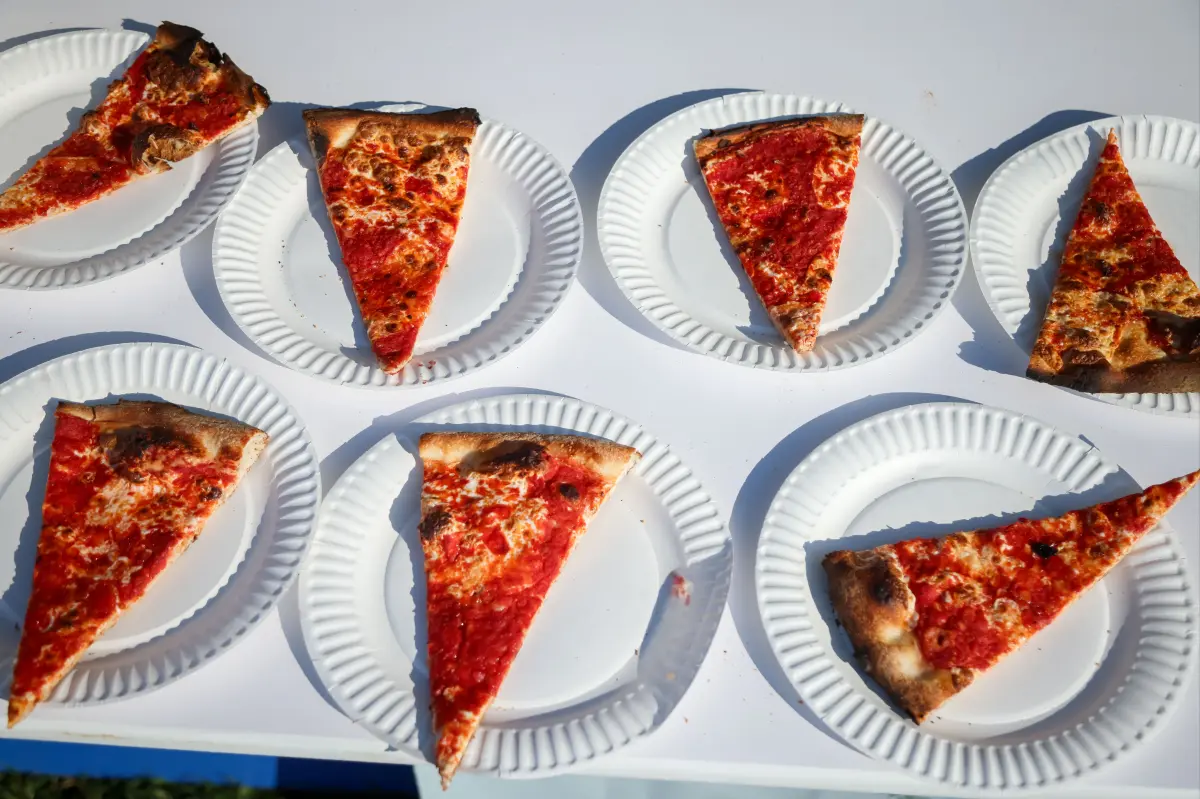
This widening price gap comes at a time when the psychology of the American diner is undergoing a profound and highly visible transformation. With household budgets stretched paper-thin, consumers are actively looking for clever, compromised ways to cut down on restaurant spending without entirely sacrificing the joy of eating their favorite foods. According to a landmark New York Times report highlighted in the NetCredit survey, financial hardship has forced a noticeable shift in how people order their pies, with a growing number of customers opt-ing for smaller sizes and abandoning expensive, gourmet toppings like pepperoni, sausage, olives, and extra cheese. Yet, this retreat to simplicity is not driven solely by financial anxiety; it also reflects a deeper cultural and generational evolution. The rising generations of diners are increasingly health-conscious and minimalist in their culinary preferences, prioritizing clean flavors, high-quality simplicity, and classic comfort over over-the-top indulgence. A perfectly baked plain cheese pizza offers a clean slate—a nostalgic, comforting throwback to childhood birthday parties and school celebrations that feels deeply comforting and uncomplicated in a chaotic world. Striping away the expensive meats and specialty vegetables is not just a highly effective cost-cutting measure; it is a deliberate return to basics, proving that sometimes, the most humble and unadorned foods are the ones that offer the greatest emotional and physical satisfaction.
Fortunately, managing a budget does not mean we have to banish the warmth and happiness of pizza night from our lives; instead, it invites us to become smarter, more strategic consumers by outmaneuvering the pricing systems of modern restaurants. To save money at the register, NetCredit offers a highly clever, slightly counterintuitive recommendation: lean into the elegant, undeniable mathematics of a circle. Because of basic geometry, the area of a circle scales exponentially with its diameter, meaning that a standard 16-inch large pizza actually contains four times as much food as an 8-inch personal pizza, despite rarely costing anywhere near four times the price. Therefore, when dining with family or friends, it is almost always significantly more cost-effective to purchase one extra-large pizza rather than ordering multiple small or medium pies. Beyond utilizing geometric advantages, families can protect their entertainment budgets by actively hunting for digital coupons, leveraging restaurant loyalty apps, and timing their cravings to coincide with weekday specials. Additionally, you can easily stretch a single restaurant pizza to feed a larger crowd by preparing quick, inexpensive side dishes at home—such as throwing together a vibrant, fresh garden salad, baking cheap frozen garlic bread, or slicing up some fresh seasonal fruit. Ultimately, whether you are planning a cross-country summer road trip, navigating the high-cost streets of a coastal metropolis, or simply looking to bring your family together around the dining room table on a budget, these playful insights remind us that with a little bit of planning, a dash of mathematical savvy, and an appreciation for simplicity, we can still enjoy our favorite slice of life without breaking the bank.