


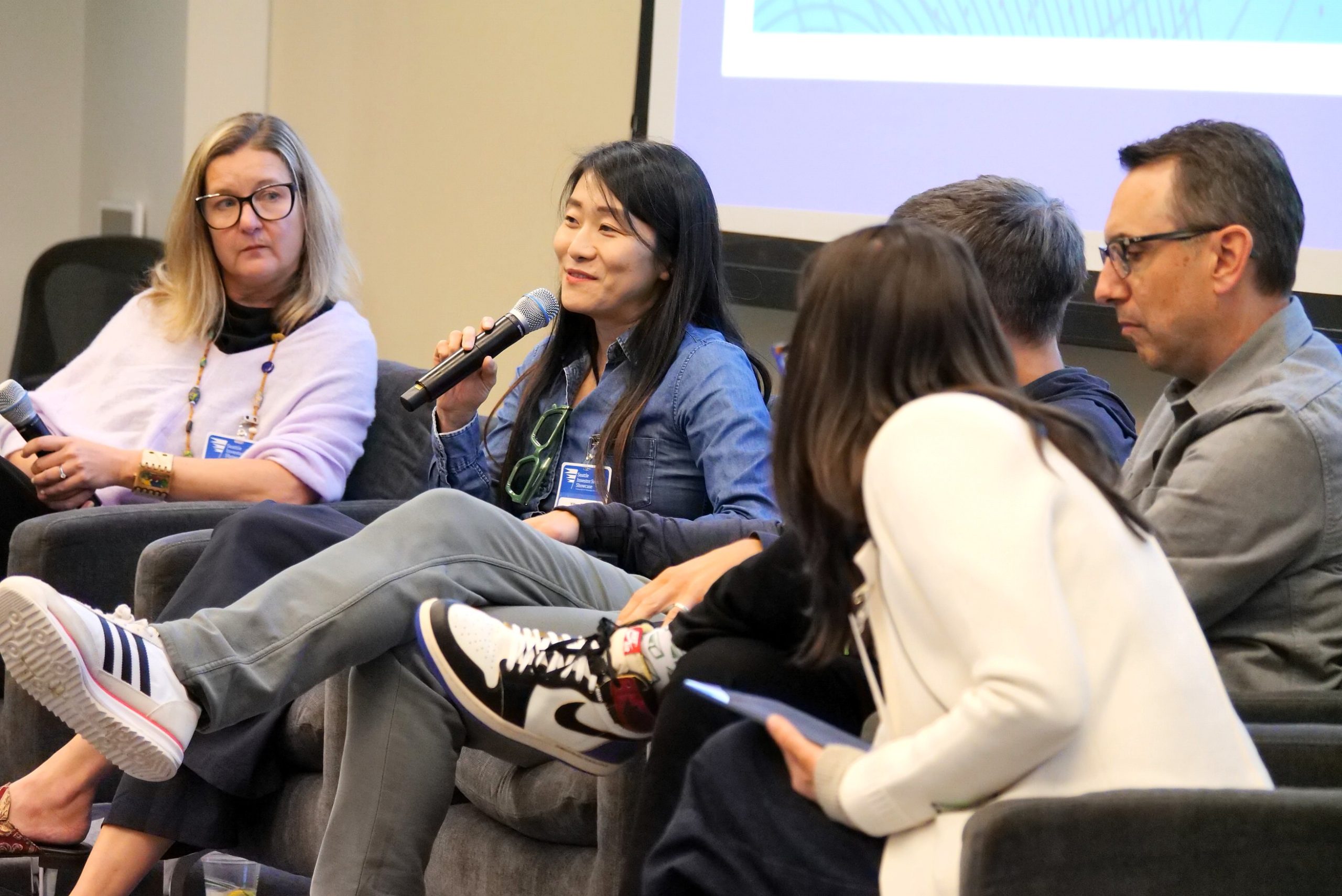
For generation after generation of startup founders, the ultimate nightmare scenario was relatively simple: a tech giant like Amazon Web Services or Microsoft would notice your product, copy its core features, and render your entire business obsolete overnight. Today, however, that anxiety has mutated into something far more complex and unpredictable. At the Technology Alliance Seattle Investor Summit and Showcase, hosted at Microsoft’s expansive Redmond headquarters, a panel of prominent venture capitalists and tech leaders met to dissect a strange new reality. Startups are no longer just competing against traditional horizontal tech giants; they are fighting for survival against cutting-edge artificial intelligence labs like OpenAI and Anthropic, whose foundational models are so incredibly capable that enterprise customers are choosing to bypass third-party software altogether. Equipped with advanced coding agents, these prospective clients are increasingly opting to build their own bespoke, internal applications on the fly, entirely rewriting the rules of what it means to sell business software.
This sudden collapse of the traditional software-as-a-service (SaaS) value proposition was articulated with striking clarity by Bryan Hale of Anthos Capital, who pointed out that the velocity of the modern tech market has rendered historical benchmarks completely useless. Hale, an experienced startup operator, recalled the days when founders would hold their collective breath during the annual AWS re:Invent conference, terrified that Amazon’s chief executive, Andy Jassy, would announce a hundred new services that might stomp on their turf. Back then, those fears were usually overblown, but Hale warned that the current AI wave is a different beast entirely. Today, corporate engineering teams are bypassing standard subscription software for tasks like lead scoring, demand forecasting, and accounting by deploying code-generation tools like OpenAI’s Codex and Anthropic’s Claude Code to spin up internal solutions in hours. The modern clock speed of innovation has accelerated so drastically that Hale admitted his own operational pace from a decade or two ago—which was highly successful at the time—would get absolutely smoked in today’s hyper-accelerated market.
To survive in an ecosystem where code itself has effectively become a free commodity, startups must abandon the idea that raw engineering alone is a competitive advantage and instead focus on what cannot be easily automated. Yifan Zhang of AI2 Incubator, a veteran entrepreneur who successfully navigated the build-and-scale journey with companies like GymPact and Loftium, argued that the hardest, least glamorous business problems still offer the greatest rewards for those willing to grind. Because writing basic software is now incredibly cheap, the real challenge has shifted from product creation to distribution, brand authority, and capturing customer attention. Zhang highlighted the success of specialized portfolio startups operating in dusty, complex sectors like transoceanic shipping, commercial mining, and regulatory immigration. These are high-friction domains where founders must spend years building deep trust, navigating ancient institutional barriers, and relying on stellar industry reputations to secure sales—precisely the kind of slow-moving, relationship-dependent turf that fast-moving, general-purpose AI labs cannot easily colonize.
Building on this defensive strategy, Mia Lewin of TheFounderVC outlined a concrete blueprint for modern founders trying to establish a durable moat in the shadow of giants. The secret, Lewin explained, lies in identifying a highly specific industry “wedge”—a target niche so narrow and specialized that multi-billion-dollar AI labs simply will not find it lucrative or worthy of their time. Once inside that niche, a startup must rely on deep, hard-earned domain expertise to iterate rapidly, avoiding the obvious, expensive product mistakes that generalist developers usually make. Over time, this concentrated focus allows the startup to collect bespoke proprietary data, creating a powerful flywheel where personalized customer experiences and active reinforcement learning continually improve the software. By the time a massive platform vendor decides to look in their direction, the specialized startup has already spun a web of deep vertical value that is virtually impossible for a horizontal AI model to disrupt.
This reassuring perspective was echoed by Tim Porter of Madrona, who urged founders to keep their existential dread in check and remember that localized domain execution still reigns supreme. Porter highlighted the real-world triumphs of legal-tech startups like Harvey and Legora, noting that their customer growth actually accelerated after Anthropic launched its own sophisticated AI tools tailored for the legal sector. His explanation was simple: corporate attorneys do not just need a raw language model that can draft text; they require absolute precision, seamless integration with incredibly complex legal workflows, software that rigorously prevents hallucinations, and guaranteed data security. A general-purpose AI lab is built to solve broad platform problems, leaving immense room for hyper-focused SaaS companies to capture market share by addressing the detailed, specialized, and highly sensitive challenges of specific professional verticals.
Even the tech platforms causing this industry-wide anxiety agree that the age of the specialized human founder is far from over. Speaking at the summit, Vijaye Raji, the CTO of applications at OpenAI, noted that every major platform shift—from the birth of the personal computer to the rise of mobile and cloud computing—has triggered a wave of fear that tech giants would centralize all software creation. Yet, in every previous era, agile startups ultimately won by finding rich, specialized niches on the edges of those new platforms. In fact, Raji pointed out a highly lucrative, emerging bottleneck caused by the AI boom itself: the explosion of automated code has vastly outpaced the tools used to test, compile, and safely deploy it. The real business opportunity is no longer generating the code, but managing the immense chaos of its aftermath. To illustrate his point, Raji recalled how skeptics warned him in 2021 that AWS would inevitably build a tool to crush his A/B software-testing startup, Statsig. Had he let that fear paralyze him, the company would have never grown to the point where OpenAI acquired Statsig in late 2025 for $1.1 billion—proving that even in an era of terrifying tech giants, bold execution and deep customer focus remain the ultimate competitive advantages.