


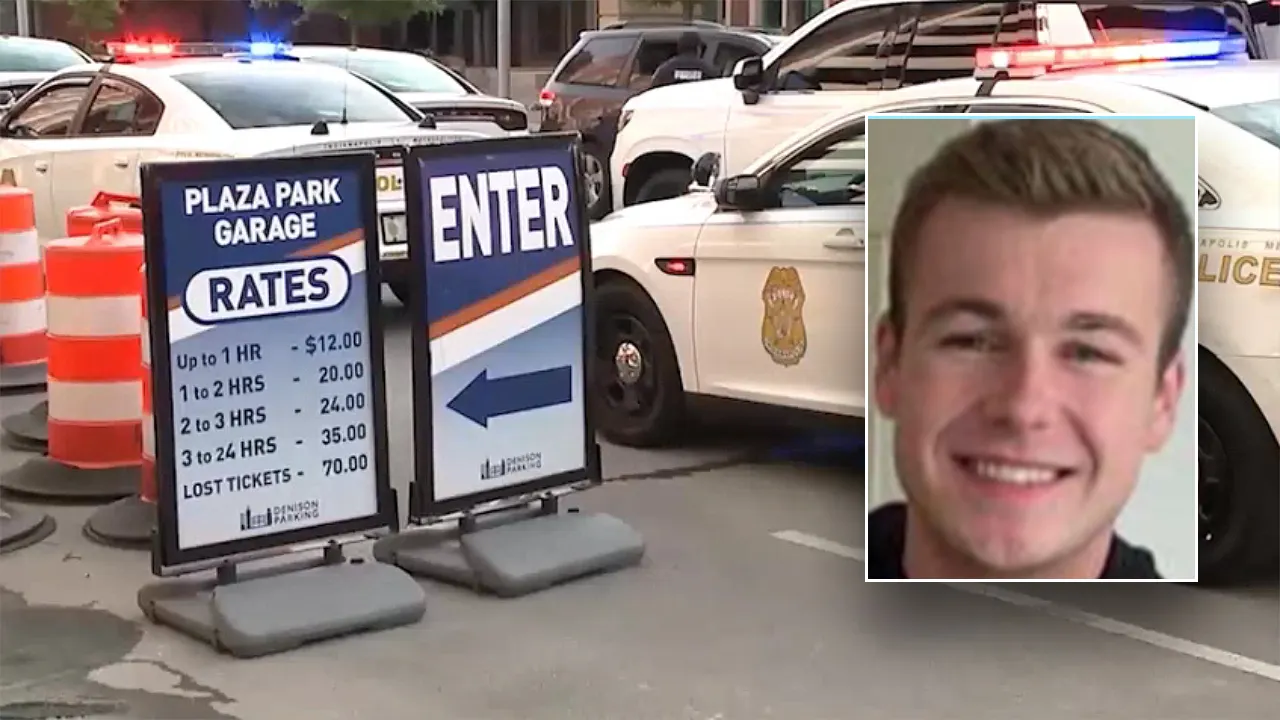
In the fleeting, golden warmth of a late May afternoon, life was supposed to be an open-ended celebration for twenty-three-year-old Brett Scrogham. Having just crossed the graduation stage as an incredibly distinguished scholar from the highly competitive Indiana University Kelley School of Business, the entire world was laid out before him like a brilliant, unwritten map full of promise, dynamic ambition, and boundless hope. He was a young man standing triumphantly on the precipice of adulthood, stepping eagerly into his very first professional role as a property development analyst—a major life milestone that represented the hard-fought culmination of years of late-night studying, unwavering personal dedication, and the steady, loving support of his family. On May 28, that bright, shining future vanished in a sudden, tragic instant inside the cold, concrete shadow of a downtown Indianapolis parking garage. Brett had traveled to the heart of the city not to engage in conflict or seek out danger, but to share a simple, deeply cherished American pastime: a Minor League baseball game with his family, who were eagerly waiting to spend quality time with their beloved son and brother. Instead of a joyful evening filled with laughter, shared stories, stadium snacks, and the crack of a bat under the bright stadium lights, the night dissolved into an unimaginable, chaotic nightmare. Inside the relative quiet of his vehicle, parked in what should have been a completely safe haven, Brett was shot and mortally wounded. When emergency first responders arrived at the scene, they found a young man desperately clinging to life, the innocent victim of a completely senseless act of random violence that would tragically claim his life shortly after arriving at a local hospital. This sudden, violent loss left an immediate, gaping void in the lives of everyone who knew him, transforming a routine family get-together into the ground zero of a profound, devastating grief that has sent deep shockwaves extending far beyond the borders of Indianapolis.
The shockwaves of Brett’s untimely death only intensified when the Indianapolis Metropolitan Police Department announced a major, heartbreaking breakthrough in their homicide investigation on a quiet Wednesday afternoon. The individual alleged to have held the firearm that ended Brett’s promising life was not a seasoned, hardened criminal or a fugitive running from the law, but a mere fourteen-year-old teenager. This jarring and profoundly unsettling revelation added an entirely new layer of grief, confusion, and systemic tragedy to an already devastating situation. Due to the suspect’s tender age, law enforcement authorities have legally withheld his identity, shielding his name and face from the public eye as the juvenile justice system begins the grueling process of handling a crime of adult proportions. Under current Indiana state law, the path forward for this teenager is wrapped in immense legal gravity and ethical dilemmas; prosecutors must now face the monumental decision of whether to petition the court for a waiver of jurisdiction to try the minor as an adult offender. Such a serious legal maneuver requires a meticulous, exhaustive review of the young suspect’s personal history, the heinous nature of the offense, and whether the state’s juvenile system possesses the appropriate resources to rehabilitate someone accused of taking a human life. This arrest forces a hushed, incredibly sober realization upon the local community: that two young lives have been essentially destroyed in a single, fleeting moment of violence. One life was permanently and cruelly snuffed out in a cold parking deck, while another, barely old enough to enter high school or obtain a driver’s permit, now faces the terrifying prospect of spending his formative years locked behind the bars of a correctional facility, forever altered by a decision made in the blink of an eye.
To truly comprehend the depth of this tragedy, one must look closely at the remarkable light Brett Scrogham cast upon the people around him during his short twenty-three years on this earth. Friends, college classmates, and professional mentors have painted a vivid, heartbreakingly beautiful portrait of a young man who was not merely successful on paper, but genuinely extraordinary in his personal character and daily actions. In an emotional, deeply moving tribute shared on social media, Seth Davis, a close friend of Brett, captured the raw essence of who Brett was to those who had the privilege of loving him. Davis described Brett as far more than just a talented graduate; he was recognized as a top-one-hundred student at the Kelley School of Business, an honor that speaks volumes about his sharp intellect, self-discipline, and tireless work ethic. Yet, it was Brett’s heart and unwavering spirit, rather than his impressive academic credentials, that truly set him apart in a busy, fast-paced, and often cynical world. According to his close circle, Brett was incredibly kind, soft-spoken, exceptionally articulate, and deeply rooted in his personal Christian faith—a faith that guided his everyday interactions and filled him with a rare, gentle warmth. He had just stepped into his professional journey, eager to build a life of contribution, integrity, and meaning. “He was exactly the kind of person the world needs more of,” Davis wrote, his poignant words echoing the collective heartbreak of a community mourning a young man who possessed the rare combination of a brilliant intellect and profound empathy. This moving testimonial elevates Brett from a tragic statistic in an evening police report to a beloved son, a brilliant friend, and a shining soul whose sudden absence leaves the world distinctly darker and less kind.
The vulnerability of the location and the timing of the shooting have struck a particularly raw and sensitive nerve within the Indianapolis community. Brett was not caught in the crossfire of known gang disputes, nor was he exploring dangerous, dark city streets in the dead of night; he was targeted in broad daylight, in a highly visible space designed to accommodate families arriving for a celebratory baseball game. Indianapolis Metropolitan Police Department Chief Tanya Terry addressed this terrifying element of randomness and the collateral damage of gun violence in a poignant public statement following the arrest. Chief Terry acknowledged the profound significance of the swift arrest made by her dedicated detectives, but she quickly shifted the focus back to the heavy human cost of the tragedy itself. Her heart broke publicly, not just for the family of the young victim who must now navigate a lifetime of empty chairs, quiet rooms, and unspoken goodbyes, but also for the tragic and broken trajectory of the young suspect. “A young man lost his life, and another now faces allegations that will change his life forever,” Terry remarked, highlighting the dual tragedy that all too often defines modern youth violence. The Chief’s emotional words reflect a growing, systemic weariness among law enforcement officers who find themselves continually picking up the pieces of shattered families and broken neighborhoods. It raises difficult, pressing questions about how a modern society can protect its brightest citizens from completely unpredictable violence while simultaneously addressing the deep-seated root causes that lead a fourteen-year-old child to carry a loaded, lethal weapon into a public parking structure on a quiet spring afternoon. This alarming act of violence challenges the core assumption that everyday citizens can go about their daily routines in public municipal spaces without fearing for their physical safety. As families gather to enjoy sports and local cultural events, the shadow of this tragedy looms large, reminding everyone of the modern fragility of peace and security.
In the wake of this arresting development, the wheels of justice are turning rapidly as Marion County Prosecutor Ryan Mears prepares to provide official, critical updates on how the state intends to proceed with this highly sensitive and painful case. Mears and his legal office find themselves at the absolute center of a complex legal and moral storm, balancing the public’s urgent demand for safety, justice, and accountability with the tragic, uncomfortable reality of prosecutorial decisions involving children. The impending update from the prosecutor’s office will likely outline the specific charges the teenager faces and shed some light on the potential for a waiver of jurisdiction to an adult court, a decision that will shape the rest of the suspect’s natural life. This high-profile case reopens a painful, ongoing national dialogue regarding juvenile justice reform, the disturbing rise in youth gun violence across American metropolises, and the overall efficacy of our correctional and rehabilitative systems. Many grieving individuals in the community are calling for the strictest possible punishment to deter future acts of violence and to honor Brett’s memory, arguing that an intentional act of taking a human life deserves an adult consequence, regardless of the young perpetrator’s biological age. Conversely, advocates for systemic juvenile justice reform remind us of the developmental realities of a fourteen-year-old brain, questioning how a child falls so deeply through the cracks of social, educational, and familial safety nets to arrive at the point of committing homicide. As Prosecutor Mears steps up to the microphone, he carries the heavy burden of navigating these opposing societal forces, seeking to deliver a profound sense of justice to a grieving family while the rest of the city watches, searching for answers to an act that seems entirely devoid of reason. This local legal drama mirrors a much broader struggle occurring in courtrooms across the country, where judges and legal practitioners grapple with the difficult fine line between seeking retribution for a life cut short and acknowledging the possibility of rehabilitation for an offender who is still legally a child.
As the formal legal proceedings unfold in the coming months and the shocking headlines begin to fade into the archival history of Indianapolis, the true, lasting challenge for those who loved Brett Scrogham, and for the community at large, lies in carrying forward the light he so effortlessly brought into every room he entered. Brett’s legacy cannot and must not be defined solely by the metallic coldness of a concrete parking garage floor or the tragic age of his juvenile assailant. Instead, his memory must be preserved through the high ideals he lived by: academic excellence, everyday kindness, unwavering faith, and a genuine commitment to building up the community around him. The tragic juxtaposition of a high-achieving twenty-three-year-old and a compromised, violent fourteen-year-old serves as a stark, urgent reminder that our society is currently fighting a crucial battle on two distinct fronts. We must fiercely protect and nurture our young scholars, analysts, and future leaders, ensuring they can walk our city streets without a shadow of fear, while simultaneously intervening in the lives of troubled, at-risk youth long before they reach a point of no return. Honoring Brett’s memory means refusing to let his senseless death foster a culture of bitterness, isolation, or indifference; rather, it should inspire a renewed, urgent commitment to youth mentoring, enhanced community safety, and active compassion. Though Brett’s seat at the Indianapolis Indians game remained tragically empty that fateful evening, the impact of his beautifully lived, albeit heartbreakingly brief life will continue to resonate in the hearts of his family, his friends, and all those who believe that a gentler, safer, and more loving world is still worth fighting for. In the end, Brett’s story is a call to action for everyone to cultivate a more empathetic, connected society where teenagers do not turn to firearms to solve disputes, and where young scholars can live out their potential to the fullest. We must ensure that his bright spirit remains an enduring catalyst for positive change rather than a footnote in an ongoing urban crisis.