


The Clay Court Revolution: How the French Open Shattered the Tennis Status Quo
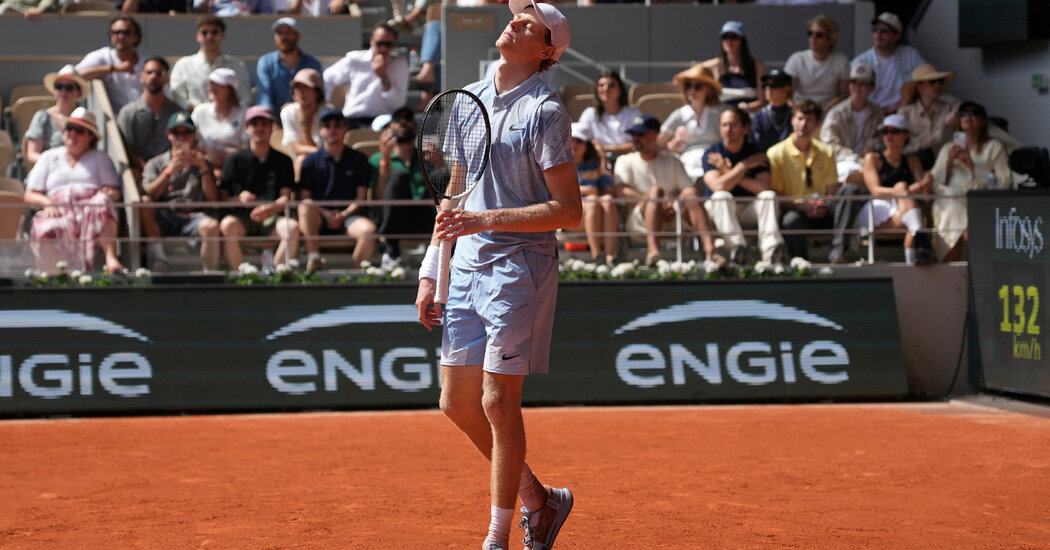
The red clay courts of Roland Garros have long been regarded as the ultimate test of physical endurance and mental fortitude in professional tennis, yet the most recent iteration of this historic tournament has delivered a series of seismic shocks that have left even the most seasoned commentators searching for historical parallels. Historically, the elite echelons of both the men’s and women’s games have operated with a predictable, almost feudal stability: Jannik Sinner and Carlos Alcaraz have spent the past several seasons establishing a dominant duopoly over the Grand Slam circuit, while the legendary Novak Djokovic, at thirty-nine years of age, has continued to defy the passage of time through sheer force of competitive will. On the women’s side, despite a slightly higher degree of natural variability that saw ten different champions rise over a five-year stretch, a definitive pecking order remained firmly anchored by the ferocious consistency of Aryna Sabalenka. Yet, this year’s French Open dismantled those hierarchies with a ruthless efficiency, beginning with Carlos Alcaraz’s forced withdrawal due to a persistent and troubling wrist injury, a absence that immediately threw the draw into uncharted territory. What followed was a sporting earthquake of unprecedented proportions: the red-hot Jannik Sinner, standing a mere four points away from securing a hard-fought victory, visibly buckled under the oppressive Parisian heat, losing a staggering eighteen consecutive points to fall in an exhausting five-set epic to Argentina’s Juan Manuel Cerúndolo, the world’s fifty-sixth ranked player. The cascade of upsets swept across the courts as Novak Djokovic uncharacteristically surrendered a substantial lead to be ousted by the sensational Brazilian teenager Joao Fonseca, leaving Germany’s Alexander Zverev—a player who has never hoisted a Grand Slam trophy—as the sole highly seeded survivor in a semifinal lineup populated entirely by players who had never previously reached this stage of a major tournament. On the women’s court, top seeds collapsed with equal rapidity, with four-time champion Iga Swiatek and defending champion Coco Gauff falling early, paving the way for Sabalenka to suffer a historic collapse of her own by losing twelve of her final thirteen games to the rising Russian star Diana Shnaider. In a classic twist of sporting fate, Shnaider was subsequently defeated in the semifinals by Poland’s Maja Chwalinska, who became the lowest-ranked player in forty years to grace an elite clay-court final, setting up a highly anticipated clash against teenage prodigy Mirra Andreeva in a tournament that has officially become the most unpredictable Grand Slam event in more than half a century.
Contagious Chaos and the Psychology of the Sporting Collapse
FAVORITES' WIN RATE IN MAJOR SPORTSTennis [========================================] 70% (Typical)
Soccer [============================] 55%
Baseball [=========================] 50%
- Note: This year’s French Open has seen the historic favorites’ win rate
completely collapse, representing the largest upset margin in 50+ years.
To understand the sheer magnitude of these French Open surprises, one must examine the unique, high-pressure ecology of professional tennis, a sport that statistical models consistently rank as the most predictable of all major athletic disciplines, with heavy favorites historical securing victories in more than seventy percent of their contests. When that statistical armor cracks, however, the resulting vulnerability can spread through a locker room like a highly contagious psychological phenomenon. In Paris, the immediate culprits were undeniably physical: Sinner was visibly plagued by severe cramping and heat exhaustion as temperatures soared to a punishing thirty-two degrees Celsius, while Sabalenka’s powerful groundstrokes were repeatedly neutralized by the unpredictable, swirling winds that swept across the stadium court. Yet, as tennis journalists have astutely noted, these adverse environmental conditions are shared equally by both competitors on opposite sides of the net, suggesting that the true catalyst for this historic wave of upsets is deeply psychological. When lower-ranked athletes witness the sport’s seemingly invincible titans falter early in a tournament, the collective aura of invincibility vanishes, instilling a fierce, liberating belief among the underdogs that the established order is ripe for overthrow. This profound, existential vulnerability of the favorite is a characteristic intrinsic to the sport itself, as the legendary Roger Federer beautifully articulated during a recent address to a university graduating class. Federer, who finished his illustrious singles career with an astronomical eighty-percent win record over more than fifteen hundred matches, revealed that he actually won only fifty-four percent of the individual points he played, demonstrating that even the greatest practitioners of the game spend nearly half of their professional lives losing. His philosophical conclusion—that in tennis, as in the broader tapestry of life, one must learn not to dwell on individual failures because losing is an inevitable part of the journey—resonates deeply with the drama currently unfolding on the Parisian clay, where a new generation of players is proving that resilience in the face of chaos is the ultimate arbiter of success.
Remembering the Legacy of Marjane Satrapi: A Voice of Quiet Defiance
While the sporting world wrestled with the unpredictable dynamics of the tennis courts, the international cultural community paused to mourn a profound loss with the passing of Marjane Satrapi, the celebrated Iranian-French author and illustrator, who died at the age of fifty-six. Satrapi rose to global prominence through her seminal graphic novel series, Persepolis, a deeply personal and visually striking masterwork that introduced millions of readers worldwide to the harrowing daily struggles, quiet rebellions, and complex domestic realities of ordinary Iranians living through the historic upheaval of the 1979 Islamic Revolution. Alongside icons like Art Spiegelman, whose groundbreaking graphic novel Maus fundamentally redefined the artistic potential of the medium, Satrapi pioneered a genre of graphic literature that seamlessly intertwined turbulent political history with raw, deeply human memoir. Her stark, expressive black-and-white illustrations did not merely tell a story; they humanized a nation often caricatured in Western media, capturing the agonizing transitions of a youth marked by war, state oppression, and subsequent exile. Throughout her decades living and working in Europe, Satrapi spoke and wrote with an acute, bittersweet eloquence regarding her perpetual sense of cultural dislocation, reflecting the complex inner lives of immigrants who find themselves forever suspended between two disparate worlds. Though she fully integrated into the intellectual and artistic life of Paris, receiving an Academy Award nomination for her brilliant cinematic adaptation of Persepolis, her psychological coordinates remained fiercely anchored in the land of her birth, once writing with characteristic clarity that regardless of how many decades she resided in France or how deeply French she felt, the word “home” would only ever possess one true, unalterable meaning: Iran. Her passing leaves a massive void in the literary world, yet her enduring legacy as a courageous storyteller who bypassed diplomatic rhetoric to speak directly to the shared human heart remains completely untouched by time.
The Invisible Borders of Sound: Pop Music and Cultural Divides in Belgium
The persistent boundaries of cultural identity are not always forged in the fires of geopolitics; occasionally, they manifest as invisible, linguistic frontiers within the quiet borders of a single European nation, as demonstrated by the fascinating, hyper-localized stardom of the Belgian pop phenomenon Pommelien Thijs. At just twenty-five years of age, Thijs has established herself as an absolute colossus of the entertainment landscape in Flanders, the Dutch-speaking northern region of Belgium, where she recently performed five consecutive sold-out arena shows to ecstatic crowds of twenty thousand fans and dominated the national pop charts for an astonishing twenty-six weeks with her hit single “Atlas.” Yet, travel just a few miles south into Wallonia, the French-speaking southern half of the very same country, and one is met with a universal, bewildered silence, as residents there ask with genuine curiosity: who exactly is this woman? This stark division highlights how deeply language and regional identity continue to segment modern entertainment markets, serving as an invisible cultural wall that even the supposedly borderless, globalizing algorithms of modern music streaming platforms fail to scale. This phenomenon is indicative of a broader sociological reality in Belgium, where federalized structures, distinct television networks, and regional school systems mean that citizens can live in close geographic proximity while consuming completely different media, political narratives, and popular culture. For her part, Thijs views this unique domestic divide with a mixture of amusement and pragmatic indifference, laughing off the geographic limits of her fame by stating that the division “is what it is”—a refreshingly grounded perspective that acknowledges that true artistic connection does not require universal conquest, but rather a deep, authentic relationship with the specific community that shares your language and heritage.
The Last Straw: Turf Wars and Heritage Preservation in Rural England
              LONG STRAW                  WATER REED
       [Traditional Wheat Thatch]   [Modern Durable Alternative]
Source: Cereal straw (UK grown) Wetland grass (Often imported)
History: Dates to Bronze Age Modern standard adaptation
Aesthetics:Soft, rounded, shaggy Sharp, uniform, clean-cut
Status: Threatened with extinction Increasingly dominant
Secured: Highly labor intensive Cheaper, faster installation
In the picturesque, rolling hills of the English countryside, a quiet yet exceedingly fierce conflict has erupted among an elite guild of traditional craftsmen, proving that intense territorial disputes can emerge from the most pastoral of traditions. The feud currently dividing the nation’s “master thatchers”—the skilled artisans responsible for hand-crafting and meticulously maintaining the iconic, picturesque straw roofs that crown traditional English country cottages—centers on a profound debate regarding historical authenticity versus modern economic efficiency. For the traditional purists of the craft, the only acceptable material for a true English thatch is “long straw,” a traditional roofing material derived from meticulously harvested cereal crops like wheat, which historians believe has been utilized to shield British dwellings since the Bronze Age. On the opposite side of this architectural schism stands a growing contingent of pragmatists who advocate for the use of water reed, a significantly more durable, uniform, and low-maintenance alternative that is increasingly imported in bulk from commercial wetlands in Eastern Europe and China. To the untrained eye of an passing tourist, the visual distinction between a meticulously thatched long-straw roof and its water-reed counterpart is almost impossible to discern, a factor that has contributed to the steady, alarming decline of historic long-straw properties across the countryside. For the master thatchers themselves, however, this technical dispute has transcended mere professional disagreement, touching upon deeply held beliefs about national identity, historical preservation, and the commercialization of ancient trades, occasionally escalating into fierce verbal altercations and fractured professional relationships in rural villages. The fight for the long-straw roof is more than an aesthetic preference; it is a desperate, passionate stand against the encroaching forces of globalization, waged by a small group of dedicated craftsmen determined to preserve the physical connection to England’s ancient agrarian past.
The Beautiful Game: Geopolitics, Family Rituality, and the Coming World Cup
As the final points are played out on the clay courts of Paris and the quiet disputes of rural England simmer in the background, a massive, unifying wave of anticipation is building across the globe for the imminent kickoff of the FIFA World Cup. For sports fans and casual observers alike, this quadrennial spectacle represents a rare, transcendent moment when the geopolitical divisions, economic anxieties, and regional fractures that define daily life are temporarily suspended in favor of a shared, hyper-focused obsession with the beautiful game. The tournament’s unique power lies in its ability to simultaneously hold a mirror up to global society while providing a celebratory escape from it, an idea beautifully explored in the new book We Are the World (Cup) by Roger Bennett, who notes that when two international teams step onto the grass, they do not merely bring twenty-two athletes; they bring their respective nations’ complex histories, political anxieties, and cultural identities with them. This intricate dance of global politics and athletic ambition is currently playing out behind the scenes of the tournament, as soccer administrators like Mehdi Taj, the president of Iran’s football federation, navigate complex diplomatic challenges and travel restrictions to ensure his squad can successfully make the journey to the host stadiums of North America. Yet, despite the heavy geopolitical currents that run beneath the surface, the true magic of the World Cup is ultimately found in the intimate, cross-generational domestic rituals it inspires—the family sweepstakes organized in living rooms, the children meticulously trading stickers to complete their tournament albums, and the shared, euphoric experience of national anthems. It is this beautiful, chaotic convergence of high-stakes sports history, cultural pride, and lighthearted musical anthems—embodied this year by the infectious rhythms of Shakira and Burna Boy’s collaborative track “Dai Dai”—that reminds us that even in a world increasingly defined by walls and borders, the universal language of the playing field remains exceptionally, beautifully unbroken.