

Under the heavy, sun-drenched canopy of the Caribbean sky, the streets of Havana, once vibrant with the rhythmic sway of music and the bright colors of classic American cars, have quieted into a landscape of exhausted endurance. For millions of ordinary Cubans, daily existence has become a relentless struggle conducted in the dark, as prolonged electrical blackouts slice through the humid evenings and lines for basic goods stretch endlessly around block after block. The source of this worsening humanitarian crisis is not merely local mismanagement or bad weather, but a highly targeted, invisible economic vise being tightened thousands of miles away in Washington. The Trump administration’s campaign to force the economic collapse of Cuba achieved its most dramatic results yet as a looming Friday deadline forced a wave of international businesses to abandon the island nation. Unlike past policies that strictly prohibited American firms from engaging with Cuba, these new measures rely on powerful tools known as “secondary sanctions.” This strategy forces foreign companies to make an agonizing, zero-sum choice: cut their commercial ties with the Cuban military-run businesses that control about half of the domestic economy, or face complete banishment from the United States financial system, the freezing of their American assets, and the loss of travel visas for their high-level executives. For the average Cuban citizen, this high-stakes game of geopolitical chess translates directly to the loss of livelihood, as the sudden withdrawal of foreign capital and tourism operations leaves them stranded without job prospects, income, or access to the basic necessities of survival.
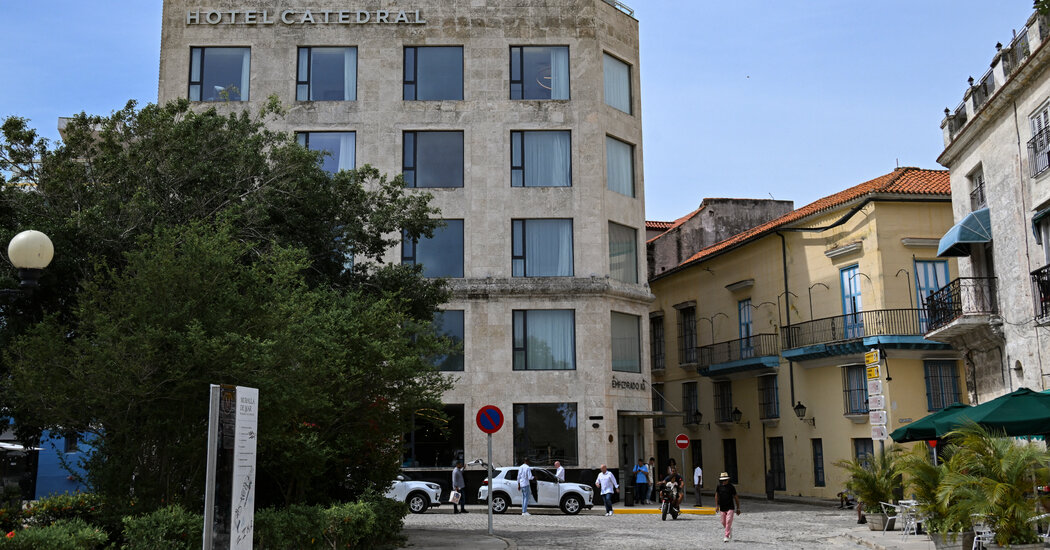
This sudden commercial exodus has struck at the heart of the Cuban economy, particularly the crucial tourism sector that has long served as the country’s primary source of foreign currency. For decades, international hotel brands had served as a bridge between Cuba and the outside world, but this week, several of the most prominent players chose corporate survival over their Cuban partnerships. The Spanish hospitality heavyweight Iberostar announced it would dissolve its partnership to operate twelve hotels with Gaviota, a major tourism enterprise controlled by the military conglomerate GAESA. Almost simultaneously, Meliá, another massive Spanish firm, declared it was pulling out from its partnerships running fifteen hotels, framing the painful decision as an act of corporate responsibility, even as it noted that many of its properties were already shuttered due to the collapse of international travel. From Canada, Blue Diamond—which ran dozens of popular resorts across the island—announced its departure, while the Indonesian hospitality chain Archipelago International quietly shut its Aston Hotels, leaving prospective travelers with nothing but dead links on its booking websites. To make matters worse, Cuba’s Central Bank announced that an unnamed international intermediary responsible for processing Visa and Mastercard transactions had severed ties with the nation to comply with the White House executive order. According to Mastercard spokesperson Seth Eisen, the decision was made by the foreign bank handling the transactions rather than the credit card company itself, leaving foreign travelers and local businesses unable to use credit cards to secure purchases, and completely severing the island from the global financial circuit.
The fallout from this corporate departure goes far beyond empty hotel lobbies, striking deep into the island’s fragile social safety net and jeopardizing international efforts to feed the hungry. The human cost of these sanctions is vividly illustrated by the plight of the United Nations’ World Food Program, which had been actively working to supply essential provisions for Cuba’s state-subsidized food rations. Etienne Labande, the agency’s country director in Cuba, revealed a devastating reality: the organization was forced to place on hold planned purchases of nearly 3,000 tons of food because it could no longer find a shipping solution willing to dock at Cuban ports. Major German and French maritime shipping companies had already ceased operations on the island to avoid violating secondary U.S. sanctions, leaving food relief literally stranded at sea. Furthermore, the banking freeze has paralyzed the agency’s local operations; because the World Food Program can no longer use Visa or Mastercard to make payments, it is struggling to find alternative ways to pay private suppliers for the fuel needed to run its distribution trucks. This mechanical paralysis of aid delivery means that elderly residents, children, and low-income families are left to bear the ultimate burden of the geopolitical standoff, as empty kitchens and chronic food shortages become the defining features of an increasingly untenable humanitarian emergency.
In Washington and Havana, political leaders continue to frame this devastating economic battle through competing, high-stakes narratives of morality and sovereignty. In remarks to reporters, President Donald J. Trump asserted that Cuba has “sort of collapsed,” promising that his administration would “handle” the nation’s communist government as soon as pressing diplomatic conflicts with Iran were resolved, hinting at a potential stopover to deal with the island. Backing up these aggressive words, the U.S. State Department announced additions to its sanctions list, targeting five more Cuban officials—including President Miguel Díaz-Canel and his immediate family—alongside five entities. These targets included Cuba’s gold mining venture and the widespread Committees for the Defense of the Revolution, neighborhood watchdog groups known for monitoring citizens. Secretary of State Marco Rubio defended the escalation, characterizing the targeted individuals and entities as those who fund and direct the regime’s efforts to mobilize radical activities globally. The primary focus of these sanctions remains GAESA, the military-run business group born out of Cuba’s 1990s post-Soviet economic crisis, which American officials claim hoards immense, illicit wealth. However, President Díaz-Canel rejected this narrative on social media, arguing that GAESA is not a vehicle for personal enrichment but a vital state organ that has allowed the Cuban people to resist decades of relentless and hostile foreign aggression from the United States.
Despite the ideological defenses of the Cuban leadership, the speed and scale of the economic destruction are historic, representing a paradigm shift in how Washington exerts pressure on the island. John S. Kavulich, the president of the U.S.-Cuba Trade and Economic Council, observed that Cuba has experienced more severe commercial, economic, and financial devastation in the last thirty days than in any period since the 1959 revolution that brought Communist rule to the island. Kavulich highlighted the efficiency of this modern political strategy, noting that the American administration had achieved massive economic leverage and structural disruption without putting a single soldier on the ground. Political economists who study Cuba’s tourism industry, like Paolo Spadoni of Augusta University, point out that while some hotels run by non-military entities remain operational, the sweeping fear of secondary sanctions has effectively paralyzed wider global investment. The U.S. State Department openly acknowledged that this mass corporate retreat was the precise goal of the policy, arguing that companies choosing to leave Cuba are making a prudent, ethical decision to avoid enriching an oppressive regime that routinely violates human rights. Yet, this aggressive freezing of capital has also led to practical collapses, as a lack of jet fuel caused by restricted U.S. deliveries forced major international airlines to cancel their scheduled flights to the island, deepening the nation’s total isolation.
Ultimately, the tragedy of this geopolitical conflict is written not in the balance sheets of multinational corporations or the policy papers of Washington, but in the anxious, weary faces of the Cuban people. Caught in an agonizing squeeze between an unyielding, authoritarian domestic government that refuses to cede political control and a powerful neighbor determined to choke off its economic oxygen, ordinary families are left to survive on the margins. The high-minded rhetoric of targeted sanctions designed to defend human rights offers very little comfort to a mother trying to find milk for her infant, or a young tour guide whose livelihood vanished overnight when the foreign resort closed its doors. As the long-standing networks of international commerce and aid continue to dissolve under the weight of secondary sanctions, the direct consequences are felt in cold stoves, dark homes, and a pervasive sense of hopelessness that is driving a historic wave of migration. The coming weeks will test the extreme limits of Cuban resilience, a quality that has been forged over decades of hardship but is now being pushed toward a breaking point. While policy makers wait to see if this economic stranglehold will force political change, the everyday citizens of Cuba continue to pay the heavy, heartbreaking price of a bloodless war waged in the name of democracy.