



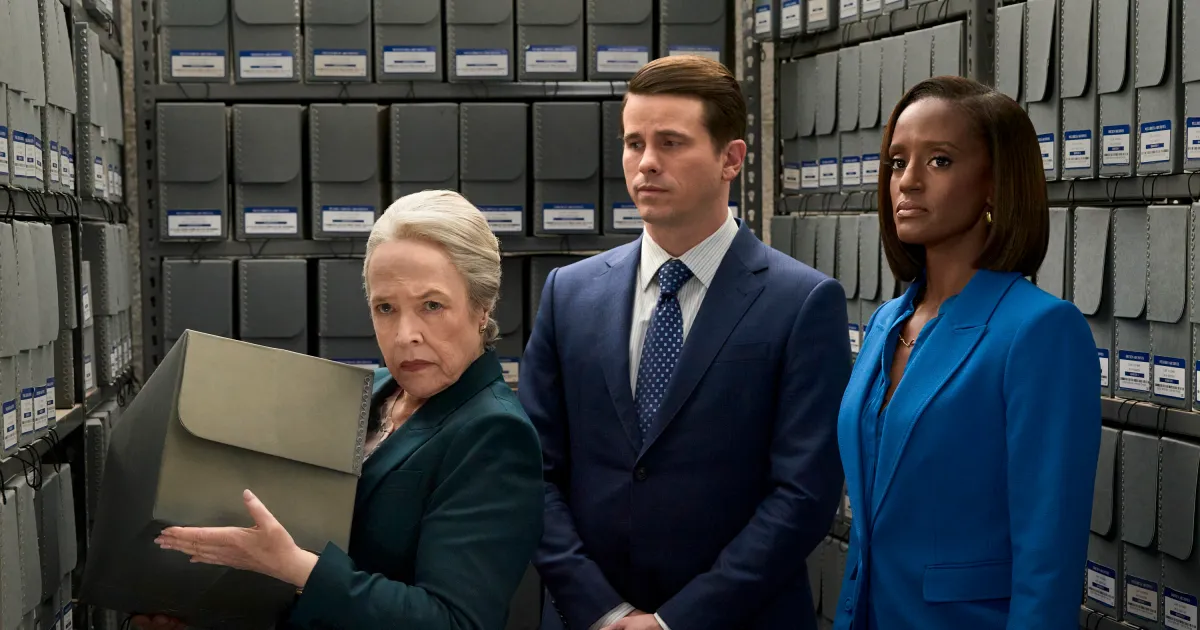
The warm, golden California sun was gently dipping below the horizon at the Motion Picture & Television Fund (MPTF) NextGen Summer Party on a brilliant late May evening, casting an inviting, ambient glow over an event designed to celebrate the tireless creative forces fueling our favorite on-screen escapes. Among the notable industry figures mingling beneath the glimmering string lights was the exceptionally warm and grounded actor Jason Ritter, whose down-to-earth presence and disarming humor have long made him a beloved fixture in Hollywood. When the conversation naturally turned toward the future of his breakout CBS legal drama, Matlock, the forty-six-year-old actor’s eyes lit up with a mixture of genuine excitement and the humble curiosity of an outsider looking in. For generations of television enthusiasts, the yearly fall schedule was an immutable gospel; prime-time networks operated like finely tuned clockwork, churning out seasonal stories with relentless, assembly-line consistency year after year. Yet, as Ritter graciously holding court under the balmy summer sky hinted, a quiet revolution is currently reshaping the television landscape, one where the breakneck speed of production is being secondary to the emotional and artistic sanity of the creative teams involved. The news that Matlock would be taking a little longer than usual to return to living rooms across the nation was initially met with a wave of collective disappointment from eager viewers. However, this intentional pause in the traditional broadcasting cycle represents a beautiful, highly necessary evolution in modern media—a conscious decision to honor the complex human labor behind the camera and prioritize deeply considered, profound storytelling over the cold demands of an archaic, hyper-speed programming calendar, reminding us that some of the finest works of art are forged slow and steady in the quiet spaces of patient preparation.
At the absolute center of this impending narrative renaissance is the character of Julian, whose moral certainty and professional identity were left shattered and hanging precariously by a thread during the breathtaking, emotionally draining final moments of the previous season. As Jason Ritter candidly reflects on his character’s highly uncertain trajectory, he displays a profound, highly empathetic connection to the deeply flawed human being he embodies on screen, admitting that he is just as eager and anxious as the audience to discover what lies ahead on the other side of Julian’s dramatic downfall. Having concluded the last season enveloped in the suffocating embrace of serious legal trouble, Julian stands at a terrifying, deeply relatable existential crossroads: he is a man forced to confront the potential loss of his highly coveted law license, a crisis that threatens to strip him of the very professional armor that defined his worth for years. Ritter notes that this devastating blow opens up a rich, fertile emotional territory for the upcoming third season, forcing Julian to either desperately cling to the tattered remnants of his former life or embark on the agonizing, radically transformative journey of reinventing himself from the ground up. What makes Ritter’s perspective so refreshingly human is his complete, unwavering trust in the show’s writing staff; even as he admits he has not yet held the physical scripts in his hands ahead of the scheduled September filming window, he welcomes the impending “character shakeups” and the highly rumored time jump with open arms. To Ritter, the anticipation of receiving those first pages of season three is akin to the pure, unadulterated joy of unwrapping a long-awaited gift, a sentiment that beautifully bridges the gap between the actors who inhabit these fictional worlds and the millions of devoted fans who welcome them into their homes every week.
This deliberate delay of Matlock’s return is not merely an isolated creative choice; rather, it is a highly calculated, fascinatingly complex maneuver in a much larger, network-wide scheduling rearrangement orchestrated by the executive suites at CBS. In a surprising strategic announcement that sent shockwaves through the television industry, the network revealed a bold, sweeping program restructuring that postponed several of its absolute highest-performing flagship intellectual properties—including the beloved supernatural comedy Ghosts, the critically acclaimed Matlock reboot, and the adrenaline-fueled procedural NCIS: Sydney—shoving their highly anticipated season premieres entirely into the midseason of 2027. This radical calendar adjustment resembles a high-stakes, grandmaster-level game of programming chess, where time slots are treated as precious currency to curate optimal viewer engagement, nurture fledgling series, and protect seasoned hits from the corrosive effects of creative fatigue. By shifting Matlock’s coveted slot over to the wonderfully eccentric, critically adored Elsbeth, the network successfully clears a smooth pathway for the high-profile premiere of Cupertino on that very same evening, creating a formidable block of prime-time storytelling. Meanwhile, the strategic movement of NCIS: Sydney to the midseason reserves allows the newly minted prequel series NCIS: Origins—which received a more focused, shorter-episode order to preserve its atmospheric narrative quality—to seamlessly pair up with the high-octane drama of NCIS: New York. These complex logistical maneuvers serve as a vivid reminder that modern television programming is no longer about simply filling blank spaces on a weekly grid; it is about constructing a balanced, emotionally resonant ecosystem that respects the viewer’s time and energy, recognizing that strategic patience is the ultimate tool for sustaining long-term viewer loyalty.
Behind the curtain of these massive corporate logistical shifts lies a deeply personal, human story of bold artistic advocacy championed by Matlock’s brilliant creator and showrunner, the fifty-year-old visionary Jennie Snyder Urman. Possessing a wealth of experience in the highly volatile world of television production, Urman understands with absolute clarity the staggering physical, mental, and emotional toll that crafting twenty-two hours of premium drama takes on a writers’ room and an ensemble cast. Rather than bowing down to the intense, relentless pressure from network executives to immediately capitalize on the show’s massive success and churn out quick-fix entertainment, Urman did something incredibly brave and increasingly rare in the modern entertainment industry: she sat down with CBS leadership and actively requested that they push the upcoming season back. In a remarkably candid conversation leading up to the season finale, Urman explained that her entire creative team had poured every ounce of their souls into successfully “landing the plane” on the massive, emotionally taxing “Wellbrexa” storyline, a complex narrative web that had dominated the series’ narrative engine for multiple seasons. By choosing to fully resolve this overarching narrative arc rather than artificially dragging it out for the sake of cheap suspense, the creative team achieved a triumphant, emotionally satisfying payoff, but it also meant they had reached a complete, absolute reset for the entire series. Urman recognized that to build something equally magnificent on the ashes of that storyline, she and her team desperately needed the luxury of quiet, uninterrupted time to recharge their imaginative batteries and thoughtfully construct the foundation for the next chapter of their characters’ lives.
The intricate, labor-intensive process of writing high-quality serial television is almost completely invisible to the average viewer who sits back to enjoy a sleek, propulsive episode on their screen, yet Urman’s revealing insights offer a rare, deeply fascinating window into the artistic devotion required to build a television mystery from scratch. To transition away from the heavy gravity of the resolved Wellbrexa saga, the writers’ room is currently engaged in the massive, highly delicate task of constructing an entirely new “narrative architecture” from the ground up—an intellectual feat that requires endless brainstorming sessions, profound character analysis, and the careful placement of narrative breadcrumbs. Urman’s ultimate creative manifesto is to fashion a brand-new mystery that is not only intellectually stimulating and emotionally gripping, but completely and utterly “airtight,” a standard of excellence that leaves zero room for the frustrating plot holes, rushed logic, and lazy narrative contrivances that so often plague television series produced under exhausting, frantic deadlines. Crafting a mystery of this elite caliber requires an extraordinary, almost sacred amount of time to think, write, dissect, and rewrite, which is precisely why the generous space afforded by the network before filming commences in September is such an invaluable, hard-won victory for the creative team. While Urman is deeply empathetic to the inevitable disappointment and sadness that loyal audiences might feel as they face a longer winter without their favorite legal drama, she remains profoundly grateful and lucky that CBS chose to honor her artistic vision, viewing this extended hiatus not as a setback, but as a prestigious vote of confidence that ensures the show’s high quality will never be compromised.
Ultimately, this monumental shift in CBS’s scheduling paradigm represents an inspiring, deeply humane triumph for the broader landscape of television production, signaling a welcome departure from the exhausting “content mill” mentality of the past and moving toward a future that deeply respects the limits of human creativity. When media conglomerates allow showrunners like Jennie Snyder Urman, actors like Jason Ritter, and their hard-working crews the breathing room to rest, heal, and deeply contemplate their craft, the ultimate beneficiary is the audience, who receives a finished cohesive product that is infinitely richer, more emotionally resonant, and beautifully reflective of the complex human journey. The mounting anticipation and passionate discussions surrounding the return of Matlock and its network peers serve as a powerful testament to the enduring, deeply symbiotic bond that exists between a dedicated audience and the storytellers who touch their hearts. As Ritter prepares to step back onto the soundstages to explore the messy, beautiful rebirth of Julian, and as the writers meticulously map out the twists and turns of their next great narrative labyrinth, viewers can rest assured knowing that this delay is the ultimate act of love and respect for the world they have built. In our modern, hyper-accelerated society dominated by instant gratification and disposable media, there remains something truly magical and profoundly human about waiting for something built to last, proving that the most memorable, soul-stirring stories are those that are given the time, space, and tender care to truly discover who they are meant to be.