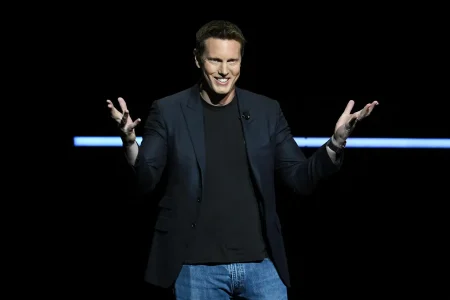




In an era dominated by hyper-specialized technological jargon and elite computer science credentials, Daniela Amodei stands out as a brilliant anomaly—a self-described generalist who has quietly ascended to become arguably the most influential woman in the rapidly evolving landscape of artificial intelligence. At thirty-eight years old, the co-founder and president of Anthropic does not fit the typical, predictable mold of a Silicon Valley power player. Armed with an undergraduate degree in English literature from the University of California, Santa Cruz, rather than a highly specialized legal degree or a doctorate in machine learning, she has built her career on a foundation of boundless curiosity, cross-disciplinary learning, and a deep-seated desire to create meaningful global impact. This unorthodox approach has yielded staggering professional and financial results. Following a massive funding round that valued Anthropic at an astonishing nine hundred and sixty-five billion dollars, Amodei’s personal net worth skyrocketed nearly thirteen-fold over the course of a single year, climbing from one point two billion to an estimated fifteen point five billion dollars. This astronomical rise has propelled her to the position of the second-richest self-made woman in America, yet her professional focus remains remarkably grounded and conceptually driven. Having left OpenAI in late twenty-twenty alongside her brother Dario and five other visionary colleagues, she helped establish Anthropic with a distinct mission: to build safe, dependable, and beneficial artificial intelligence systems. For Amodei, the entrepreneurial journey has never been solely about capital accumulation; instead, it is about proving that pioneering scientific breakthroughs can co-exist harmoniously with high ethical standards. Her meteoric rise demonstrates to a new generation of professionals that in a world increasingly defined by automated algorithms, the human capacity to connect disparate ideas, ask fundamental ethical questions, and lead with empathy remains an incredibly undervalued asset.
Amodei’s philosophical approach to capital success is far from an isolated occurrence among America’s elite female entrepreneurs; rather, it reflects a profound and growing cultural shift that reframes massive wealth as a vehicle for systemic global good. Long before Anthropic achieved its current eye-popping financial valuation, its co-founders collectively committed to eventually donating eighty percent of their personal fortunes to philanthropic causes, asserting the bold conviction that commercial success and social responsibility do not have to exist in a state of constant, irreconcilable tension. This progressive ethos resonates deeply across the ranks of America’s richest self-made women. Consider Judy Faulkner, the pioneering founder of Epic Systems, who holds the third spot on this year’s list and has pledged ninety-nine percent of her immense assets to charity. Faulkner famously articulated her philanthropic vision as a desire to provide others with basic, fundamental life resources—such as food, warm shelter, healthcare, and education—so that they, too, might have the “roots” necessary to eventually grow wings and soar. This perspective directly challenges the historical archetype of the ruthless corporate tycoon, replacing it with a more nurturing, long-term vision of capitalism. It highlights a shared understanding among these prominent female leaders that commercial enterprises can be highly profitable engines of innovation while simultaneously serving as forces for humanitarian progress. By viewing their financial fortunes not as personal trophies but as tools for empowerment, these trailblazing women are actively rewriting the rules of engagement for modern business, proving that professional excellence is most impactful when it is directly leveraged to elevate human lives and foster a more equitable society. By dismantling the outdated notion that corporate profitability and societal altruism are mutually exclusive, they are showing that the next generation of business leaders can achieve unprecedented market caps while maintaining a steadfast commitment to the public good.
The sheer diversity of industries represented on this year’s list underscores the multifaceted ways in which modern women are forging their own paths to financial sovereignty and cultural dominance. The newest additions to the billionaire ranks illustrate this beautifully, emerging from entirely different spheres of influence to claim their rightful places at the top of the economic ladder. Pop-cultural icon Beyoncé Knowles-Carter officially vaulted into the three-comma club, propelled by the unparalleled success of her monumental Cowboy Carter Tour, which generated over four hundred and fifty million dollars in ticket and merchandise sales alone, demonstrating how creative sovereignty can translate into massive economic leverage. Meanwhile, in the corporate tech sector, Caryn Seidman-Becker demonstrated the power of identifying and scaling essential infrastructure as the leader of Clear Secure, transforming how we navigate security checkpoints at airports, sports stadiums, and medical facilities through advanced biometric technology. Simultaneously, Colette Kress, the seasoned Chief Financial Officer of Nvidia, secured her billionaire status by steering the financial operations of the semiconductor company at the absolute center of the global artificial intelligence boom. Intriguingly, her decision to join Nvidia years ago was championed by her two young sons, who were avid video gamers familiar with the company’s graphics processing units. These stories highlight the deeply personal and often unconventional narratives behind massive financial triumphs. Whether commanding global concert stages, designing critical identity verification networks, or managing the complex finances of semiconductor giants, these women prove that success is rarely a straight line, but is instead built on intuition, adaptability, and the courage to seize unique opportunities when they present themselves. Their accomplishments showcase a vibrant tapestry of leadership styles, proving that whether one operates in the vibrant lights of the entertainment industry or the quiet boardrooms of hardware manufacturing, a willing embrace of calculated risk and a sharp eye for emerging consumer trends are the true universal keys to unlocking massive global scale.
Perhaps no story on this year’s list captures the spirit of bold, multidisciplinary reinvention quite like that of Luana Lopes Lara, the former Brazilian ballerina who has quickly transitioned into a major powerhouse of modern predictive finance. After spending her college summers working within the intense, quantitative environments of legendary financial institutions like Bridgewater Associates and Citadel Securities, the brilliant Massachusetts Institute of Technology graduate co-founded Kalshi, a fast-growing prediction market platform. In late twenty-twenty-five, Lara made history by officially becoming America’s youngest self-made female billionaire at the age of twenty-nine, when her New York-based firm successfully raised one billion dollars at an eleven-billion-dollar valuation. Now at thirty years old, her net worth has surged to two point six billion dollars on the heels of a massive twenty-two-billion-dollar funding round, solidifying her status as a premier leader in financial technology. Lara’s transition from the rigorous, highly structured discipline of classical ballet to the fast-paced, high-stakes realm of financial prediction markets illustrates the immense power of cognitive flexibility. Her journey serves as a powerful testament to a new generation of young female leaders who refuse to be pigeonholed into a single identity or traditional career path. By blending the artistic focus of her youth with the analytical rigor of her academic training, she has disrupted old-guard financial models and paved the way for an entirely new category of market-based speculation, proving that the most revolutionary innovations often occur at the intersection of wildly divergent fields of expertise. Her rapid ascent also signals a broader shift in the demographics of high finance, demonstrating that young women can successfully navigate, disrupt, and command sectors of the economy that have historically been dominated by seasoned male executives. By bringing a fresh perspective to market liquidity and risk management, Lara has not only built a massive financial empire but has also challenged the traditional boundaries of what an entrepreneur in the financial technology sector looks like.
From a broader macroeconomic perspective, the collective success of these women is historically unprecedented, yet it also serves as a sobering reminder of the deep structural gender disparities that continue to persist in global finance. This year, her ninth consecutive year at the very top of the list, building materials magnate Diane Hendricks retained her crown as America’s richest self-made woman, maintaining a comfortable lead over runner-up Daniela Amodei despite experiencing a slight dip in her overall fortune over the past year. Collectively, the forty-three self-made billionaires on this list—up from thirty-eight in the prior year—command a record-breaking combined net worth of one hundred and sixty-six point three billion dollars, with the top ten solitary figures accounting for a massive ninety-six billion of that total. This represents a staggering tripling of wealth for the top ten since the list’s inception in twenty-fifteen, a dramatic growth rate that closely mirrors the exceptional returns of the broader stock market over the same decade. However, these triumphs must be analyzed alongside the stark reality of the persistent gender wealth gap: in America today, some seven hundred men are self-made billionaires, holding a combined fortune of six point seven trillion dollars. This means that even with the record-breaking gains celebrated this year, the nation’s most successful self-made women still control a mere two point four percent of the total self-made billionaire wealth in the country. While the upward trajectory of female-led enterprises is undeniable and provides ample reason for long-term optimism, these statistics remind us that the road to true economic equity remains incredibly long, requiring systemic changes to venture funding, executive recruitment, and mentorship pipelines. The concentration of capital in so few hands highlights the necessity of expanding access to early-stage venture capital, which remains a primary barrier for aspiring female founders. Until these structural barriers are dismantled, the immense talent pool of female innovators will continue to face steep climbs to reach the levels of capital accumulation enjoyed by their male peers.
To accurately capture this evolving economic landscape, compilers employed a highly rigorous methodology, valuing public shares and conservatively assessing private holdings using market values to ensure a precise financial snapshot. For the first time in the history of this list, the bar was raised to require an absolute minimum net worth of one billion dollars, resulting in the exclusion of several beloved cultural figures who previously occupied prominent spaces, such as Dolly Parton, Kylie Jenner, and Selena Gomez. Furthermore, every candidate was evaluated on a self-made scale ranging from six to ten, designed to measure the sheer distance they traveled and the specific socioeconomic obstacles they overcame to build their empires. This year’s list also represents a poignant passing of the torch, marked by the recent deaths of legendary commercial pioneers Doris Fisher of Gap and Alice Schwartz of Bio-Rad Laboratories, both of whom lived long, impactful lives of nearly a century. Despite these losses and the raising of the entry threshold, the list is more robust than ever, powered by a vibrant mix of veteran industrialists, cutting-edge technology founders, and visionary creative artists. These self-made women possess more collective wealth, broader institutional influence, and greater societal impact than at any other point in American history, serving as a beacon of inspiration for future generations. Ultimately, this list is far more than a simple registry of immense fortunes; it is a living history of female perseverance and ingenuity, illustrating how curiosity, resilience, and a dedication to purposeful leadership can reshape the face of global wealth. By celebrating these achievements, we do not merely applaud individual financial success; rather, we recognize the structural shifts that allow women to claim agency over their professional destinies. As these billionaires continue to invest in their businesses, support community philanthropy, and mentor the next wave of founders, they are laying the groundwork for a more inclusive, dynamic economic future where a generalist’s curiosity is valued just as highly as a specialist’s technical skills.