



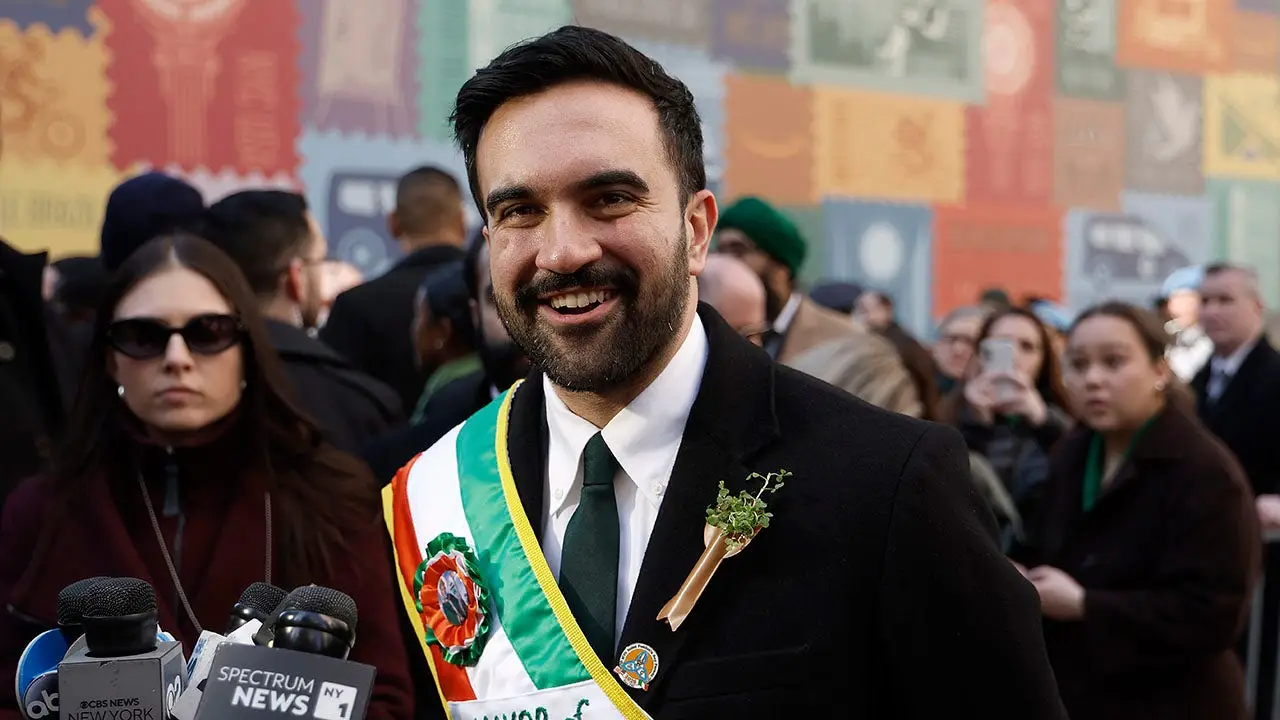
On a vibrant, sun-drenched Sunday morning, the bustling concrete canyons of New York City’s legendary Fifth Avenue were transformed into a breathtaking sea of blue and white, filled with the triumphant sounds of shofars, the energetic rhythms of high school marching bands, and the passionate cheers of thousands of spectator families. For decades, the annual Israel Day parade has stood as an unshakeable, sacred cornerstone of the city’s civic and cultural calendar—a joyous, high-energy demonstration of survival, heritage, and pride for the Jewish state and its deep-rooted connection to the Big Apple. Historically, the event has served as an essential, non-negotiable gathering point for the state’s political elite, bringing together mayors, governors, senators, and local leaders of every political persuasion in a rare, heartening display of bipartisan unity alongside throngs of enthusiastic revelers. Yet, this year’s march carried a palpable undercurrent of political tension, marked most notably by the glaring and unprecedented absence of New York City Mayor Zohran Mamdani. While major political heavyweights like New York Governor Kathy Hochul, Senate Minority Leader Chuck Schumer, and State Attorney General Letitia James marched shoulder-to-shoulder with the crowds, the city’s top executive chose to break with decades of tradition by skipping the celebration altogether. This decision cast a complex, somber shadow over what has traditionally been an uncontroversial celebration of community, highlighting the sharpening ideological divides and cultural anxieties currently reshaping New York’s political landscape.
Mayor Mamdani’s choice to boycott the festive gathering was not a last-minute scheduling conflict, but rather a deliberate and pre-announced political statement that drew a sharp, controversial line in the sand of municipal politics. During a press conference held just days before the event, Mamdani stood firm on his decision, reminding reporters and the public that he had openly pledged during his mayoral campaign to stay away from the annual parade. Explaining his stance to a quiet room, the mayor emphasized that his absence was a direct reflection of his deeply held, critical views regarding the current Israeli government’s policies, making it clear that he could not in good conscience participate in an event celebrating the nation-state under its current leadership. This explicit boycott shattered a long-standing, multi-generational tradition of Big Apple mayors leading the parade as a gesture of goodwill and representation of the city’s massive, diverse Jewish constituency—a tradition upheld through thick and thin by previous mayors of all political stripes. However, the internal dynamics of City Hall presented a striking and dramatic contrast; standing directly alongside the mayor at that same press conference was his newly appointed Police Commissioner, Jessica Tisch. Tisch, who is Jewish, offered a completely different, deeply personal perspective, proudly announcing her intention to lead the parade as a grand marshal. Her spirited declaration to march alongside her officers and the public underscored a profound internal division within the city’s leadership, showing that while the mayor chose to distance himself, the heart of the city’s law enforcement was determined to stand tall in solidarity with the community.
The mayor’s decision immediately ignited a firestorm of controversy and drew fierce condemnation from political opponents who viewed his boycott as a historic betrayal of his constituents during a time of heightened vulnerability. Taking center stage in the wave of public criticism was New York Republican gubernatorial candidate Bruce Blakeman, a long-time adversary of Mamdani, who held a highly charged press conference of his own just feet from where the parade line formed. Blakeman did not mince words, launching a scathing verbal attack in which he accused the mayor of harboring anti-Israel and deeply antisemitic sentiments that run counter to the values of New Yorkers. He argued that one of Mamdani’s earliest actions upon taking office was a calculated effort to dilute the official, internationally recognized definition of antisemitism, a move that critics argue weakened protections for Jewish residents during a frightening surge in hate crimes. Furthermore, Blakeman lambasted the mayor for what he characterized as a glaring, hypocritical double standard in his foreign policy critiques; he pointed out that while Mamdani is quick to loudly denigrate Israel, he remains conspicuously silent on notorious human rights violators such as Iran, Russia, and China. Labeling Mamdani a “wolf in sheep’s clothing,” Blakeman expressed relief that the mayor was not participating, asserting that someone who continuously undermines and delegitimizes the Jewish state has no place marching in a parade meant to celebrate its survival and success.
Despite the loud political rancor emanating from the steps of City Hall, the atmosphere on Fifth Avenue remained defiantly joyous, filled with a sense of collective resilience that refused to be dampened by executive boycotts. Danny Danon, the Israeli Ambassador to the United Nations, captured this triumphant spirit, expressing immense pride in the sheer volume of everyday citizens who showed up to flood the streets in support of Israel. In an emotional statement addressing the mayor’s absence, Danon remarked that while Mamdani chose to turn his back on tens of thousands of Jewish New Yorkers and their allies, the overwhelming turnout proved that the cultural and emotional bond between New York and Israel transcends any temporary political campaign or individual politician’s agenda. He emphasized that the massive, flag-waving crowds sent an unmistakable, powerful message to the world: that the vibrant Jewish community of New York cannot be marginalized, silenced, or erased from the civic fabric of the city. Danon declared that the day’s overwhelming success was a clear victory over attempts to distance the city from its Jewish heritage, noting that no political posturing or boycott would ever force the community to take down the Israeli flag or hide their pride, neither in New York nor anywhere else across the globe.
This enduring sense of community resilience was bolstered by the robust, energetic presence of other heavyweight political figures who recognized the vital importance of showing up during a period of heightened social anxiety. Governor Kathy Hochul and Senate Minority Leader Chuck Schumer, along with State Attorney General Letitia James, actively engaged with the marchers, shaking hands, exchanging warm words of encouragement, and demonstrating that the state’s highest offices remained deeply committed to the well-being of the Jewish community. For many attendees, seeing these high-profile leaders marching along Fifth Avenue provided a deeply needed sense of comfort, validation, and physical security, especially at a time when many Jewish families describe feeling increasingly isolated due to a highly publicized surge in antisemitic rhetoric. Their physical presence served as a powerful counterweight to the mayor’s boycott, reassuring the public that New York’s traditional commitment to multicultural solidarity and support for Israel remains alive, well, and fiercely protected. By choosing to walk the parade route, hold up banners, and wave to the crowds, these leaders humanized the political sphere, bridging the gap between cold policymaking and the warm, lived reality of thousands of citizens yearning for safety, recognition, and collective celebration.
The emotional focal point of the day came when Senator Chuck Schumer delivered a poignant, sobering speech before the parade officially kicked off, addressing the painful realities currently facing Jewish people globally in the digital age. Schumer did not shy away from the darker cultural currents of the modern era, warning of an “ugly resurgence” of antisemitism that is being fueled by ancient lies and libels updated for the twenty-first century. He noted with grave concern how historical prejudices are no longer confined to the fringes of society, but are now transmitted globally at the lightning-fast speed of fiber-optic internet connections and delivered directly to the phones in people’s pockets in a matter of seconds, making hatred more contagious than ever before. In light of this viral spread of misinformation and hostility, Schumer passionately argued that the existence of a strong, secure Jewish state is more critical today than ever, pointing out that antisemitism never truly disappears but merely lies dormant in the shadows, waiting for the right social and political conditions to reemerge. His final remarks served as a powerful conclusion to a day defined by both division and unity; while the mayor’s absence marked a disappointing historical shift in local governance, the unwavering spirit of the marchers, the strength of their leaders, and the sea of flags on Fifth Avenue proved that New York’s enduring relationship with Israel is built on shared struggles and mutual respect that can never be easily shaken.