



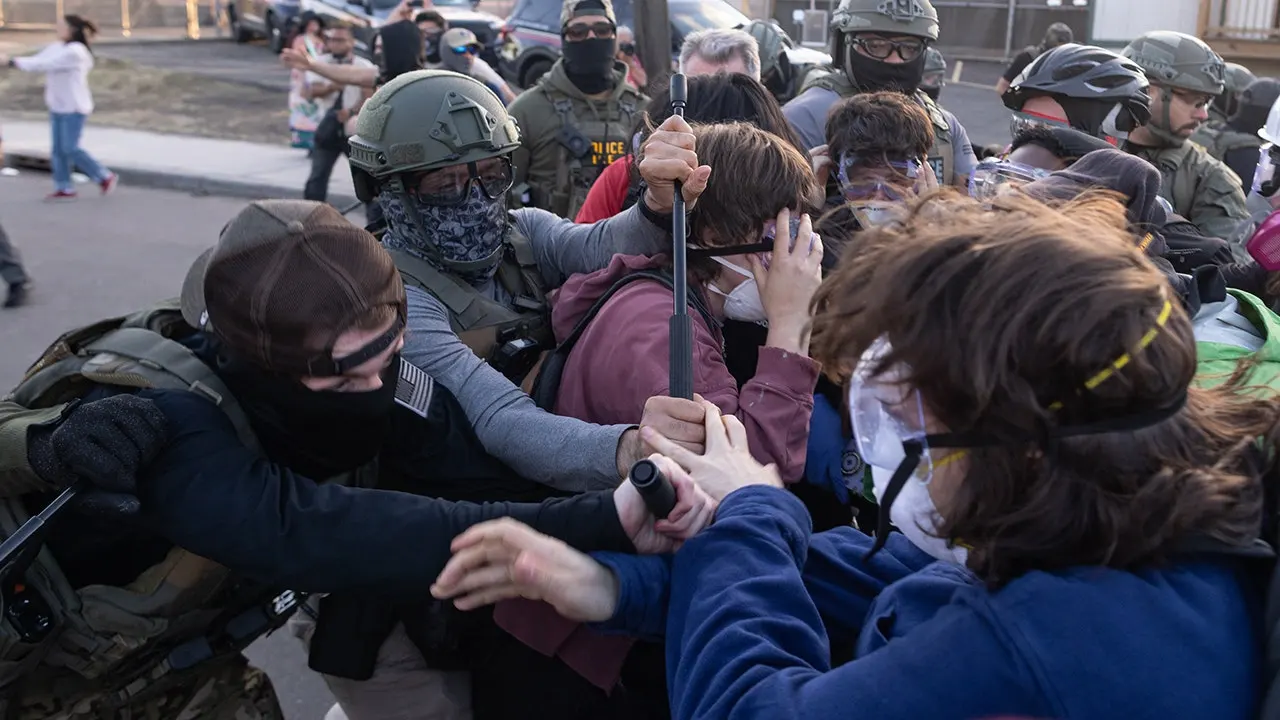
Behind the sterile headlines of geopolitical standoffs and bureaucratic policy shifts lies a deeply personal and unsettling reality for the men and women working on the frontlines of America’s immigration enforcement system. This harsh reality was thrust into the public eye outside Newark’s Delaney Hall detention center in New Jersey, where a routine assignment quickly dissolved into a nightmare of personal terror for one Immigration and Customs Enforcement (ICE) officer. Standing steadfastly amidst a chaotic crowd of demonstrators, the officer became the target of a vitriolic tirade that bypassed political debate and pierced directly to the bone of human vulnerability. A protester, captured in a chilling video that quickly went viral online, screamed explicit, horrifying death threats directed not just at the officer himself, but at his spouse and innocent children. This was not a mere expression of ideological disagreement; it was a psychological assault designed to dismantle a father’s sense of security, weaponizing the names and lives of his loved ones by promising their violent demise. The venomous words echoed through the night air, stripping away the professional armor of the badge to expose the fragile, universal human desire to protect one’s family from harm.
The federal response to this egregious breach of civil safety was swift, resolute, and aimed at sending an unequivocal message that the families of law enforcement officers are entirely off-limits. Acting United States Attorney General Todd Blanche stepped into the media spotlight to voice his profound disgust at the incident, denouncing the specific targeting of the officer’s wife and children as a grotesque departure from any acceptable standard of public dissent. Blanche publicly vowed that the individual responsible for these threats would be hunted down, a promise that materialized in less than twenty-four hours when the Federal Bureau of Investigation tracked down and arrested the unnamed suspect. Announcing the apprehension on social media with a blunt reminder of the consequences of such behavior, Blanche underscored the gravity of making threats against federal personnel. Yet, while the physical arrest provides a degree of legal resolution and immediate security, the emotional shrapnel of such an encounter remains. The psychological toll on the officer’s household cannot be easily erased by handcuffs; the knowledge that their identities and safety were compromised in the public square leaves a lingering shadow of anxiety over their daily lives.
This terrifying personal confrontation was the culmination of six consecutive nights of escalating volatility outside Delaney Hall, a facility that has become a localized crucible for the nation’s deeply polarized immigration struggle. What began as a vigil of dissent rapidly devolved into physical warfare, transforming the streets of Newark into a chaotic battleground where federal agents stood as a human barricade against waves of aggressive rioters. Approximately one hundred protesters, shielding themselves behind black umbrellas and wearing gas masks to neutralize defensive measures, bombarded the facility and its defenders with wooden pallets and mattresses. The physical toll on the agents was severe and intimate, with reports detailing officers being bitten, kicked, and punched as they struggled to maintain a defensive perimeter. The air grew thick with chemical irritants as agents deployed pepper spray to repel the oncoming crowd, resulting in a chaotic, sensory-overloaded environment where human bodies clashed in the dark. By the end of the violent Thursday night skirmish, nine individuals were arrested, adding to the growing tally of citizens whose passionate beliefs had mutated into physical violence and criminal behavior.
Adding a complex and frustrating layer to this already explosive situation was the apparent breakdown of inter-agency cooperation, which left federal officers feeling dangerously isolated on the frontlines. As the violence peaked on Wednesday and Thursday nights, federal agents repeatedly placed urgent calls for assistance to local and state police departments, hoping for reinforcements to help quell the riotous crowd. However, those desperate pleas for backup went unanswered, revealing a stark political divide that has left law enforcement personnel caught in the crossfire of governance disputes. Federal authorities pointed the finger directly at New Jersey Governor Mikie Sherrill, alleging that her administration’s recent policy directives and rhetoric effectively handcuffed local law enforcement, prohibiting them from responding to assist federal personnel. This perceived betrayal left the agents at Delaney Hall to absorb the brunt of the violence on their own, fostering a deep sense of abandonment among a force that felt sacrificed at the altar of state-level political posturing. The situation highlighted the perilous vulnerability of officers who are tasked with executing human-rights and border-enforcement laws but are denied the basic structural support necessary to ensure their own physical safety.
Ironically, the explosive violence in the streets stood in stark, tragic contrast to the quiet desperation of the very individuals who had catalyzed the demonstrations in the first place. Tucked inside the concrete walls of Delaney Hall, a group of detainees had previously penned a poignant open letter to the public, cataloging a list of grievances that touched on fundamental human needs and dignity. They claimed they were being subjected to systematic neglect, detailing severe shortages of edible food, prolonged deprivation of necessary medical attention, and the agonizing psychological limbo of being detained indefinitely without access to overdue legal proceedings. While the Department of Homeland Security has flatly denied these allegations of subpar conditions, the letters painted a picture of profound human suffering that initially drew well-meaning advocates to the streets to demand justice. However, the humane and empathetic message of care for the vulnerable was entirely hijacked and overshadowed by the aggressive tactics of radical agitators who chose violence over advocacy. The raw, quiet plea for food and medical care from the detainees inside was ultimately drowned out by the deafening screams of hatred and the clatter of riot gear outside.
Ultimately, the chaotic events unfolding at Newark’s detention facility serve as a somber, cautionary reflection of a society struggling to find its moral bearings in a deeply fractured political landscape. When the legitimate, peaceful right to protest is supplanted by physical violence, and when the discourse of dissent degrades into threatening the lives of an officer’s children, the shared fabric of our common humanity begins to unravel. There is an urgent, dual necessity to address both sides of this human equation: we must champion the fundamental right to humane treatment and swift legal process for those detained within our immigration facilities, while simultaneously guarding the safety and sanctity of the families of those sworn to uphold the law. Securing our borders and administering our laws should never require our civil servants to sacrifice the peace of mind of their spouses and children, nor should it require the silencing of peaceful, constructive oversight. As the dust settles in Newark and the legal system process those arrested, the hope remains that we can transition away from the theater of violence and toward a system that respects the dignity, safety, and humanity of everyone involved.