




The Diagnostic of Dependency: Europe’s Painful Quest for Economic Sovereignty
   _..---.._
 .'  _..._  '.
/  .'     '.
| / | THE CHINA-EU CHESSBOARD:
| | (X) (X) | | A High-Stakes Decoupling Narrative
| __ / |
‘. ‘—‘ .’ /
‘. '---' .’
`’-….-‘`
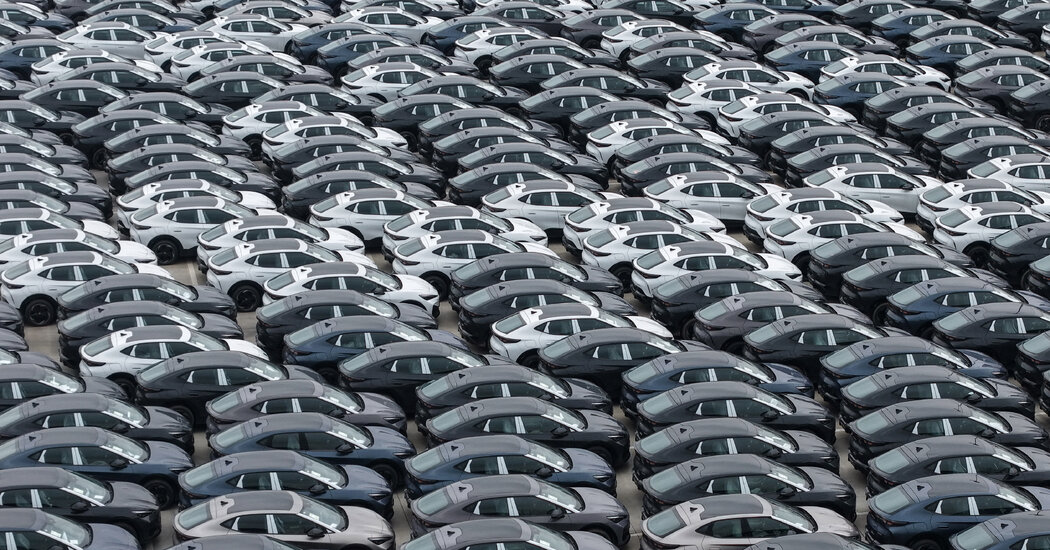
In the rarefied corridors of Brussels, a grim consensus is hardening: Europe’s relationship with Beijing has graduated from a lucrative trade partnership to a systemic vulnerability requiring urgent, perhaps agonizing, intervention. This shift in sentiment was starkly crystallized by Kaja Kallas, the European Union’s incoming foreign policy chief, who likened the continent’s deep-seated reliance on Chinese supply chains to a chronic physical affliction. Addressing the daunting prospect of dismantling these supply networks, Kallas suggested that curing this structural dependency would require economic “chemotherapy”—a process that, while potentially life-saving in the long term, would inevitably inflict severe, widespread pain across the European economy. This blunt medical metaphor captures the quiet desperation currently permeating European Union trade policy discussions. For decades, the European project thrived on the promise of globalized, frictionless trade, naturally positioning China as the bloc’s second-largest goods trading partner after the United States. Today, however, that open-door philosophy has collided with a sobering reality: as Beijing ramps up its state-subsidized industrial machinery, flooding foreign markets with cheap goods, European leaders find themselves trapped in a defensive crouch. Jeromin Zettelmeyer, the director of the influential Brussels-based economic think tank Bruegel, described the prevailing mood among European policymakers as nothing short of “panic,” pointing to an overwhelming sense of imminent industrial collapse as domestic factories struggle to compete with a highly subsidized Chinese export surge.
The Gathering Geopolitical Storm: A Trade Deficit Unleashed
[ U.S. TARIFFS ] —> ( Chinese Overcapacity ) —> [ EUROPEAN PORTS ]
|
$418 Billion Deficit
This domestic panic is rapidly setting the stage for a series of high-stakes diplomatic confrontations, pitting a defensive Brussels against an increasingly hostile and defensive Beijing. The battle lines are scheduled to be dry-run at the upcoming Group of 7 summit in Evian, France, where world leaders will grapple with global economic imbalances, before moving to a dedicated European Council meeting where the 27 EU heads of state will attempt to forge a unified strategy. Behind the flurry of upcoming diplomatic summits lies a stark, mathematically staggering reality: the widening Sino-European trade deficit. In 2025 alone, the trade imbalance in goods reached an astronomical $418 billion in China’s favor, a deficit driven heavily by Beijing’s deliberate macroeconomic shift. Facing a crippling domestic real estate crisis, Chinese policymakers chose to revitalize their slumping economy by pumping massive state resources directly into the country’s manufacturing sector. As the United States erected aggressive tariff walls to shield its own domestic market, this hyper-charged Chinese industrial output naturally redirected its flow toward Europe’s relatively open borders. The early months of 2026 recorded a unprecedented spike in imports, laying bare a structural trade imbalance that threatens to permanently displace European production. While European officials continue to voice fragile hopes of negotiating a cooperative recalibration with Beijing, they are simultaneously drafting unprecedentedly aggressive defensive trade measures, signaling that the era of naive, unrestricted market access is coming to an abrupt and volatile end.
The Consumer Paradox: The Green Transition Versus Industrial Survival
EUROPEAN CONSUMERS EUROPEAN MANUFACTURERS( Want Cheap, Clean EVs ) <=========> ( Face Industrial Extinction )
/
—> [ THE SYSTEMIC STRUCTURAL GAP ] <—/
Yet, implementing a robust decoupling strategy from China exposes a deep, structural paradox within the European Union itself—a conflict that pits the pocketbooks of everyday consumers against the long-term survival of the continent’s industrial base. Over the past several years, European consumers struggling with inflation and high energy costs, exacerbated by ongoing geopolitical conflicts in the Middle East, have eagerly turned to highly affordable Chinese electric vehicle imports to meet their transportation needs and advance sustainability goals. This consumer demand directly undermines Brussels’ political ambitions to foster a self-sufficient green technology sector, leaving domestic industries, particularly in Germany’s traditional automotive and chemical heartlands, increasingly unable to compete in their own domestic market. Rebecca Arcesati, an analyst at the Mercator Institute for China Studies (MERICS), notes that European democratic systems are fundamentally ill-equipped for this style of asymmetric economic warfare. Unlike Beijing’s authoritarian, centralized control model, European leaders must constantly answer to anxious voters, manage short-term electoral cycles, and balance the immediate financial concerns of their citizens against abstract, long-term strategic vulnerabilities, rendering any swift, unified retaliation incredibly difficult to execute. If Brussels moving forward imposes aggressive tariffs that drive up the cost of green technologies, it risks alienating its own electorate and derailing its ambitous climate targets, creating a paralyzing deadlock that Beijing has proven highly adept at exploiting.
Divergent Fronts: The Contradictory Currents of European Diplomacy
 [ THE HAWKS (France) ]  <===============>  [ THE PRAGMATISTS (Spain) ]
 "Build European Shields!"                  "Keep Beijing Open!"
                                           /
                     `---> [ JOINT PAPER ] <---'
                "Combat systemic overcapacity"
This internal policy gridlock is further complicated by the divergent and often contradictory political strategies championed by individual European capitals. French President Emmanuel Macron has emerged as one of the bloc’s most vocal China hawks, repeatedly urging the European Commission to build robust, American-style trade defense mechanisms capable of aggressively protecting strategic domestic industries from foreign market distortion. In stark contrast, leaders like Spanish Prime Minister Pedro Sánchez have historically favored a much more pragmatic, conciliatory tone; during a recent diplomatic visit to Beijing, Sánchez argued that Europe must persuade China to open its own market further so that “Europe does not have to close itself off” in a self-destructive pivot toward protectionism. Despite these philosophical differences, a quiet, defensive consensus is beginning to crystallize behind the scenes. Spain recently joined forces with France, Italy, Lithuania, and the Netherlands to draft an influential joint policy paper urging the European Union to deploy more aggressive, innovative trade instruments. While the document diplomatically avoided naming China directly, its target was unmistakable, focusing its criticisms squarely on foreign partners suffering from “systemic and structural industrial overcapacity.” This unusual coalition demonstrates that even the most Beijing-friendly states are beginning to realize that without a coordinated defense, their domestic manufacturing bases run the risk of being hollowed out entirely by China’s aggressive, state-subsidized economic export machine.
The Defensive Playbook: Legislative Shields and the Weaponization of Resources
EU DEFENSE:                             CHINA RETALIATION:
[ Industrial Accelerator Act ]  <--->   [ Weaponized Rare Earths ]
(Excludes Chinese Subsidies)            (Starves Green Manufacturing)
In response to this existential threat, Brussels is moving beyond mere rhetoric, actively constructing a defensive legislative apparatus designed to rebuild its domestic manufacturing base and insulate itself from external economic coercion. A key pillar of this strategy is the European Union’s proposed Industrial Accelerator Act, a landmark policy framework engineered to revitalize regional factories and, critically, prevent Chinese-backed enterprises from accessing lucrative European green energy subsidies. Economists like Brad Setser of the Council on Foreign Relations point out that while European leaders have historically hesitated to challenge Beijing out of a deep-seated fear of economic retaliation, the sheer scale of potential manufacturing losses, particularly within Germany’s auto sector, has finally pushed the bloc to act. However, this defensive posturing has already provoked a furious reaction from the Chinese Ministry of Commerce, which denounced the Industrial Accelerator Act as an illegal, protectionist violation of global trade rules and warned of swift countermeasures. Crucially, Beijing has already demonstrated its willingness to weaponize its near-monopoly over critical minerals, having previously restricted exports of vital rare-earth elements and advanced magnets in response to Western trade restrictions. This move sent shockwaves through European industrial supply chains, illustrating that any attempt by the West to achieve meaningful decoupling from China will be met with targeted retaliation designed to starve European high-tech and green energy manufacturers of the raw materials they require to function.
Corporate Containment: Beijing’s New Legal Iron Curtain and the Transatlantic Calculus
                  /--- [ Examine Records ]
[ APRIL LAWS ]  <----- [ Interrogate Staff ]
                  --- [ Prevent Exit ]
                            |
               "Unprecedented Economic Damage"
The economic cold war has escalated beyond tariffs and raw materials into the corporate realm, as Beijing deploys a formidable array of regulatory barriers aimed at keeping European multinational corporations firmly under its control. In an aggressive regulatory move, Beijing unveiled sweeping national security guidelines granting mainland authorities the power to audit foreign corporate records, interrogate local employees, and place exit bans on Western executives if they are suspected of attempting to move critical manufacturing and supply chains out of Chinese territory. The European Union Chamber of Commerce in China warned that these new surveillance measures could inflict “an unprecedented level of damage” on European businesses, effectively turning foreign corporate executives into statistical hostages in a high-stakes geopolitical game. Noah Barkin, an expert on Sino-European relations at the Rhodium Group, notes that Beijing’s aggressive, confident posture is deeply calculated, designed to exploit fragile political dynamics and perceived divisions between Washington and Brussels. By projecting raw regulatory power, Beijing is sending a clear, uncompromising message to European capitals: that they cannot rely on their traditional transatlantic alliances to protect them from the harsh economic consequences of challenging China’s industrial dominance. As the European Union prepares for its upcoming internal debates, leaders face a stark, agonizing choice: either endure the painful, disruptive “chemotherapy” of dismantling their dependence on Chinese manufacturing, or accept a slow, progressive decline in their industrial sovereignty.
Comparative Analysis: Trade Dynamics and Policy Responses
| Metric / Dimension | European Union Position | Chinese Government Position |
|---|---|---|
| Primary Economic Goal | Preserve industrial sovereignty, protect jobs, and reduce critical supply chain dependencies. | Maintain high GDP growth, export excess industrial capacity, and secure dominance in green tech. |
| Key Defensive Policy | Industrial Accelerator Act (subsidies restriction, local sourcing requirements). | Restricted export of rare-earth elements, magnets, and stringent national security audits. |
| Geopolitical Stance | Navigating internal division (French hawks vs. Spanish pragmatists) and transatlantic ties. | Strategic division of Western allies, asserting dominance via retaliatory warnings and regulatory control. |
| Vulnerable Sectors | Automotive manufacturing, chemical industries, wind and solar power infrastructural chains. | Real estate investment, highly leveraged state-subsidized companies, domestic consumer retail. |