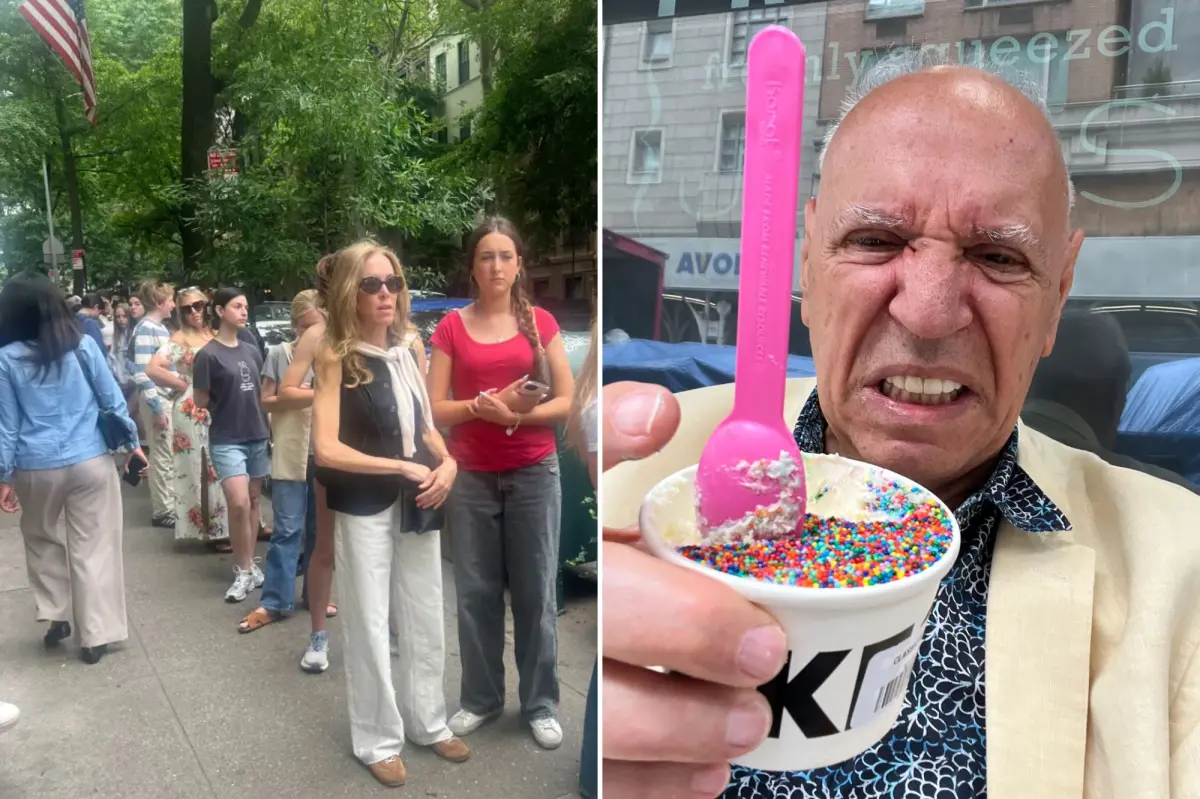
In an era dominated by screens and algorithms, our relationship with food has undergone a radical transformation. No longer is eating merely a sensory experience of taste, aroma, and texture; for many, it has become a visual performance, a digital currency minted in likes, views, and shares. This modern phenomenon is currently on full display on the bustling streets of Manhattan, where hundreds of eager locals and curious tourists are willingly sacrificing hours of their precious days to participate in the latest viral culinary craze. Led by the hypnotic pull of TikTok and Instagram, crowds are forming massive queues for a chance to purchase “Dot Cakes.” These humble confections—essentially small, round portions of cake layered in clear plastic cups and crowned with a colorful blanket of nonpareil sprinkles—have captured the collective imagination of the social media masses in a way that feels almost supernatural. The primary epicenters of this sensory frenzy are the two locations of Butterfield Market, an upscale grocery institution on the Upper East Side, which serves as the exclusive New York City supplier for these treats. Manufactured by a bakery out of Roslyn, Long Island, simply called The Dot Cakes, these sweet cups are delivered in batches of 600 to each market location on Wednesdays and Saturdays. Like clockwork, the entire inventory vanishes within two hours of delivery, leaving latecomers with nothing but empty shelves and digital envy. On social media, the visual allure of these tiny cakes has translated into an absolute juggernaut of engagement, with videos showcasing the desserts regularly pulling in hundreds of thousands, and sometimes millions, of views from viewers around the globe. A prime example of this digital wildfire is a TikTok video posted by a twenty-nine-year-old influencer named Danielle Pheloung. Her brief video, which has amassed a staggering seven million views in less than a week, features her proclaiming to her massive audience that these Dot Cakes are quite literally the single best culinary creation she has ever experienced in her entire life. While such lofty praise might inspire immediate cravings in the casual scroller, a closer, more grounded inspection of these hyper-popular treats reveals a stark and highly disappointing contrast between social media fantasy and physical reality.
When you strip away the flattering studio lighting, the catchy background tracks, and the highly stylized video edits that make these desserts look like magical elixirs, what you are left with is an incredibly basic, highly processed product that raises serious questions about the current state of consumer taste. Each eight-ounce plastic cup of Dot Cakes commands a hefty price tag of eleven dollars, a premium and almost offensive cost for a product that is divided into three simple, underwhelming components: a dense layer of cake at the bottom, a razor-thin smear of white frosting in the middle, and a heavy crown of rainbow nonpareil sprinkles on top. The product line is built around four traditional flavor offerings: “classic white,” vanilla chip, red velvet, and chocolate. However, the moment one attempts to read the microscopic ingredient label pasted onto the bottom of the plastic cup, the illusion of an artisanal, scratch-made bakery treat completely crumbles. The “classic white” variation, for example, conspicuously avoids using the word “vanilla” in its title, a culinary omission explained by the complete absence of actual vanilla extract in its chemical makeup. Instead, the cake portion of the dessert delivers a flavor profile that is aggressively and synthetic-forward, relying on artificial flavorings rather than real ingredients to mimic the taste of home baking. The back of the package reads more like a high school chemistry textbook than a recipe card, listing a bizarre, none-too-appetizing cocktail of industrial food additives such as sodium silicoaluminate, monocalcium phosphate, sorbitan monostearate, tetrasodium pyrophosphate, and polysorbate 60. To make matters worse, the middle layer of frosting, which boasts of containing “natural flavor” without ever specifying what that flavor actually is, is whipped together primarily from cheap palm oil and high-fructose corn syrup. The resulting mixture is dry, sickly sweet, and leaves a heavy, greasy film on the palate that tastes of little more than pure, unrefined industrial sugar.
To fully understand the gravity of this collective cultural delusion, one must leave the comfort of the digital space and step directly into the physical reality of the Butterfield Market queue on a brisk New York morning. Standing on the concrete sidewalk of Madison Avenue, wedged tightly between East 85th Street, the experience of waiting for a Dot Cake quickly sheds its online glamour. As the line of hopeful buyers inches incredibly slowly past a smelly municipal garbage dumpster, the sensory environment is less like a Parisian patisserie and more like a crowded, noisy commuter terminal. The queue at the Lexington Avenue and East 78th Street location is reportedly even longer, stretching far down the block and drawing bewildered stares from ordinary New Yorkers going about their daily routines. At one point, a frustrated passerby, observing the massive assemblage of humanity blocking the sidewalk, yelled out a sarcastic question to the crowd: “Are they giving away money?” This humorous interruption highlights the sheer absurdity of the spectacle. Among those standing in line, the mood is often far from celebratory; instead, it is characterized by a strange, quiet anxiety as people begin to question whether the reward will match the effort. Managing this sprawling, restive crowd is a monumental task, handled with grace by Butterfield staff members like Timo, a friendly and patient employee who works tirelessly to keep the store’s freight entrance clear of eager influencers. Timo and his colleagues count the heads in line, trying their best to ensure that people do not spend hours waiting only to be greeted by the disappointing news that the shop has run out of stock. Ironically, when asked about his personal opinion of the viral treats he spends his entire shift organizing crowds for, Timo quietly admitted that he has never actually eaten one himself—a humorous revelation suggesting that those closest to the phenomenon might perceive the emptiness of the hype more clearly than anyone else.
The communal conversations that emerge among the crowd waiting on the sidewalk offer a fascinating and deeply human window into the psychology of modern consumerism and the intense fear of missing out, or FOMO. There is a palpable tension between the desire to be part of a shared cultural moment and the quiet, creeping suspicion that one is being taken for a ride by a clever internet marketing campaign. For instance, twenty-something Celia Lo, who was visiting New York City with her boyfriend all the way from London, openly shared her internal conflict as she waited in the slow-moving queue. She confessed that her primary motivation was the social pressure of her peer group back home, explaining that she desperately wanted to return to the UK and tell her friends that the cakes were amazing. She admitted, with a nervous laugh, that she did not want to have to confess that she spent a beautiful, limited vacation day in New York standing on a garbage-adjacent sidewalk only to find out that the viral treats actually sucked. Nearby, another young Manhattan woman, who chose to remain completely anonymous out of what felt like a sense of mild social embarrassment, offered a highly resigned and almost philosophical take on her participation in the queue. Shrugging her shoulders, she questioned her own agency, wondering aloud how she, an independent, free-willed person with a busy life and limited free time, had somehow chosen to spend her precious afternoon standing in a line for an overhyped cup of cold cake. This shared vulnerability reveals a modern human truth: many of us are willing to suspend our critical judgment and surrender our free time simply to feel connected to a larger, synchronized global conversation playing out on our phone screens.
For those who lived through the golden age of New York City food trends, it is impossible not to compare the Dot Cake craze to the legendary debut of Dominique Ansel’s Cronut back in 2013, though the comparison only serves to highlight how much our standards have fallen. A decade ago, when eager food lovers formed lines around the block in SoHo for Ansel’s revolutionary croissant-doughnut hybrid, the experience felt justified by the genuine culinary artistry, innovation, and immense skill required to laminate and fry the delicate layers of pastry dough. The Cronut was a labor-of-love pastry that delivered a complex, deeply satisfying, and genuinely delicious eating experience that justified its high price tag and long wait times. The Dot Cake, by stark contrast, offers absolutely none of this culinary craftsmanship or reward. When you finally take a spoonful of the chocolate variation, which at least has the dignity of containing real alkali-processed cocoa rather than purely synthetic food colorings, the texture is shockingly poor—unpleasantly sticky, mealy, and dry. It tastes almost indistinguishable from a generic, cellophane-wrapped, mass-produced chocolate cupcake you might find in a dark corner of a corner bodega for less than two dollars, requiring absolutely no sidewalk standing, hype, or emotional investment. Even the star attraction of the dessert—the tiny, crunchable rainbow nonpareil sprinkles that visually captivate millions of TikTok users—presents a major physical annoyance. Rather than melting delicately or offering a pleasing contrast, they are incredibly hard, waxy, and aggressively stick in the crevices of your teeth, requiring a thorough, immediate brushing to remove. After watching two young girls sitting on a nearby public bench eating their hard-won cups with sour, unimpressed expressions on their faces, the reality of the situation becomes impossible to ignore. Sharing a disappointed look, one of the girls quietly remarked that while she liked the artificial “buttercrunch” flavor, the entire experience was ultimately just “a lot of hype.”
In the final estimation, the phenomenal rise of the Dot Cake is a powerful, cautionary testament to the fleeting, superficial nature of digital culture and our modern desperation for instant, visually appealing gratification. As the pragmatic line manager Timo astutely and humorously remarked to the waiting crowd, if consumers simply wait a mere three weeks, the social media spotlight will inevitably shift to something else, and these viral cakes will no longer be the center of the internet’s attention. Life is far too short, and our limited time on this planet is far too precious, to spend it waiting in long, stressful queues on noisy Manhattan sidewalks for overpriced, highly chemical confections that fail to deliver even a basic level of culinary satisfaction. True pleasure in food does not require a digital audience, a beautifully curated video, or the validation of a million strangers on TikTok. Instead of succumbing to the manufactured urgency of the next viral food trend, we would all be much happier, and far better fed, if we reclaimed our own independent taste buds and sought out simple, authentic local culinary pleasures. There is a deep, quiet joy in walking into an unpretentious, quiet convenience store or neighborhood bakery on a sunny afternoon and purchasing a humble, three-dollar cookie generously topped with colorful sprinkles. Enjoying that sweet, simple treat on a quiet bench with a cup of hot coffee, without having to wait in a single line or post a single video, is a far superior, healthier, and more genuinely human experience than any eleven-dollar, social-media-approved plastic cup of artificial cake could ever hope to provide.