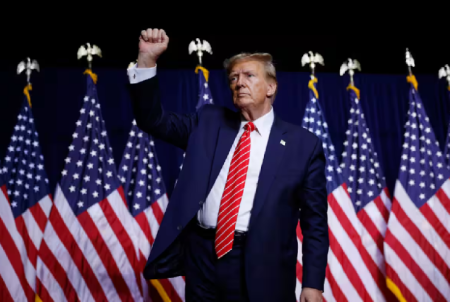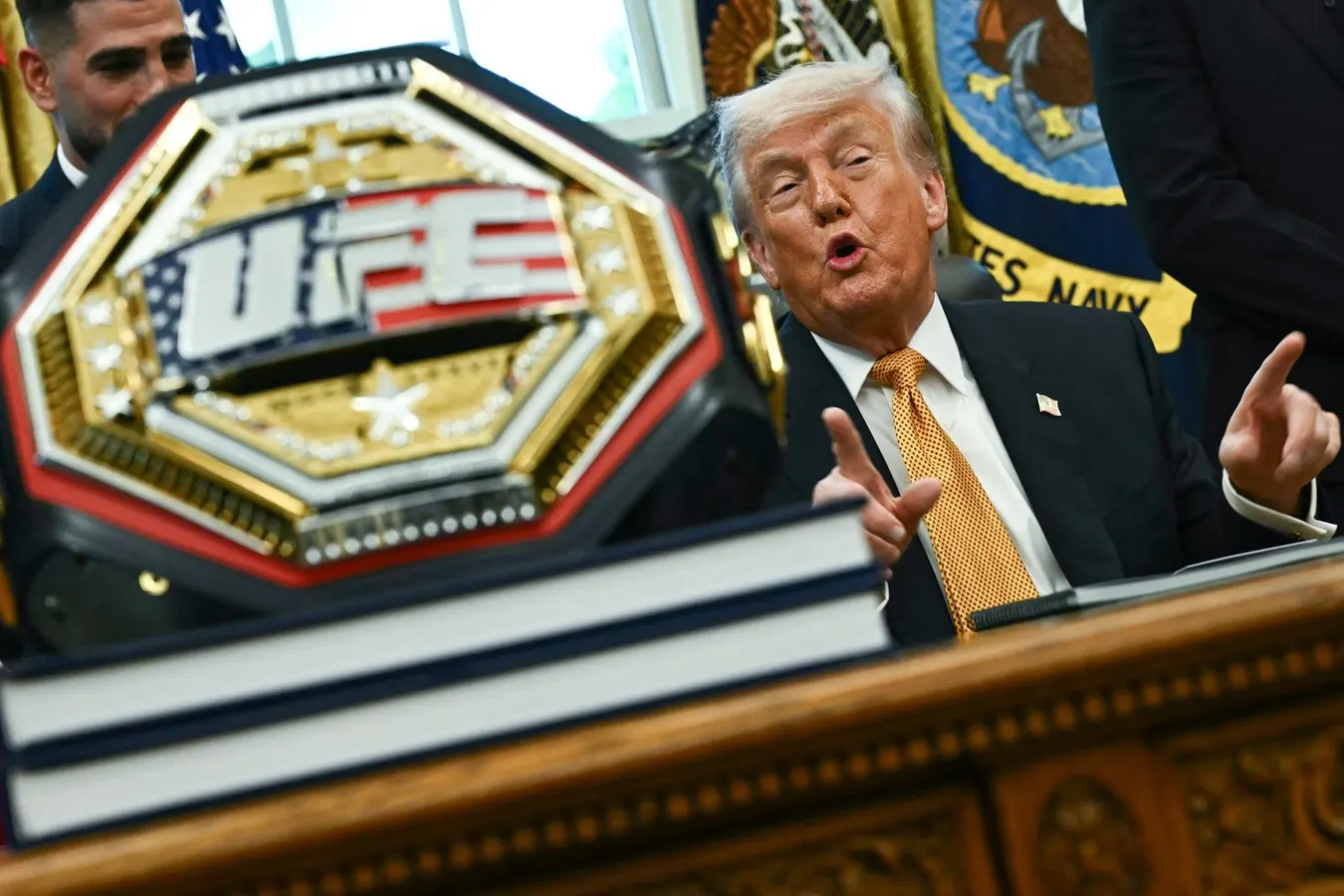
The South Lawn of the White House has historically served as a peaceful stage for diplomatic breakthroughs, solemn state arrivals, and quiet moments of presidential reflection, where the weight of global leadership is felt in every architectural detail. However, in an unprecedented fusion of political power, milestone birthday celebration, and high-impact sports entertainment, this storied expanse of executive green is currently being transformed into a high-octane battleground. “UFC Freedom 250,” scheduled for Sunday, June 14, is set to be the first-ever professional combat sports event held within the executive gates, timed deliberately to coincide with President Donald Trump’s 80th birthday. The sheer audacity of the spectacle is hard to overstate: in place of quiet rose gardens and polite press conferences, cranes and technicians are busy assembling a massive, custom-built 4,000-seat arena. At the heart of this temporary stadium will sit a full-sized, 87-foot UFC Octagon, flanked by colossal LED video screens and engulfed in a vibrant red, white, and blue staging design. Dangling above the ring will be a state-of-the-art overhead lighting rig ominously dubbed “The Claw,” ready to illuminate the combatants under the night sky. For Dana White, the long-time CEO of the UFC and a fierce, unwavering political ally of Trump, this endeavor is the ultimate passion project, a physical manifestation of a decades-long friendship packaged into a historic broadcasting event. The visual contrast of elite, sweat-drenched athletes trading heavy blows with the iconic neoclassical columns of the Executive Mansion looming in the immediate background promises to be one of the most striking, surreal, and deeply polarizing images in modern American cultural history, marking a dramatic departure from traditional statecraft, replacing quiet diplomacy with the raw, visceral energy of mixed martial arts, and drawing a sharp line in the sand between those who view it as a thrilling celebration of American populism and those who see it as a stark degradation of the nation’s most sacred political institution.
Inside this historical amphitheater, the athletic stakes are as high as the political drama surrounding it, forcing fighters into a surreal psychology where they must block out the distraction of their historic surroundings. The fight card is headlined by a lightweight title clash between the relentless Ilia Topuria and the notoriously explosive Justin Gaethje, a matchup guaranteed to deliver a grueling test of human endurance, strategy, and pure physical will. Adding to the gravity of the evening, Alex Pereira and Ciryl Gane are scheduled to square up in a high-stakes battle for the interim heavyweight title, ensuring that some of the most formidable and imposing athletes on Earth will be competing on the President’s very doorstep. Dana White has leveraged his immense Rolodex to curate an exceptionally star-studded, yet highly exclusive, invite list to witness this localized gladiatorial spectacle. High-profile personal invitations have been extended to cultural icons and Hollywood mainstays, including Tom Brady, Jared Leto, Jason Statham, Guy Ritchie, and Dwayne “The Rock” Johnson, who also serves as a prominent board member for the UFC’s parent company, TKO. However, the event has already experienced some notable Hollywood pushback; representatives for both beloved comedian Adam Sandler and television personality Mario Lopez have publicly confirmed they will not be attending, with Lopez’s team citing a direct scheduling conflict with his holiday filming commitments. For those who do make the prestigious cut, the seating chart represents a fascinating study in modern social stratification. Of the roughly 4,300 exclusive seats available on the South Lawn, the organizing committee has designated 1,200 tickets to active-duty military personnel, offering these service members a front-row view of the action as a gesture of patriotic gratitude. The remaining seats have been divided into highly coveted enclaves for administration officials, corporate sponsors, and close allies of the Trump family. For the ultra-wealthy, VIP packages priced at a staggering $1.5 million offer unprecedented access, including exclusive lawn seating, a private reception, and a pre-fight concert headlined by the Zac Brown Band, effectively turning a presidential birthday party into one of the most expensive and elite ticketed experiences in the history of live sports.
While the South Lawn plays host to the financial and political elite, the democratic spirit of the event is meant to spill over onto the Ellipse, the 52-acre public park located just south of the executive residence, where the public can participate in the madness. Here, far removed from the security cordons and million-dollar VIP tents, the UFC is organizing a massive, free fan festival designed to accommodate between 75,000 and 100,000 ordinary citizens. For these thousands of passionate fans, representing a vibrant cross-section of working-class America, the experience will be a communal pilgrimage to the heart of the nation’s capital, where they can watch the fights live on colossal, high-definition projection screens erected against the Washington Monument skyline. This massive public gathering represents a brilliant populist masterstroke, transforming what could have been a deeply exclusionary, closed-door gathering of elites into a carnivalesque celebration of the modern sports-entertainment era. The raw energy of thousands of chanting fans, sharing food, wearing patriotic gear, and roaring in unison, will echo across the National Mall, providing a thunderous soundtrack to the fights occurring just a thousand feet away. For those unable to journey to Washington, the entire event will be beamed directly into living rooms across the globe via Paramount+, starting at 8:00 p.m. Eastern Time, requiring only a standard monthly subscription to witness history unfold. This accessibility ensures that “UFC Freedom 250” is not merely a localized birthday party, but a global media event that democratizes the spectacle, allowing everyday viewers to participate in the sheer novelty of watching elite combat athletes fight on federal ground. By bridging the gap between the ultra-wealthy lawn guests and the grassroots public at the Ellipse, the UFC has constructed a multi-layered cultural moment that reflects the unique, populist branding that has defined both Dana White’s sporting empire and Donald Trump’s political career, turning the presidency itself into a massive, interactive civic theater.
Behind the scenes of this historic evening lies a massive financial gamble that highlights the dizzying, high-stakes economics of modern sports marketing. The sheer logistical complexity of building a temporary, world-class stadium on the President’s lawn is projected to cost the UFC around $60 million. According to Mark Shapiro, the president of TKO, this astronomical sum includes everything from constructing the complex arena infrastructure to compensating the elite fighters on the card. Dana White has been quick to emphasize that the UFC, rather than the American taxpayer, is entirely footing this massive production bill, noting that the company expects to absorb a net loss of approximately $30 million on the event. Yet, in the eyes of TKO leadership, this short-term financial hit is a small price to pay for what Shapiro calls “the greatest earned marketing tool of all time” and a genuinely “once-in-a-generation” promotional milestone. The strategic value of associating the UFC brand so intimately with the symbolic seat of global power is practically immeasurable, cementing the sport’s transition from a once-banned, underground spectacle into a mainstream pillar of American culture. The physical toll on the iconic grounds is also being meticulously addressed; the UFC has committed an additional $700,000 specifically to repair and replant the historic South Lawn grass, which will inevitably be pulverized by the heavy machinery, staging equipment, and thousands of trampling feet. This eye-popping landscape restoration budget serves as a literal metaphor for the entire event—a temporary, high-impact disruption of institutional history that can simply be patched over with corporate cash when the show is over, demonstrating how public spaces can be seamlessly leased, repurposed, and restored for the sake of monumental brand prestige, turning a national historic landmark into a temporary corporate billboard.
However, despite the UFC’s reassurances of financial self-sufficiency, the reality of hosting a massive sporting event in the heart of a highly fortified political zone means that American taxpayers will still likely shoulder a significant financial burden. While corporate funds will pay for the cage and the fighters, the immense demand for security, crowd control, traffic management, and regional law enforcement will ultimately fall upon public agencies. The Department of Homeland Security has officially designated “UFC Freedom 250” as a “SEAR 1” event, the absolute highest national security classification reserved for high-threat public gatherings of global significance, placing the White House fight card on the same administrative level as the Super Bowl, the political conventions, or the presidential inauguration itself. A security operation of this magnitude requires an extraordinary mobilization of federal resources; for comparison, local municipalities have historically spent upwards of $6.4 million in policing services to secure recent Super Bowls. When President Trump previously traveled to major events like the 2025 Super Bowl in New Orleans, federal investigations revealed that the security footprint alone cost taxpayers millions of dollars to cover specialized Secret Service logistics, tactical transportation, and the deployment of nearly 700 Homeland Security personnel. At a time when public budgets are tightly scrutinized, the decision to allocate massive amounts of federal law enforcement coordination, tactical planning, and emergency response capabilities to a private birthday celebration and sporting match raises pressing questions about the division of public and private interests. The complex web of local police departments, federal agencies, and secret service details required to keep the peace at both the White House and the surrounding Ellipse park underscores the immense hidden costs of turning a secure executive residence into a global entertainment hub, proving that even a “free” corporate event carries a substantial public price tag.
This intersection of politics, violence, and commercial spectacle has ignited a fierce, highly polarized debate about the changing nature of the American presidency and the values it represents to the rest of the world. Critics have wasted no time in branding the entire affair a tone-deaf and undignified stunt, arguing that staging a brutal, multi-million-dollar cage match on the executive lawn is deeply inappropriate—particularly as the nation navigates the severe geopolitical and economic impacts of the ongoing war with Iran. Even prominent industry figures like UFC commentator Joe Rogan, who has recently distanced himself politically from the Trump administration, have expressed deep reservations, calling the event a “gimmick” and highlighting the physical hazards of an outdoor arena, such as heat, rain, and insects, that could compromise the safety of the fighters. Politically, the event has become a lightning rod; California Governor Gavin Newsom pointedly and sarcastically thanked the administration for focusing on the “priorities of all Americans,” while Democratic Party Chair Ken Martin accused Trump of prioritizing his “golden ballroom” and private arenas over essential public services like healthcare. John Dichtl, the president of the American Association for State and Local History, sharply questioned the event’s billing as a celebration of America’s 250th anniversary, asking what a cage fight could possibly have to do with the nation’s historical greatness. In response to this wave of condemnation, Dana White has remained characteristically defiant, arguing that the UFC refused to halt its plans or roll over in the face of global tragedies, championing the fight as a celebration of resilient American spirit. Yet, as the Octagon rises on the south lawn, the fundamental question posed by historians and citizens alike remains: does this display represent the ultimate triumph of populist accessibility and rugged American individualism, or does it signal a worrying shift toward a superficial, distraction-heavy political culture that values entertainment over the solemn, democratic duties of the office?