



The New Counter-Intelligence Front: How Western Agencies Are Confronting a Scaled-Up Russian Shadow War in Europe
The Shadow War at Bletchley Park: GCHQ Warns of Russia’s Expanding Hybrid Front
At Bletchley Park, the historic Buckinghamshire estate where Allied codebreakers once painstakingly shattered the German Enigma cipher to shift the course of Western history, the modern successors of those wartime cryptanalysts are confronting an entirely new, highly sophisticated, and invisible digital battlefield. Speaking from this iconic cradle of global intelligence, Anne Keast-Butler, the director of Britain’s high-tech electronic surveillance and cybersecurity agency GCHQ, delivered a chilling annual address outlining a profound and dangerous shift in the Kremlin’s strategic calculus. As Russia’s conventional military apparatus suffers catastrophic casualties and remains largely locked in a grinding, attritional stalemate on the battlefields of Ukraine, President Vladimir V. Putin has pivoted toward an aggressive, non-linear campaign aimed at destabilizing the wider European continent. Keast-Butler warned with absolute clarity that Moscow is scaling up its daily hybrid warfare activity against both the United Kingdom and its European neighbors, deploying its vast intelligence apparatus to orchestrate reckless acts of sabotage, widespread cyber assaults, disinformation campaigns, and even targeted assassination attempts. Far from a localized border dispute, the Kremlin is now actively waging a coordinated, deniable shadow war directly designed to degrade European security, compromise critical national infrastructure, and break the West’s collective political will to assist Kyiv in its fifth agonizing year of survival.
From GPS Jamming to Rail Sabotage: Mapping the Kremlin’s Gray-Zone Tactics
The tangible manifestations of this asymmetric campaign are no longer theoretical or confined to the dark corners of the deep web; they represent an active, physical menace stretching across the transport hubs, energy grids, and communication systems of sovereign European states. In Poland, which serves as the logistical gateway for Western military aid flowing to the front lines, domestic security services recently dismantled a highly coordinated cell of operatives directed by Russia’s military intelligence agency, the GRU, who were planning to deploy drone swarms and plant explosives along vital cargo rail networks. Simultaneously, in the Baltic region, commercial aviation has been repeatedly thrown into chaos by powerful electronic warfare systems that jam civilian GPS and navigation instruments over Sweden, recklessly placing civilian aircraft at risk to demonstrate Moscow’s electronic dominance. Further north, Norwegian authorities continue to investigate sophisticated state-sponsored cyber intrusions targeting the industrial software of sensitive water management systems and hydroelectric dams, while postal networks and logistics hubs across Western Europe have been placed on high alert following the discovery of incendiary devices hidden inside air cargo consignments intended to detonate mid-flight. Underscoring the human cost of these operations, Lithuanian security forces, working in close coordination with European counterparts, recently carried out the high-profile arrests of nine individuals accused of plotting physical acts of sabotage and targeted assassinations under the direct instruction of Russian intelligence, demonstrating that the boundaries of traditional statecraft have been completely discarded in favor of rogue, high-risk operations to intimidate the Western home front.
A Continent Divided or United? NATO’s Geopolitical Resilience Amid Interlocking Global Crises
This dramatic surge in hybrid aggression arrives at an exceptionally volatile and dangerous geopolitical juncture, as Western allies navigate a series of overlapping international crises that threaten to strain the post-Cold War security architecture to its breaking point. Not only has the conventional war of attrition in Ukraine dragged on into its fifth grueling year, draining Western military stockpiles and testing the industrial resilience of democratic states, but escalating commercial and kinetic conflicts across the Middle East continue to inject deep volatility into global markets and disrupt critical maritime shipping lanes. Compounding these severe structural challenges is the persistent political anxiety within the NATO alliance itself, where the potential return of Donald J. Trump to the United States presidency continues to prompt intense debate over the reliability of America’s nuclear umbrella and its long-term commitment to collective defense under Article 5. Yet, despite these compounding vulnerabilities and Vladimir Putin’s explicit strategic desire to fragment Western cohesion, the Russian leader’s efforts to sowing permanent political discord have largely yielded the opposite effect. Rather than capitulating, European capitals have responded by aggressively bolstering their internal defense budgets, reinforcing the physical protection of vulnerable subsea pipelines and digital telecommunication cables, and establishing unprecedented levels of real-time intelligence sharing that prove that while Moscow may attempt to escalate its terror campaigns abroad, its forces are ultimately struggling to hold ground on the battlefield.
The Anglo-Polish Alliance: Hardening the Frontier Against External Aggression
In a direct and historic response to this heightened threat landscape, the United Kingdom and Poland have moved swiftly to solidify their security partnership by signing a landmark bilateral defense and security treaty designed to harden Europe’s heavily militarized eastern flank. Polish Prime Minister Donald Tusk traveled to London to finalize the comprehensive security pact alongside British Prime Minister Keir Starmer, marking the most significant and structurally deep defense agreement between the two nations in a generation. Poland, which shares a sensitive border with the highly armed Russian enclave of Kaliningrad and the Moscow-dependent dictatorship of Belarus, has stood as the vital geographic pivot for NATO’s eastern defense posture, making its territory a prime target for continuous Russian surveillance, cyber provocations, and state-backed migration crises. In a statement underscoring the strategic necessity of the new treaty, Prime Minister Starmer emphasized that the pact represents a massive step forward in collective defense, explicitly engineered to counter modern, asymmetrical threats that, while operating just beneath the surface of traditional military visibility, pose a profound and existential risk to sovereign national infrastructure. By fostering deep, institutionalized integration between British and Polish intelligence networks, conducting specialized joint military maneuvers tailored for hybrid defense, and co-developing next-generation cybersecurity platforms, both nations are actively constructing a robust, resilient shield against the multi-dimensional threats emanating from the East.
Testing the Threshold of War: MI6 and the Multi-Dimensional Russian Threat
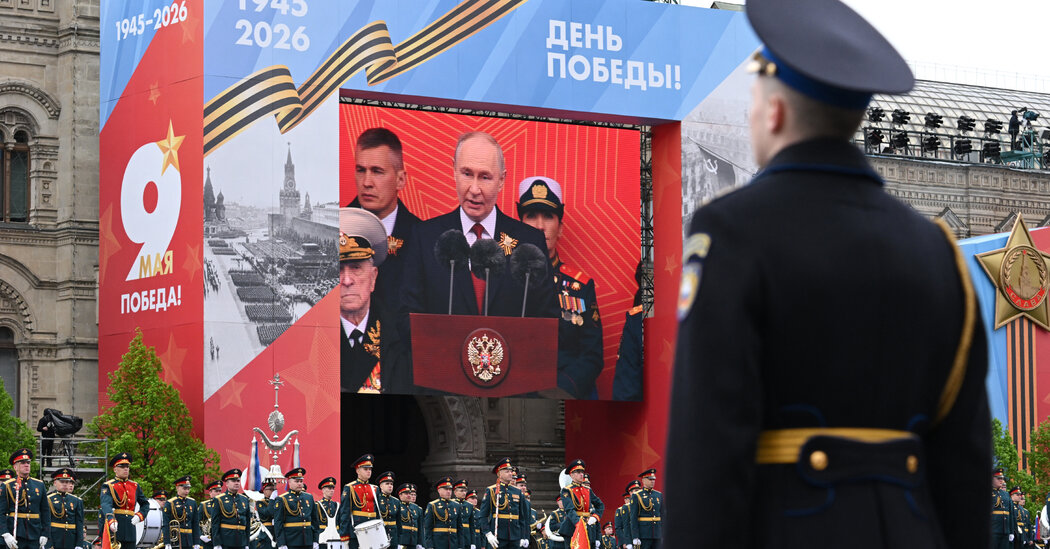
The sobering warnings emanating from GCHQ’s leadership are mirrored with equal intensity across the broader British intelligence landscape, aligning closely with recent strategic assessments delivered by Blaise Metreweli, the chief of the Secret Intelligence Service, popularly known as MI6. While Keast-Butler’s GCHQ specializes in signals intelligence—monitoring, intercepting, and analyzing millions of digital communications daily to safeguard the state—Ms. Metreweli’s MI6 operates in the human sphere, orchestrating covert operations and maintaining secret networks of agents deep inside hostile regimes to unmask the true strategic intentions of adversaries. In her public warnings, Ms. Metreweli has repeatedly detailed how a highly revisionist, expansionist, and aggressive Russia is continuously testing the Western alliance in the “gray zone,” executing dangerous, deniable intelligence operations that intentionally hover just below the formal threshold of kinetic warfare to avoid triggering a unified, full-scale military counter-response from NATO. This strategy allows the Kremlin to exploit the open, legal, and democratic frameworks of Western societies to inflict physical and systemic damage, a confrontational posture that President Putin proudly showcased during Moscow’s annual Victory Day parade. Standing before thousands of marching troops and advanced military hardware in Red Square, the Russian leader once again framed his brutal invasion of Ukraine as a sanctified, defensive crusade against an aggressive, imperialistic NATO coalition, signaling to the world that Russia views this shadow conflict as an enduring, historical struggle to dismantle Western democratic influence globally.
The Dragon and the Bear: Emerging Tech Frontiers and the Dual Threat of China-Russia Alignment
However, even as British intelligence works tirelessly to contain and neutralize the immediate, chaotic physical threats posed by Russia, they are simultaneously sounding the alarm on a far more technologically sophisticated, long-term challenge: the relentless rise of the People’s Republic of China as a dominant science and technology superpower. In her address at Bletchley Park, Anne Keast-Butler emphasized that Beijing possesses incredibly advanced, highly disciplined cyber, intelligence, and military institutions that are capable of executing highly targeted, global cyber espionage campaigns on an unprecedented scale. This massive capability was starkly demonstrated by “Salt Typhoon,” a sweeping, state-sponsored Chinese cyber campaign that successfully penetrated major telecommunications networks across more than eighty countries, mapping critical communications links and highlighting a systemic level of technological infiltration that poses a grave, enduring risk to global digital security. The situation is further aggravated by the deepening geopolitical, economic, and operational alignment between Moscow and Beijing, creating a powerful authoritarian axis designed to challenge Western norms and establish a parallel international order dominated by autocratic power. Concluding her landmark speech, the GCHQ director observed that the international community is standing at a critical historical inflection point characterized by radical geopolitical uncertainty and hyper-accelerated technological change, demanding that the United Kingdom and its democratic allies rapidly coordinate their cyber defenses, protect sensitive technological supply chains, and preserve their fading technological superiority before it is permanently eroded.