


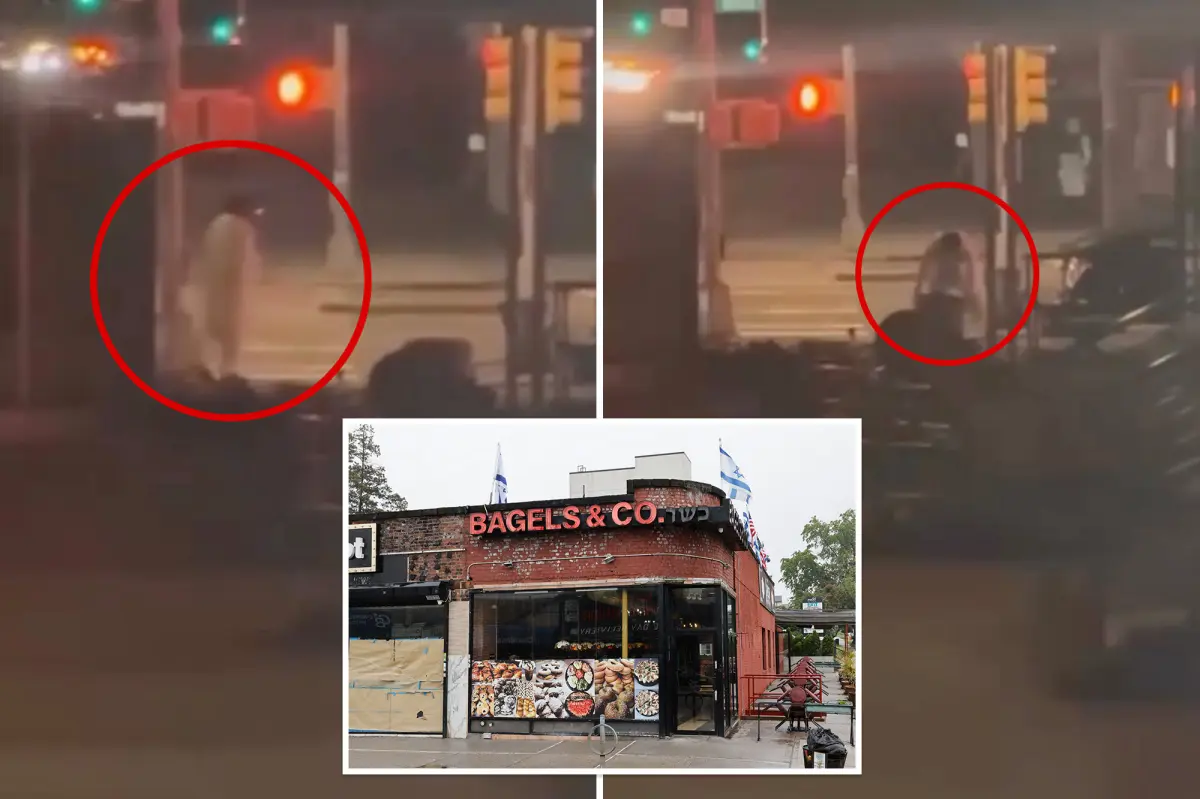
In the quiet, early morning hours in Jamaica Estates, Queens, a neighborhood known for its diverse communities, cultural richness, and family-oriented tree-lined streets, a sudden act of destruction shattered the pre-dawn peace. Around 1:00 a.m. on a Friday, an unidentified individual targeted Bagels & Company, a popular Israeli-owned establishment that serves as a staple gathering spot and culinary anchor for the local neighborhood. Security footage captured the individual systematically dismantling the shop’s outdoor seating area over a span of nearly five minutes. Potted plants, heavy chairs, and dining tables were repeatedly hurled against the storefront, creating a scene of chaotic vandalism that left the immediate area littered with debris and shattered structures. While the physical damage to the property was tangible, the psychological impact on the surrounding community was far more profound and enduring. Establishments like local bakeries and cafes are often the heartbeat of a neighborhood—places where people meet, share conversations, and build a sense of shared life. When such a space is subjected to targeted violence, it disrupts the shared sense of safety and predictability that binds a community together, transforming a familiar avenue into a symbol of vulnerability and concern. The local authorities, recognizing the potential implications of the act, quickly launched an investigation, treating the incident as a potential hate crime in a city already grappling with heightened social tensions and collective anxiety.
The response from local leaders was swift and underscored a growing frustration with what many perceive as a systemic threat to their daily lives and personal security. Moshe Spern, a dedicated high school teacher and the president of the United Jewish Teachers organization, expressed deep concern over the event, describing it as part of an ongoing, unsettling trend of harassment targeting Jewish residents and businesses in Queens. Spern emphasized that despite public rallies, community forums, and numerous official statements calling for peace and mutual respect, actual security on the ground remains a pressing issue that requires immediate attention from city leadership. He called directly upon city officials and local law enforcement, specifically urging the deployment of increased NYPD officers and security resources to safeguard vulnerable community spaces, including synagogues, schools, and local businesses. For educators and community organizers like Spern, the priority is not merely about repair and clean-up, but about reclaiming the fundamental right of every citizen to live, work, and learn without fear of intimidation. His advocacy highlights the critical role that local leadership plays in giving voice to the anxieties of everyday citizens, demanding that those in power take concrete, proactive measures to ensure that public spaces remain welcoming and safe for all residents, regardless of their cultural or religious background.
Behind the headlines and security footage lie the deeply personal stories of the individuals who call the neighborhood home, such as an 18-year-old Jewish student who frequently walks the streets of Jamaica Estates. Speaking on the condition of anonymity to protect her privacy in a tense environment, she shared a poignant perspective that reveals the emotional toll of persistent societal tension on the younger generation. Instead of reacting with shock, her immediate response was a somber sense of resignation—a feeling of “here we go again” that speaks volumes about how normalized hostility has become in her daily reality. She described watching the footage of a person venting intense anger on a neighborhood storefront, recognizing the fragility of her own peace of mind and the unpredictable nature of public spaces. For a young person starting their adult life, the simple freedom of walking through one’s own neighborhood should be an unquestioned assumption; instead, she expressed a stark vulnerability, admitting that she no longer feels safe walking alone in the area. This personal reflection humanizes the statistical realities of urban crime, demonstrating that the true cost of vandalism is often paid in the currency of trust, freedom of movement, and the quiet comfort of feeling secure in the place one calls home.
To fully understand the gravity of the incident in Queens, it must be viewed within the larger context of global events that frequently project their shadows onto the local communities of New York City. The ongoing geopolitical conflicts in the Middle East have historically acted as catalysts for increased friction thousands of miles away, particularly in highly diverse urban centers where various diaspora populations live side by side in close proximity. When international disputes escalate, local neighborhoods often experience a parallel rise in verbal disputes, vandalism, and general mistrust, as global grievances are mapped onto local businesses, religious centers, and neighbors. This dynamic presents a complex challenge for municipal authorities, educators, and community organizers, who must work tirelessly to decouple global political events from the everyday lives of local citizens. In a city built on the contributions of countless immigrant and cultural groups, maintaining social cohesion requires a continuous effort to foster empathy, encourage open dialogue, and prevent international tragedies from eroding the mutual respect that enables New York’s diverse populations to coexist constructively.
This complex social landscape is further illuminated by the empirical data tracked by the New York City Police Department, which monitors hate crime trends across the five boroughs to guide public safety strategies and resource allocation. Earlier in the year, statistical records pointed to a dramatic escalation, with antisemitic incidents rising substantially compared to previous years and representing a significant portion of all recorded bias incidents in the city. However, subsequent monthly reports have shown fluctuating trends, including notable decreases in certain intervals, highlighting the unpredictable nature of community relations and the impact of active policing. These statistical shifts represent more than just numbers on a spreadsheet; they reflect the shifting tides of anxiety and relief experienced by real people who run businesses, attend places of worship, and raise families in the city. By analyzing these trends, criminologists, policymakers, and community advocates hope to better understand the root causes of bias-motivated behavior, develop more effective intervention strategies, and ensure that law enforcement resources are directed where they are most urgently needed to prevent bias and protect citizens.
In the aftermath of the vandalism at Bagels & Company, the path forward for the Jamaica Estates community is defined by a collective determination to rebuild, support one another, and foster resilience in the face of adversity. While physical storefronts can be repaired and debris cleared, the process of healing the social fabric of a community requires deliberate effort, dialogue, and solidarity across cultural lines. Local business owners, civic organizations, and residents must work hand-in-hand with municipal leaders to reinforce the message that violence and intimidation have no place in their shared neighborhood. Rebuilding a sense of safety involves not only increased security and police patrols but also the daily, quiet acts of neighborliness—patronizing affected businesses, expressing mutual support, and standing together against division. Through these collaborative actions, the diverse residents of Queens can demonstrate that their commitment to peaceful coexistence is far stronger than any single act of hostility, ultimately turning a moment of local distress into an opportunity for renewed unity, cooperation, and lasting peace.