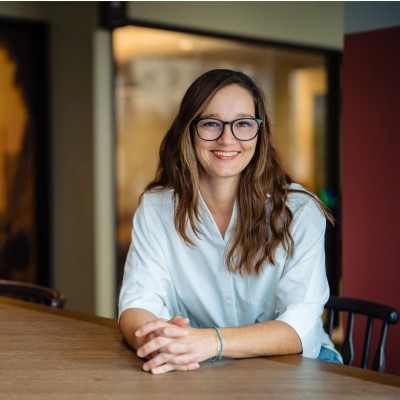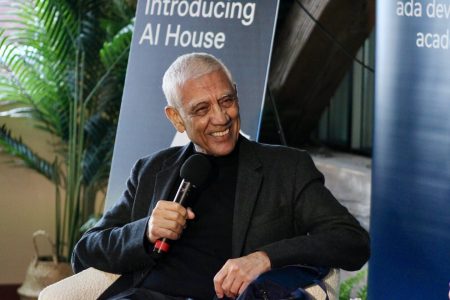




The true scale of a technology ecosystem is measured not merely by its stock valuations or computing power, but by the gravity of the people who build it. No story from the past week illustrates this truth more profoundly than the collective wave of grief, gratitude, and remembrance following the passing of S. “Soma” Somasegar. For decades, Somasegar was a towering pillar of the Pacific Northwest tech corridor, a leader who spent nearly twenty-seven years shaping Microsoft’s Developer Division into a global powerhouse before transitioning to venture capital as a managing director at Madrona Venture Group in 2015. Yet, as friends, colleagues, and startup founders voiced their memories, the conversation bypassed corporate statistics entirely, focusing instead on his extraordinary character. Soma was remembered uniformly as a patient listener, a steadying anchor in quiet storms, and a remarkably humble mentor who routinely made time for early-stage entrepreneurs and junior engineers. In an industry increasingly defined by frantic competition and algorithmic noise, Soma’s legacy serves as a vital reminder that human kindness, mentorship, and quiet generosity are the ultimate foundational blocks of any lasting innovation hub. His life’s work was proof that when you invest sincerely in people, the technology they build becomes infinitely more resilient.
This theme of legacy and transition echoes through the executive corridors of the region’s defining titans, where historical milestones are meeting the relentless demands of the artificial intelligence frontier. At Microsoft, Yusuf Mehdi—a widely recognized face of the company’s consumer and product strategy—has announced that the upcoming year will be his “final season” before retiring. Mehdi’s astonishing thirty-five-year journey at Microsoft serves as a living history of personal computing, stretching from the foundational days of Windows 3.1 all the way to the contemporary rollout of AI-driven Copilot tools. His measured departure represents the graceful close of an era, but as one pioneer prepares to step away, another returns to navigate the storm. Across town, Amazon Web Services has welcomed back Dr. Matt Wood, the AI and machine learning visionary who departed the retail giant in 2024 after a highly influential fourteen-year run. Wood’s return to AWS in the newly minted role of Chief AI and Technology Officer underscores the frantic, gravitational pull of the modern generative AI arms race, where legacy cloud providers are marshaling their most brilliant veterans to secure supremacy in a rapidly shifting paradigm. Taken together, Mehdi and Wood illustrate the dual cycles of tech leadership: the long-term stewardship that builds empires, and the strategic homecomings required to keep those empires competitive when technological tectonic plates begin to shift.
At the cutting edge where software collides with physical reality, the definitions of what artificial intelligence can actually achieve are being rewritten in real-time. During a revealing interview on CNBC, Amazon founder Jeff Bezos offered his most detailed public description yet of Project Prometheus, a highly confidential venture that he characterized not as a simple chatbot or digital assistant, but as an “artificial general engineer.” Bezos’s vision for Prometheus is to build next-generation design systems capable of conceptualizing, optimizing, and physically engineering real-world hardware, bridging the chasm between digital intelligence and mechanical physics. Yet, while high-concept engineering models aim to revolutionize the industrial future, local Seattle startup Filium is proving that practical material engineering can quietly transform our daily, physical lives right now. Founded in 2015 by apparel industry veterans Raj Shah and Akhil Shah, Filium has developed a proprietary clean technology that allows common, natural fabrics like cotton and wool to inherently repel perspiration, liquid stains, and unwanted odors without sacrificing their natural softness or breathability. While Bezos looks to the heavens with AI-designed industrial hardware, the Shah brothers demonstrate that the future of engineering is equally rooted in the earthly, tactile science of the threads we wear, highlighting a shared human drive to make our physical existence cleaner, more efficient, and more elegantly designed.
Nowhere is this physical ambition more evident than in the dramatic, high-stakes orbital expansion taking place right in Seattle’s backyard, as the region solidifies its status as the premier shipyard of the commercial space age. In a recently made public S-1 filing, Elon Musk’s SpaceX disclosed that its manufacturing facility in Redmond, Washington, is churning out an astonishing seventy Starlink satellites per week. This hard production metric reveals a highly optimized, assembly-line approach to aerospace manufacturing that was once thought impossible, turning what used to be bespoke scientific instruments into a highly standardized utility. This logistical triumph serves as a direct challenge to Amazon’s own orbital network ambitions, tracing back to the early strategies initiated by Jeff Bezos to establish a robust space-based connectivity platform. What started as the highly secretive Project Kuiper has evolved and expanded into Amazon Leo (Low Earth Orbit), representing a massive infrastructure campaign designed to blanket the globe in reliable, high-speed broadband internet. This industrial rivalry between SpaceX and Amazon is no longer just a boardroom competition; it is a monumental struggle to build the next layer of global communications infrastructure, turning the skies of the Pacific Northwest into the launching pad for humanity’s next great digital connectivity network.
Yet, this rapid acceleration of capital, infrastructure, and influence is forcing a critical reckoning within the cultural and political soul of Seattle itself. This friction is highlighted by the sudden departure of Dr. Lynda Stuart as the inaugural CEO of the Fund for Science and Technology—the philanthropic powerhouse created under the precise instructions of the late Microsoft co-founder and visionary Paul Allen. Dr. Stuart’s exit signals a transition period for philanthropic scientific funding, which has long stepped in to support high-risk, curiosity-driven research that commercial enterprises might otherwise ignore. At the same time, GeekWire co-founder John Cook has published a poignant, cautionary analysis warning that Seattle’s increasingly hostile national business reputation threatens to erode its historic standing as a premier innovation hub. Writing exactly thirty years after Newsweek famously featured Seattle on its cover as America’s ultimate economic and cultural boomtown, Cook argues that rising civic divisiveness, regulatory resistance, and an anti-business cultural shift risk alienating the very founders, dreamers, and investors who build generational companies. It is a sobering reminder that a thriving tech ecosystem requires more than just massive computing clusters and venture capital; it demands a local community, a supportive civic climate, and a shared cultural spirit that welcomes disruption and encourages risk-taking.
When we synthesize the events of the past week, we see a tech community navigating a profound period of transformation—one that is trying to balance its gargantuan, industrial-scale future with its deeply human past. We see an industry that is simultaneously manufacturing dozens of satellites a week in Redmond, teaching AI to design physical machines, and weaving eco-friendly stain resistance into everyday fabrics, while also grappling with the loss of legendary leaders like Soma Somasegar and long-term pillars like Yusuf Mehdi. These stories remind us that technology is never just a cold calculation of product rollouts and quarterly earnings; it is an ongoing human narrative written by individuals who dare to ask “what if.” As Seattle faces critical questions about its regulatory landscape, national identity, and legacy of curiosity-driven science, the path forward lies in remembering the values that built this community in the first place. Whether designing a satellite constellations or mentoring an aspiring developer, the ultimate engine of progress remains the same: a persistent, shared commitment to building a future that is not just faster and more automated, but fundamentally more connected, more humane, and more resilient.