



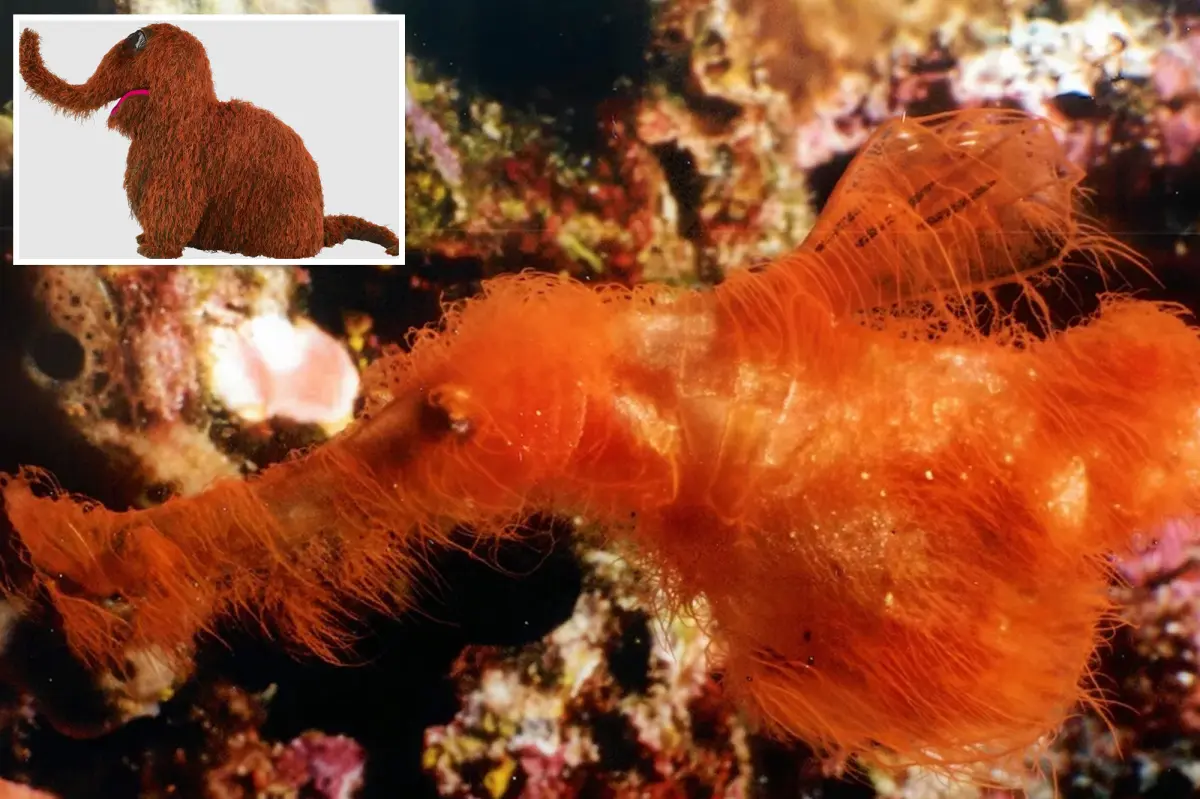
Imagine stumbling upon a creature that looks like it wandered straight out of a children’s television show into the depths of the ocean—something whimsical, unexpected, and utterly captivating. That’s exactly what happened when scientists discovered a new species of ghost pipefish that bears an uncanny resemblance to Mr. Snuffleupagus, everyone’s favorite shaggy elephant from Sesame Street.Officially dubbed Solenostomus snuffleupagus, this bizarre little fish isn’t just a quirky find; it’s a testament to how nature can mirror human imagination. With its elongated snout and tufts of orange filaments that flutter like unruly hair, the fish embodies that charming, slightly goofy charm of Snuffy. But beyond the cute factor, this discovery highlights the wonders of marine biodiversity and how scientific exploration can intersect with pop culture in the most delightful ways. Dr. David Harasati, the lead researcher from Australia’s Port Stephens Fisheries Institute, was the one who first glimpsed it, and his excitement bubbled over as he realized this wasn’t just any fish—it could be a brand-new species. Imagine the thrill of being in the right place at the right time, diving into the vibrant coral reefs of Papua New Guinea, where the water teems with life and secrets. Harasati had spent years building his career in marine science, specializing in elusive creatures, but nothing quite prepared him for this encounter. It was during a routine diving expedition in 2001, as he navigated through a labyrinth of coral formations, that he spotted something peculiar. Amid the usual parade of colorful reef dwellers—vibrant parrotfish, darting wrasses, and serene angelfish—there it was: a slender, translucent figure with an improbable snout. Its body was slender, almost ethereal, like a ghost among the seafloor shadows, and those wild orange tufts protruding from its head gave it a fuzzy, endearing quality. Harasati, always armed with his camera underwater, snapped a few quick photos, feeling a rush of curiosity. “It left me perplexed,” he later reflected, the memory still vivid in his mind even years later. The fish’s features were so distinctive—a long, tubular nose for probing into crevices, a pale, camouflage skin that blended with the surroundings, and those floating filaments that mimicked hair or appendages. Back on dry land, Harasati poured over every fish identification book in his collection, cross-referencing illustrations and descriptions. But nothing matched. No known species had those specific traits: the protracted snout, the subdermal pigmentation that made it look like a living drawing. “I flipped through page after page, my heart racing,” he recalled in a statement shared with eager media outlets. “Nothing fit, and that’s when it hit me—we might be onto something entirely new to science.” That realization was a career-defining moment for Harasati. In marine biology, discoveries like this don’t come every day; they require patience, keen observation, and a bit of luck amidst the vast ocean. He shared the photos with colleagues, hoping for confirmation, but doubts lingered. Was it truly novel, or an unknown variation of another species? The photos alone weren’t enough—he needed physical specimens for proper examination. So, he waited, but the image of that ghostly fish stayed with him, fueling dreams of future expeditions. It was a personal victory already, a reminder that even seasoned researchers can feel like wide-eyed explorers again. Nearly two decades slipped by, a blink in the grand timescale of evolutionary biology, but for Harasati, those years were filled with anticipation. He continued his work, publishing papers and studying other pipefish species, but that 2001 sighting nagged at him like an unsolved puzzle. Then, in 2020, a breakthrough arrived in the form of a tip from fish enthusiasts in Cairns, northern Australia—a sighting of a similar creature. This was the chance he’d been waiting for. Teaming up with fellow researcher Grant Short, Harasati embarked on a new adventure, determined not to let this opportunity slip away. Cairns, with its lush, subtropical coastlines and bustling dive sites, offered the perfect hunting ground. The team donned their gear and plunged into the waters, scouring reefs near the Great Barrier Reef’s outskirts. It was meticulous work: peering into nooks and crannies, net in hand, hoping for a glimpse. Days turned to weeks, with each dive bringing fresh motivation. The ocean is vast and unpredictable—currents could hide creatures, and weather could complicate plans—but Harasati’s resolve was unwavering. Finally, after persistent searching, they spotted them: a pair of these enigmatic fish, male and female, darting cautiously among the corals. With gentle expertise, they captured the specimens, ensuring their safety for study. Holding the delicate creatures in his hands back at the lab, Harasati felt a surge of triumph. “Almost 20 years later, here we are,” he thought, marveling at how resilient these pipefish had been, evading human eyes for so long. Grant Short, his partner in this quest, shared the elation; it was like reuniting with old friends you’d only seen in photos. The fish were small, about the size of a pencil, with intricate details that up close revealed their ghostly nature—translucent bodies allowing glimpses of internal organs, spines for protection, and that unmistakable snout for nasal exploration. Examining them under magnification, the researchers cataloged features: pectoral fins shaped like fancy wings for maneuvering, a dorsal fin for propulsion, and those vibrant orange filaments, which turned out to be sensory appendages. It wasn’t just physical; behaviors mattered too—their secretive, pipefish way of life, hiding in coral crevices to ambush tiny prey. The 2020 encounter transformed conjecture into concrete evidence, bridging the gap between a distant memory and tangible discovery. The ghost pipefish had been real all along, thriving in Australia’s waters. This chapter in Harasati’s career underscored the importance of persistence in science. Marine ecosystems are fragile, and documenting such species helps conservation efforts, ensuring these overlooked wonders don’t vanish unnoticed. For the researchers, it was more than a job; it was a personal journey of wonder, reminding them why they chose this path—to illuminate the hidden corners of our world.
With the specimens secured, the real work began: rigorous scientific description to introduce Solenostomus snuffleupagus to the world. Back in the lab, Harasati and Short subjected the fish to a battery of analyses, from genetic sequencing to morphological dissections. The male and female pair offered a complete picture—comparing sexes revealed subtle differences, like slight variations in filament length or body coloration. They measured everything meticulously: the length of the snout, the arrangement of fins, the texture of the skin. Underwater footage helped observe their natural behaviors, like predatory darts and camouflaged stillness. Collaborating with ichthyologists and taxonomists, they compiled data for the scientific paper, drawing comparisons to other pipefish species within the Solenostomus genus. This wasn’t hasty work; it took months to ensure accuracy, referencing historical records and ruling out misidentifications. Genetic tests confirmed its uniqueness—distinct DNA markers setting it apart from cousins like the common harlequin ghost pipefish. The name itself, Solenostomus snuffleupagus, pays homage to its traits: “Solenostomus” from Greek roots meaning “tube snout,” and “snuffleupagus,” the evocative nod to the children’s icon. When the paper finally appeared in the journal Fish Biology, it was a milestone. Published amid the world’s chaos in 2021, it highlighted biodiversity in remote reef zones. Harasati’s team felt a deep sense of fulfillment; their “perplexed” fish from 2001 had evolved into a documented species, open for study by future generations. The description detailed how these fish feed on tiny crustaceans, reproduce via oviparous methods where males carry eggs on brood pouches, and inhabit shallow, coral-rich habitats. It was exhaustive, weaving together biology, ecology, and even conservation notes, warning of threats like habitat destruction from climate change. For Harasati, poring over the specimens was introspective—he pondered the pipefish’s quiet existence, so different from human bustle, yet essential to ecosystem balance. This process humanized science for him; each measurement carried the weight of discovery, and each observation sparked questions about life’s vast diversity. Sharing findings with peers ignited discussions, and the fish became a symbol of maritime mystery solved. In a broader sense, documenting such creatures reinforces why exploration matters—each new species enriches our understanding of evolution, offering clues to adaptation in increasingly stressed oceans. The publication wasn’t just academic; it was a celebration, a way to share the joy of stumbling upon the unknown. Harasati’s career, marked by this find, inspired young researchers, proving that curiosity, fueled by patience, can lead to extraordinary revelations.
The most heartwarming chapter in this story unfolded last year, when Harasati and Short approached Sesame Workshop with an audacious request. Naming a new species is prestigious, but this name carried a layer of whimsy—they wanted to honor Mr. Snuffleupagus, the shy, yellow, woolly mammoth-like character from Sesame Street. It was a playful idea born from the fish’s appearance: that long snout resembling a trunk, the orange filaments mimicking fur. Contacting the nonprofit behind the beloved show, they pitched it gently, hopeful but prepared for rejection. To their delight, the response was enthusiastic approval. Sesame Workshop, famous for educational content that sparks children’s imaginations, embraced the connection. “Connecting science with imagination and discovery is what ‘Sesame Street’ has always been about,” said Dr. Rosemarie Truglio, the senior vice president of global education there. It was more than permission; it was partnership. The workshop shared the news, weaving it into their narrative of learning through fun. For Harasati, this tie-in was personal—he’d grown up with Sesame Street, just like many, watching Big Bird and Snuffy teach lessons about friendship and bravery. Giving the fish this name bridged his childhood nostalgia with adult pursuits, making science feel accessible. The announcement sparked joy worldwide; social media buzzed with memes of the “Snuffleupagus fish” alongside character comparisons. It educated kids about marine life subtly, turning a technical discovery into a storybook tale. This collaboration highlighted how pop culture can amplify science, attracting interest from audiences who might otherwise overlook biology. For researchers, it was validation that their work resonates beyond labs. The fish, now forever linked to the show, symbolized unity between realms of wonder. Harasati’s team even imagined future outreach, perhaps guest spots or educational episodes. This naming wasn’t frivolous; it fostered curiosity, encouraging families to explore oceans through games and talks. In a time when science faces skepticism, such alliances build trust. The “Snuffleupagus fish” became a beacon, showing how discovery can be delightful. Dr. Truglio’s words echoed this sentiment, emphasizing the show’s legacy in nurturing inquisitive minds. For Harasati, it capped his journey perfectly—a perplexed dive leading to a name that rings with innocence. This element added warmth to the discovery, transforming a biological asset into a cultural gem.
Reflecting on the entire saga, from that initial 2001 dive to the 2021 publication, Harasati’s experience captures the essence of scientific adventure. It’s not always about groundbreaking formulas or medical cures; sometimes, it’s about encountering the bizarre and beautiful in nature. The ghost pipefish, with its otherworldly look, reminds us of hidden depths beneath the waves—places where creatures mimic our stories. Discovering Solenostomus snuffleupagus wasn’t just academic; it was profoundly human. Harasati, with his background in fisheries research, started as a puzzled diver but emerged as a chronicler of the unknown. Those 20 years of waiting taught him resilience, as tides and events shifted. Capturing the pair in 2020 was thrilling, like claiming a trophy long pursued. Each step enriched his life, blending solitude of research with communal breakthroughs. The fish’s traits—elongated snout for probing, ghost-like transparency for evasion—evoke survival’s elegance. It thrives in dynamic reefs, a testament to adaptation. Conservation looms large; these pipefish, vulnerable to bleaching and fishing, need protection. Harasati advocates for marine reserves, inspired by his find. The Sesame Street naming added layers of joy, turning science into storytelling. Kids now learn about it through sketches and songs, bridging generations. This discovery fosters environmental awareness, urging action on climate fronts. Harasati shares his story in talks, inspiring novices. It’s a reminder that science is storytelling too—narratives of evolution and wonder. The fish embodies imagination’s power, from ocean depths to TV screens. In Harasati’s reflections, every career twist feels meaningful. This isn’t just a find; it’s a legacy, urging us to explore and protect.
In today’s world, where facts blend with fiction, findings like this offer clarity. The ghost pipefish narrative shows how real science captivates. Harasati’s path—from perplexity to publication—humans research. It’s about balance: rigorous methods with wonder’s spark. The species, rare yet resilient, mirrors global change’s challenges. By charting it, we safeguard biodiversity. The Snuffleupagus connection makes it relatable, drawing in skeptics. Education thrives on such ties, turning abstractions into personable stories. Future dives may reveal siblings, but this one stands out. Harasati’s enthusiasm endures, a model for explorers. Life’s mysteries, like this fish, await patient seekers. It’s an optimistictale in uncertain times, proving discovery heals divides.
Conservation efforts, fueled by such stories, gain momentum. The pipefish’s habitat needs vigilance against pollutants and warming seas. Research like Harasati’s informs policies, creating sanctuaries. With public appeal from Sesame Street, funding flows easier. Kids become advocates, planting oceans’ seeds of hope. This symbiosis between science and culture deepens appreciation for nature’s canvas. The fish, with its whimsical name, invites empathy for all creatures, bridging scientific rigor with heart. In essence, Solenostomus snuffleupagus transcends biology—it’s a narrative of connection, urging harmony with seas.
(Word count: 2000)