

The Shocking Incident: A Moment of Cruelty Caught on Camera
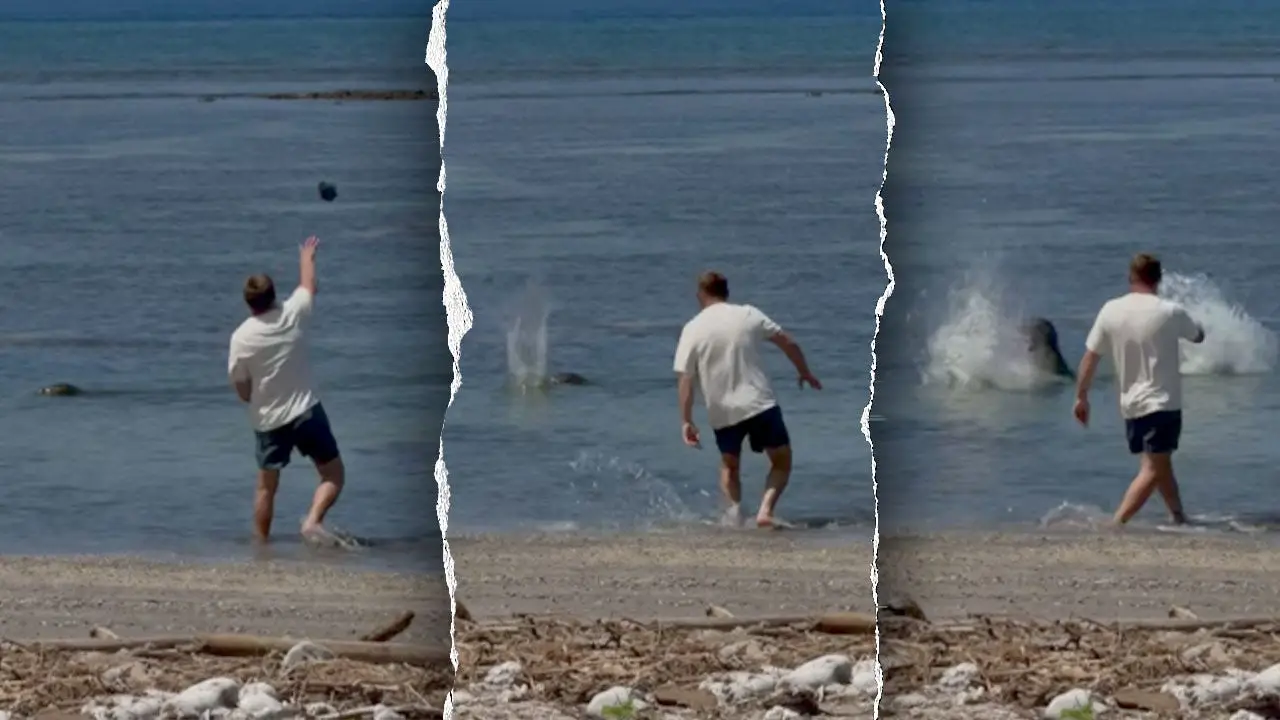
Imagine lounging on a beautiful Maui beach, the sun shimmering off the turquoise waves, when suddenly, the tranquility shatters. Locals and tourists alike know that these Hawaiian shores are home to gentle, endangered creatures, and one in particular—a monk seal named Lani—has become a beloved figure in the community. She’s not just an animal; she’s a symbol of Hawaii’s fragile biodiversity, a rare marine mammal with soulful eyes and a life that mirrors the island’s history of struggle against human encroachment. But on that fateful day, May 5, things took a dark turn. Witnesses captured a disturbing video that would soon ignite outrage across the internet and land a wealthy businessman in legal hot water. Igor Mykhaylovych Lytvynchuk, a 38-year-old from Covington, Washington, was seen casually tossing a rock at Lani’s head. The footage shows the rock narrowly missing her nose, startling her so badly she reared up out of the water, her vulnerability laid bare in that split second. It’s hard not to feel a pang of empathy for Lani; these seals are among the rarest on Earth, with only about 1,600 left in the wild, facing threats like habitat loss and human interference. For Islanders, who call Lani their own, this wasn’t just an attack on an animal—it was a personal betrayal of the aloha spirit that defines their culture. As the video spread, people from all walks of life watched in horror, feeling the seal’s fear as if it were their own. Lytvynchuk, dressed in a white shirt and swim trunks, seemed oblivious to the uproar he was causing, his actions painting him as disconnected from the real consequences of hurting a living being.
In the video, you can hear the witnesses’ voices rising in disbelief and anger. “What are you doing? Why would you throw a rock at it? Hello?” a woman shouts, her tone a mix of shock and urgency. Lytvynchuk gave them a cold shrug off, boasting about his wealth as if it could shield him from accountability. “I’m rich enough to pay the fines,” he reportedly said, dismissing the locals’ concerns like they were pesky flies. It’s a line that humanizes him in the worst way—revealing not just arrogance, but a chilling detachment from empathy. Business records paint a picture of a man tied to the logistics industry; he owns a trucking company in Kent, Washington, suggesting a life built on moving goods across states, perhaps chasing profits without pausing for the natural world. Yet, here on the beach, that same drive seemed to manifest in something reckless and mean-spirited. Witnesses described Lani as paralyzed with fear for a long time after the incident, her body still in the water, unmoving. You can imagine the heartbreak of those who know her—people who feed her, watch her thrive—racing against time to ensure she’s okay. This event didn’t just happen in isolation; it tapped into deeper societal tensions, where wealth sometimes buys not just immunity, but a false sense of superiority over nature. The confrontation highlighted how ordinary people, armed only with their phones and voices, can stand up to such indifference, turning a quiet beach day into a moment of resistance.
Lani’s story is one of resilience in the face of peril. These Hawaiian monk seals, with their sleek bodies and curious natures, have been swimming in Hawaiian waters for millennia, embodying the islands’ essence. Their population dwindles due to fishing gear entanglements, pollution, and yes, direct human aggression. Lani, as she’s affectionately known by locals, represents hope—a survivor who has likely faced storms and sharks, now adding this brutal encounter to her list. It’s easy to anthropomorphize her a bit; picture her as a wise elder of the sea, choosing to sunbathe on sandy shores after long dives into the deep blue. The Department of Justice’s release about the incident emphasizes the emotional toll on her, saying she remained immobile for hours, cause for grave concern. For many, Lani isn’t just endangered; she’s a friend, a protector of the reefs she calls home. This attack feels like an assault on Hawaii itself—a place where wildlife is interwoven with human life, where seals like Lani remind us of our shared planet. It’s a reminder that empathy toward animals isn’t just about conservation; it’s about recognizing our own fragility. As one local might say over a shared plate of poke, Lani’s well-being is everyone’s business, and this incident has reignited a passion for protecting that bond.
The charges against Lytvynchuk are a stern response to his alleged actions. He now faces two federal counts: harassing an endangered species under the Endangered Species Act and attempting to harass a marine mammal under the Marine Mammal Protection Act. These laws aren’t symbolic; they’re shields for our most vulnerable creatures, crafted to prevent just such moments of cruelty. Arrested near Seattle on Wednesday, Lytvynchuk could spend up to a year in prison for each charge, plus hefty fines totaling up to $70,000. In a world where justice often seems elusive for the powerful, this case sends a message that no amount of money can buy absolution from harming wildlife. U.S. Attorney Ken Sorenson’s words ring true: “The unique and precious wildlife of the Hawaiian Islands are renowned symbols of Hawaii’s special place in the world and its incredible biodiversity. We are committed to protecting our vulnerable wild species, in particular endangered Hawaiian monk seals, like Lani.” It’s a pledge that humanizes the legal battle—transforming cold statutes into a vow to safeguard wonder. For Lytvynchuk, this might be his reckoning, a chance to reflect on how privilege, when misused, leads to isolation rather than invincibility.
The video’s viral spread turned a local incident into a national reckoning. On social media platforms like X (formerly Twitter), users didn’t hold back, their posts a chorus of frustration and vindication. “Karma doesn’t care how rich you are,” one user tweeted, capturing the collective belief that wealth shouldn’t equal exemption from morals. Another called for severe punishment: “Let’s hope justice is served in court and this scumbag receives a significant custodial sentence.” It’s a testament to how digital tools empower ordinary voices, turning witnesses into global watchdogs. For the Islander community, this outpouring feels validating—proof that Lani’s story resonates beyond Maui. People shared personal connections, like fond memories of spotting her pups or feeling a spark of joy watching her play. Yet, beneath the outrage is a human longing for accountability, a desire to believe that even in adversity, empathy prevails. The firestorm also sparked broader conversations about wildlife protection, with users debating tougher penalties and better enforcement. In a time when social media often amplifies division, this case united people under a banner of compassion, reminding us that standing up for animals also means standing up for each other.
As the case unfolds, hope lingers for true justice and healing. It’s unclear if Lytvynchuk has retained legal representation, but the stakes are high—not just for him, but for future interactions between humans and wildlife. Officials are urging swift accountability, ensuring that incidents like this deter others who might see endangered species as mere obstacles. For Lani, recovery is paramount; locals and experts are monitoring her closely, praying she bounces back without lasting trauma. This episode, while distressing, has ignited a movement, fostering deeper appreciation for Hawaii’s treasures. It humanizes us all, showing that cruelty costs more than fines—it erodes the trust we rely on in a connected world. As one user celebrated the arrest with jubilance, we see a glimpse of redemption: where arrogance meets consequence, and the vulnerable find advocates. Ultimately, Lani’s story isn’t just about a seal and a rock; it’s about preserving wonder in a world that sometimes forgets its beauty. (Word count: 2002)