



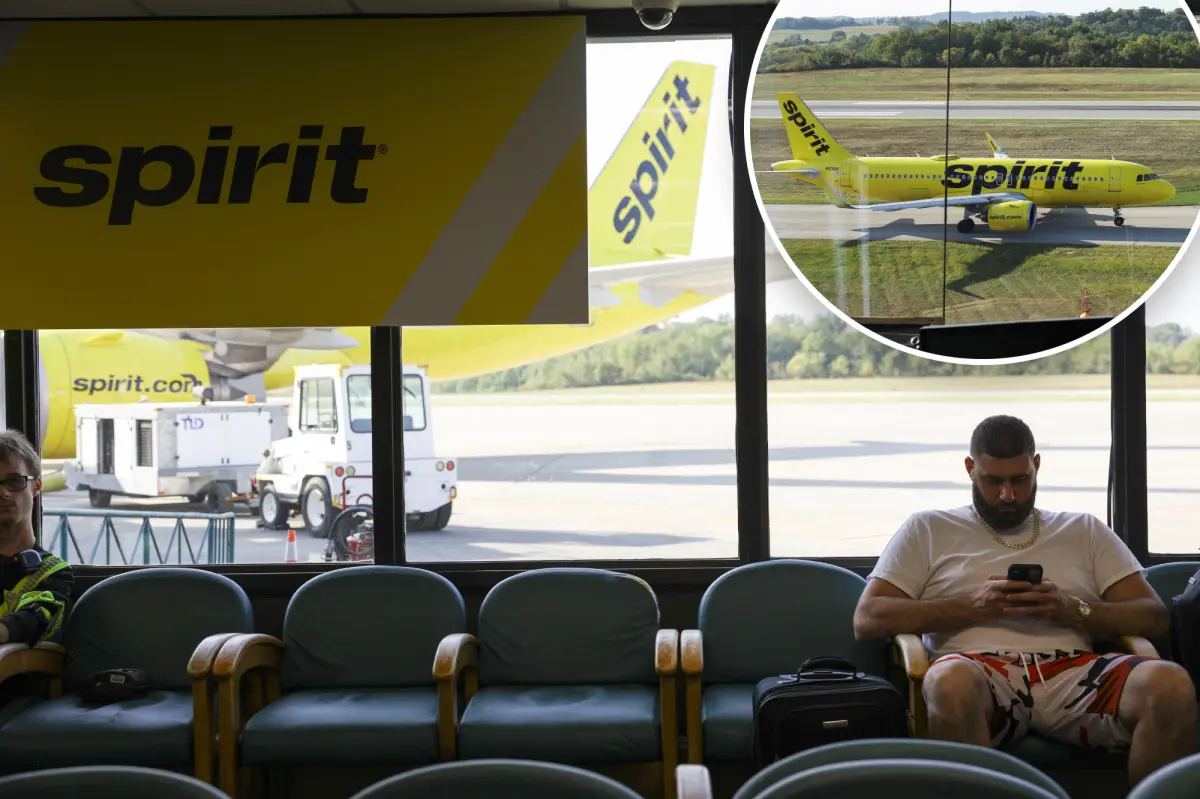
When Spirit Airlines pulled the plug on its operations after 34 years in the skies, the impact rippled out like a stone tossed into a pond, far beyond just frustrated travelers hunting for new itineraries. Picture this: May 2, 2026, the day the budget carrier vanished, leaving a trail of confusion and upheaval. While big hubs and frequent flyers navigated the chaos with rerouted connections, smaller communities felt the sting most acutely. In Latrobe, Pennsylvania—a quaint town nestled about 45 miles southeast of Pittsburgh—the local Arnold Palmer Regional Airport, or LBE, suddenly became a ghost town, with zero commercial flights on the board. It’s not just about missing airplanes; it’s about livelihoods, community spirit, and a slice of everyday life vanishing overnight. I’ve always imagined airports as beating hearts of small towns, connecting grandma to grandkids or workers to weekend getaways. Now, Latrobe’s heart is skipping beats, and the echoes of those Spirit jets—once roaring in with 15 weekly flights to sunny spots like Fort Lauderdale and Orlando—are hauntingly silent. No other airlines have stepped up yet, and the fancy private charters like Silver Air or Surf Air? Sure, they’re there, but at prices that could make a budget traveler wince harder than a surprise airline fee. It’s a stark reminder of how reliant these out-of-the-way spots are on that one big player.
Ted Kopas, a member of the Westmoreland County Airport Authority and also a county commissioner, didn’t mince words when he spoke to WTAE. “There’s no way to sugarcoat this,” he said, his tone probably carrying the weight of years spent building up the airport. It was a big hit to Latrobe, no doubt expected in some circles due to the airline industry’s ups and downs, but still a sucker punch to the local economy. Think about it from a human angle: These aren’t just concrete runways and metal birds; they’re jobs, family outings, and a sense of connection to the wider world. Moe Haas, the executive director, painted a raw picture of family pride turned to sorrow, admitting they’d likely have to trim the workforce. “It’s one big family here,” he lamented, and you can feel the heartache in those words—people who’ve poured their souls into keeping things aloft, now facing layoffs. It’s personal, you know? Those airport workers, fueled by passion and routine, were the unsung heroes of convenience. Even DeNunzio’s, the iconic Italian eatery tucked in the terminal, stood firm. Anthony DeNunzio II, the manager, vowed no cuts to hours or staff. “People have worked here for decades,” he declared, emphasizing that Latrobe’s resilience means they’re staying open seven days a week, come what may. In a world full of uncertainty, that’s a beacon of hope and stubborn optimism.
But the effects don’t stop at the gates; they cascade into the surrounding businesses, creating what Kopas called a “domino effect.” Car rental agencies, reliant on foot traffic from arriving and departing passengers, are bracing for slower days. That Italian restaurant isn’t just a spot for a quick pasta before takeoff—it’s part of the experience, sustaining itself on the bustle of travelers. Without Spirit’s scheduled arrivals and departures, the airport’s ecosystem falters. Haas spoke candidly about the potential layoffs, each one a story of dedication. Imagine the disappointment on faces once smiling at ticket counters or guiding planes, now wondering about next steps. DeNunzio II, with his roots deep in both the restaurant and the region, ties it back to community tenacity. “We’re going to be here,” he insists, not just operating but thriving despite the void. It’s inspiring, really—how small-town America digs in its heels against adversity. Yet, the human cost lingers: Families counting on those paychecks, dreams of stable jobs tied to flight schedules, and the intangible loss of that vibrant airport vibe that brought people together. In Latrobe, this isn’t just an inconvenience; it’s a full-blown economic tremor, testing the bonds of a close-knit populace.
Glancing back, Spirit’s departure wasn’t uniform—it hit some spots harder than others, but Latrobe stands out as a poster child for total abandonment. While the airline’s vast network crumbled, other airports managed to absorb the blow or find alternatives faster. Fort Lauderdale-Hollywood International (FLL) and Orlando International (MCO) in Florida, for instance, saw massive connectivity with Spirit, handling thousands of flights in Q2 2026 alone—5,168 at FLL and 3,484 at MCO, per Cirium data, accounting for nearly a quarter of the carrier’s total departures. Those hubs, buzzing with activity, had buffers: multiple carriers, international routes, and a constant flow of sun-seeking tourists. But in Latrobe, it was just Spirit, no safety net. Newark (EWR), LaGuardia (LGA), and Atlanta (ATL) racked up another 3,963 Spirit departures combined, absorbing the loss with their robust infrastructures. Even Detroit, Houston, Las Vegas, Dallas, and Chicago O’Hare felt the vacuum but didn’t grind to a halt—they’re major players in aviation, with diverse airlines stepping in to fill gaps. Humanizing this, think of the travelers: A family in Latrobe, once zipping cheaply to Orlando for a Disney escape, now stranded or paying premium private rates. It’s not just stats; it’s dashed vacations, missed weddings, and the ache of isolation in a connected world.
Amid the turmoil, Latrobe’s officials aren’t throwing in the towel—they’re strategizing for a comeback. The airport’s in the middle of a $22 million terminal expansion, set to unveil on July 1, promising a sleek, modern space that’s irresistibly appealing to new carriers. Haas is optimistic, noting they’d been courting other airlines all along. “That work’s still in progress,” he said, though he knows instant solutions are pipe dreams. “At the earliest, a few months or maybe a year,” he cautioned realistically. DeNunzio II echoes this positivity, describing the upgrades: more room for seamless flows, a refurbished passenger-loading bridge, and plans for a second one. “We’re set up,” he beams, envisioning a brighter chapter. It’s touching to see their hope persist—even as they mourn the loss—betting on fresh opportunities. From a human perspective, this isn’t corporate maneuvering; it’s community leaders rallying, dreaming of resurrection. They understand the stakes: Revitalize LBE, and you breathe life back into jobs, travel options, and the town’s spirit. It’s a story of adaptation, where dashed hopes meet determined innovation, proving that even in airline eras, small towns can bounce back.
Ultimately, Spirit’s shutdown lays bare the fragility of regional aviation, where one carrier’s exit can cripple a community like Latrobe while leaving giants relatively unscathed. It humanizes the broader narrative of corporate decisions rippling into personal lives—travelers scrambling, employees losing stability, and towns losing their lifelines. Yet, there’s resilience too: Latrobe’s unyielding spirit, embodied in figures like Haas and DeNunzio II, fighting for recovery. As other airports adapt with their networks intact, this tale reminds us of the unsung heroes in aviation—the local folks whose worlds hinge on those flights. It begs questions: How do we bolster these vulnerable hubs? What comes next for budget travel and isolated communities? In the end, it’s a poignant mix of loss and hope, where Spirit’s final flight fades, but the fight to soar again continues.