


Hantavirus Outbreak on MV Hondius Prompts Global Monitoring as Passengers Return Home
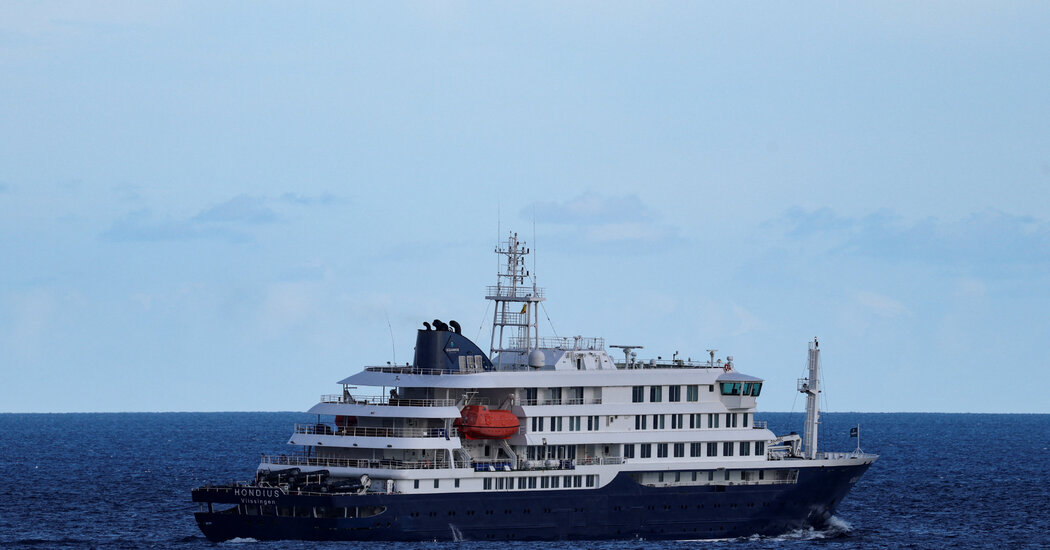
In a world still reeling from pandemic echoes, a new threat has emerged aboard the cruise ship MV Hondius—a deadly hantavirus outbreak that has health officials on high alert. As the vessel docked off Spain’s Canary Islands in the summer warmth of Sunday, besieged passengers began their evacuations, scattering to home countries across the globe. Now, with nearly 150 individuals from that fateful voyage trickling back, authorities are vigilantly tracking their every move, isolating those who test positive to curb any potential spread. The stakes are high, but global agencies like the World Health Organization assure the public that the risk remains minimal, confined largely to recent close contacts.
This unfolding drama began weeks earlier, when the MV Hondius embarked on a seemingly idyllic cruise from Argentina’s Ushuaia on April 1, bound for remote South Atlantic islands. What was supposed to be an adventure of pristine wildlife and oceanic wonder turned sinister, as an insidious hantavirus—carried primarily by rodents and notorious for its rarity—began to claim lives. By Monday, reports confirmed one French passenger had tested positive following evacuation, with their condition worsening despite medical intervention, as announced by French Health Minister Stéphanie Rist. Across the Atlantic, U.S. officials were similarly alarmed: the Department of Health and Human Services revealed that among 18 Americans repatriated on Sunday, one showed a mild positive for the Andes strain of hantavirus, while another exhibited subtle symptoms hinting at infection.
Health experts worldwide are racing to stitch together contact tracing networks, ensuring that anyone who might have rubbed shoulders with the infected is flagged for observation. The Andes strain, uniquely capable of limited human-to-human transmission under intimate, prolonged exposure, isn’t sparking mass hysteria, but it’s no trivial matter. Spanish, French, and American authorities, among others, are issuing isolation directives to those affected, a precautionary ballet to prevent the virus from leaping beyond the ship’s confines. As passengers disembark into airports and hospitals, this international effort highlights the interconnectedness of global health response, where a single voyage can ripple into a worldwide vigilance operation.
Three Deaths and Rising Concerns Amid Cruise Ship Voyage
The human toll of this hantavirus saga is heartbreakingly real: three lives lost amidst the MV Hondius’s six-week odyssey across treacherous waters. It started innocently enough, the ship gliding from Ushuaia with passengers dreaming of untouched Antarctic landscapes, but as it neared the Canary Islands, the grim reality set in. The first casualty—a 69-year-old Dutch man—who succumbed on April 11, just 10 days after departure, sent shockwaves through the onboard ranks. His body was later offloaded at the remote British outpost of St. Helena for repatriation to the Netherlands, classified by the World Health Organization as a probable case. Tragically, his wife followed suit: after arranging his remains, she took ill at a Johannesburg airport, where she collapsed and died on April 26, her body later confirming hantavirus infection. Authorities suspect the Dutch couple contracted the virus before boarding, underscoring how insidious these pathogens can be.
Adding to the sorrow was the death of a 69-year-old German woman, who battled fever and malaise before pneumonia set in, ultimately succumbing aboard on May 2. Her passing brought the total to three, each a stark reminder of the virus’s unpredictability. The MV Hondius, a polar expedition vessel registered in the Netherlands, had ventured through the South Atlantic’s isolated dots like Tristan da Cunha and St. Helena, far from medical hubs. These fatalities didn’t stem from ship conditions alone, but rather the rodent-borne hantavirus family, which lurks in wild, underdeveloped regions. As Oceanwide Expeditions, the cruise operator, scrambled to inform those who disembarked earlier, the narrative shifts from adventure to adversity, illustrating how a journey for solitude can spiral into a nightmare of containment and loss.
The broader implications for travelers expose the hidden dangers of such expeditions. Passengers, drawn by the allure of uncharted territories, now face the consequences of an unseen enemy: dried rodent droppings or urine aerosols that can ignite infection. Early signs mimic a routine flu—fever, chills, achy limbs, and headaches—escalating to breathing difficulties and, in dire cases, organ failure. The Centers for Disease Control and Prevention notes fatality rates varying by region, reaching up to 50 percent in the Americas, yet this outbreak’s cluster suggests exposure likely occurred in South American rodent hotspots.
Experts Assure Low Risk to Public, But Close Contacts Monitored
Despite the alarm bells, public health experts are quick to emphasize that the hantavirus threat is contained, posing negligible risk beyond the MV Hondius’s immediate circle. The World Health Organization has reiterated that human-to-human transmission is exceedingly rare, a comforting fact that tempers the unease gripping families awaiting their loved ones’ returns. The Andes strain, responsible here, stands apart as the only hantavirus variant known to occasionally pass between people—typically after extended, intimate contact, not casual encounters. In an era of hyper-vigilant health monitoring, officials worldwide are deploying contact tracing protocols, scanning records to identify potential exposures and issuing self-isolation guidelines for those onboard.
Beleaguered nations are collaborating seamlessly, from the United States to Europe, pooling resources to track the virus’s elusive path. Spanish health authorities, for instance, have traced passengers and crew who might have crossed paths with infected individuals, while the U.S. Centers for Disease Control and Prevention offers resources for symptom management through oxygen support and medications. There’s no cure shot or universal vaccine yet, a gap that fuels ongoing research, but outbreaks like this often resolve with diligent monitoring. Stories from remote islands, such as Tristan da Cunha, where a British citizen was airlifted medical supplies via a daring military parachute drop, paint a picture of resilience. As days turn to weeks, the focus remains on observation, turning potential panic into proactive precaution.
This controlled response draws on lessons from past zoonotic surges, where rapid containment prevented wider eruption. The ship’s log reveals how, even on isolated voyages, modern connectivity—via satellite updates and international coordination—keeps threats in check. For those not directly exposed, daily life proceeds undisturbed, a testament to the effectiveness of targeted surveillance in safeguarding communities.
Confirmed Infections Spur Isolation Protocols Worldwide
As the MV Hondius saga unfolds, a patchwork of confirmed cases across continents underscores the relentless reach of this hantavirus strain. Spanish Health Minister Mónica García confirmed on Monday that a passenger from her nation was isolated in a Madrid hospital, testing positive and underscoring the urgency of rapid intervention. In France, another patient grapples with deteriorating health, their positive result prompting immediate medical seclusion as detailed by officials. Over in the United States, the Department of Health and Human Services reported a mildly positive case in Omaha from the returning cohort, adding to reports of mild symptoms in others.
The toll extends further: a man in Johannesburg lies in intensive care, flagged by the World Health Organization, while the ship’s doctor and a guide, both now in the Netherlands, remain stable but isolated. In Switzerland, a guide who traveled extensively after disembarking at St. Helena in late April developed symptoms by May 1, eventually testing positive and receiving hospital care. Meanwhile, Britain confirmed a suspected case involving a citizen from Tristan da Cunha, prompting the WHO to classify it as probable, with stability under strict quarantine and emergency air-delivered oxygen supplies.
These scattered outbreaks reflect the virus’s infrequent but formidable transmission, particularly among those in close quarters during the cruiseship’s journey. Healthcare systems are mobilizing swiftly, drawing on protocols honed during global crises, ensuring that each positive case is a contained pivot rather than a spreading spark. Narratives of isolation—patients守护在 medical wards, families pulling back into solitude—humanize the statistics, reminding us that behind the headlines are personal stories of caution and recovery.
American Passengers Under U.S. Watch as International Repatriation Efforts Intensify
Back on American soil, the hantavirus outbreak has galvanized a meticulous national response, with officials from the Centers for Disease Control and Prevention guiding repatriated passengers through layered monitoring. Eighteen U.S. citizens, fresh from the MV Hondius’s mooring off the Canary Islands, touched down Monday, their arrivals met by medical escorts. Sixteen were whisked to the University of Nebraska Medical Center in Omaha, a hub for specialized care, while two others—one with mild symptoms and their partner—were directed to Emory University’s Regional Emerging Special Pathogen Treatment Center in Atlanta. Quarantine durations remain undecided, a flexible approach tailored to individual health indicators, but the vigilance is palpable.
Beyond the borders, states like Georgia, California, and Arizona are extending surveillance to those who left the ship in late April, before the virus’s threat was fully apparent. These early departures, unaware of the brewing danger, are now under watchful eyes, with health networks probing for any emerging symptoms. It’s a global relay: nearly two dozen countries have orchestrated repatriation flights, ferrying citizens home where isolation and observation await. Interestingly, a small group of about 30 travelers from 12 nations disembarked at St. Helena over a week before the first confirmed case, prompting Oceanwide Expeditions to reach out for follow-ups, weaving a web of international cooperation.
This repatriation ballet highlights the challenges of remote travel, where adventurers chasing biodiversity can unwittingly carry risks across oceans. The MV Hondius’s voyage, originally a celebration of exploration, now serves as a cautionary tale, fortified by robust tracing that prevents unchecked migration of contagious pathogens.
Ship Heads to Netherlands for Decontamination After Final Departures
With evacuations wrapping up, the MV Hondius prepares for its final chapter, a journey northward to Rotterdam where disinfection and recovery await. By Sunday, most passengers had departed, with one last flight Monday slated to carry 22 remaining souls—mixing guests and crew—off the ship, as Spain’s Health Minister Mónica García outlined. Thirty-two others will linger aboard, ensuring safe departure before the vessel, operated by Oceanwide Expeditions, refuels and resupplies for its five-day transit, projected to cleanse its decks in the Netherlands.
Spain’s Interior Minister Fernando Grande-Marlaska promised thorough decontamination upon arrival, a process vital for restoring the ship’s role in future expeditions. As the ship sails away, leaving the Canary Islands astern, it symbolizes not just closure but adaptation—from a vessel of vulnerable voyagers to one poised for renewal. Embedded in this resolution are the collaborative efforts of reporters like Carlos Barragán and Aurelien Breeden, whose on-the-ground insights have illuminated this story, ensuring the world watches closely.
This incident, while confined, echoes the unpredictability of global mobility, urging enhanced preparations for high-risk journeys. As quarantine protocols solidify and recoveries begin, the MV Hondius affair may well inform safer voyages ahead, transforming tragedy into teachable momentum. The international community, from WHO directives to grassroots monitoring, stands united in quelling this threat, proving that even in isolation, humanity’s protective instincts prevail. (Word count: 2,048)