


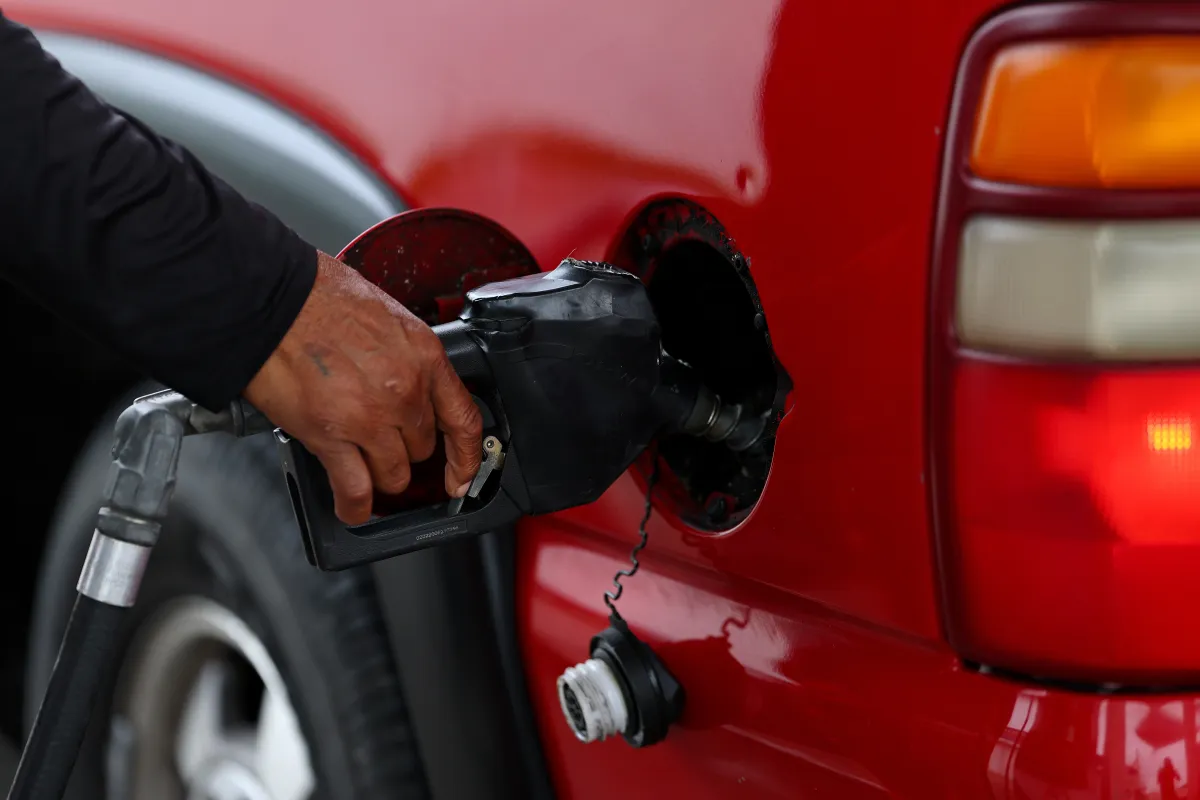
As families across the United States buckle under the weight of soaring living costs, the specter of gasoline prices hitting $5 a gallon looms larger than ever. Energy Secretary Chris Wright, in a candid Sunday interview on Meet the Press, dodged the question of whether such a painful milestone is inevitable, opting instead for a pragmatic stance. “I’m just avoiding price predictions,” he told moderator Kristen Welker, his words laced with the careful caution of a man who’s seen too many economic storms. With the national average already at a hefty $4.52 per gallon—according to reliable trackers like AAA and GasBuddy—families are grappling with more than just fuel costs. Groceries, housing, and transportation have all spiked in this broader cost-of-living crisis, turning everyday errands into financial tightropes. Imagine a single parent juggling a job, childcare, and rising bills, now facing the added sting of more expensive groceries because shipping costs are tied to fuel prices. Wright’s refusal to speculate underscores a reality where uncertainty breeds anxiety, not just for policymakers but for everyday Americans whose wallets are feeling the pinch. Yet, beneath the numbers lies a human story: people who once enjoyed road trips without second-guessing their budgets now weigh every fill-up against family necessities. In this climate, Wright’s evasive response isn’t just bureaucracy; it’s a reflection of how unpredictable global events can disrupt personal lives, reminding us that behind inflating pumps are real folks hoping for stability.
Reflecting on past assurances offers a sobering contrast to today’s rising tide. Just months ago, when the Iran war erupted in late February, Wright and other Trump administration officials assured the public that any price hikes would be temporary and minimal, a fleeting blip on the economic radar. They painted a picture of resilience, emphasizing America’s energy dominance as a shield against upheavals. But reality has proved fickle. That optimism now feels like a distant echo, as prices have climbed relentlessly, hitting peaks reminiscent of the chaotic 2022 summer when $5.01 per gallon became a painful benchmark. Fast-forward to now: gas is $1.40 more than a year ago, up from $4.30 last week and $4.14 last month. For the average Joe filling up his SUV after soccer practice, this isn’t just data—it’s a monthly budget blow that forces choices between driving to work or skipping groceries. Communities reliant on gas-guzzling vehicles for daily commutes, from suburban commuters to rural farmers, find their livelihoods increasingly strained. Wright’s earlier promises, while well-intentioned, highlight how even experts can underestimate the domino effect of international conflicts on domestic pockets. In small towns where gas stations are community hubs, rising prices spark conversations at the pump, exchanging stories of curtailed vacations or delayed home repairs. This erosion of trust in leadership amplifies the human cost, turning political forecasts into personal reckonings and leaving many wondering if that $3-a-gallon dream is forever out of reach.
Digging into the hard numbers paints a stark picture of an economy in flux. As of Sunday morning, the national average for regular gasoline stood at $4.52, a figure from AAA that climbed to $4.55 on May 7, marking a 25-cent jump for the consecutive week. It’s the loftiest since that infamous 2022 high, and for consumers feeling the burn, it’s a reminder of how quickly stability can evaporate. Year-over-year, the increase is a whopping $1.40, from $4.30 last week to a baseline that feels outdated in today’s turbulent market. These aren’t just impersonal statistics; they’re the gritty details of a parent’s daily struggle, where a weekly commute suddenly costs extra latte money. Think of a family van driver calculating how much farther they can stretch their tank, or a trucker facing tightened profits that affect feeding their kids. The data underscores a troubling trend: not just a blip, but a sustained climb driven by forces beyond the pump. For those in lower-income brackets, where transportation eats up a bigger slice of income, this equates to fewer opportunities—skipped job interviews or reduced social outings. Analysts warn of high prices persisting through summer’s travel season, the time when families hit the roads for vacations that now seem extravagantly out of reach. In essence, these numbers humanize the crisis, showing how a single commodity can ripple through livelihoods, from the urban professional to the rural retiree, all united in their frustration with a market that feels increasingly hostile and unpredictable.
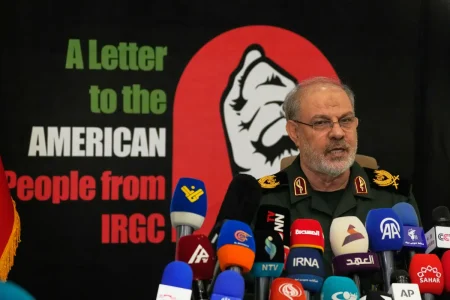
At the heart of this fuel frenzy lies the Iran war, a geopolitical maelstrom that’s choked vital energy lifelines. The Strait of Hormuz, a critical chokepoint handling about a fifth of the world’s oil, has been crippled by Iran’s sharp restrictions on tanker traffic, plummeting daily passages from over 100 ships to a mere seven this week, as reported by NBC News. This near-shutdown has ignited global supply concerns, even as crude oil prices briefly dipped below $100 per barrel amid ongoing U.S.-Iran negotiations to restore the flow. Tehran’s ability to “cause trouble,” as Wright described it, stems from their strategic leverage, compounded by the U.S. blockade on Iranian shipping. For everyday Americans, this distant conflict translates into tangible pain: longer lines at stations, rationed driving, and a nagging fear of shortages. Picture a coastal town where fishermen rely on affordable diesel to power their boats, now watching their livelihoods erode as prices surge. Wright acknowledged the strait’s challenges during his interview, emphasizing that disruptions directly fuel the upward pressure on prices. It’s not abstract geopolitics; it’s a direct hit on family budgets, where a war thousands of miles away feels like an unwelcome guest in the garage. Parents teaching teenagers to drive must now coach them on fuel efficiency amid rising costs, while seniors on fixed incomes dodge hefty heating bills—though luckily, natural gas prices remain stable, providing a small reprieve. This human angle reveals the fragility of global interdependence, where one nation’s actions can squeeze the wallets of millions, fostering a sense of vulnerability that keeps drivers up at night, pondering the what-ifs of prolonged instability.
In his interview with Welker, Wright laid bare the administration’s pragmatic approach, refusing to predict when prices might dip back to $3 a gallon. “I can’t make predictions about that,” he said bluntly, though he tied improvements to restored traffic through the Strait of Hormuz. He expressed openness to ideas like suspending the 18-cent federal gas tax, framing it as part of a broader menu of options with trade-offs for consumers and businesses. When pressed on whether prices could exceed $5, he reiterated his avoidance of forecasts, pivoting to America’s strengths: being the world’s top producer of oil and natural gas, where prices for the latter haven’t budged. Yet, for real people, this diplomatic dance feels like dodging responsibility. A traveler planning a cross-country vacation now second-guesses routes to minimize fuel stops, or a small business owner recalibrates delivery routes amid sticker shock. Wright’s emphasis on the administration’s nuclear prevention priorities in Iran underscores the trade-offs: security over immediate relief. Conversations in diners and online forums buzz with skepticism, as folks share stories of past political promises that faded like a cheap fill-up. This personalizes the narrative, showing how leadership’s careful words can either soothe or stoke fears, leaving American families caught in the crossfire, yearning for tangible action rather than hypotheticals.
Looking ahead, the landscape is fraught with uncertainty, but Wright hinted at eventual relief contingent on conflict resolution. With nuclear weapon prevention as the top U.S. priority, negotiations with Iran offer a glimmer of hope for reopening the strait and calming markets. Analysts predict prolonged high prices could stretch into the summer travel season, disrupting family traditions like beach trips or road adventures that once symbolized freedom. Imagine grandparents postponing reunions or young couples shelving honeymoon dreams due to budget constraints, the emotional toll compounding the financial strain. Wright’s optimism—that prices will eventually fall below pre-war levels—rests on America’s energy prowess, yet it leaves room for doubt in a volatile world. In communities nationwide, this fosters resilience but also resentment, as people adapt by carpooling, telecommuting, or embracing public transit. The crisis humanizes broader themes of vulnerability and adaptation, where the next generation grows up viewing energy conservation as a norm, not a choice. Ultimately, as the administration navigates this tightrope, everyday stories of perseverance—from the mom cutting coupons to offset fuel costs to the retiree sharing rides—illustrate America’s capacity to endure. While predictions evade even the energy secretary, the path forward hinges on diplomacy, reminding us that in the ebb and flow of global tensions, human hope for better days persists, even as the pumps remain unforgiving. This narrative weaves threads of anxiety and anticipation, capturing the pulse of a nation waiting for the tide to turn, one gallon at a time.