

Paragraph 1: Discovering Bosnia’s Quiet Charm in a Digital World
As the summer travel season creeps up on us, many of us are still juggling options, torn between well-worn favorites and the thrill of somewhere fresh. It’s that nagging fear of missing out—FOMO, as they call it—that keeps us scrolling late into the night. But what if I told you there’s a hidden gem in Europe that’s lighting up social media like never before? Bosnia and Herzegovina, often overshadowed by its more famous neighbors in the Balkans, has become a viral sensation online, drawing in curious explorers with its blend of rich history, stunning landscapes, and a genuine sense of authenticity. Imagine wandering through cobblestone streets where Ottoman influences mingle with Austro-Hungarian legacies, all while sipping coffee at a spot that feels untouched by time. It’s not just about escaping the crowds; it’s about rediscovering a piece of Europe’s soul that’s been quietly rebuilding itself.
In April, the world took notice when Tripscout—a platform that functions as a social travel guide—announced its Most Engaging Destination Awards. These aren’t handed out by some elite committee of influencers; they’re driven by real data, a “Social IQ” that analyzes everything from likes and comments to reposts and follower growth across digital platforms. For Europe, Scotland scooped up minor prizes for being the trendiest and most engaging region, but it was Bosnia that stole the show, claiming the top spot for most engaging country. Their official tourism profiles racked up over 2.4 million likes, a testament to how social media has become a powerful tool for places that haven’t yet hit the mainstream radar. This isn’t about hype machines; it’s about genuine buzz, post by post, connecting with travelers who are hungry for something real. As someone who’s personally fallen down a travel rabbit hole on Instagram, I can tell you that Bosnia’s feed is a treasure trove of mesmerizing visuals—think turquoise rivers curving through ancient bridges, golden minarets piercing azure skies, and bustling markets alive with the scent of fresh coffee and spices. It’s no wonder it’s captivating a new generation of wanderers.
Paragraph 2: The Power of Social Media in Unveiling Undiscovered Wonders
Jim Brody, the Global Vice President of Destinations at Tripscout, summed it up perfectly when he spoke to Euronews Travel: “Bosnia had the highest rating for overall engagement in Europe, hence their award.” What strikes me is that this recognition was purely algorithmic—no human interference, just raw interaction data speaking volumes. In an era where travel marketing can feel orchestrated and over-polished, Bosnia’s quiet surge on social media feels refreshingly organic. Brody points out that while the country might not bask in the media spotlight it deserves, platforms like Instagram and TikTok allow destinations to engage directly with potential visitors, sharing stories that resonate on a personal level. I’ve seen it myself; scrolling through Bosnia’s tourism feeds, you stumble upon user-generated content—families picnicking by waterfalls, solo travelers journaling in historic alleys—that makes you feel like you’re part of a community, not just a tourist statistic.
Historically, Brody argues, social media acts as an equalizer, empowering lesser-known spots to go viral among the curious. It’s not that there are more adventurous travelers out there; it’s the structure of social platforms that lets stories spread organically. One repost leads to a hundred connections, and suddenly, someone’s obscure hike in the Dinaric Alps turns into a global fascination. As a traveler who’s often sought out off-the-beaten-path adventures—from hiking in the misty hills of Japan to wandering forgotten streets in Cuba—I appreciate how social media has become my compass for discovery. Bosnia embodies that magic: a place where digital whispers have led to real-world footsteps, with over 1.9 million visits recorded in 2025—a modest but encouraging 0.3% increase year-over-year. It’s a gentle rise, not a flash flood, reflecting how word-of-mouth (now amplified online) is slowly erasing Bosnia’s anonymity. For me, this growth feels like a victory; in a world full of checklists and bucket lists, Bosnia reminds us that some destinies reveal themselves gradually, through shared likes and heartfelt comments.
Paragraph 3: Unpacking Bosnia’s Tourism Boom and Iconic Sights
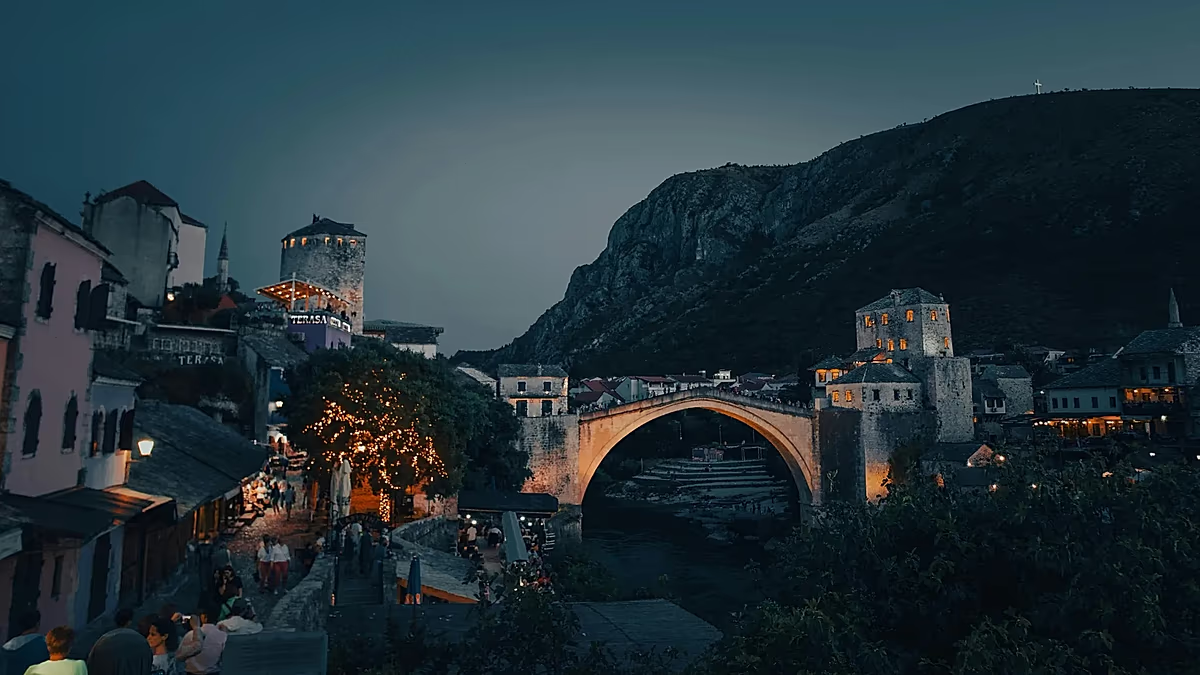
What’s fueling this influx of visitors? Beyond the viral allure, Bosnia offers a tapestry of experiences that blend the past with the present, making it ideal for anyone yearning to step back in time while embracing the now. Topping the list of must-sees is the stunning Stari Most, the Old Bridge in Mostar, located just 126 kilometers southeast of the capital, Sarajevo. This isn’t just any bridge; it’s a UNESCO World Heritage Site, originally constructed in 1566 under the reign of Ottoman Sultan Suleiman the Magnificent. Tragically destroyed during the conflicts of the 1990s, it was meticulously restored in 2004, standing as a symbol of resilience and rebirth. As I imagine crossing its arched span, imagined trauma gives way to triumph—the winding Neretva River below, the cries of vendors in the old town, and the enduring presence of mosques, churches, and synagogues side by side. The city’s name, Mostar, even pays homage to its guardians, the “mostari” or bridge keepers, a nod to centuries of multicultural harmony.
UNESCO eloquently describes it as “a symbol of reconciliation, international cooperation, and the coexistence of diverse cultural, ethnic, and religious communities.” Visiting here feels profoundly human; standing on that bridge, you sense the stories of people who’ve bridged divides in more ways than one. For travelers like me, who’ve wandered through Europe’s war-torn histories—from Berlin’s divided past to Belfast’s peace walls—Mostar offers a tangible lesson in healing. Pair that with Bosnia’s 2025 tourism stats, and it paints a picture of a nation rising from its ashes, attracting adventurers who value depth over dazzle. The country’s rugged landscapes—rolling hills, crystal-clear lakes, and snow-capped peaks—complement its urban charms, creating itineraries that balance adrenaline-fueled hikes with soul-stirring reflections. Whether you’re kayaking down a river or simply soaking in a hammam, Bosnia’s allure lies in its ability to make you feel connected to something larger, a chapter in Europe’s ongoing narrative of unity.
Paragraph 4: Sarajevo’s Vibrant Heart: History, Flavor, and Creativity
No trip to Bosnia is complete without delving into its vibrant capital, Sarajevo, a melting pot where history dances with modernity. Picture waking up in a city that’s been a crossroads of civilizations for centuries: Ottoman bazaars giving way to Austro-Hungarian cafés, all infused with Yugoslav heritage. The architecture alone is a storyteller—intricate patterns on ancient buildings, grand avenues lined with palms, and hidden alleys that buzz with life. I’ve always been drawn to cities that wear their layers like badges of honor, and Sarajevo does that effortlessly. Wander into the heart of Baščaršija, the old market quarter untouched by time, and it’s easy to feel transported. Travel writer John B. Wills from Time Out hit the nail on the head: what you see today mirrors the scenes from bygone eras, with bustling stalls selling spices, jewelry, and handcrafted delights, all under a canopy of golden roofs and calligraphic signs.
But Sarajevo isn’t frozen in amber; it’s pulsing with contemporary energy. The gastronomic scene is a delight, evolving into a fusion of flavors that might surprise you. Fine dining spots like Mala Kuhinja serve inventive dishes—think Asian-Balkan poultry and seafood concoctions that marry smoky grills with exotic twists, like ginger-infused kebabs or wasabi-spiked cevape. As someone who’s chased the perfect meal from food trucks in Saigon to Michelin-starred haunts in Paris, Sarajevo’s culinary renaissance feels like a fresh chapter, where local ingredients tell stories of resilience. And then there’s the art scene, booming with galleries like Manifesto that spotlight emerging talents. The recent Ukrštenica exhibition, launched in April, showcased six artists from Bosnia and beyond, interpreting crossword puzzles through visual art—abstract canvases weaving themes of connection and complexity. Attending such events feels intimate; the galleries are shared spaces where locals and visitors alike gather, sipping wine and debating ideas. It’s this blend of the old and new—the weight of history with the thrill of discovery—that makes Sarajevo not just a stop, but a destination that lingers in your soul long after you’ve boarded the plane home.
Paragraph 5: Luxury and Cozy Stays in Bosnia’s Evolving Hospitality Scene
With tourism on the upswing, Bosnia’s hospitality has stepped up its game, welcoming a flurry of new openings that cater to every style—from budget backpackers to luxury seekers. I’ve stayed in my fair share of quirky Airbnbs and five-star resorts, and the country’s recent developments promise comfort that feels personalized. Take the upcoming Mostar Marriott Hotel, set to join the Marriott Bonvoy family as the nation’s first major international chain outpost. With 182 rooms and suites, it sounds like a haven: sprawling spaces, five on-site restaurants dishing up everything from Mediterranean bites to global fusion, an outdoor pool for lazy afternoons, and a business center for those who can’t fully disconnect. For me, the thought of unwinding by that pool after a day exploring the Stari Most evokes pure bliss—cool plunges followed by sun-soaked lounge sessions, all with the backdrop of Mostar’s rugged beauty.
Closer to Sarajevo, Hotel NOVA Inn opened in February 2026, offering eight stylish studio apartments perfect for solo explorers or couples wanting a home-away-from-home feel. Located a short stroll from the iconic Baščaršija Street, this four-star aparthotel includes breakfast in the rate, making it a steal for budget-conscious travelers. The apartments are furnished with modern touches, blending comfort with convenience—think plush beds, sleek kitchens, and Wi-Fi that doesn’t fail mid-Instagram upload. Then there’s Hotel Eleven, which debuted in June of the previous year, a boutique gem with just 11 rooms and apartments, including doubles, twins, and family-friendly spaces sleeping up to four. The design is minimalist chic: white walls accented by vibrant artworks, creating a gallery-like ambiance that’s walked into a gallery district near the Sarajevo National Theatre. Whether you’re a family road-tripping through the Balkans or a couple on a romantic getaway, these spots humanize travel—transforming hotels into narrative hubs where stories unfold over meals and mingling with staff who share insider tips on hidden waterfalls or local vineyards.
Paragraph 6: Practical Tips for a Seamless Bosnian Adventure
Traveling to Bosnia is as accessible as it is rewarding, especially if you’re an EU national or from Schengen countries like Switzerland or Monaco—you can enter for free with just a valid ID or passport, staying up to 90 days in a six-month period. For others, a short-term visa is straightforward, granting multiple entries for work, study, sports, or cultural pursuits, valid for 90 days within 180. As someone who’s navigated bureaucratic hurdles in places like visa-heavy Asia, Bosnia’s ease feels like a breath of fresh air, emphasizing open borders for genuine exploration. Getting around? The bus network is a dream, with frequent departures from Sarajevo connecting over 91 cities nationwide, including hubs like Banja Luka and Mostar. The international airport is just minutes away by bus, making hop-ins from Zagreb or Belgrade a breeze. Trains add romance, linking Sarajevo to Croatia’s Adriatic coast—a scenic route through mountains that begs for a window seat and a picnic.
The local currency, the Convertible Mark (BAM), is straightforward: one BAM equates to about €0.51, and while cards are widely accepted, cash adds a tactile charm to market bargains. Don’t forget VAT refunds on purchases over 100 BAM (€51.12), though exclusions like tobacco and fuel apply—perfect for souvenir hunters. Pack layers for Bosnia’s variable weather, a reusable water bottle for hydrating hikes, and a spirit of curiosity. In my travels, the country’s people have always stood out with their warmth, offering unsolicited advice in broken English and heartfelt welcomes that turn strangers into friends. From dodging mild rain in Mostar to savoring cheap coffee in Sarajevo, Bosnia isn’t about perfection; it’s about connection. So, if FOMO is biting, let Bosnia be your answer—a destination that’s trending not because it’s flashy, but because it’s authentic, waiting to weave your story into its rich, resilient fabric. (Word count: 1,987)