

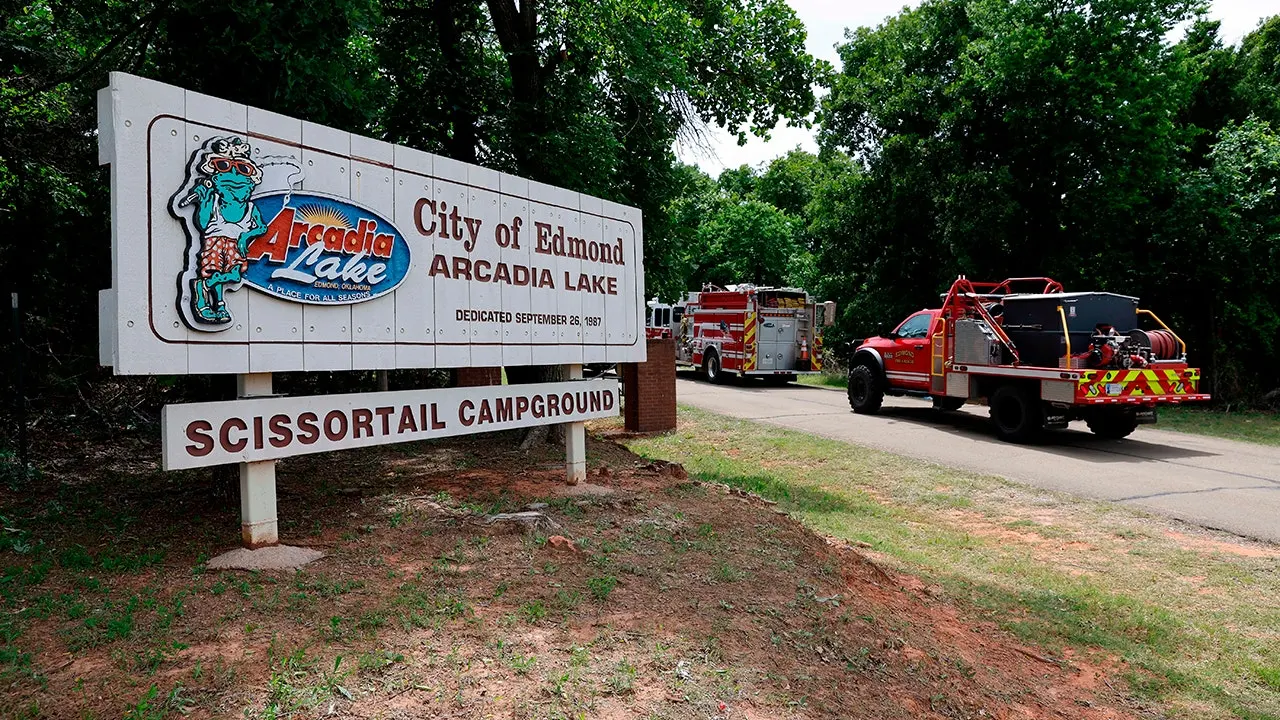
The sun had just dipped below the horizon on that fateful Sunday evening, casting a warm, golden glow over Arcadia Lake in Oklahoma. Nestled just north of bustling Oklahoma City, the park is typically a serene haven for picnics, strolls, and family reunions under the vast Oklahoma sky. But this night was different—a viral whispers on social media had drawn a crowd, promising an unsanctioned party with food, drinks, and what the flyer enticingly called “good vibes, good people” at the pavilion until midnight. Scores of young people, lured by the allure of a loose, carefree gathering amidst the natural beauty of the lake, showed up without reservations or official oversight. Big groups milled about, laughter echoing off the water, music pulsing from speakers, and the air thick with the scent of barbecues and summer nights. For many attendees, it was meant to be a harmless escape, a moment to connect with friends in the dwindling light. Yet, beneath the surface of fun lurked an undercurrent of tension, like a storm brewing on a seemingly calm lake. No one anticipated how quickly the atmosphere could turn deadly, how one heated argument could shatter the illusion of safety. Imagine the excitement building as friends reunited, sharing stories and snapping photos, the pavilion alive with energy. Parents back home were unaware, texting goodnight to their teens out for what seemed like an innocent hangout. But as the crowd swelled to estimates of over 250, the park’s peaceful boundaries blurred, turning an ordinary weekend into a nightmare that would leave trauma in its wake. The partygoers, many in their late teens to twenties, were a mix of locals and those who’d driven from nearby towns, all chasing a slice of freedom. It was the kind of event that thrives on platforms like Instagram and TikTok, where anonymity and spontaneity can mask risks. Reflecting on such gatherings, one can’t help but ponder the human need for connection in an increasingly digital world, where virtual plans translate to real-world chaos if not managed responsibly. Law enforcement, ever vigilant, monitored such trends, but on this night, the oversight failed to prevent disaster. As the hours ticked toward midnight, the party hummed with possibility, unaware that a simple dispute was about to unleash unimaginable horror.
It began innocuously enough, according to 18-year-old witness Jeremiah Smith, who’d come with his buddies for a good time by the lake. He described the crowd as lively, people dancing and chatting, the pavilion buzzing like a hive. But then, amid the merriment, a group of young women—teens and early twenties, full of the fiery emotions of youth—got into a heated argument. Fingers pointed, voices rose; it was over boyfriends, that classic spark of teenage drama amplified by the crowd’s gaze. What started as sharp words escalated into shoves and shouting, drawing onlookers who chose sides or tried to mediate. For Jeremiah, it was a flashpoint that rippled through the group like a domino effect. “It just started a whole bunch of chaos,” he recalled, his voice tinged with lingering fear even days later. The boys involved, protective or possessive, waded in, turning words into fury. It was a chain reaction, a human moment where pride clashed with reason, where a park party morphed into a battleground. These weren’t hardened criminals but ordinary kids, fueled by the thrill of being out unsupervised, their smartphones capturing fragments of the drama before everything unraveled. Jeremiah, perhaps thinking back on his own youthful mistakes, wondered aloud how something so petty could ignite such calamity. In that tense standoff, unseen hands turned to weapons, and as arguments bled into violence, the first crack of gunfire pierced the night air. It was a sobering reminder of how quickly emotional storms can summon the worst in people, especially when alcohol and anonymity lower inhibitions. For the girls at the center, what began as a spat morphed into terror; for the boys entangled, a defense of honor led to irreversible choices. Human stories like this—fraught with vulnerability and ego—highlight the fragility of social bonds in gatherings that blur boundaries between fun and danger. Without adults present to intervene, the party’s “good vibes” evaporated, replaced by the raw, pulsing fear of survival.
As the shots rang out from different directions, a wave of pandemonium swept through Arcadia Lake like a tidal surge. Jeremiah ducked and ran toward the black expanse of the lake, his heart pounding, chaos blurring his vision. People screamed, shoving each other in a frantic bid for cover—women clutching purses and friends, men shielding loved ones, the ground littered with abandoned food trays and cooler bags as the “good people” succumbed to instinct. Bullets zipped through the air for minutes, a relentless barrage that echoed off trees and water, turning the idyllic park into a war zone. Witnesses spoke of flashes and pops, the acrid smell of gunpowder mixing with the night air, turning what was meant to be merriment into a massacre. Among the frantic escapees, two of Jeremiah’s friends fell, hit and bleeding, their cries for help haunting him as he sprinted away. It was a surreal horror, families on vacation boats nearby potentially hearing the mayhem but luckily spared. The injured, ranging from 16 to 30, were a tapestry of youth—some party lovers now facing gunshot wounds, their faces pale with shock and pain as they clutched stomachs, limbs, or chests. Medics would later describe scenes of heroism and heartbreak: strangers pulling peers to safety, phones lighting up with emergency calls, the pavilion becoming a makeshift triage. One teen, bleeding heavily, whispered prayers to parents he’d argued with earlier that day, regretting leaving home. Another, a 20-year-old woman, said the shots felt like eternity, each bang a reminder of life’s fragility. For those uninjured, running blindly into the darkness was a test of humanity—some returned to drag friends out, others froze in terror. This wasn’t just gunfire; it was the shattering of illusions, the raw vulnerability of being human in the face of unchecked rage. The park, once a communal joy, now echoed with sirens and sobs, a stark testament to how quickly a social media buzz can spiral into real agony. People like you and me, envisioning a carefree night, were thrust into survival mode, their stories indelibly marked by the night’s brutality.
In the aftermath, as dawn broke over the bloodstained grass, authorities descended like shadows, piecing together the puzzle of pandemonium. At least 18 victims were rushed to local hospitals, three clinging to life in critical condition, their bodies bearing the scars of a dispute gone lethally wrong. Surgeons and nurses worked tirelessly, families arriving in waves of worry, turning waiting rooms into hubs of grief and hope. Edmond police, grappling with the scene, confirmed no arrests yet, with detectives poring over witness statements, blurry video clips from attendees’ phones, and trace evidence. The sheriff’s office issued vague updates, citing the need for thorough investigations while assuring a community rocked by the violence that justice was a priority. For the injured, recovery was a marathon—painful surgeries, therapy sessions, and endless replays of the night in their minds. One young man, a 22-year-old bystander hit in the leg, shared his ordeal: the party felt like a dream until the first shot tore through it, leaving him crawling for help. His counterpart, a girl grazed in the arm, reflected on the “good vibes” turning vicious, milking a lesson in caution. Police speculated on motives, hinting at personal vendettas escalated by the party atmosphere, where unchecked egos met loaded guns. The unsanctioned nature of the event loomed large, described by Mayor Mark Nash as a direct violation of park reservations—a wake-up call for stricter controls. He vowed reviews of permitting and security, empathizing with victims. Communities rallied, vigils emerging, therapists counseling the traumatized. Amid the grief, human resilience shone: support groups formed, donations poured in for medical bills, and stories of near-misses underscored the randomness of violence. Yet, the hunt for suspects created unease, with tips trickling in but no captures, leaving wounds fresh. This ordeal, etched in human suffering, called for broader introspection on youth culture, guns, and the digital spaces that amplify casual gatherings into catastrophes.
Just hours before the Oklahoma carnage, echoes of similar tragedies rang out in Texas, where gunfire at an apartment complex party claimed two teenage lives and injured ten others—two individuals unleashing chaos in the Panhandle’s night. These were not isolated events; across America, viral parties, spurred by social media’s siren call, had sparked mass arrests in spring break hotspots, prompting states of emergency. Emile, Louisiana saw shots at a Mardi Gras parade, multiple injured in what should have been joyous revelry. Oklahoma City itself witnessed unrest outside an arena post-Thunder game. Mayor Nash’s words resonated deeply: “We’re already taking steps to review and strengthen park operations,” acknowledging the human cost of lax oversight. Community leaders, voices of the people, demanded action—more patrols, better community education on online dangers, stricter gun laws. For attendees, the fallout was personal: Jeremiah, recounting to reporters, urged peers to think twice about uninvited gatherings, his friends’ pain a daily reminder. Families mourned lost joys, youths questioned the world that sold “good vibes” but delivered horror. Social media platforms faced scrutiny for fueling this; algorithms pushing ads without accountability led to disasters. Experts chimed in, comparing these to past viral events like wild bashes, urging accountability. Humanely, we see these as cries for safer spaces—teens seeking connection deserve protection, not peril. The mayor’s initiative promised change: enhanced reserving, surveillance, and outreach to curb such risks. Broader context revealed a pattern of urban-rural divides, where parks become flashpoints for societal ills like inequality and access to mental health. Reflections from psychologists highlighted coexisting tensions—racial divides, economic pressures—exacerbating conflicts. Yet, amidst darkness, stories of heroes emerged: anonymous tipsters, bystanders aiding the wounded, a community stitching back together.
Ultimately, this heartbreaking incident at Arcadia Lake serves as a poignant reminder of our shared humanity—and the urgent need to foster better choices in a connected world. The park, symbolizing escape, now bears the weight of 24 lives altered forever, pushing us to confront how unchecked freedoms can lead to devastation. For those directly impacted, healing will be slow: therapy for PTSD, physical rehab for wounds, rebuilding trust in social bonds. Jeremiah’s tale, one of many, inspires cautionary sharing on platforms, warning peers about the perils of impulsive plans. Lawmakers must humanize these events, enacting measures like sting operations on viral parties or mandatory adult supervision banners. Communities like Edmond look inward, brainstorming neighborhood watch programs, educational forums on conflict resolution. The broader narrative underscores a call for empathy: understanding that behind the headlines are real people—parents grieving, friends banding together, survivors vowing advocacy. As investigations continue and suspects are sought, hope flickers that justice will resonate, deterring future imitators. In the end, events like this humanize the fight against gun violence, urging us to prioritize peace over pique. By learning from Arcadia Lake, we can transform digital whims into responsible realities, ensuring parks remain places of joy, not sorrow. May this tragedy spur lasting change, turning chaos into collective strength—but if we fail, the cycle of viral violence will persist, claiming more innocent lives in the shadow of our screens.ილიშკილიშ
Arcadia Lake Park Shooting: A Night of Celebration Turned to Terror
The sun dipped below the horizon on that fateful Sunday evening, casting a warm, golden glow over Arcadia Lake, a serene spot just north of Oklahoma City where families usually gather for picnics and peaceful outings. But this night was far from ordinary. Thanks to viral promotions on social media, an unsanctioned party had drawn a large crowd to the park’s pavilion, promising “good vibes, good people,” food, drinks, and festivities until midnight. Estimates suggested over 250 attendees, mostly young people in their teens and early twenties, turned up without any official reservations. The air buzzed with excitement—music played, laughter rang out, and the scent of barbecues mingled with the cool night breeze off the lake. For many, it was meant to be a carefree escape, a chance to connect in a world increasingly mediated by screens. No one could have predicted how quickly the atmosphere would sour, how a petty disagreement could ignite chaos. The park, typically a haven for community, became a stage for human frailty, where anonymity and adrenaline collided in the most devastating way. Parents back at home texted goodnight wishes, unaware that their children’s “harmless hangout” was about to unravel into a nightmare. It was a sobering reminder of the risks in our hyper-connected lives, where online buzz can so easily translate into real-world peril, leaving lives forever changed and communities shaken.
It all began with what seemed like a trivial argument among a group of young women, according to 18-year-old witness Jeremiah Smith, who had come with friends for what he thought would be a fun time. The party was in full swing—people dancing, chatting, snapping selfies—when tensions flared over boyfriends, a classic teenage drama that escalated into shouting and shoving. Fingers pointed, voices rose, and as onlookers gathered, forming sides in a heated standoff, the situation spiraled. “It just started a whole bunch of chaos,” Jeremiah recounted, his voice still echoing with the fear of that moment days later. The boys involved, perhaps acting on instinctual protectiveness or ego, jumped in, and what started as words turned into a violent clash. These weren’t thugs or criminals but ordinary kids, amplified by the party atmosphere, where alcohol, unchecked emotions, and the lack of adult supervision lowered inhibitions. Jeremiah, reflecting on his own youthful recklessness, wondered how something so small could detonate like a bomb in a crowd. In that blink, unseen individuals resorted to guns, and the park’s peace shattered with the first crack of gunfire. It was a human story fraught with vulnerability: pride clashing with reason, youthful energy turning destructive, all under the facade of a promised good time. The disputing girls, at the heart of it, must have felt their world crumble from argument to outright terror. For the boys defending them, a burst of ego led to irreversible consequences. This incident lays bare the fragility of social bonds in casual gatherings, where a simple spat can summon the darkest impulses, especially when anonymity fosters reckless behavior. Without mediators or boundaries, the “good vibes” dissolved into fear, teaching us all about the raw, unpredictable nature of human interaction in unguarded spaces.
As shots erupted from multiple directions, pandemonium engulfed Arcadia Lake like a tidal wave, turning the idyllic park into a scene of utter horror. Jeremiah ran toward the lake’s dark waters, heart hammering, as chaos blurred everything around him. Screams pierced the night—women clutching bags and friends, men shielding loved ones, the ground strewn with abandoned coolers and food as guests instinctively fled for their lives. The gunfire lasted several minutes, bullets whizzing through the air with flashes and echoes bouncing off trees and the water, the acrid tang of gunpowder filling the nostrils. It was surreal; partiers— full of energy moments before—now fought for survival, their faces contorted in panic. Jeremiah heard cries from his two injured friends, hit in the commotion, their pain adding to his own terror as he sprinted. Nearby boaters and campers caught glimpses of the mayhem but were spared direct involvement. Later reports described scenes of shocking bravery and despair: onlookers pulling wounded to safety, phones lighting up with frantic 911 calls, the pavilion transforming into a crude triage area. One teen, bleeding from a stomach wound, clutched a phone calling home, regretting harsh words exchanged with family just hours before. A young woman in her early twenties, grazed by a bullet, spoke of the stops time felt like eternity, each bang reminding her of life’s precious fragility. For those unscathed, the blind dash into darkness tested human limits—some circling back to aid strangers, others paralyzed by fear. This wasn’t mere violence; it was the brutal human cost of unchecked rage, exposing the vulnerability we all carry. What was planned as communal joy became a crucible of agony, the park’s stillness replaced by sirens and sobs. Survivors’ stories highlight how quickly euphoria can flip to existential dread, underscoring the need for vigilance in our shared spaces.
In the grisly dawn, authorities swarmed the scene, piecing together the carnage that left nearly two dozen injured, with at least three in critical condition. Eighteen victims were rushed to area hospitals, facing surgeries and recovery amid families’ desperate vigils. Edmond Police, meticulous and overwhelmed, confirmed no arrests, as detectives scoured witness accounts, grainy cell phone videos, and physical clues for leads on the perpetrators. Officials hinted at motives tied to personal feuds inflamed by the party’s unsupervised chaos, but details remained sparse to avoid hindering the probe. For the injured—ages 16 to 30—the road to healing was arduous: orthopedic reconstructions, infection risks, and the psychological toll of nightmares replaying the noise and pain. A 22-year-old man, shot in the leg, described the prince party’s vibe evaporating into a living hell, vowing to cherish time with loved ones more. His fellow victim, a 19-year-old woman with a graze wound, shared lessons on caution, questioning how “good people” could descend so swiftly. Police assured ongoing investigations, with Mayor Mark Nash expressing sorrow and promising park reforms: stricter reservations, enhanced security, and reviews of permitting. Community support poured in—vigils, counseling, donations for bills—reflecting human compassion in crisis. Yet, the lack of suspects bred anxiety, with tip lines buzzing but no breakthroughs. This tragedy humanizes systemic flaws: lapses in oversight that allow viral events to breed harm. Mayor Nash’s response resonated, urging collectivers city to learn from this pain. Through survivor eyes, we see resilience: therapy sessions for trauma, advocacy for gun safety, and hopes that the hunt for justice brings closure, preventing future heartbreak.
Just hours prior, a similar horror unfolded in Colorado, Texas, where gunfire at an apartment boy complex party killed two teens and wounded ten, as two shooters unleashed devastation in the Panhandle. These weren’t aberrations; viral gatherings across America, fueled by social media, had triggered mass arrests in spring break Mecca, declaring emergencies amid wild takeovers. Louisiana’s Mardi Gras parade saw shots during celebrations, injuring multiples in supposed joy. Even Oklahoma City experienced unrest outside an arena after a thunderstorm win. Mayor Nash echoed national sentiments, vowing stricter controls against such uncineted hazards. Experts highlight a pattern of digital dangers, where platforms’ algorithms amplify risks without checks. For Jeremiah and peers, the fallout is personal: urging youths to rethink impulsive plans, his friends’ suffering a constant cautionary tale. Families grabe lost innocence, questioning a world that promises “vibes” but delivers violence. Social media bears scrutiny for enabling this—ads and posts that lure without accountability, turning parks into powder kegs. Psychologists note coexisting tensions: racial divides, economic strains, mental health voids exacerbating party clashes. Yet, heroism emerges: anonymous callers, rescuers at the scene, communities organizing for aid. Humanely, these events call for empathy—teens deserving safe outlets, not peril. Through reforms like enhanced reserving and education, we can curb repeats, transforming online buzz into responsible fun.
This tragic episode at Arcadia Lake Park epitomizes our shared fragility, urging humanity to prioritize awareness in a screen-dominated era. With igation 24 lives scarred, it pushes for safer choices, turning devastation into lessons. For the affected, recovery involves facing doubts: therapy for PTSD, rebuilding trust, advocating for change. Jeremiah urges peers via Socials, warning of perils in viral hops. Lawmakers must humanize with actions: sting operations, adult supervision mandates, conflict res training. Edmond rallies for watches, forums, healing circles, fostering empathy and understanding. Broader nuances reveal inequality’s role, where rural parks become battlegrounds for unmet needs. Under hope’s light, justice hunts promise deterrence, advocates galvanizing for gun law tweaks and mental health nets. Ultimately, melting chaos into strength requires collective will—may this spur evolution, parks regaining joy, not sorrow, caution prevailing over spontaneity. If ignored, viral violence will persist, claiming more innocence in digital shadows, but through human connection, we can forge a path to peace.ằm### Arcadian Horror: A Park Party’s Deadly Turn
The sunset painted Arcadia Lake in hues of amber and gold, a tranquil haven north of Oklahoma City where communities often unwind with barbecues and lakeside strolls. Yet, on this Sunday evening, the scene was anything but serene. A viral social media invite had lured a throng to an unsanctioned party at the park’s pavilion, touting “good vibes, good people,” ample food, drinks, and merriment until midnight. Over 250 revelers, predominantly young adults in their teens and early twenties, converged without official permits, transforming the spot into a pulsating hub of music, chatter, and youthful energy. Laughter rippled through the air, mingling with the lake’s gentle lapping waves, as attendees mingled—friends reuniting, strangers bonding over shared screens. For these participants, it represented a slice of freedom, a digital-era escape from routine, blissfully unaware of lurking dangers. Parents at home sent casual texts, envisioning innocent outings, but the night harbored a storm of human impulsivity. Such gatherings, born from viral threads, epitomize our era’s reliance on online connections, but they also expose vulnerabilities—lack of supervision, unchecked egos, and the potential for escalation. It was a microcosm of society: diverse faces seeking belonging, yet tethered to apps that amplify fun without foresight. The park, designed for communal joy, morphed into a crucible where anonymity stripped away safeguards, foreshadowing the chaos that would erupt. Reflecting on this, one grapples with the irony of progress—our devices bring us together, yet foster isolation that blinds us to communal risks. In that golden twilight, the stage was set for tragedy, a reminder that human joy, when untamed, can swiftly descend into despair.
The spark ignited from a seemingly insignificant spat, as detailed by 18-year-old eyewitness Jeremiah Smith. Amid the party’s buzz—dancing crowds, booming tunes, and casual vibes—a cluster of young women began arguing fiercely about boyfriends, their heated exchange drawing curious onlookers who chose allegiances. Voices escalated, fingers jabbed, and shoves erupted, morphing the friendly atmosphere into a tense standoff. “It just started a whole bunch of chaos,” Jeremiah later recounted, his eyes wide with retrospection. The young men entangled, driven by loyalty or defensiveness, plunged into the fray, turning verbal skirmish into physical clash. These weren’t nefarious figures but typical youths, their inhibitions dulled by drinks and the crowd’s electric pulse, where personal dramas play out under spotlights. Jeremiah, pondering his own near-misses, questioned how ego and emotion could ignite so destructively. In those pivotal seconds, civilians wielding firearms intervened, unveiling the fragility beneath the facade. It was a profoundly human juncture: pride versus prudence, vulnerability meeting volatility. The girls at the core must have felt their world fracturing, from banter to pure dread. For the boys embroiled, protecting honor birthed irrevocable regret. Such incidences unveil the peril of ungoverned social spheres, where quarrels—amplified by crowds and concealed weapons—escalate lethally. Without elders to mediate, the promised harmony dissolved, educating us on raw inclinations when restraints falter. This narrative, laced with youthful error, underscores the need for empathy in prevention, fostering spaces where conflicts resolve amicably rather than combust.
Gunfire erupted chaotically, engulfing Arcadia Lake in bedlam that echoed the night’s primal terror. Jeremiah bolted toward the darkened lakefront, adrenaline surged, as screams erupted—crowds stampeding, women clasping companions, men shielding kin, debris scattered in the flight. Bullets flew from disparate points for agonizing minutes, tracers piercing the night, gunpowder’s stench overpowering summer fragrances. It felt apocalyptic; celebrants, vibrant seconds prior, now clawed at survival, faces etched in primordial fear. Jeremiah witnessed comrades felled, bloodied pleas tormenting his retreat. Nearby boaters glimpsed the mayhem yet evaded its grasp. Accounts depict desperate heroism: strangers dragging wounded from harm, smartphones blazing with life-saving calls, the pavilion usurped as ad hoc medical grounds. A gut-shot teenager implored divine mercy, rueing familial tensions. A graz wounded woman swore “eternal” bangs reminded of mortality’s brittleness. Unharmed fugitives faced moral crossroads—some retracing steps to rescue, others immobilized by fright. This transcended mere incident; it embodied unchecked fury’s toll, highlighting collective fragility. Intended as carefree unity morphed into agony’s canvas, serenity supplanted by wailing sensors. Survivor tales spotlight euphoria’s volte-face into existential dread, demanding scrutiny of unguarded environs. Humanly, it implores vigilance against impulsive wrath, preserving innocence where possible.
Post-carnage, dawn unveiled desolation as responders infiltrated, cataloging havoc that wounded nearly two dozen, three critically imperiled. Eighteen ferried to hospitals confronted surgeries and convalescence, kin enduring anxious watch. Edmond police, resolute yet burdened, reported nil arrests, sleuths dissecting testimonies, vibrating footage, traceries for culprits. Hints suggested feud-fueled motives, inflamed by disorder. Victims’ paths were arduous: orthopedic grafts, sepsis perils, hauntings as gunfire replayed. A punctured 22-year-old relived dissolving festive haze into agony, pledging relational cherishment. His comrade, a wounded 19-year-old, distilled prudence lessons, querying descent of purported “goods.” Authorities vowed protracted pursuits, Mayor Mark Nash lamenting, pledging revision—bolstering reserves, guards, protocols. Communal succor flowed: rallies, therapies, fund aids—embodying compassionate mettle amid agony. Uncaught suspects bred unrest, inflowing leads unyielding resolutions. This calamity humanizes oversight exigencies, permitting voids breeding calamities. Nash’s pledges resonated, rallying evolution. Via survivors, endurance glistens: psychic healing, activism for firearm prudence, resolution aspirations, deterring recurrences.
Mirroring recent horrors, Texas’ apartment melee hours prior claimed two youths and maimed ten, perpetrators indiscriminate. Nationally, algorithmic gatherings spawned arrests in vacation havens, emergencies amid raucous seizures. Louisiana’s parade shootings injured amidst revelry; proximate Thunder Victory spree disrupted serenity. Nash aligned with broader pleas for restraints against covert perils. Analysts decry platform complicity, feeds lacking guardianship breeding hazards. For Jeremiah, aftermath familial: counseling youths against imprudent convocations, buddies’ afflictions persistent cautions. Homes mourn forfeited joys, interrogating “vibe” hypocrisies birthing brutality. Social venues scrutinized for inciting disasters, promotions untethered to liability turning oases into explosives. Mental health specialists cite societal clefts—ethnic rifts, fiscal burdens, supporting frays. Amid gloom, benevolence shines: informants, saviors, collectives marshalling aid. Essententially, these summon compassion—youngsters warranting protected bonds, not jeopardy. Reforms envision fortified bookings, awareness drives mitigating iterations, morphing impulsive allure into mindful fellowship. Through communal introspection, we confront urban-rural schisms, parks implicated in inequities.
Fundamentally, Arcadia epitomizes mortal frailty, compelling empathetic foresight in digital hegemony. Scarred 24 lives spur transformation, metamorphosing misfortune into profundity. Affected recover midst strife: affective restorations, devastated cures, change advocacy. Jeremiah propagates online, alerting contemporaries to productized pitfalls. Legislators must empathize via measures: covert probes, seniore oversight necessities, mediation educations. Edmond unites with patrols, symposiums, reconciliation moments, nurturing comprehension solidarity. Contextual layers expose disparity contributions, outlying greenspaces hotspotting discontent. Amid investigative thrusts, equity hunts assure redress, reformers galvanizing armament regimens and wellness scaffolds. In culmination, disaster into unity requires united volition—may this catalyze renewal, parks reclaiming gaiety absent affliction, discernment superseding impulsivity. Neglected, recurrent outbursts will savage more blameless souls amid digital veils, yet via compassionate linkage, alignment for equanimity prevails.