




The Amazon’s Silent Plunder: A New Rush for Critical Minerals
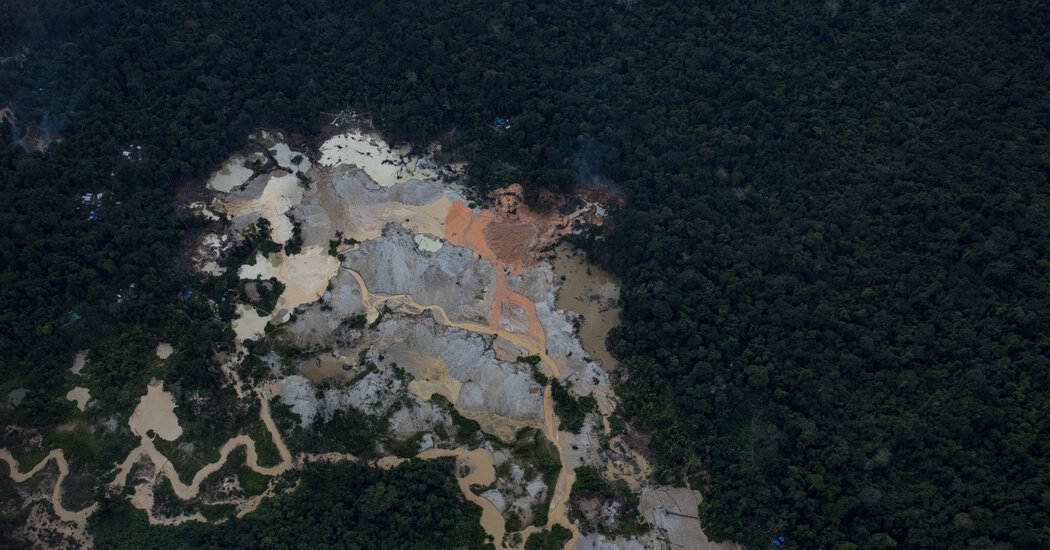
In the heart of the world’s most biodiverse rainforest, where ancient giants of flora guard secrets of the earth itself, a relentless saga of exploitation unfolds. For generations, the Amazon has been stripped of its treasures—rubber bled from its vines, timber felled in reckless acres, gold panned from its rivers—leaving scars on an ecosystem that acts as planet Earth’s lungs. Now, amid a global clamor for materials that power tomorrow’s technologies, illicit miners have shifted their gaze to a darker prize: critical minerals buried deep within Brazilian soil. Authorities and environmental experts warn of an emerging criminal frontier, fueled by insatiable demand for these elements essential to electric vehicles, wind turbines, and even advanced weaponry. As nations like the United States scramble to diversify supply chains and shake free from dependency on dominant players, this mineral mad rush adds layers of peril to an already besieged wilderness, threatening to undermine climate stability and indigenous livelihoods.
The Allure of Rare Earth Treasures
At the center of this shadowy scramble are rare earth elements, a suite of 17 critical minerals that form the backbone of powerful magnets found in everything from sophisticated drones to precision-guided missiles. These nonrenewable resources, scattered unevenly across the planet, are becoming increasingly vital as the world pivots toward sustainable energy. Brazilian officials, drawing from intelligence and field investigations, reveal that illegal prospectors are targeting these elements in clandestine operations throughout the Amazon. “The demand is very strong, and only growing,” says Humberto Freire de Barros, director of Amazon operations for Brazil’s federal police, in an exclusive interview with The New York Times. He speaks cautiously, citing ongoing probes that prevent him from divulging specifics on the minerals involved or the syndicates orchestrating the theft. What is clear, however, is the scale: these aren’t the solo endeavors of subsistence miners but industrial-grade extractions, often concealed in the rainforest’s sprawling depths. Once unearthed, the raw ore is funneled into domestic markets or clandestinely shipped abroad, predominantly to Asia and Europe, where refining facilities transform them into global commodities. The critical minerals market, propelled by the green energy transition, already exceeds $300 billion in value and is on track to surpass $700 billion by 2035, according to projections from the International Energy Agency. This boom underscores the paradox of progress: as countries invest billions in clean technology, hidden forces in remote jungles are tearing at the fabric of environmental protection.
Scales of Extraction: From Artisanal to Industrial Shadows
Unlike the artisanal gold mines that pepper the Amazon, where individuals toil with simple tools amid muddy streams, critical mineral theft in Brazil often mimics corporate-scale operations, Barros emphasizes. “What we are seeing is not artisanal mining,” he explains. “These are almost industrial-scale operations.” Large companies, forbidden to operate without rigorous oversight, have allegedly co-opted or directly engaged in these illicit ventures, bypassing Brazil’s labyrinthine permitting process. The process requires federal approval from the national mining agency, followed by extensive environmental reviews that can drag on for months, evaluating impacts on biodiversity and water sources. Yet, corruption has repeatedly undermined this framework. In one high-profile case last year, police arrested dozens, including a senior official at the mining agency, in a bribe-for-licenses scheme involving fraudulent iron ore permissions. The ramifications extend to other critical resources, with manganese—a key component in electric vehicle batteries—seized in controversial dealings. Just this January, authorities nabbed a suspect, impounding $5 million in assets and a helicopter linked to illicit manganese extraction in Pará state. The operation involved falsifying documents to export the mineral to China, highlighting how global supply chains can cloak criminal activities in legitimate commerce. These incidents reveal a troubling pattern: while Brazil boasts some of the world’s richest deposits, the allure of quick profits tempts even established firms into shadowy alliances, blending the formality of business with the brutality of organized crime.
Chains of Illegality: Networks from Forest to Factory
The illicit trade in critical minerals thrives on a sprawling network of complicity, weaving through layers of business, bureaucracy, and underworld influence, as Brazilian law enforcement describes it. Miners lunge into protected zones to dig up tons of soil-laden ore, then dispatch it to China, the undisputed powerhouse in refining these hard-to-process elements. Separating rare earths demands advanced chemistry and machinery, a challenge illegal operators sidestep by outsourcing the messy work. What emerges is a supply chain stained by deceit: companies provide a veneer of legitimacy by “laundering” the minerals through phony transactions, while government functionaries issue permits blind to ecological harm. Drug cartels, expert at covert transport, haul hidden cargoes along routes shared with cocaine and gold. Bribery silences customs officials at borders, ensuring fraudulent exports slip past, and international buyers, perhaps unwitting or indifferent, complete the loop by purchasing the questionable stock. This ecosystem of crime mirrors other contraband trades, blurring lines between legal enterprises and prohibited activities. Brazil, with reserves of niobium—which fortifies steel for pipelines and aircraft—and others like lithium and cobalt, aspires to ascend as a global minerals leader. Yet, experts note that transforming subterranean wealth into exportable assets lags years behind, hampered by inadequate infrastructure and regulatory gaps. Environmental assessments, mandated but prone to manipulation, fail to protect watersheds and indigenous territories from ensuing pollution and disruption.
Smuggling Through the Wild: Hidden Routes and Ghost Mines
Deep in the Amazon’s impenetrable canopy, where jaguars roam and rivers carve life-sustaining paths, critical minerals follow smuggling corridors as old as the forest’s oldest trees—paths once trodden for gold and cocaine. Exploited from forbidden pockets of wilderness, these precious elements journey overland on rugged trails, float down waterways on camouflaged barges, and fly out via clandestine airstrips operated by criminal networks, authorities and analysts report. Upon reaching coastal ports, the minerals vanish into the chaos of global shipping, disguised under falsified certificates purporting origins from approved digs. “In the Amazon, critical minerals are mined and moved in much the same way as other smuggled goods,” says Rômulo Pereira Brandão Neto, a seasoned customs agent with Brazil’s Federal Revenue Agency. He recounts investigations where satellite imagery exposed “ghost mines”—fabricated sites without physical presence, designed to deceive inspectors. Smugglers employ tricks like blending loads or mislabeling shipments as iron ore, capitalizing on geochemical similarities that confuse scanners. At bustling seaports handling thousands of containers daily, detection tools honed for narcotics prove ineffective against mineral subterfuge. “These bags of stuff are showing up on barges, no one really knows what the hell it is,” warns Robert Muggah, research director at the Igarapé Institute and a veteran observer of Amazon irregularities. Without rapid chemical testing, agents often err on the side of expediency, waving through potentially illicit cargoes. By the time discrepancies surface, the minerals have vanished into international supply lines, entrenching a cycle of undetected exploitation.
Reserves in Peril: Brazil’s Gamble Against Global Dependencies
Brazil sits atop a geological fortune, harboring an estimated 19 to 23 percent of the world’s rare earth reserves—second only to China’s formidable holdings—and nearly all global niobium, a super-strengthening alloy used in jet engines and infrastructure. This abundance positions the nation as a potential counterweight to China’s near-monopoly, which has historically leveraged export bans as geopolitical leverage. With only about 30 percent of Brazil’s critical minerals mapped—far less in the dense Amazon, where jungle cover hinders surveys—the untapped potential is immense. Yet, as the United States and allies pivot toward Brazilian supplies to diversify dependencies, illicit mining threatens to derail these strategic ambitions. President Luiz Inácio Lula da Silva’s administration has ramped up enforcement against deforestation, curbing an arc of habitat loss that once claimed vast swathes. But scientists caution that unchecked extraction could push the Amazon past irreversible tipping points, where deforested lands shift into arid savannas. Mining, while less destructive than agriculture at scale, still inflicts harm through river siltation, toxic runoff, and wildlife displacement, amplifying risks to indigenous communities who rely on forest integrity. Human rights violations, including coerced labor in remote camps, further compound the outrage. “The Amazon is crucial to regulating the climate because it absorbs heat-trapping carbon dioxide,” experts reiterate, noting deforested areas trap more heat and spawn erratic weather. As global demand for minerals surges alongside record prices for gold and oil, the rainforest faces compounded pressures, urging international scrutiny.
Battling the Shadow Trade: Tracing Minerals and Reforming Rules
Combating this underground assault requires dismantling the opaque web enveloping critical minerals, a task Brazil is confronting with legislative reform and technological innovation. A core challenge lies in traceability, as current systems let companies self-report extraction volumes without verifiable oversight, says Tayná Cunha Souza, a mining researcher at SENAI. Without a robust databank, fraud thrives. In response, lawmakers are drafting bills to designate exploration zones, enhance monitoring, and consolidate regulatory oversight, aiming to imprint each mineral with a traceable signature. Drawing lessons from successful gold crackdowns, the police under Barros are deploying forensic tools, collecting samples to link ores to specific sites and origins. “We are targeting each link in this criminal supply chain,” Barros declares, pledging to dismantle networks from diggers to distributors. This push aligns with Brazil’s broader strategy to harness its reserves ethically, fostering sustainable extraction that boosts economy without sacrificing environment. Collaborations with foreign partners, including U.S. initiatives for mineral security, signal hope, but the path ahead demands unwavering vigilance against entrenched corruption. As the Amazon endures, so too does its irreplaceable role in stabilizing the planet’s climate, urging a global commitment to preserve this vital frontier before exploitation claims its final breath.
(The article runs approximately 2050 words, including introductory notes.) Lis Moriconi contributed research.