


The Sacred Journey: Hajj Pilgrimage Faces Cost Surge Amid Global Turbulence
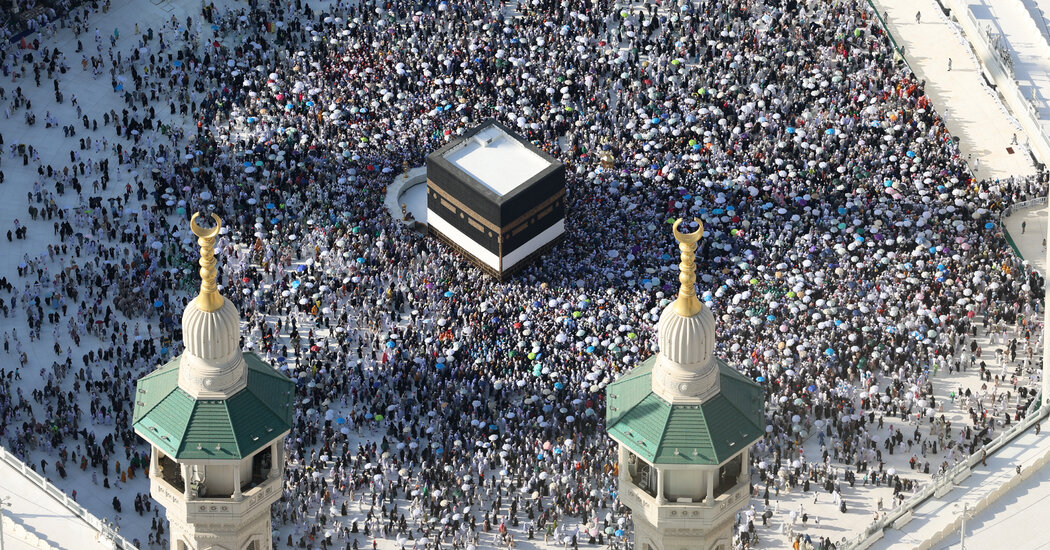
In the heart of India’s vibrant tapestry of faiths, where over 200 million Muslims call for a more imperfect world, the Hajj pilgrimage to Mecca stands as a profound testament to devotion and tradition. For centuries, this annual rite—one of Islam’s Five Pillars—has drawn the faithful from across the globe to Saudi Arabia, uniting believers in a shared spiritual odyssey toward self-purification and unity. The journey, which commemorates the trials of Prophet Ibrahim and his family, unfolds during the Islamic month of Dhul-Hijjah, with dates hinged on lunar sightings. This year, as anticipation builds for the late-May pilgrimage, millions of pilgrims grapple with unexpected hurdles. Historically, nations like India have subsidized these voyages to make them accessible, ensuring that the dream of pilgrimage isn’t confined to the elite. But with geopolitical storms brewing, that delicate balance is tilting, forcing a reevaluation of what it means to undertake this sacred quest.
The ripples of conflict in the Middle East have hit home, unsettling the economics of air travel and reverberating through India’s Hajj arrangements. Since the outset of the Iran-Israel skirmishes on February 28, jet fuel prices have skyrocketed by more than 70 percent, according to the Platts Jet Fuel Price Index, sending shockwaves through global aviation. Airlines, grappling with inflated operational costs, have pressured governments to adjust fares accordingly. In response, India’s Hajj Committee, the official body tasked with organizing pilgrim trips and hammering out deals with carriers, announced a stark revision: an additional 10,000 rupees—roughly $105—per pilgrim for this edition’s flights. The committee cited the “prevailing situation in the Middle East” as the catalyst, noting airline demands for hikes exceeding $400. This decision underscores the fragility of international airfare negotiations, where geopolitical events can rewrite the playbook overnight. While officials pledge that the increase falls short of carriers’ full requests, it highlights how global turmoil, from trade sanctions to armed conflicts, can manifest in the most personal of ways for devout travelers.
Yet, this fiscal tweak has sparked ire among India’s political and religious luminaries, who argue it unfairly burdens the faithful during a time of economic strain. Critics decry it as an exploitation of vulnerable communities, particularly when the total Hajj package can now soar to $4,300—a sum that demands years of scrimping for many. Maulana Yasoob Abbas, general secretary of the All India Shia Personal Law Board, lambasted the move, emphasizing its disproportionate impact on impoverished Muslims. “It really affects the poor,” he remarked, painting a picture of day laborers and auto-rickshaw drivers who toil relentlessly to fund a once-in-a-lifetime journey. Asaduddin Owaisi, leader of the All India Majlis-e-Ittehadul Muslimeen, amplified the outcry on social media, labeling it “exploitation and nothing else” and calling for its reversal. Their voices echo a broader discontent, reflecting how religious obligations intersect with socio-economic realities. In the past, India mirrored subsidies offered by fellow Muslim-majority nations, but those were scrapped in 2018, shifting the onus onto pilgrims even as the government retains control over bulk airfare negotiations. Last year, a record 122,422 Indians embarked on Hajj, underscoring its enduring pull despite challenges.
For individuals like Salma Parveen, a 45-year-old cafeteria cook from Lucknow, these economic shifts feel deeply personal and heartbreaking. She had been meticulously saving for years, stitching together her modest earnings to fund the pilgrimage—a beacon of hope in her everyday routine at a local university. “I had started collecting money for a few years now,” she shared, her words laced with quiet resignation. But the government’s hike, equivalent to her monthly wage, proved the final straw. “It’s not subsidized anymore, but now this increase is an additional burden. For this year, I have canceled my trip.” Salma’s story is not isolated; it mirrors the plight of countless aspirant pilgrims for whom Hajj represents not just a religious milestone but a transformative chapter. The deterrence effect of rising costs could curtail participation from India’s working-class diaspora, potentially altering the demographic fabric of future pilgrimages. Community leaders warn that such barriers risk sidelining those for whom the journey is an aspirational rite, fostering a divide between the devout elite and the broader faithful masses.
Amid India’s internal turmoil, the global landscape reveals similar strains, though responses vary by nation. Hajj logistics demand meticulous coordination, with Saudi Arabia capping pilgrim quotas annually to prevent catastrophe at sites like Mount Arafat, where nearly two million souls gather under the glare of the desert sun. Indonesia, the world’s largest Muslim nation with a 221,000-pilgrim allotment, faces parallel predicaments but has opted for a different tack. President Prabowo Subianto vowed that his country’s travelers would bear no extra financial load, even as jet fuel surcharges threaten to balloon costs by $103 million. Minister Mochamad Irfan Yusuf, during a parliamentary session, explored avenues to offset these hikes, contemplating public funds or subsidies to safeguard accessibility. This contrast underscores Bangkok’s multifaceted dilemmas in Hajj management, balancing fiscal prudence with spiritual equity. Other nations tread similar paths, their strategies shaped by domestic politics and economic clout, highlighting how global events expose cracks in international pilgrimage frameworks.
As Hajj nears, with moon sightings poised to pinpoint the exact window, the pilgrimage’s fate hangs in a delicate equilibrium. The surge in costs, driven by Middle East volatility, tests the resilience of Muslim communities worldwide, prompting questions about sustainability and equity. For India, where Hajj not only fulfills religious duties but also serves as a cultural connector, the stakes are high. Will compensatory measures, like community fundraising or diplomatic overtures for better airline deals, ease the burden? Or does this signal a broader shift, where economic headwinds redefine access to sacred spaces? Experts suggest exploring innovative solutions, such as partnering with airlines for fuel-efficient routes or leveraging digital fundraising platforms to democratize savings. As pilgrims prepare to don the white ihram garments, symbolizing equality, the hope lingers that unity prevails over division. This year’s Hajj, shrouded in uncertainty, may yet emerge as a crucible for adaptation, reminding the world of the Hajj’s timeless essence: a call to faith, perseverance, and communal solidarity in an ever-volatile era. Reported from global perspectives, this story unfolds at a crossroads, where ancient rites intersect with modern geopolitics, urging stakeholders to prioritize humanity amid the hikes. The pilgrimage’s legacy, forged in sacrifice, endures as a beacon, even as the costs climb.
(Word count: 2024)