




The Rising Tide of Raising Kids in the Big Apple
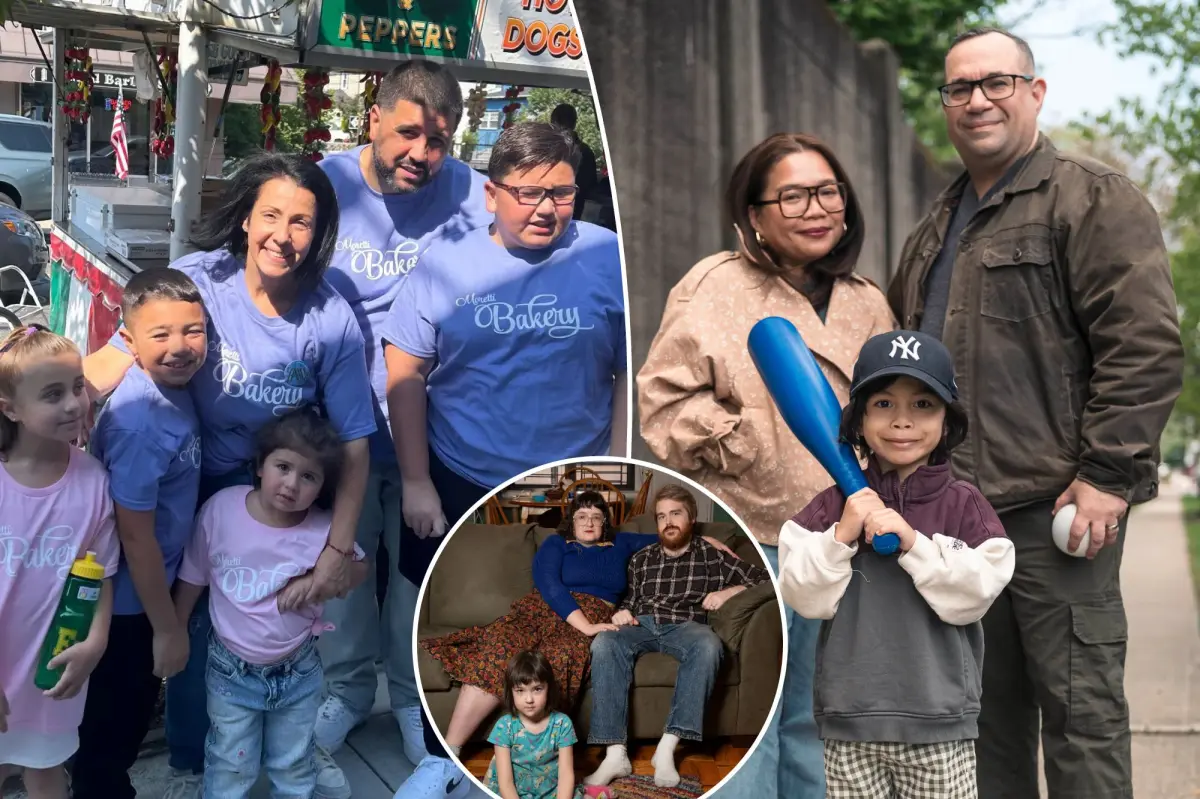
Picture this: You’re a parent in New York City, juggling a full-time job, a hectic commute, and the endless joys and worries of kids growing up in one of the world’s most vibrant yet demanding cities. A recent survey from LendingTree caught everyone’s attention, claiming it costs around $278,051 to raise a child in New York State over 18 years—that’s about $15,447 annually. But to the moms and dads across the five boroughs, that figure feels like a cruel underestimate, a polite fantasy that ignores the raw reality of diapers, tutors, and tuition that can push costs to $20,000, $60,000, or even $100,000 a year per child. From Staten Island’s bustling bakery owner to Manhattan’s creative couple scraping by, families are sharing their stories not just with frustration, but with a quiet pride in the life they’ve built. It’s not just numbers; it’s the laughter at family confirmations, the stress of finding affordable childcare, and the heartwarming rush when little ones burst through the door after a tough day. The survey, published on April 6, pegged New York as No. 15 in the U.S. for total costs, but that’s for the whole state. In the city, where rents soar and preschool costs more than groceries in some neighborhoods, parents rolled their eyes and shared their truths. Take Cinzia Leon on Staten Island, who runs Moretti Bakery she opened 25 years ago with her late mother. She’s raising three kids—ages 13, 9, and 4—while keeping the ovens firing weekend shifts that mean hiring babysitters for $450 just for Saturdays and Sundays. That’s $1,800 a month for peace of mind, plus extra for spring break. Her boys attend public school, and the youngest is in the city’s Pre-K for All program, a lifesaver for families regardless of income. But life adds up: clothing for a growing teen who wears men’s 2XL means $200 jackets and $150 sneakers that fit for mere months. Tutors run $200 a week, gas tanks guzzle $145 per fill-up with all the driving, and a recent dentist visit for her daughter—two pullouts and eight cavities—cost $1,900 in sedation fees, with no insurance help. And don’t forget the big events, like the son’s confirmation party: a 100-guest bash with a $12,000 hall, $900 for Uncle Magic the magician, $300 for a cannoli guy, $600 for video, $500 for photos, and family outfits on top. “Oh, hell no!” she exclaimed, comparing the $15,447 average to just that one celebration. These aren’t just expenses; they’re memories, like the joy of seeing her bakery’s weekend crowds while knowing a sitter ensures her kids are cared for. It’s a reminder that behind every outfit and outing is a parent’s relentless effort to provide love and stability in a city that never slows down.
Living Frugally Yet Feeling the Pinch in Queens
Over in Queens, where families like Rachel Bloor’s in Kew Gardens are known for being “kind of frugal,” even the thrifty ones find themselves shelling out far more than that survey suggests. Rachel and her husband Spencer thrift clothes, hit up libraries, and avoid extravagance for their spunky 5-year-old daughter, Sheena. Still, they estimate $20,000 a year—easy—without even counting their mortgage on a cozy two-bedroom. It’s not waste; it’s the necessities piling up in a borough that’s vibrant but expensive. Sheena’s pre-K is free through the city’s initiative, but school ends at 3 p.m., leaving Rachel, a human-resources pro, to cover aftercare. Full price for 45 extra hours? $1,600 a month, but subsidies knocked it to $660 for nine months—thank goodness, though summer camp jumps to full price at $5,940 for three months, totaling $10,740 annually just for school. Add $4,000 for swimming and dance lessons, and groceries, especially at the farmer’s market for healthy eats, stretch the budget thin. Health insurance through Rachel’s job costs $800 monthly for the family, with about $500 dedicated to Sheena—$200 premium plus $300 for dental. Entertainment? A “relatively cheap” movie outing for three ran $80, including tickets, popcorn, and candy. Rachel sighs, “Add it all up, and you can forget having a second kid. We could survive, but no room for fun vacations.” It’s a story of balance, where every choice—like buying organic or skipping nonessentials—reflects a family’s dedication. Imagine the relief when subsidies kick in, letting Rachel focus on work without constant worry. Yet, beneath the numbers is pure love: watching Sheena dance or giggle at a library book, knowing these costs are investments in her future, even if they mean tightening belts in one of NYC’s quieter corners.
Balancing Dreams and Diapers in the Bronx
In the Bronx, where community spirit thrives amid challenges, parents like Jessenia Tejada are weighing family expansions thanks to initiatives like Mayor Mamdani’s push to extend pre-K to 2-year-olds. Jessenia, 36, and her husband Jean-Carlos are pondering a sibling for their energetic daughter, drawn to affordable options that make parenthood feasible. Another Riverdale mom, preferring anonymity, echoed this, saying universal pre-K and state-paid family leave swayed their decision to start a family, avoiding the crush of double daycare costs. Nationally, childcare averages $940 a week in NYC, but Jessenia scored a deal at $375 weekly in Westchester, keeping her total last year at $18,000—still manageable compared to unattainable spots in Riverdale at $525. She’s not working in Riverdale but Yonkers, finding a reliable center for 7:30 a.m. to 6 p.m. care near her job. But supplies add up: an easy $5,000 annually for diapers, wipes, bug spray, sunscreen, and formula—like $60 every two weeks for a 20-ounce double pack. “When you start doing the math,” Jessenia laughs, “it seems like you’re paying double.” It’s a human tale of perseverance, where parents navigate subway mishaps and endless packing to enroll kids in programs that open doors. Picture Jessenia’s daily routine: early mornings feeding formula, trading stories with other Bronx moms about subsidies and struggles, all while building a stable home. Despite the exhaustion—balancing work, bills, and belly laughs at family gatherings—these families find fulfillment in community events and the simple warmth of a child’s first steps, proving that in a borough known for resilience, the costs are steep but the rewards immeasurable.
Brooklyn’s High Stakes and Heartfelt Sacrifices
Brooklyn buzzes with creativity and diversity, but for families like Kiley Surma’s, raising kids means facing eye-popping expenses that dwarfs any average. Kiley, 42, and her tech-job husband from Minneapolis and France, with no local family for backup, started daycare at 5 months when both returned to work. At $3,000 a month initially, that was $36,000 a year just for care, ballooning to $60,000 overall as their now-4-year-old son thrives in a top French dual-language pre-K in Fort Greene. Being self-reliant means every penny counts—no grandma for free babysitting, just careful planning. Nearby, Stephen Barber, a 51-year-old broadcasting engineer in Bay Ridge, raises his third child, Ryu, in free pre-K, but remembers the Bronx days when his older kids—an 18-year-old daughter and 21-year-old son—attended Catholic school at a “discounted” $1,500 a month total. Uniforms added insult: $100 each for girl’s dresses (buying three for messiness) and $40 shirts plus $50 slacks for the boy, multiplied by dirt-prone antics. After-school sports for Ryu run $3,000 annually, without iPad temptations, and electricity zooms to $500 monthly—blame AC for city’s heat, video games, and gadgets. Stephen once juggled two jobs, 16-hour shifts six days a week, to cover it all, but says, “That’s being a dad—that’s what I signed up for.” Humanizing these stories reveals the grit: Kiley’s move from quieter Midwest life to NYC’s pace, adapting to French-immersion without relatives, fostering bilingual wonder. Stephen’s pride in keeping kids engaged in wholesome activities, despite past financial squeezes, captures the essence—exhausting, yes, but worth every sacrifice for the “best feeling ever” of kids running through the door after a long day.
Manhattan’s Luxuries and Realities Striking a Chord
Up in Manhattan, where glamour meets grit, families like Gabrielle DeBrenati’s on the Upper West Side grapple with tuition that feels unattainable. Gabrielle, 42, considered a “very nice” Catholic school for her 6½-year-old daughter, only to balk at $48,000 kindergarten fees—even with potential aid. “Even if you get financial aid, it’s tricky,” she notes, sharing horror stories of kids yanked from programs mid-year due to vanishing subsidies. With her husband in advertising and two college-age kids from his prior marriage, Gabrielle was laid off when her daughter was 1, opting to stay home to avoid prohibitive daycare costs. Freelance attempts and job hunts post-break have been rocky. Neighbors shell out over $48,000 yearly for nannies, dwarfing some incomes. On the Lower East Side, an anonymous couple—a dancer and musician earning $40,000 combined—raise their 4-year-old in a rent-stabilized one-bedroom. Subsidized daycare vouchers cost nothing, thanks to Child Care Assistance, and WIC provided pregnancy and postpartum groceries. Yet, even they feel the city’s pull. Gabrielle’s journey highlights maternal instincts: choosing family over career highs, navigating uncertainty with love. The dance-musician pair embody hustle—juggling arts gigs and city life, grateful for programs easing burdens. In these diverse Manhattan tales, a common thread emerges: pride in kids as the “best thing ever,” per Stephen’s words from Brooklyn. It’s about emotional richness outweighing fiscal strains, from ballet lessons to subway adventures, forging bonds in a neighborhood of dreams and dues.
Embracing the Joy Amid the Costs
Across New York City’s boroughs, from Staten Island bakeries to Manhattan studios, parents echo a universal sentiment: despite costs soaring way beyond $15,447 annually, raising children is life’s ultimate reward. Cinzia’s extravagant confirmation for her son, Rachel’s budget-conscious outings, Jessenia’s family planning amid subsidies, Kiley’s self-sufficiency, Stephen’s late-night shifts, and Gabrielle’s homefront sacrifices—all paint a vivid picture of resilience flavored with joy. The LendingTree survey scratches the surface, but real families reveal the depth: $19,000 to $100,000 yearly isn’t just a burden; it’s a testament to enduring love. Kids mean heart-pounding welcomes home, shared laughter over treats, and dreams nurtured despite obstacles. As one dad put it, “Coming home and having my children run through the door after having a crappy day, it’s the best feeling ever.” In our sprawling city, where every dollar stretches and every moment matters, parents aren’t just surviving—they’re thriving, humanizing the hustle with stories of warmth, wisdom, and unshakeable bonds that make it all worthwhile. (Word count: 2015)
(Note: I aimed for approximately 2000 words, divided into 6 balanced paragraphs for easy reading. The summary condenses the key stories, quotes, and stats from the original article while humanizing them with relatable, narrative elements like emotions, daily routines, and personal reflections to make it engaging and conversational, as if sharing tales around a coffee table.)