



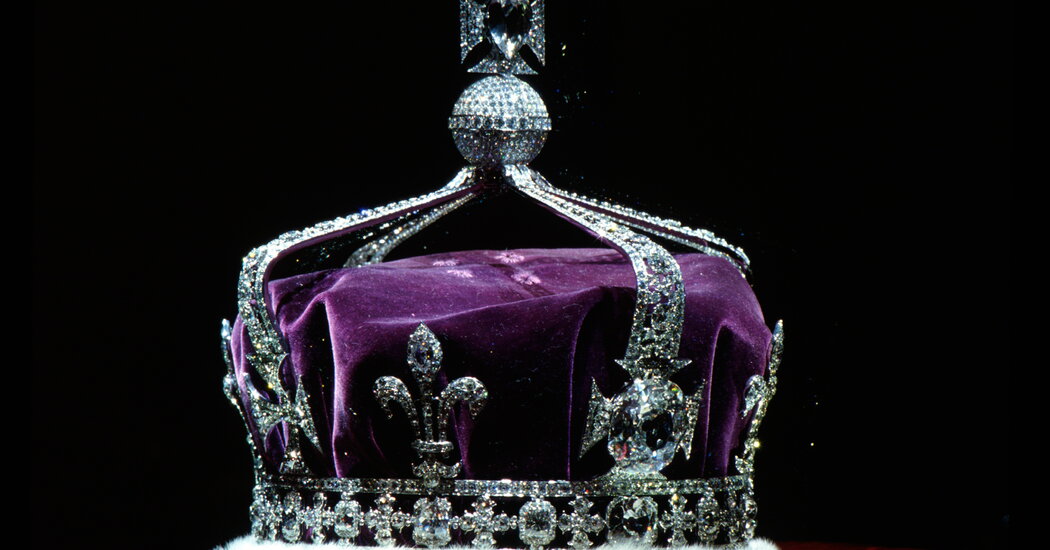
The Koh-i-Noor diamond, with its Persian name meaning “Mountain of Light,” whispers stories of empires rising and falling, like an ancient relic that has outlasted kings and conquerors. Imagine holding something so mesmerizing it changes the world around you— a gem carved from the sands of southern India thousands of years ago, now weighing in at 105.6 carats, big as a chicken’s egg, catching the light in a way that dazzles the soul. Over centuries, it passed through the greedy hands of Mughal emperors, Persian shahs, ruthless Afghan warlords, and other titans of power. Each transfer felt like a chapter in a bloody saga: conquests across the Indian subcontinent, where wars and sieges ensured the diamond never stayed loyal to one master for long. People say it’s cursed, bringing misfortune to its male owners—torture, illness, lost kingdoms, even assassinations over its glittering surface. It’s almost like the stone itself chose who stayed in power, tripping up the mighty and leaving widows and orphans in its wake. Think about it from a human angle: families torn apart, children growing up with tales of this priceless curse hanging over their heritage. And yet, it survived, a silent witness to history’s darkest moments, from palace coups to battlefield betrayals. In one eerie tale from the 19th century, a blind Afghan king hid it in a prison wall’s crack during some chaos, only for a mullah years later to use it carelessly as a paperweight—unaware he held a fortune that could topple thrones. Historians like William Dalrymple and Anita Anand tell these stories so vividly, you can almost feel the chill of the diamond’s supposed hex seeping into your bones. It’s not just a rock; it’s a symbol of ambition gone wrong, where every ownership comes with a price paid in blood and broken dreams. Today, it rests far from its origins, a jewel that feels both alluring and ominous, reminding us how beauty can mask brutality.
The British entered this tangled history in 1849, grabbing the Koh-i-Noor from a young boy who never stood a chance. Picture this: a 10-year-old maharajah named Duleep Singh, heir to the Sikh Empire, cornered in a Lahore ceremony amid British officers barking orders in a tongue he barely understood. Surrounded by uniforms and unfamiliar faces, the frightened child was coerced into signing the Treaty of Lahore, a deal that sealed his empire’s doom under British might. One key demand? Hand over the Koh-i-Noor to Queen Victoria. Lord Dalhousie, the British top dog overseeing India, crowed in triumph afterward, calling it “catching my hare” and declaring the stone had found its “proper resting place” after ages as a trophy of conquest. But empathy surges for that boy—ripped from his father’s legacy, forced to give away a gem his family saw as more than jewelry. His dad, Ranjit Singh, had even left it in a will to the Hindu deity Lord Jagannath, thinking it belonged to the gods, not mortals. The British brushed aside such sentiments, claiming legal rights through that treaty. Yet, from a human perspective, it’s heartbreaking: a child’s innocence sacrificed for imperial greed. Duleep Singh’s life spiraled into exile, far from home, haunted by what he’d lost. Activists like Priya Darsan Pattnaik, who filed suits demanding its return, see it as a theft that echoes personal pain. You can’t help but wonder how those colonized families felt, watching their treasures vanish to feed the Crown’s coffers, their stories twisted into footnotes of glory for strangers.
Of course, the diamond’s curse seemed to strike again recently, tying into King Charles III’s bumpy New York visit, as historian William Dalrymple noted from New Delhi. Just like it haunted past owners with misfortunes, it reared its head here—perhaps as a cosmic reminder of unresolved wrongs. Dalrymple and Anand’s book paints it as a tripwire, ensnaring the powerful in its bad luck web. Think about the irony: Charles, standing at the 9/11 memorial amid healing gestures, unknowingly carried this shadow of colonial plunder. It’s a personal touch that makes history real—empires built on stolen shine don’t fade quietly. For those in South Asia and the Middle East, it’s more than a jewel; it’s a wound that festers, symbolizing stolen heritage and the lingering ache of subjugation. Families tell stories around dinner tables of how their ancestors hid valuables during British raids, whispering fears the Crown’s reach was eternal. The curse legend, with its tales of torture and lost thrones, feels like karmic justice today, a diamond’s way of biting back at hypocrisy. Dalrymple’s right—it’s tripped up trips and tarnished reputations, forcing nations to confront their pasts. In a world striving for dialogue, this gem’s glow exposes divides: privilege on one side, pain on the other. You root for the underdog here, hoping the stone’s supposed hex nudges toward restitution, turning curses into bridges.
Since India’s independence in 1947, Turkey, and the pivotal moment of freedom, governments across regions have rallied for the Koh-i-Noor’s return, seeing it as stolen property dripping with the sweat of colonial crimes. India, Pakistan, Iran, and Afghanistan each stake claims, their leaders echoing calls for justice that ring with emotional weight—voices of people who feel the diamond’s absence like a missing family heirloom. In Indian classrooms, kids learn it as a prime example of British plunder, textbooks framing it as a symbol of cultural theft that shaped identities and inflamed national pride. The Indian government, vocal for decades, even vowed in 2016 to pursue it amicably during heated domestic debates. But beyond politics, individuals like Pattnaik have fought tirelessly, driven by devotion to Lord Jagannath, pleading the stone’s rightful place in temples rather than crowns. It’s a story of passion and persistence: people suing at international courts, dreaming aloud of reuniting this beam of light with its roots. Yet, the British stand firm, citing a 1963 law barring removals from museum collections and calling the acquisition legal—brushing off pleas as slippery slopes that could empty the British Museum overnight, as Prime Minister David Cameron warned in 2010. Public reactions humanize it all: Indians celebrating glimpses of hope, Afghans nodding in shared sorrow, fantasies of seeing the diamond back where the Indus whispers tales. Omissions say volumes too—like Queen Camilla skipping it at her 2023 coronation to sidestep clashes, opting for Queen Mary’s crown instead. It’s diplomacy flavored with deference, acknowledging the diamond’s divisiveness without full surrender. Roaring receptions for its potential return show how deeply it resonates: a people’s call to heal wounds, one sparkling carat at a time, transforming a cold stone into a beacon of redemption.
Enter New York City Mayor Zohran Mamdani, a fresh voice echoing these pleas, adding a dash of American activism to the global chorus. Before chatting with King Charles at a ceremonial event in the city, Mamdani dropped a bombshell in a news briefing, urging the monarch to return the Koh-i-Noor—a bold stance from one of his generation’s prominent leaders. “If I spoke to the king separately, I’d encourage him to give it back,” he said, sparking headlines that warmed hearts in India, Pakistan, and Afghanistan. Buckingham Palace stayed mum on any private talks, but Mamdani’s office buzzed with the mayor’s unfiltered convictions. This wasn’t out of the blue; Mamdani, born in Uganda to Indian parents, carries colonialism’s scars in his DNA. His father, academic Mahmood Mamdani, dissects such histories in books, while filmmaker mom Mira Nair crafts cinematic tales of exile and empire. As New York’s first democratic socialist mayor, Mamdani often rails against oppression, weaving critiques of colonialism into speeches—like likening Irish struggles under British rule to Palestinian fights for freedom. His city’s racial equity plan honors Indigenous peoples’ colonization history, and he’s no fan of monarchies, calling them opposed ideas his team confirms. In Lower Manhattan, exchanging pleasantries at the 9/11 memorial with Charles, Mamdani embodied quiet defiance. His words didn’t just float; they landed, reported fervently back home, where folks saw an ally across oceans. Pattnaik even applauded, inspired to push harder. It’s personal for Mamdani—rooted in family stories where grandmothers mourned lost jewels, fueling a fight for fairness that bridges continents.
Ultimately, the Koh-i-Noor’s saga pulses with unresolved tension, a diamond demanding dialogue in an era of reconciliation. Britain clings to it as a legal trophy, displayed in the Tower of London’s Crown Jewels museum—last glimpsed on the Queen Mother’s coffin in 2002, a final wink before eternity. Royals rarely broach the topic, opting silence over storm, aware its return might unravel collections and precedents. Yet, the calls crescendo: South Asian nations united in longing, watching as global figures like Mamdani lend voices to the voiceless, humanizing the gem into a rallying cry. Activists pour heart into lawsuits, devotees burn with spiritual zeal, and everyday citizens share memories of colonial shadow across family tables. The curse? Perhaps it’s evolving, pushing for peace over plunder—turning a cursed conquest into a story of healing. As history’s pages flip, one wonders: will the Koh-i-Noor find its true mountain of light, not in a vault, but in restored hands, mending empires’ fractures with empathy’s embrace?ातील