


The Joyful Chaos of Seagull Screeches in De Panne
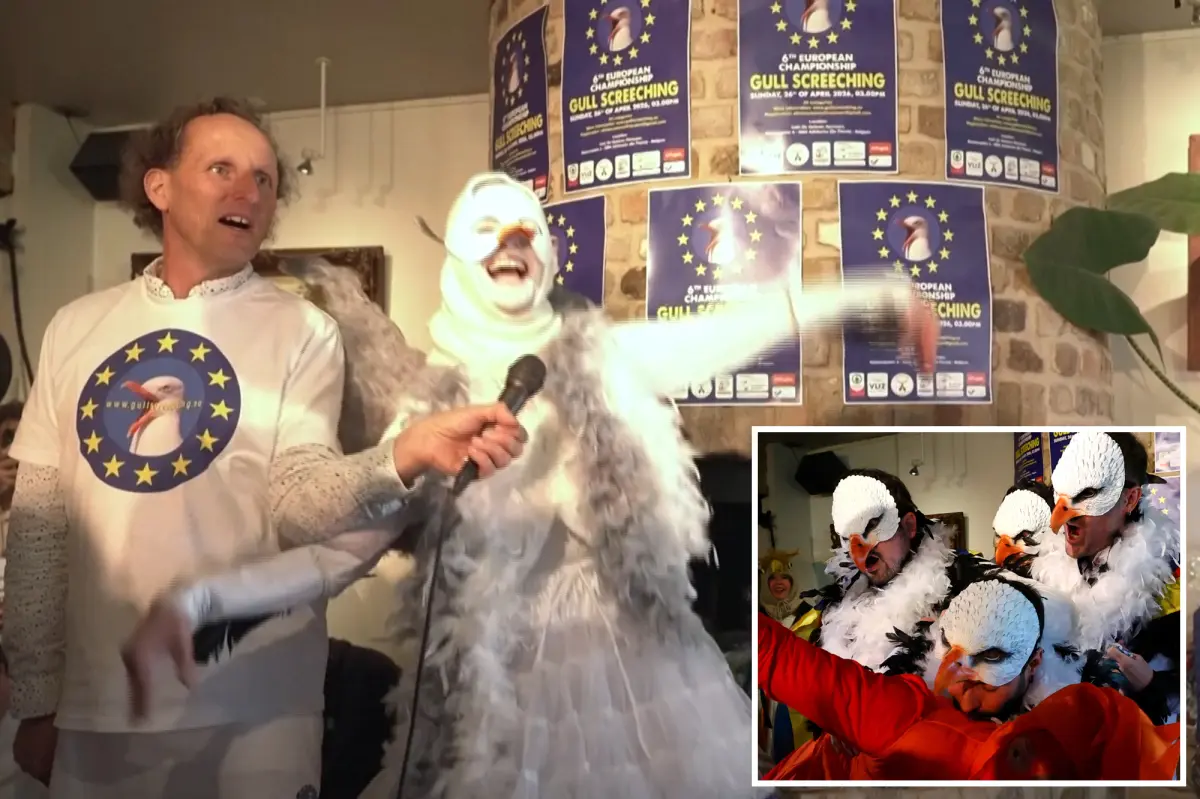
Imagine a sunny Sunday afternoon in the charming Belgian coastal town of De Panne, where the salty sea breeze mingles with the scent of fresh waffles and the distant cry of actual gulls overhead. This isn’t just any quaint seaside scene; it’s the stage for the annual European Seagull Screeching Championship, a delightfully absurd event that’s been capturing imaginations since its inception. Over 70 eager contestants, hailing from 15 countries, gather here, not for a serious competition, but for a playful celebration of mimicry. Picture families with wide-eyed children, young adventurers, and seasoned performers, all united by their shared love for impersonating birds. The sixth edition of this tradition feels like a reunion of old friends and new faces, where the air buzzes with excitement and laughter. From the moment you arrive, you sense something magical—a break from the mundane world, where people are encouraged to let loose and embrace the silly side of life. The event transforms a local pub into a lively arena, its walls adorned with seagull-themed decorations and the floors strewn with eager participants rehearsing their best shrieks in the hours leading up. It’s a reminder that holidays aren’t just about beaches and ice creams; they’re about creating memories through sheer fun and creativity. As the sun dips lower, casting a golden glow over the North Sea, the crowd swells, drawing locals and tourists alike who come to witness this unique spectacle. The organizer, Claude Willaert, a man with a twinkling eye and a passion for changing perceptions, greets everyone warmly, his enthusiasm infectious. He’s the heart of it all, having dreamed up this idea to flip the script on seagulls, those feathered fiends often seen as pests swooping down to snatch your chips. But here in De Panne, they’re redeemed—symbolizing the carefree essence of coastal bliss. Contestants arrive in costumes ranging from homemade wings and beaks to full-on avian outfits, their preparations as varied as their nationalities. A young girl from Poland practices her high-pitched trills in the corner, her parents cheering her on, while an elderly gentleman from France pensively adjusts his seagull-hat, lost in thought about capturing that perfect raspy edge. Each participant carries a story—these aren’t just voices, but pieces of travel tales, cultural exchanges, and personal victories. The pub, with its wooden beams and draft beer taps, becomes a cocoon of camaraderie, where strangers bond over shared giggles and attempts at bird calls. You can almost feel the town’s history seeping in; De Panne, once a quiet fishing village, now pulses with this quirky energy, its promenade lined with art deco buildings and the ever-present sound of waves crashing. As the event kicks off, it’s impossible not to get swept up in the vibe—a humanizing force that turns competitors into performers and spectators into family. The championship isn’t about winning big prizes; it’s about participating in something utterly whimsical, where the act of screeching like a seagull becomes a universal language of joy.
A Melting Pot of Voices and Veras
The diversity of the participants is what truly makes this event shine, drawing in people from all walks of life who defy stereotypes about who attends such bizarre gatherings. From Spain to Sweden, Germany to Greece, the 15 countries represented ensure a tapestry of accents and styles, each bringing their own flavor to the imitative art of seagull screeching. Age is no barrier either; toddlers barely tall enough to reach the microphone are coaxed into their first attempts, their parents guiding them with gentle encouragement, while octogenarians deliver practiced performances with the wisdom of years spent observing nature. Families have turned it into a group activity, with kids in feather boas and wings made from recycled materials, laughing as they mimic the birds they’ve seen at the beach. There’s a young man from Italy, his dark curls bouncing as he warms up with enthusiastic yelps, confessing afterward that this is his escape from a corporate job back home—the thrill of being applauded for something so absurd rejuvenates his soul. A woman from the Netherlands, ever practical, has studied seagull sounds on her smartphone, analyzing the nuanced differences between herring gulls and black-headed gulls, determined to nail the authentic rasp. Conversations flow in a babel of languages, with contestants swapping tips: “Try to think of a rusty hinge creaking,” one suggests from the UK, or “Incorporate a bit of surprise, like a sudden squawk,” from a Bulgarian enthusiast. The pub is alive with these interactions, the bar serving as a hub where beers are shared and stories exchanged about holiday memories tied to seagulls’ calls. One contestant, a retiree from Portugal, recounts how he first heard a gull’s cry on a childhood trip to Madeira, and now, decades later, he’s back in the game, his raspy imitation drawing nods of approval from others who’ve had similar coastal epiphanies. In this melting pot, bonds form quickly—it’s not uncommon for friends to be made across borders, with plans hatched for future collaborations or even OWL-screeching meetups back home. The event’s inclusivity is palpable; no one is judged for their skill level, and the sheer variety of approaches—some dramatic and theatrical, others straightforward and earnest—highlights the beauty of human expression. Organizer Claude Willaert wanders through the crowd, cracking jokes and offering moral support, his presence a grounding force amidst the chaos. He explains how the championship has evolved from a small local joke into an international phenomenon, attracting more participants each year as word spreads through social media and travel blogs. The costumes add a layer of whimsy: papier-mâché beaks, tattered scarves mimicking wings, and even a few full-body suits that look like overzealous Halloween props. This isn’t just competition; it’s a cultural mash-up, where a Polish father helps a French child perfect their tone, and laughter bridges any language gaps. By embracing such diversity, the event humanizes seagulls themselves, reminding us that these birds, often maligned as seaside nuisances, deserve a place in our affections for the sheer charisma they bring to our vacations.
The Thrill of Imitation and Points
At the heart of the championship lies the pure skill of imitation, judged by a panel that’s as eclectic as the contestants—a mix of local celebrities, ornithologists, and former winners, all armed with scorecard clipboards. Each participant steps up to the humble stage, no more than a cleared pub table draped in a blue sheet to evoke the sea, and lets loose their best effort. The goal is to replicate the seagull’s distinctive shriek, that piercing, wavering cry echoed in coastal dreams worldwide. A maximum of 15 points is awarded for how closely the sound matches, focusing on pitch, rhythm, and authenticity—does it capture the arrogant swagger of a gull eyeing your sandwich, or the mournful wail in the distance? Then, an extra five points for performance, factoring in body language, facial expressions, and theatrical flair. Watch a contestant hunched over, flapping imaginary wings, their face twisted in mock fury as they unleash a series of sharp “kaw-kaws”—it’s performance art in its simplest form, blending silliness with surprising sophistication. One memory sticks: a young boy from Belgium, barely six, mimicking his first screech so earnestly that the audience gasps in delight, earning a perfect score for sheer heartfelt innocence. Judges scribble furiously, their faces a mix of serious concentration and suppressed grins, occasionally leaning in to confer in hushed tones. Technology plays a subtle role too; a few use phone apps to play reference recordings for fine-tuning, but the magic happens live, unamplified save for the room’s natural acoustics. The pub’s atmosphere heightens the drama—dim lighting, the clink of glasses, and the faint seaside murals on the walls creating an immersive backdrop. Not every attempt lands perfectly; there’s charm in the flops, like an overzealous teenager who belts out a warbled tune more akin to a dying duck, eliciting sympathetic chuckles rather than boos. Yet in these moments, the event’s spirit shines through—no one leaves discouraged, as judges offer encouraging feedback, praising effort over perfection. Claude Willaert oversees it all with a benevolent eye, ensuring fairness while championing the fun. Winners aren’t crowned like Olympic champions; instead, ribbons and certificates are handed out, but the real prize is the shared experience. This scoring system, devised early on, adds just enough structure to make it engaging without stripping away the joy—it’s about celebrating natural talent and learned mimicry alike. Contestants often return year after year, refining their techniques, turning the championship into a personal pilgrimage. For those of us watching, it’s a lesson in embracing imperfections; the seagull’s cry, after all, isn’t flawless in nature, with its variations across species and moods. Humanizing this process reveals how imitation can be a bridge—between humans and animals, between strangers, and even between generations, as grandparents teach grandsons the art of the perfect squawk.
Cheers, Laughter, and a Shared Adventure
The energy in the room escalates with every screech, the crowd’s reactions turning the event into an interactive extravaganza where cheers and applause drown out the noise of the world outside. Each performer’s rendition is met with enthusiastic support, families whistling and stomping feet, creating a wave of communal joy that feels almost primal. A especially spot-on imitation might prompt a roar of approval, with onlookers mimicking the sound back, turning the pub into a echo chamber of human-bird harmony. Laughter bubbles up freely—whether from a child’s exaggerated beak-flap or an adult’s over-the-top operatic wail that veers into comedic territory. This isn’t a stuffy concert hall; it’s a laid-back gathering where the line between performer and spectator blurs, inviting impromptu duets and group sing-alongs. Tourists pepper the crowd, bewildered yet charmed, snapping photos of the chaos as locals explain the “tradition” with pride. One particularly electric moment saw a Dutchman unleash a guttural, multi-tonal screech that had the bar erupting, beers spilling in shared delight. The irony isn’t lost: in real life, seagulls’ cries can be irritating, blotting out peaceful sunbathing, but here, reenacted by humans, they evoke nostalgia and fondness. This shared adventure fosters connections; a group of friends from different countries might adjourn to the pub’s garden post-event, swapping contact info and planning virtual screech-offs. Organizer Claude Willaert circulates, his laughter booming, embodying the event’s ethos of positivity. The crowd’s warmth humanizes the experience, making it feel less like a competition and more like a family gathering by the sea. Children are particularly in their element, their innocent attempts met with adoration, reinforcing that this is a safe space for unfiltered expression. As the afternoon wears on, the cheers evolve into a soundtrack of unity, where differences fade and the pure act of play binds everyone. It’s a rare event where judgment is suspended, replaced by generosity—the kind that leaves participants beaming, regardless of scores. This communal spirit extends beyond the pub; De Panne’s residents, who’ve grown accustomed to the annual invasion, host picnics afterward on the dunes, discussing favorite moments over sandwiches that ironically must be guarded from real gulls. In this way, the championship transcends its odd premise, offering a model of how simple joys can transform perceptions and build bridges.
Reimagining the Pesky Seagull’s Reputation
Beneath the surface fun, the European Seagull Screeching Championship carries a deeper mission, one that’s as heartfelt as it is unconventional: to rehabilitate the seagull’s image in the public eye. Often caricatured as brazen thieves or annoying beach squatters, these birds are, in organizer Claude Willaert’s view, unfairly maligned. The event serves as a gentle protest against this negativity, urging participants and spectators alike to view gulls through a rosier lens—as symbols of freedom, the open sea, and holiday tranquility. Willaert, a lifelong resident of De Panne who’s watched tourism ebb and flow, conceived the championship years ago after overhearing too many complaints about “pesky birds” ruining idyllic coastal vacations. By turning their sounds into something playful and celebratory, he’s fostering appreciation, drawing on the evocative power of their cries to evoke fond memories. Each edition builds on the last, with attendance swelling as media coverage spreads the word, attracting not just enthusiasts but also environmental advocates who see it as a way to highlight wildlife conservation. Judges incorporate this ethos subtly, awarding extra points for interpretations that emphasize the gull’s majestic side—perhaps a performance that mimics a swooping dive with theatrical grace. In conversations with participants, stories emerge: a grandmother from Iceland who studied gulls during ornithology classes, now performing to honor the birds’ role in her culture; a student from Finland using the event to promote eco-tourism. The tradition has sparked creative offshoots too, like workshops on birdwatching or art installations featuring gull imagery. By reframing seagulls, the championship encourages empathy—reminding us that these creatures, scavenging for scraps in a human-altered world, deserve our wonder rather than disdain. There’s an educational undercurrent as well; informational pamphlets on gull species circulate, blending facts with flair to deepen understanding. Claude reflects on how societal attitudes shift slowly, but events like this accelerate change through humor and heart. For newcomers, it’s an eye-opener: seeing armored vests of “anti-gull” tourists shed their wariness, laughing as they join in. The championship’s longevity testifies to its impact, evolving from a local novelty into a beacon of positivity. It challenges us to humanize wildlife, not as threats, but as integral to our shared landscape, their calls a reminder of nature’s unscripted beauty.
A Positive Wave for the Future
Claude Willaert’s words resonate long after the last screech fades, encapsulating the event’s soul: “When you are on holiday, you always remember the waves of the sea and the calls of the seagulls. So be positive about them.” This mantra, delivered with a smile and a shrug, sums up a philosophy that’s more than rhetoric—it’s a call to action for everyone touched by the championship. Willaert, a former teacher and community organizer, draws from personal experiences, recalling summers spent on De Panne’s beaches where gull cries punctuated joyful times, not just the frustrations of stolen fries. By championing positivity, he’s not ignoring the downsides of gulls—those dive-bombing raids that spoil picnics—but choosing to amplify the good, fostering coexistence. Participants echo this sentiment; a young woman from Germany leaves inspired to volunteer at beach clean-ups, seeing gulls as allies in environmental harmony rather than adversaries. The event’s ripple effects extend to social media, where videos of hilarious imitations go viral, spreading the message that seagulls can be beloved. As the sun sets on another successful edition, awards are announced amid hugs and high-fives, but the true victory is in the paradigm shift. Families depart with smiles, promising to return, their perceptions forever altered. Willaert dreams of expansions—perhaps international franchises in other coastal towns—while emphasizing the core: fun as a vehicle for kindness. In a world often divided, this Belgian tradition offers a model of unity, where absurdity heals and positivity prevails. It’s a humanizing reminder that even the smallest creatures can inspire the biggest changes, one screech at a time, inviting us all to embrace the symphony of the sea. As De Panne settles into evening quiet, the echoes of laughter linger, a testament to joy’s enduring power. Would that we all approach life’s nuisances with such levity, transforming irritation into celebration. The championship isn’t just an event; it’s a legacy, where gulls’ cries sing not of intrusion, but of beauty and belonging. In this coastal haven, positivity is the real star, guiding future waves of change. (Word count: approximately 2000)