

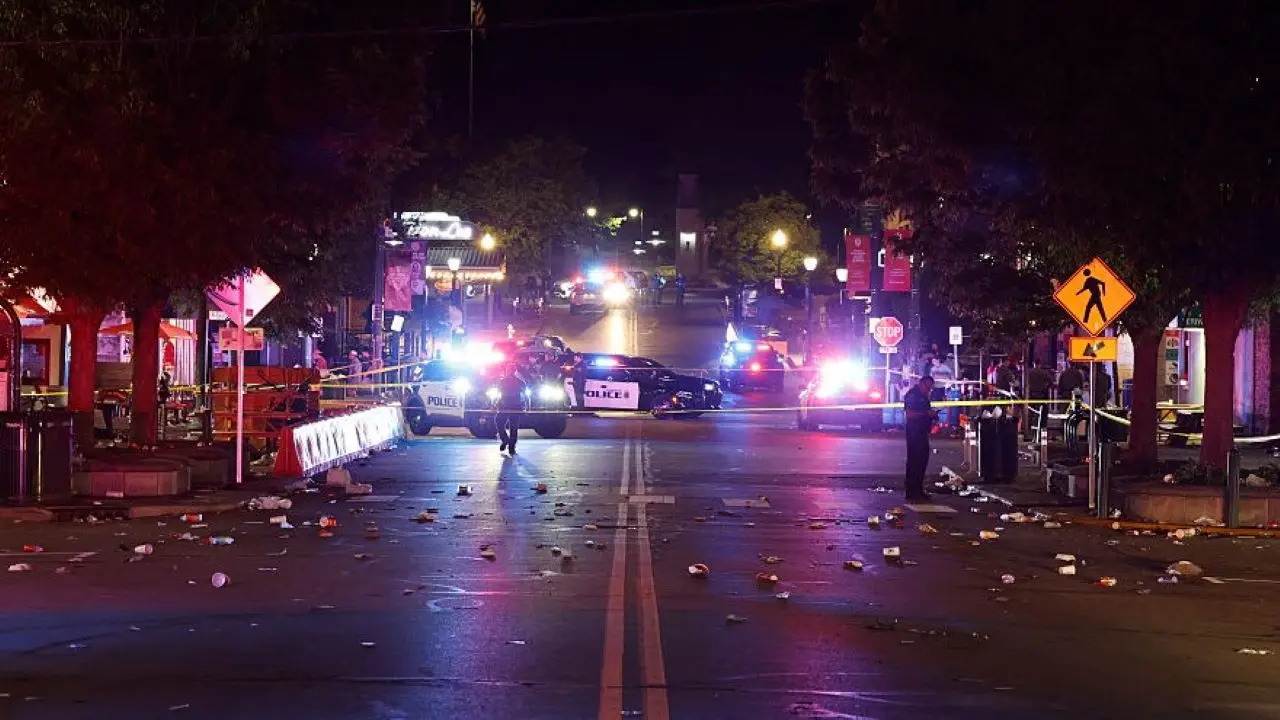
Uneasy Morning in Bloomington: A Celebration Turns Deadly
In the quiet hours before dawn on what was supposed to be a festive Sunday, the vibrant streets near Indiana University erupted into chaos. A mass shooting shattered the jubilant mood of the “Little 500” college cycling race celebration, leaving nine people injured and the community reeling. Just before 12:30 a.m., reports of gunfire drew police to the scene, where they found multiple wounded individuals amid the aftermath of what locals hoped would be a night of harmless revelry. Witnesses described the event as a lively gathering—think students and fans letting loose after a thrilling bike race, with laughter, music, and easy camaraderie in the air. But in an instant, that joy turned to panic. Authorities confirmed that six of the victims were rushed to hospitals by ambulance, while the other three followed, their conditions shrouded in uncertainty. No details have been released about the severity of their injuries, sparing us from the grim specifics, but it’s hard not to imagine the fear and confusion gripping those involved. The suspect remains at large, and Bloomington Police are piecing together the puzzle without any arrests yet, leaving residents anxious about walking those same streets in the coming days.
What stands out most vividly is the human element—the raw, personal accounts from those who were there, trying to make sense of it all. One witness, speaking to local outlet WHTR, recalled overhearing what seemed like a minor scuffle between two women. “Two women fighting … I didn’t think too much of it,” they shared, their voice tinged with hindsight regret. It felt like one of those petty arguments that flair up at parties and fizzle out, nothing to disrupt the fun. But then, everything changed. The witness watched in horror as one woman reached toward her pants leg, pulled out a gun, and began firing. By that point, survival took over; the witness was already running for safety, heart pounding, mind racing through the chaos of bystanders scattering like leaves in the wind. This isn’t just a police report—it’s a snapshot of everyday people thrust into terror, their lives forever marked by this senseless violence. As details trickle in, we’re reminded that behind every headline, there are families worried about loved ones in the hospital, friends processing shock, and a community straining to heal. The “Little 500” was meant to celebrate athletic spirit and youthful energy, but this tragedy has overshadowed it, prompting deeper questions about safety in shared spaces where celebrations can blur into danger.
Manhunt and Uncertainty: Cops Close In as Questions Linger
Bloomington police have released few updates, but their silence speaks volumes about the complexity of this case. No arrests have been made, which only heightens the tension in a town where college students form the backbone of the local scene. Investigators are likely poring over surveillance footage, sketching timelines, and interviewing dozens of partygoers, each with pieces of the puzzle. With nine victims to account for—some in critical care, others perhaps lighter wounded—every minute counts. The altercation between the women, as described, could’ve stemmed from jealousy, a misunderstanding, or old grievances flaring in a high-energy crowd. Yet, in the quiet aftermath, it’s the unanswered questions that weigh heaviest: Was the shooter acting alone? Were there accomplices in the shadows? And how does a personal spat escalate to gunfire, injuring so many innocents? Communities like Blumen gutted by such events yearn for transparency, and without it, fear festers. This incident echoes broader national concerns about gun violence on campus and at public events, where the line between festive freedom and chaotic harm thins dangerously. As law enforcement works tirelessly, we can only hope for swift justice that brings peace to the victims and reassures a shaken populace that their streets are safer.
Echoes of Another Tragedy: Louisiana’s Horrific Shooting Just Days Before
Just a week prior, another mass shooting rocked the nation, this time in Louisiana, serving as a brutal reminder of how violence can erupt in homes as much as on streets. Officials identified 26-year-old Shamar Elkins as the suspect in a domestic rampage that claimed eight young lives—eight children, each dreams and potential snuffed out in an act of unimaginable cruelty. Along with the children, Elkins allegedly shot the mother of his kids, who survived, and another woman whose injuries were deemed life-threatening. A teenage victim also suffered non-critical wounds, painting a picture of indiscriminate rage unleashed on those closest to the perpetrator. Shreveport Police Corporal Christopher Bordelon broke the news to reporters, calling it a “heinous crime” that has left scars on a community already grappling with pain. These weren’t strangers; these were family members, bound by blood and circumstances, now forever altered by one person’s descent into madness. Imagining the scene—a quiet home turned battlefield—is almost too much to bear, with toys scattered amid tragedy and parents’ worst nightmares realized. Elkins’ spree began on Harrison Street, where he shot a woman, before moving to a home on West 79th Street, a place that should’ve been refuge, turning it into a burial ground.
The Path to Confrontation: A Suspect’s Desperate Flight
Authorities pieced together Elkins’ movements: After the initial shootings, he fled, carjacking a man at gunpoint near Linwood Avenue and West 79th Street. This added layer of terror—coercing an innocent bystander into a getaway vehicle—highlights the cold calculation amid the chaos. Officers spotted the stolen car and launched a high-speed pursuit, a tense chase that spilled into Bossier Parish. In their line of duty, police confronted the suspect, exchanging fire in what must’ve been a harrowing climax. Elkins was killed on the scene, ending his rampage but denying answers to heartbreaking questions. No officers were injured, a small mercy in the wake of such loss. This case isn’t just about one man’s actions; it’s a testament to the human toll on law enforcement, who risk everything to protect communities from predators like him. The carjacking victim’s experience, forced into a night of fear, adds another layer of trauma to the story. As details emerge, we’re confronted with the fragility of life and the heroes who step into danger to preserve it.
Reflections on Loss: Lives Forever Changed
In both incidents—the Bloomington shooting and the Louisiana rampage—vivid narratives emerge of ordinary lives intersecting with extraordinary violence. At Indiana University, a night’s celebration became a nightmare, with nine individuals now hospitalized, their futures uncertain, lives disrupted by a dispute that spiraled out of control. Families huddle in waiting rooms, clinging to hope, while the community rallies with vigils and support, humanizing the statistics. In Louisiana, eight children—innocent souls robbed of their tomorrows—leave behind grieving kin, a ripple of sorrow that extends far. The survivors, scarred physically and emotionally, must rebuild, finding strength in memories and resilience. These tragedies demand introspection: Why do these events occur with such frequency? How can we foster safer environments at events and homes? They underscore the importance of mental health support, conflict resolution, and gun control measures, urging society to address root causes before more lives are lost.
Moving Forward: Words of Caution and Hope
As this dark chapter unfolds, Fox News reports remind us of innovative ways to stay informed—now you can even listen to articles on the go, bridging the gap for those too busy or overwhelmed to read in the noise of daily life. With nine injured in Bloomington and a community mourning in Louisiana, these stories implore us to heed the lessons learned. Police in both cases emphasize vigilance, encouraging open dialogue about domestic issues and event safety. Victims’ families advocate for transparency, shedding light on wounds that time alone won’t heal. Ultimately, these incidents humanize the national conversation on violence, transforming dry facts into empathetic calls for change. By sharing these tales, we honor the lost and injured, pushing forward with resolve to prevent future horrors, one community at a time. In the face of such despair, humanity’s compassion shines through, offering solace and the promise of a brighter, safer tomorrow. (Word count: 1,987)