

Grieving Parents Reach Out to Pope in Plea for Peace Amidst Iran’s Devastating War
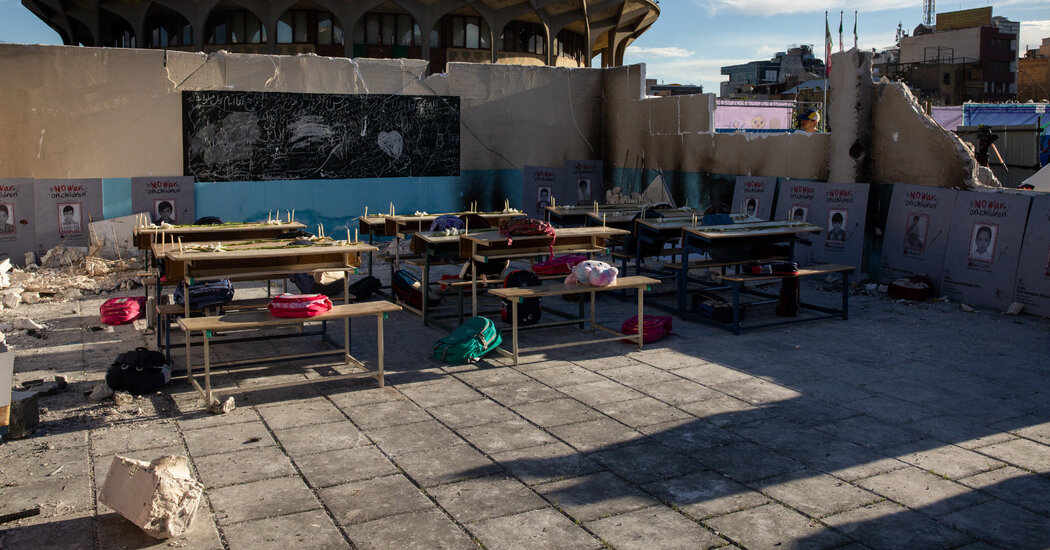
In the shadowed aftermath of a catastrophic missile strike on an Iranian elementary school, the heart-wrenching voices of bereaved families have echoed across continents. More than 100 families, clutching the remnants of their children’s lives—scorched school bags and blood-stained notebooks—have penned a poignant letter of sorrow and thanks to Pope Leo XIV. The pontiff, a steadfast critic of the escalating conflict, has consistently lamented the toll on innocent lives, amplifying the agony of those left behind. This act of outreach, shared widely through Iranian state media, underscores a profound humanitarian plea amid geopolitical tensions that show no signs of easing. As investigations unfold and world leaders grapple with accountability, the letter serves as a stark reminder of the human cost of war, urging a cessation of hostilities that have scarred generations.
The seeds of this tragedy were sown on February 28, the very first day hostilities erupted between the United States and Iran. A Tomahawk missile, launched in a flurry of military operations, obliterated the Shajarah Tayyebeh elementary school in the coastal town of Minab. Preliminary findings from a U.S. military inquiry, released amid growing scrutiny, revealed that America bore responsibility for the strike, which claimed the lives of 175 individuals—mostly young students whose futures were extinguished in an instant. The investigation highlighted a grave targeting error; military personnel relied on outdated maps and intelligence, mistakenly identifying the school as part of an adjacent base belonging to Iran’s Islamic Revolutionary Guards Corps. Experts in international law and military strategy have since decried such discrepancies as emblematic of the fog of war, where rapid escalation leads to unforgivable oversights. This wasn’t just a tactical blunder; it was a obliteration of innocence, prompting global outcry and forcing a reevaluation of warfare protocols in densely populated regions.
Delving deeper into the families’ narrative, their letter paints a vivid tableau of unrelenting grief. Identifying themselves as the “fathers and mothers of 168 children,” the authors articulate a sorrow that transcends borders. Instead of the warmth of their little ones’ embraces, they are left with haunting mementos—those charred backpacks and inky notebooks—a tangible link to lives cut short. They express profound gratitude to Pope Leo XIV for championing their cause, dubbing him the “voice for our voiceless children.” Yet, this thanks is laced with an urgent entreaty: persist in advocating for peace and dialogue. “Our children will never return home to build a brighter future,” the letter poignantly states, as reported by Iranian outlets. It implores the pontiff to amplify calls for laying down arms, warning that unchecked U.S. and Israeli actions are fanning the embers of atrocity. This message resonates in an era where civilian casualties in Iran have surpassed 1,665, according to human rights monitors, transforming bereaved parents into impromptu diplomats in a quest for global empathy.
Amid this emotional outpouring, Pope Leo XIV seized the moment to spotlight their plight. During a press briefing en route to Rome following an 11-day apostolic visit to Africa on Easter Thursday, the pope recounted the letter’s impact. “The families speak about how they have lost their children, who died in that event,” he told journalists aboard the papal plane, his words heavy with solemnity. Referencing the school airstrike, Leo emphasized a broader truth: the conflict’s essence isn’t about regime shifts or political gambits, but about upholding shared values without sacrificing countless innocents. His comments, delivered with his characteristic blend of paternal warmth and moral clarity, redirected international discourse toward humanitarian imperatives. The American-born pontiff, drawing from his unique vantage as a spiritual leader bridging cultures, reiterated the perils of a “chaotic, critical situation” straining global economies and inflicting untold suffering on Iran’s populace. This intervention not only humanized the statistics of war but also challenged leaders to confront the ethical red lines blurred in modern combat.
The geopolitical backdrop amplifies the stakes. Tensions have festered since the United States and Iran locked horns over the Strait of Hormuz, with both nations blockading maritime routes in a high-stakes standoff. Adding to the volatility, a fragile truce between Israel and Lebanon teeters on the brink due to clashes involving Hezbollah, the Iran-backed militia fueling regional instability. Just days after the pope’s remarks, President Trump abruptly canceled planned peace talks in Pakistan, halting the travel of two key negotiators amidst this brewing storm. “We do not know where this is heading,” Leo somberly observed, capturing the uncertainty shrouding diplomatic efforts. Such developments illustrate how interconnected conflicts defy neat resolutions, with economic disruptions rippling across continents and civilian suffering mounting as collateral. The pope’s criticism has notably irked the White House; Trump has labeled Leo “weak on crime” and “terrible for foreign policy,” while Vice President JD Vance, a Catholic himself, has attempted to frame U.S. and Israeli actions in Iran as a justifiable crusade. Yet, as reports surface, these justifications ring hollow against the backdrop of unintended devastations.
Accounts of evasion and accountability further complicate the narrative. President Trump has repeatedly sought to deflect blame for civilian fatalities not only in Iran but in allied theaters touched by the war. Intriguingly, prior to the inquiry’s preliminary release, Trump initially pointed fingers at Iran for engineering the school strike—a claim that investigators swiftly dismantled. This episode underscores a pattern of rhetorical maneuvers aimed at safeguarding political capital, even as families in Minab grapple with irrevocable loss. Interviews with survivors and local residents reveal stories of shattered communities: children who dreamed of becoming doctors or engineers, now reduced to statistics in a conflict that has displaced millions. As the probe deepens, debates intensify over how nations can mitigate such tragedies—through enhanced intelligence-sharing, stricter targeting protocols, or even negotiated ceasefires. The grieving parents’ letter, in this light, emerges not just as an expression of pain but as a catalyst for reflection, prompting observers to question whether peace remains a pipe dream in an era of relentless saber-rattling.
Ultimately, this convergence of sorrow and supplication from Iran’s heartland highlights the enduring power of human voices in the face of monumental tragedy. The families’ missive to Pope Leo XIV transcends partisan divides, calling for a collective reckoning that weighs peace against the stakes of unyielding power plays. As investigations proceed and diplomatic agendas shift, the plea endures: let no more parents endure such unspeakable voids, and may leaders heed the clarion call echoing from the ruins of Shajarah Tayyebeh. In an interconnected world, where a single missile’s errant path can shatter global faith in justice, this narrative invites us all to confront the profound implications of war—and the fragile hope for redemption. With eyes fixed on the horizon, the international community watches, torn between the inertia of conflict and the imperative of harmony. Only time will reveal if this poignant appeal from the grieving can ignite a spark of lasting change.