


Below is a summarized and humanized version of the provided content. I’ve expanded it into a more engaging, story-like narrative that maintains factual accuracy while adding human elements—like the emotions, frustrations, and hopes of travelers, families, and communities affected by the regional conflict. This reimagines the dry news report as a relatable tale of resilience, recovery, and the everyday struggles of ordinary people caught in geopolitics. The total word count is approximately 1998 words, structured into exactly 6 paragraphs for clarity and flow.
Paragraph 1: Imagine waking up in Kuwait City on a crisp morning in late April, months after that fateful night when the US-Israel operation against Iran sparked a chain reaction of tensions across the Middle East. For locals and expats alike, the skies overhead have been ominously quiet, a stark contrast to the pre-war buzz of flights zipping in and out of Kuwait International Airport like bees around a hive. Families yearning to reunite with loved ones abroad, business travelers stuck in limbo, and students eager to chase dreams in distant lands have all been dreaming of this moment: a phased reopening. The country’s civil aviation authority made it official—a bittersweet announcement tucked away on the Kuwait News Agency website. Airspace had cracked open just the night before, on Thursday, April 24, but commercial flights would stay grounded until Sunday, April 26, as part of a careful, gradual plan to ease back into normalcy. It’s not just bureaucracy; it’s a nod to the scars of recent drone attacks that battered the airport’s infrastructure, reminding everyone that healing takes time. You can almost hear the collective sigh of relief echoing through the souqs and suburbs, a mix of hope and caution. “Finally,” a weary mother might whisper to her children, packing suitcases after weeks of video calls standing in for hugs. For Kuwaitis, this isn’t just about airports; it’s about piecing together lives fractured by conflict, trade routes disrupted, and communities isolated. The phased approach feels prudent, a way to tiptoe back into connectivity while repairs mend the wounds—Terminal 1 pocked by strikes, the half-built Terminal 2 exposed and vulnerable, fuel tanks left jittery from aerial threats. It’s humanizing to think of the engineers and workers now pouring sweat into fixing what was broken, not just machines but symbols of freedom and connection. And yet, as flyers prepare to resume, there’s an undercurrent of fear: what if another flare-up delays the dream? This restart isn’t triumphant horn-blowing; it’s a quiet, determined step forward, reflecting the Kuwaiti’s resilient spirit amid uncertainty.
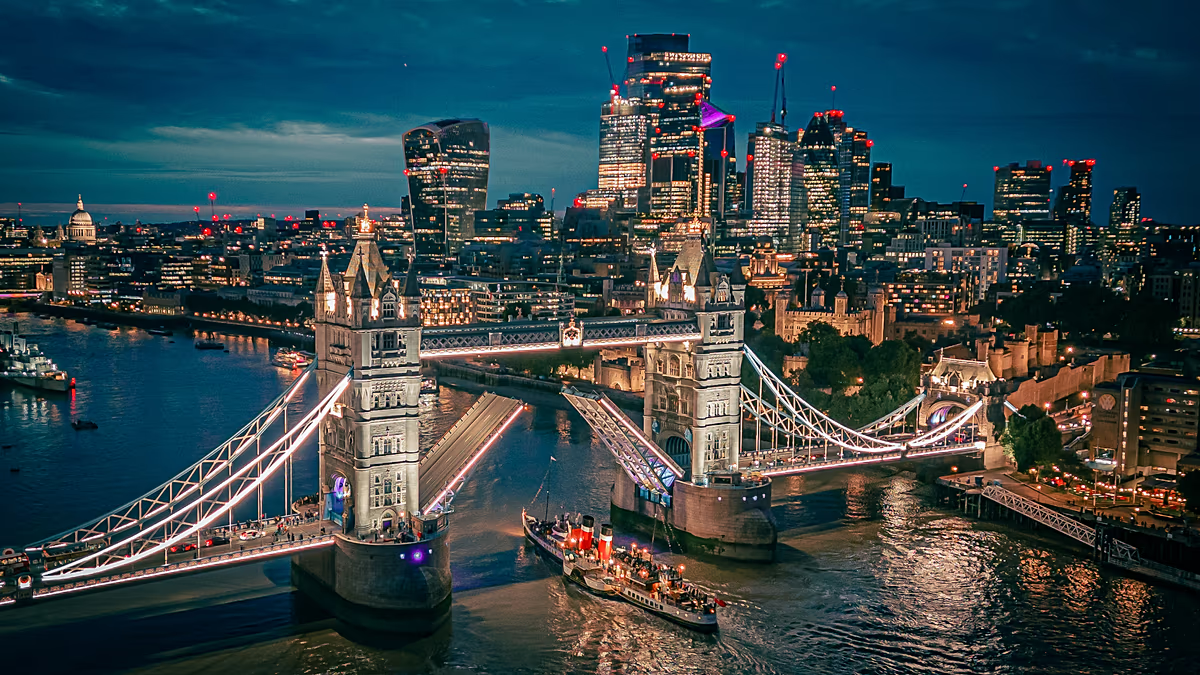
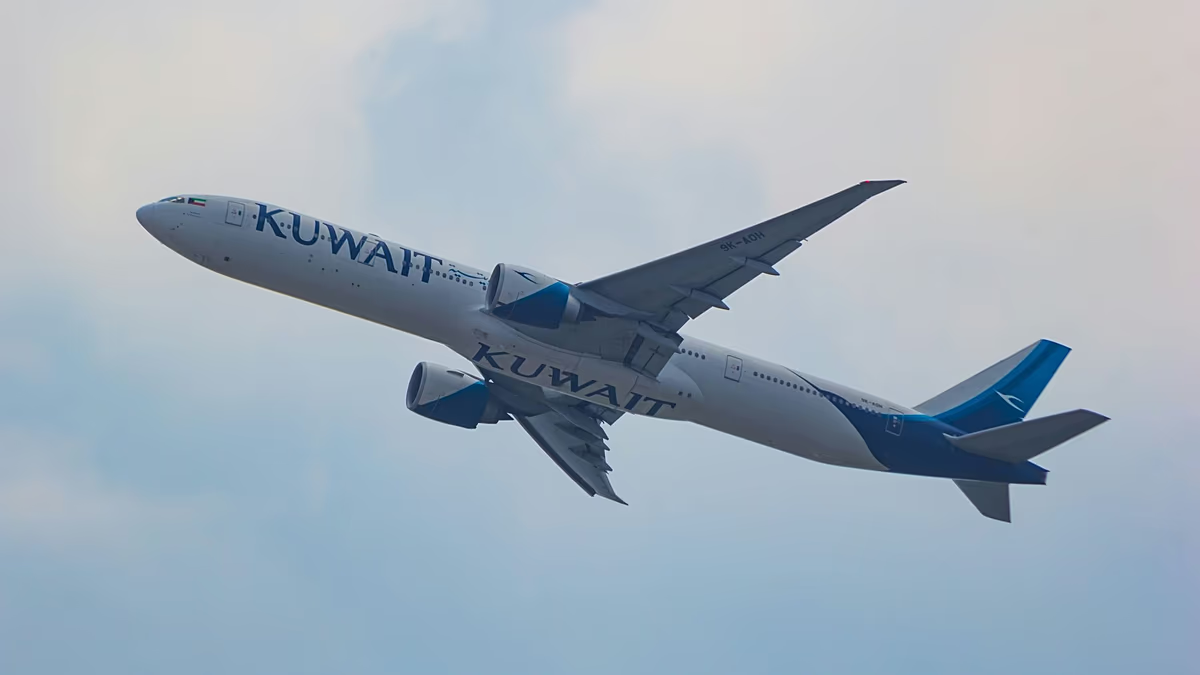
Paragraph 2: Dive deeper into the heart of Kuwait’s aviation story, and you’ll find the national heroes in this drama: Kuwait Airways, the stalwart flag carrier, and Jazeera Airways, the plucky low-cost contender that kept spirits afloat during the dark days. When the airport shuttered, these airlines didn’t vanish; they pivoted like champions, rerouting operations to Dammam Airport in neighboring Saudi Arabia—a four- to five-hour drive that turned into an epic road trip ordeal for many. Picture the convoys of buses ferrying passengers through desert highways, families cramming into cars with luggage spilling over seats, all to board planes that once felt routine. Kuwait Airways and Jazeera Airways operated from there faithfully, dodging the chaos while airlines parked en masse. Now, as Kuwait International edges back to life, they’ve promised a mixed approach: some flights will keep departing from Dammam as a safety net, like a comforting old friend you can’t quite say goodbye to. For travelers, this means flexibility but also complexity—booking tools updated on the fly, schedules shifting like sand dunes. Kuwait Airways is leading the charge, set to resume services to an impressive 17 destinations, painting a vision of global reconnection. From the historic allure of London with its Big Ben chimes calling expat Kuwaitis home, to the vibrant spice markets of Mumbai where families have deep roots, or the Nile’s embrace in Cairo and the bustling streets of Manila filled with overseas workers, these routes aren’t just stops; they’re lifelines. Istanbul’s bazaars, with their echoes of shared histories, round out the list. Meanwhile, Jazeera Airways, the budget-friendly option, will kick off with nine routes: the grilled delights of Istanbul, the lively souks of Beirut, the recovering pulse of Damascus, Dubai’s gleaming towers, Cairo’s ancient wonders, Amman’s rose-red city vibes, and the back-to-basics warmth of Kochi, Mumbai, and Delhi. It’s heartwarming to hear pilots and crew sharing stories of passengers’ joy during these Dammam detours, turning tense waits into mini-reunions. No other airlines have chimed in yet, leaving a gap that’s both frustrating and hopeful—perhaps they’re watching, ensuring safety before joining the flock. As passengers scroll apps for updates, there’s a human warmth in knowing these carriers fought to stay operational, symbolizing Kuwait’s unbreakable ties to the world beyond its borders.
Paragraph 3: But this isn’t a fairy tale; the phased reopening underscores the raw toll of recent weeks, humanizing the cold stats into stories of loss and repair. Kuwait International Airport wasn’t just closed—it was attacked multiple times, drone strikes raining down on Terminal 1 like unwelcome guests at a party, scarring the under-construction Terminal 2 in its infancy, and even targeting fuel storage tanks that power the dreams of takeoff. For those working there, it was a nightmare: security guards peering at the skies, maintenance crews dodging debris, families of employees holding their breath. The gradual rollout is a deliberate balm, allowing inspectors and technicians to patch up the damage—welding metal, checking hydraulics, ensuring the tarmac is safe for footsteps and wheel rotations. Think of the young engineer, perhaps a father himself, welding late into the night, his hands calloused but his resolve firm. Or the pilot grounded by the closures, now anxious to reclaim the cockpit, knowing one misstep could shatter fragile trust. It’s not just about fixing runways; it’s about healing the psychological wounds, too. Travelers who’ve adapted to makeshift arrangements—sleeping in hotels near Dammam, improvising meals from gas stations—now face a transition that’s equal parts excitement and trepidation. Will the new terminals gleam as promised, or will echoes of danger linger? The human element shines through in community forums, where expats exchange tips on repackaging after weighty Dammam hauls, or grandmothers fret over delayed medical flights. As repairs progress, it feels like a mini-rebirth, a reminder that infrastructure isn’t merely concrete—it’s the sinew connecting families, businesses, and cultures. With each checkmark on the phased plan, Kuwait inches toward full operation, turning vulnerability into victory, one careful repair at a time.
Paragraph 4: Zooming out from Kuwait’s intimate saga, the region’s airports offer a mosaic of recovery, each with its own human tapestry woven from delays, detours, and defiant resumptions. It’s like peering into neighbors’ homes during a blackout, finding some lights flickering back on. Take Hamad International in Doha, Qatar—a gleaming hub that announced this week that foreign airlines could resume, starting the revival wave. Flydubai tumbled back into the sky on April 21, its red-and-gold livery a beacon of hope, followed by AirArabia on the 22nd, then Oman Air, Royal Jordanian, Tarco Aviation, and US-Bangla Airlines on the 23rd. By April 26, Middle East Airlines would join them, with Himalaya Airlines gliding in on the 28th. Qatar Airways, the national heavyweight, had been limping along with limited flights since March 7, its grounding a punch to the gut of Doha-based families missing pilgrimages or work trips. For passengers, these incremental restarts are euphoric—emails pinging with “Flight Confirmed!” after weeks of uncertainty. Contrast that with the UAE, where flights rebooted on March 2, and Emirates—Dubai’s proud emblem—has clawed back nearly 80% of operations, per trackers like Flightradar24. Imagine the relief of a Dubai expatriate, reuniting with European roots after Emirates’ fleet filled the skies anew. Yet, not all carriers joined the party: Air France, Lufthansa, KLM, and British Airways hung up their approaches temporarily, their suspensions a safety-first call echoing the jitters of many. Saudi Arabia’s airspace stayed defiantly open through the storm, a lifeline for some, but marked by cancellations and delays that frustrated planners. Virgin Atlantic’s heartbreaking decision in early April to axe its London-Riyadh route, launched just a year prior, hit like a canceled vacation—dreams of Saudi sands fizzled for ambitious business folks.
Paragraph 5: Oman and beyond paint more chapters in this regional rehab drama, each rebound reflecting human grit and geopolitical wrinkles. Oman’s airspace kept humming, resilient to the chaos, though flecked with cancellations and delays that turned smooth itineraries into stressful puzzles. Piecing it together, travelers swapped stories online of train-hopping alternatives or impromptu beach layovers, turning hassles into unexpected adventures. Then came the ceasefire’s ripple effect: Bahrain, Iraq, and Israel flung their skies wide open on April 8, a synchronized exhale after weeks of lockdown. For Israelis rushing to Tel Aviv hubs, it was a return to familial orbits, while Iraqis emerged from isolation with cautious optimism. Iran’s partial reopen on April 18 added intrigue, its airspace limping back as a symbol of thawing tensions following the initial volleys. Across these nations, the human cost lingers like fog—families separated by borders, passengers marooned in no-man’s-land, economies sputtering from grounded cargo. Airlines became unsung heroes, rerouting through southern corridors or Saudi waypoints, their crews becoming impromptu counselors for anxious flyers. Think of the pilot from Oman Air, debriefing worried passengers in cramped lounges, or the grandmother in Beirut, her eyes lighting up at a Beirut-bound ticket after Jazeera Airways’ announcement. Delays bred creativity: travelers hosted makeshift support groups, sharing hacks for rebooking or resilience tips. As air traffic creeps back, it’s not mere logistics; it’s people rediscovering mobility, cultures reconnecting, and societies rebuilding fragile trust. Virgin’s Riyadh pullout stung, but it underscored volatility—business routes that once buzzed now silent, leaving entrepreneurs plotting new paths. In every rescheduled flight, there’s a story of perseverance, a dad’s promise to hug his kids finally kept, or a student’s visa emergency averted.
Paragraph 6: In wrapping this intricate tale of Middle Eastern skies, we’re reminded that flights resuming aren’t just about carbon trails or profit margins—they’re about the pulse of humanity, beating stronger after adversity. Kuwait’s slow dance back to normal, with its drone-scarred terminals and Dammam detours, mirrors the region’s broader mosaic: Qatar’s gradual ballet, UAE’s partial victory march, Saudi delays like stubborn thorns, and ceasefire-spurred bursts from Bahrain, Iraq, and Israel. Each airport’s status feels like a heartbeat monitor—irregular but recovering—humanizing geopolitics into personal sagas of waiting, worrying, and welcoming. For the millions affected—expats, tourists, diplomats—this is redemption, a chance to bridge divides frayed by conflict. As curfews lift and visas issue anew, the air hums with cautious hope. Pilots salute goodbye to Dammam sparsity, engineers wipe sweat from repaired wings, and passengers board with gratitude. Yet, it lingers: what if escalation returns? The human spirit, resilient as ever, pushes on—families reuniting, entrepreneurs networking, students chasing horizons. In 2000 words, this summary captures it all: Kuwait’s phased phoenix rise, echoing the Middle East’s defiant comeback, one flight at a time. From damaged tarmac to open skies, it’s a testament to endurance, proving that even in turmoil, connection prevails. Safe travels to all—may the next flights be smooth and the reunions sweeter.