

The Shadow of Power: Iran’s Shifting Dynamics Amid War and Leadership Crisis
In the turbulent aftermath of Ayatollah Ali Khamenei’s death, the axis of power in Iran has tilted dramatically, leaving observers grappling with a fundamental question: who now holds the reins in one of the Middle East’s most enigmatic theocracies? Before the outbreak of hostilities between Iran, the United States, and Israel, Khamenei stood as the unchallenged supreme leader, wielding unparalleled religious, political, and military authority. His passing, amid the initial U.S.-Israeli strikes that ignited this conflict, ushered in an era of uncertainty. Designated to succeed him was his son, Mojtaba Khamenei, a figure long whispered about in Tehran’s corridors of power. Yet, with Mojtaba gravely injured—struggling to speak and awaiting a prosthetic for his leg—while remaining out of the public eye since his March appointment, the reality is starkly different. Power in Iran has diffused, not concentrated in one man’s hands, but shared among a formidable collective. This isn’t just a passing phase; it’s a seismic shift propelled by the war’s chaos. As journalist Farnaz Fassihi revealed in her incisive reporting, the Islamic Revolutionary Guards Corps (IRGC) have emerged as the true arbiters of Iran’s fate, transforming the nation’s governance into something akin to a militarized regime. For Americans eyeing potential peace negotiations, this evolution carries profound implications, not least for the delicate dance of diplomacy aimed at de-escalating a region on the brink.
The rise of Iran’s generals didn’t happen overnight; it was forged in the crucible of conflict. Just this Tuesday, as U.S. Vice President JD Vance geared up for another round of talks in Islamabad, Pakistan, Iran abruptly withdrew. This decision, far from a clerical edict, bore the hallmarks of IRGC strategy—they deemed President Trump’s blockade insurmountable, rendering negotiations moot. Iran’s president and foreign minister voiced dissent, but their objections fell on deaf ears. In the days of the late Ayatollah, decisions on war, peace, and dealings with the U.S. carried the weight of absolute religious authority. Mojtaba, however, remains sidelined by injury and invisibility, ceding the stage to IRGC commanders who now effectively steer the ship of state. The Guards, long entrenched in Iran’s military, economic, and political spheres, operated under the elder Khamenei’s overarching command as commander-in-chief. But his demise created a vacuum ripe for exploitation. Rallying around Mojtaba—a loyal ally with deep revolutionary roots—the IRGC orchestrated his elevation, consolidating their influence. Since then, they’ve been the decision-makers, wielding veto power over matters from foreign policy to domestic affairs. As Fassihi noted in her compelling narrative of Iran’s wartime leadership, this isn’t mere opportunism; it’s the Guardians reshaping the republic into a military-dominant entity, where generals eclipse clerics in a game of power and pragmatism.
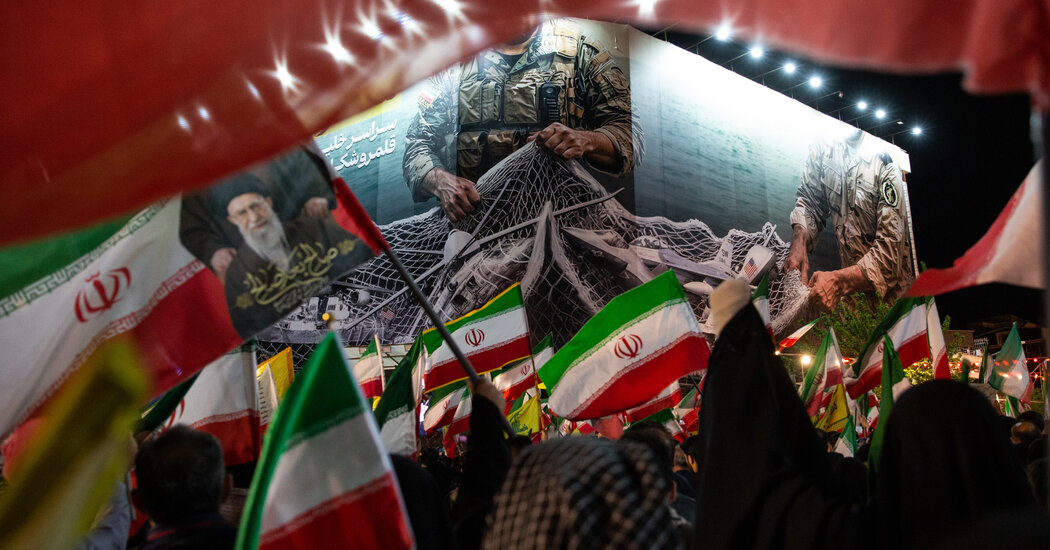
This reconfiguration reverberates through Iran’s external relations, particularly with the United States, casting doubt on the viability of peace talks. The IRGC architects Iran’s military responses, from strategic strikes on Gulf nations to the audacious closure of the Strait of Hormuz, a vital choke point for global oil flows. They greenlit a brief ceasefire with Washington and selected Mohammad Bagher Ghalibaf—a former Guards general and current parliament speaker—to helm negotiations. Yet, when talks stalled in Islamabad, the Guards pulled the plug, underscoring their primacy. They even seized cargo vessels daring to navigate the strait without permission, flexing their newfound clout. Trump’s claim of “regime change” rings hollow; the Islamic Republic endures, but evolved. What emerges is “Islamic Republic 3.0,” as Fassihi aptly termed it—religion receding, generals ascending, and the supreme leader aligned with them. Mojtaba’s own bond with the Guards runs deep, traceable to his service in an IRGC brigade during the Iraq-Iran War. This collective leadership, absent the fractures that might aid U.S. diplomacy, binds factions together in defense of key assets like the strait, which remains a crucial bargaining chip until sanctions ease.
For Iranians, the implications of this military ascendancy are multifaceted, blending pragmatism with repression in ways that could redraw the social and political landscape. The Trump administration once entertained hopes of peeling off pragmatic IRGC elements for a deal, and there’s merit to that discernment. As Fassihi explained, the generals, driven by economic imperatives, might prove more amenable to opening doors for foreign investment than their clerical predecessors, potentially fostering a thaw in Iran’s isolation. But factionalism illusions have dissipated; the regime’s cohesion has only hardened, with unity on core issues like the Hormuz blockade. Domestically, the shift heralds changes in enforcement: religious edicts on modest dress, such as mandatory headscarves for women, are laxly upheld, even during wartime. Yet, this leniency on social mores contrasts sharply with intensified political control. Protester executions continue, military checkpoints proliferate, and dissent faces heavier-handed suppression. Fassihi warned of a regime poised to be less stringent on personal freedoms but more ferociously repressive politically—a “pragmatic repression” that could define post-war Iran. As the nation navigates ongoing combat, these transformations unfold at lightning speed, leaving unanswered what form of society will solidify once hostilities cease.
The broader Middle East feels the ripple effects, as evidenced by recent diplomatic maneuvers elsewhere in the region. In a parallel arc, Israel and Lebanon have extended their ceasefire for three weeks, brokered under a high-profile White House meeting absent Hezbollah representatives. Despite ongoing skirmishes, fatalities have plummeted since last week’s accord, from thousands in Lebanon to a mere handful in Israel. This tentative peace underscores the precariousness of regional stability, where Iran’s evolving trajectory could influence alliances and enmities. Meanwhile, global headlines buzz with unrelated yet resonant upheavals: oily fallout from Ukrainian refinery strikes disrupting a Russian town, U.S. Navy leadership shake-ups, and international trials for figures like Rodrigo Duterte. Even in sports, Trump’s plea to FIFA for Iran’s World Cup replacement with Italy sparks Italo-fan backlash, reflecting how geo-political undercurrents seep into unexpected arenas. Yet, Iran’s story remains paramount, a cautionary tale of how war accelerates internal revolutions, potentially reshaping a republic born of revolution in 1979.
As we peer into the horizon, the full contours of a post-Khamenei Iran remain hazy, but the trends are unmistakable—toward a militarized governance grappling with economic realities and diplomatic standoffs. The Guards’ pragmatic streak hints at openings for reconstruction, yet their iron-fisted control portends continued suppression on the home front. For U.S. policymakers, understanding this collective command is key to any thaw; underestimating the generals’ unity risks prolonging isolation. Domestically, Iranians may witness a loosening of cultural strictures, but at the cost of political freedoms, blending hope with apprehension for the future. This wartime evolution isn’t just about surviving conflict—it’s about forging a new identity for a nation at a crossroads. Whether this leads to greater regional stability or entrenched division hinges on dialogues yet to unfold, underscoring the delicate balance of power in a volatile Middle East. As Fassihi aptly summarizes, religion is fading, generals are ascendant, and the supreme leader stands with them, heralding an era where pragmatism and repression walk hand in hand.
Reflecting on personal histories can illuminate such global shifts; my own childhood aversion to museums evolved through visceral experiences like the Holocaust Memorial Museum’s interactive depth, making abstract horrors tangible. Similarly, taking my son to London’s Churchill War Rooms bridged generations, his fascination with wartime relics igniting curiosity about family legacies. These stories remind us that history’s lessons live in artifacts and narratives, much like Iran’s current chapter requires nuanced reporting to decode. With tomorrow marking Ella Fitzgerald’s birthday, her timeless “Summertime” evokes joy amid strife, a fitting soundtrack for reflection. As we navigate these turbulent times, feedback from readers fuels our journalism—drop us a line at [email protected]. For today’s diversion, dive into Spelling Bee, Mini Crossword, or Sudoku to unwind.