

Paragraph 1: Unleashing the Myth of the Kraken
Picture this: You’re curled up with a mug of hot cocoa on a stormy evening, flipping through tales of sailors’ nightmares. There’s the legendary kraken, that enormous sea monster from Norse myths, with its writhing tentacles capable of sinking ships and dragging brave souls into the abyss. For centuries, it’s been the stuff of spooky campfire stories and pirate legends—pure fiction, right? Wrong. Thanks to some jaw-dropping discoveries, science is pulling back the curtain on a real-life cousin of that monster, lurking in the ocean depths millions of years ago. I’m talking about colossal octopuses, not the cute little ones in tanks, but behemoths that could give any horror movie villain a run for its money. These weren’t imaginary beasts; they were flesh-and-blood hunters roaming the seas during the Cretaceous period, when dinosaurs stomped the Earth. As a species, we humans often feel big and bold, but encountering these ancient giants through fossils reminds us how tiny we are in the grand scheme of time. Yet, in a weird way, it’s exciting—like finding out your favorite fairy tale has roots in the real world. Researchers have unearthed evidence of these massive cephalopods, and it just blows my mind. Imagine if we’d had smartphones back then; the selfies from these dives would be legendary!
So, why are we only learning about this now? Well, the tricky part is that most soft-bodied creatures like octopuses don’t leave behind much to remember them by. Their squishy forms decompose quickly, leaving little for the fossil record. But every now and then, hard bits survive—like their beaklike jaws, toughened for crunching prey. Paleontologist Yasuhiro Iba from Hokkaido University compares it to trying to reconstruct a missing puzzle with only the edges. It’s frustrating, you know? You’re piecing together history from scraps, but when you do find something solid, it’s incredibly rewarding. Just think about it: these jaws aren’t just bones; they’re windows into a bygone era, whispering secrets of creatures that thrived when our ancestors were still scurrying about in the trees. And get this—these jaws belonged to octopuses that dwarf anything alive today. We’re talking lengths up to 62 feet, long enough to wrap around a house! It puts our modern-day concerns—like traffic jams or bad Wi-Fi—into perspective. These animals weren’t just big; they were the bosses of the ocean, top predators in a world dominated by reptiles and dinosaurs. Part of me feels a thrill, like I’ve stumbled upon a hidden history that connects us to the wild past. It’s not just science; it’s a reminder that the Earth has thrown curveballs far more dramatic than any we’ve ever faced.
The challenge in studying these fossils goes beyond the decomposition hurdle; it’s also about access and technology. You can’t just dig these up like dinosaur bones; many are embedded in rock, fragile and easy to damage. Researchers have to be gentle, almost like whispers, to avoid destroying irreplaceable evidence. And logging details—measuring every curve and groove—feels like an art form. Imagine yourself as Yasuhiro Iba, hunched over microscope slides for hours, painstakingly logging data. It might sound tedious, but I bet it’s exhilarating too, like being the first detective at a cosmic crime scene. By carefully analyzing fossil jaws from sites in Japan and Canada’s Vancouver Island, dated to 72 to 100 million years ago, he’s piecing together a picture of ancient life that many assumed was lost forever. These jaws, etched with wear and tear, tell stories of battles and feasts, hinting at an octopus eater of colossal proportions. It’s not hard to humanize this: just envision the creature snapping its jaws on a meal, much like how we might tackle a juicy steak—except this dinner could include crustaceans or even bony fish that paleontologists are eager to confirm.
Paragraph 2: Piecing Together the Puzzle with Smarts and Machines
Now, let’s talk about the clever ways scientists are cracking this case, because studying these fossils isn’t a walk in the park—it’s more like a high-stakes treasure hunt. Yasuhiro Iba and his team tackled 15 known fossil jaws head-on, meticulously measuring and comparing them to living and extinct relatives. But they didn’t stop there; they got creative with rocks collected from Japan. Imagine grinding down these stones layer by layer, almost like shaving onion slices, and taking photos at every stage. It’s tedious work that demands patience, kind of like restoring an old painting. To top it off, they used artificial intelligence to build digital models of jaws too delicate to extract traditionally. AI acting as a gentle archaeologist—now that’s innovation that makes you smile! It’s fascinating how tech bridges the gap between the past and present. In my mind, it’s like giving a voice to relics that have been silent for eons. Thanks to this blend of human curiosity and machine precision, they identified 12 new jaws, bringing the total to 27 specimens. What struck me most is how this mirrors everyday life: sometimes, solving big puzzles requires both elbow grease and smart tools, whether it’s fixing a leaky faucet or decoding ancient mysteries.
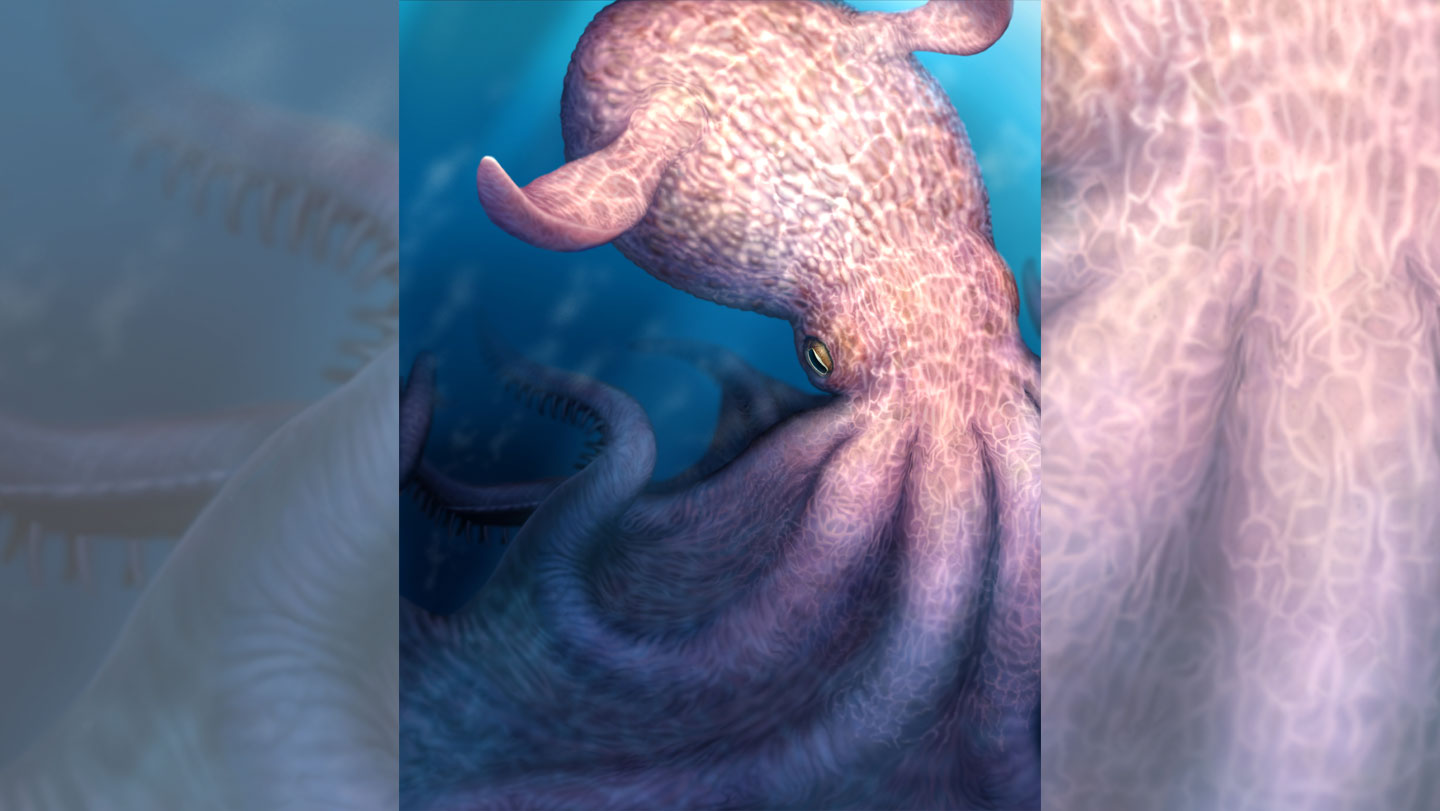
Reclassifying these fossils was a game-changer. Initially, folks thought they belonged to five distinct extinct species. But after deep dives into the data, Iba and colleagues narrowed it down to just two: Nanaimoteuthis jeletzkyi and the heavyweight, N. haggarti. By cross-referencing with modern cephalopods like the giant squid, they revealed something startling—these were early finned octopuses, relatives of the adorable dumbo octopus with its flapping fins and webbed arms. It’s almost heartwarming to connect such a fearsome beast to something cute and fuzzy-earred. Yet, the ancient versions were no joke; they wandered the deep seas, far from the cozy shallows we’ve tamed. Humanizing this, I imagine these critters as the elite divers of their time, graceful in the water, outsmarting prey with intelligence that rivals ours. But their size? That’s where the awe kicks in. The largest lower jaw of N. haggarti was about grapefruit-sized, a whopping 50% bigger than that of the 12-meter giant squid we know today. Scaling up from there, with arms and tentacles fanning out, these octopuses could stretch 7 to 19 meters—longer than a school bus! It’s mind-boggling, like discovering your goldfish is actually a whale.
Paragraph 3: Giant Squids and Myths Come to Life
Let’s pause and compare these titans to what we know now, because it really hits home how extraordinary they were. Picture yourself beside the waterfront, watching waves roll in, and then envision a creature so huge it could dwarf current marine giants. The giant squid holds the record as one of today’s biggest cephalopods at around 13 meters, but N. haggarti might have been even larger, potentially swaggering as the biggest invertebrate in Earth’s history. Invertebrates? Yeah, no bones in the spine department, yet powerful enough to challenge the top dogs of the Cretaceous seas. It’s like that underrated underdog story where the squishy outsider proves it’s the real boss. I feel a mix of envy and relief—envy for their undeniable coolness, relief that they didn’t bump us highly evolved humans out of the way back then. Their sheer size suggests a vibrant, competitive ecosystem where big eaters ruled unchallenged. And honestly, as someone who gets a kick out of sea creatures, it’s thrilling to think these monsters were out here, battling it out eons before we started recording history on shiny discs or social media reels.
Adding arms and tentacles into the equation? That’s the real showstopper. We’re not just talking head and jaws; these octopuses had billowing umbrellas of appendages that could ensnare or crush. At 19 meters long, N. haggarti would have been a nightmare for any unlucky marine life crossing its path—yet also a marvel of evolution. It’s not hard to humanize this giant; imagine him (or her?) as a hopeful oceanic explorer, cruising the depths seeking adventures and appetizers. Compared to dinosaurs strutting on land, this octopus was a chubby legend, emphasis on legend. I laugh thinking about Jurassic World remixes with tentacles instead of T-Rex roars. The size alone reshapes our view of prehistory, turning passive seas into arenas of epic struggles. It’s a gentle reminder for us: nature’s not always cute; sometimes it’s downright intimidating, and that’s what keeps it fascinating.
Paragraph 4: Wear and Tear: Signs of a Predator’s Lifestyle
Diving deeper into the jaws, the researchers spotted something telling: consistent wear and damage, like battle scars on a seasoned warrior. These weren’t smooth, pristine fossils; they bore marks from bashing shells and bones, evidence that N. haggarti was a voracious, powerful predator. It’s easy to empathize here—if you’ve ever chipped a tooth on tough candy, you get the idea of a creature constantly testing its limits for food. For these octopuses, it meant gnawing on hard-shelled prey, perhaps competing directly with other big hitters in the food chain. The thought of them clashing with mosasaurs or plesiosaurs—those enormous reptiles—paints a picture of a high-stakes drama, like an underwater gladiator arena. I can almost hear the thumps and crunches, feel the tension in a chase. It’s not just about survival; it’s about thriving in a world where the big eat the bigger. This wear suggests they were relentless hunters, not dainty eaters, pushing the boundaries of what an invertebrate could achieve. In our human stories, we celebrate heroes who overcome odds; here, Nature did the same with octopuses defying expectations.
These findings imply ancient oceans were way more complex than we thought—bridges of predators big and small, from tiny fish to reptilian leviathans. For ages, we’ve fixated on vertebrates as the stars of the marine show, with spines and scales dominating the narrative. But slipping invertebrates like giant octopuses into the mix flips the script, showing a richer tapestry of life. It’s heartening, really, like realizing the underdogs have always had their moments. Imagine communities of scientists buzzing over these details, debating like friends at a game night. “What if they stalked schools of fish?” “Or ambushed passing reptiles?” The possibilities stir excitement, reminding us that Earth’s history is full of surprises, waiting for curious minds to uncover them. Personally, it makes me eager to learn more, to appreciate the interconnected web of existence. These octopuses weren’t anomalies; they were key players, proving that delicacy and toughness can coexist.
Paragraph 5: Shifting Paradigms in Prehistoric Ecosystems
Zooming out, this discovery nudges us to rethink prehistoric biology altogether. Traditionally, the top of the marine food web got credit to large vertebrates—those scaly, spine-sporting champs. But Yasuhiro Iba emphasizes how giant invertebrates like N. haggarti claimed their throne too, coexisting and competing in the Cretaceous clubhouse. It’s a paradigm shift that humanizes science: we’re not just listing facts; we’re rewriting stories. Picture historians revising textbooks, artists sketching tentacled tyrants alongside dinos. For me, it’s liberating, like confirming a long-ignored theory and watching the world adjust. These octopuses weren’t background noise; they were headliners, influencing who ate what and how ecosystems ticked. The complexity they add—more predators, more interactions—enriches our understanding of life back then, making history feel alive, dynamic, and a tad more intimidating. It’s the kind of revelation that sparks wonder, urging us to question our assumptions about strength and survival. Who knew soft Mountain bodies could command such respect?
Expert voices echo this enthusiasm with a cautious optimism. Christian Klug from the University of Zurich appreciates the jaw-based estimates but stresses the need for more remains to confirm sizes—after all, piecing from fragments is like guessing a person’s height from shoes. Yet, he agrees they’re indisputable top predators, a consensus that warms the heart. Adiël Klompmaker from the University of Alabama dreams bigger: preserved stomach contents revealing menus of shelled ammonites or vertebrate haunches. “What did they eat?” he wonders, his curiosity infectious. It’s relatable; we all love a good “what’s for dinner?” storyline. This persistence in research reminds us that science is a team effort, driven by passion. As individuals, we connect through these shared quests for knowledge, finding comfort in the unknown being slowly illuminated. Future digs might yield bodies or tools, but for now, these jaws tell a compelling tale—one of giants, grinders, and surprises that keep us hooked.
Paragraph 6: Future Mysteries and the Thrill of Discovery
As we wrap up this deep dive, there’s no denying the “kraken” isn’t just myth—it’s a scientific bombshell with tentacles reaching into our collective imagination. The colossal octopuses of the Cretaceous, particularly the 19-meter N. haggarti, redefine marine majesty, inviting us to marvel at life’s extremes. Humanizing it all, I see parallels to our own adventures: exploring, adapting, dominating. Yet, it’s humble too, reminding us how little we know and how much exploration remains. Paleontologists will keep grinding rocks and refining predictions, piecing together N. haggarti’s world bit by bit. Imagine the next big find—a full fossilized portrait or chemical traces of ancient meals. It could rewrite biology books, inspire art, and fuel fantasies. For the rest of us, it’s a call to curiosity: to read, question, and dream about the depths. These are not mere monsters; they’re ambassadors from a wild past, urging us to cherish Earth’s hidden wonders. So, next time you spot an octopus at the aquarium, give a nod to its giant ancestors. Who knows what secrets they’ll drag up next? The ocean’s depths hold more than stories; they hold lessons and laughter for us all to share. Let’s keep listening.