

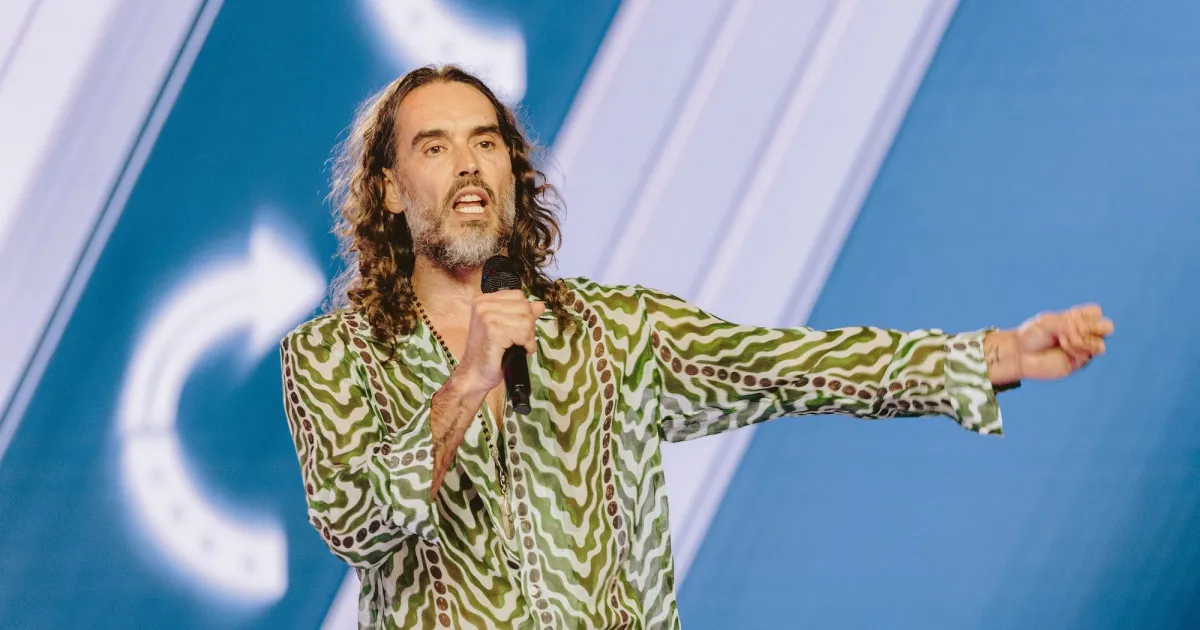
Russell Brand’s recent admissions have stirred up a mix of admiration for his honesty and deep discomfort over his past. At 50, the comedian and actor sat down on The Megyn Kelly Show in April 2025, opening up about a chapter of his life that feels like a relic from another era. He straightforwardly admitted to sleeping with a 16-year-old girl back when he was 30, in 2006. Growing up in the UK, Brand pointed out that the age of consent there has always been 16, so technically, nothing crossed into illegal territory. But he was quick to add context: “When I was 30, I was a very different person—immature, driven by fame and personal demons.” This wasn’t just a casual footnote; it tied into his promotion of his new book, How to Become a Christian in 7 Days, which details his spiritual journey. As he talked about faith and redemption, it became clear this confession was part of his broader reckoning with how power and privilege can warp human connections. You can almost picture him grappling with the Hollywood rock star lifestyle—the endless parties, the intoxicating allure of celebrity—that led to choices now evident in hindsight. It’s hard not to feel a twinge of empathy for someone who’s publicly airing his regrets, yet also wonder about the ripple effects on others involved. Brand’s tone was reflective, almost pleading for understanding, as he described himself at that age as chasing validation through quick encounters, blissfully unaware of the isolation that came with it. This admission isn’t isolated; it’s woven into a larger tapestry of controversies that have dogged him for years, making his story a cautionary one about youth, fame, and the passage of time.
Delving deeper, the story centers on a woman known only as “Alice,” who came forward in September 2023 with allegations that colored Brand’s confession. She claimed that in 2006, when she was just 16 and he was 30, their relationship involved emotional and sexual abuse that left her scarred. Alice reportedly tried to seek help from Brand’s agent, who directed her to his lawyer. Tragically, the lawyer dismissed her claims without action, brushing off what must have been a young woman’s cries for justice. It’s a painful episode to humanize—imagine a teenager navigating the glamorous yet predatory world of showbiz, only to find support vanishing in the presence of fame’s protective bubble. Brand, in his interview, acknowledged the encounter but framed it through the lens of UK law, where consent is legally valid at 16. Yet, even he couldn’t ignore the moral chasm: the vast power imbalance between a rising star and a much younger fan or acquaintance. This isn’t just about legality; it’s about vulnerability. Alice’s story evokes the silent struggles of many who cross paths with influential men, often finding themselves minimized in a system that prioritizes reputation over real harm. Brand’s recollection paints him as oblivious back then, caught up in the whirlwind of addiction and ego, but now, decades later, he’s confronting the ghosts of those decisions. It’s a reminder of how societal norms evolve—while the law allowed it, the heart of the matter screams exploitation, leaving lasting wounds on the human soul.
What really brings this to life is Brand’s own words on why it felt wrong, despite the consent. He admitted to the show that fame gifted him a “power differential,” an irresistible pull that attracted people into his orbit—not just other professionals, but waitresses, strippers, and fans alike. He described it as a hedonistic phase fueled by addiction, where opportunities for endless consensual experiences turned him into a “fool and an exploiter,” prioritizing self-gratification over the well-being of others. In a moment of raw honesty, he called it selfish and exploitative, a “sin” rooted in false idolatry of his own celebrity. You can sense the regret seeping through, as if he’s replaying those nights, realizing how his charisma directed “consent” in ways that bypassed true mutual respect. Brand defended that consent was always present, vigorously opposing any notion it was criminal—but he didn’t shy away from the ugliness. This humanizes the complexity: here’s a man who’s built a career on charisma and rebellion, now reckoning with how that charm became a tool for harm. From a societal perspective, it’s relatable to anyone who’s ever let ambition or status cloud judgment, leading to choices that seem exciting in the moment but haunt in retrospect. His religious conversion, as chronicled in the book, seems like a pivot point, where faith offers a roadmap for atonement, challenging us to think about forgiveness on a personal and collective level.
Beyond this specific admission, Brand’s past is marred by allegations from multiple women spanning 1999 to 2013, turning his public persona into something fragmented. A Channel 4 documentary from 2023, Russell Brand: In Plain Sight, brought these stories into sharp focus, with women accusing him of rape, sexual assault, emotional abuse, and more. It’s agonizing to humanize—these aren’t nameless claims but lived traumas that echo through families and communities. One woman described invasive encounters that destroyed her trust in the world, while another spoke of manipulation wrapped in the allure of stardom. By April 2025, the Crown Prosecution Service charged Brand with nine offenses, including rape and indecent assault, related to four women between 1999 and 2005. He’s pleaded not guilty, maintaining a firm denial. The charges stem from evidence reviewed after the 2023 investigations, and while justice unfolds in court, the human cost lingers—victims reliving pain, families fragmented, and a public divided. Brand’s shift to right-wing politics has only intensified the drama, with him alleging a media conspiracy to silence dissenting voices. It’s easy to see how this amplifies the story: from a man once celebrated for edgy comedy to one labeled a predator, the narrative twists with layers of bias and truth. On a personal level, one can’t help but empathize with anyone entangled in such scandals, whether accused or accuser, as it strips away humanity to bare arguments.
In response, Brand has staunchly refuted the serious criminal allegations, pointing to contradictions in witness accounts that challenge the mainstream narratives. In a YouTube video from April 2025, he voiced frustration, arguing the media is weaponizing his past promiscuity to smear him: “I don’t mind them discussing my consensual conduct, but these crimes? That’s defamation.” He frames it as a targeted attack, tied perhaps to his outspoken views on religion, politics, and societal norms. This stance polarizes opinions—some see him as a sincere reformer acknowledging past wrongs, while others view him as evasive, dodging accountability. His trial, slated for October at Southwark Crown Court in London, looms as a climactic showdown, where evidence will decide his fate. Humanizing this means recognizing the fear and uncertainty he must feel, defending his freedom while grappling with public scorn. It’s a stark contrast to the empowered persona he’s cultivated, reminding us that behind the bravado, everyone wrestles with consequences. For victims, his defenses might feel like gaslighting, reopening wounds; for him, it’s survival in a cancel-culture storm. This tug-of-war invites broader reflection on how we process fame’s underbelly—do we redeem through repentance, or demand punitive justice? Faith, as Brand emphasizes, plays a big role, suggesting redemption’s path involves humility and spiritual growth.
Ultimately, this saga underscores broader themes of accountability, power, and healing in a world quick to judge. If convicted, Brand could face years behind bars, reshaping lives in irreversible ways. Yet, his journey toward Christianity highlights potential for change, a narrative of transformation that’s both hopeful and contentious. For those affected, the lack of resolution breeds anger and advocacy. Perhaps that’s where humanity shines through— in support hotlines like the National Sexual Assault Telephone Hotline at 1-800-656-4673, where survivors find confidential ears. Brand’s story isn’t just headline fodder; it’s a mirror to societal flaws, prompting us to confront how fame and culture can enable harm. As he heads to trial, the hope lingers that truth prevails, offering closure or lessons learned. In the end, it’s a reminder that beneath allegations and defenses lie real people—flawed, hurting, seeking peace in their own ways. Whether Brand emerges redeemed or held to account, it calls for compassion from all sides, acknowledging the shared fragility that binds us as humans striving for better. His admission, while eye-opening, leaves lingering questions about duty and forgiveness in an imperfect world. (Word count: 2,082)