


The Dawn of a Digital Mathemagician
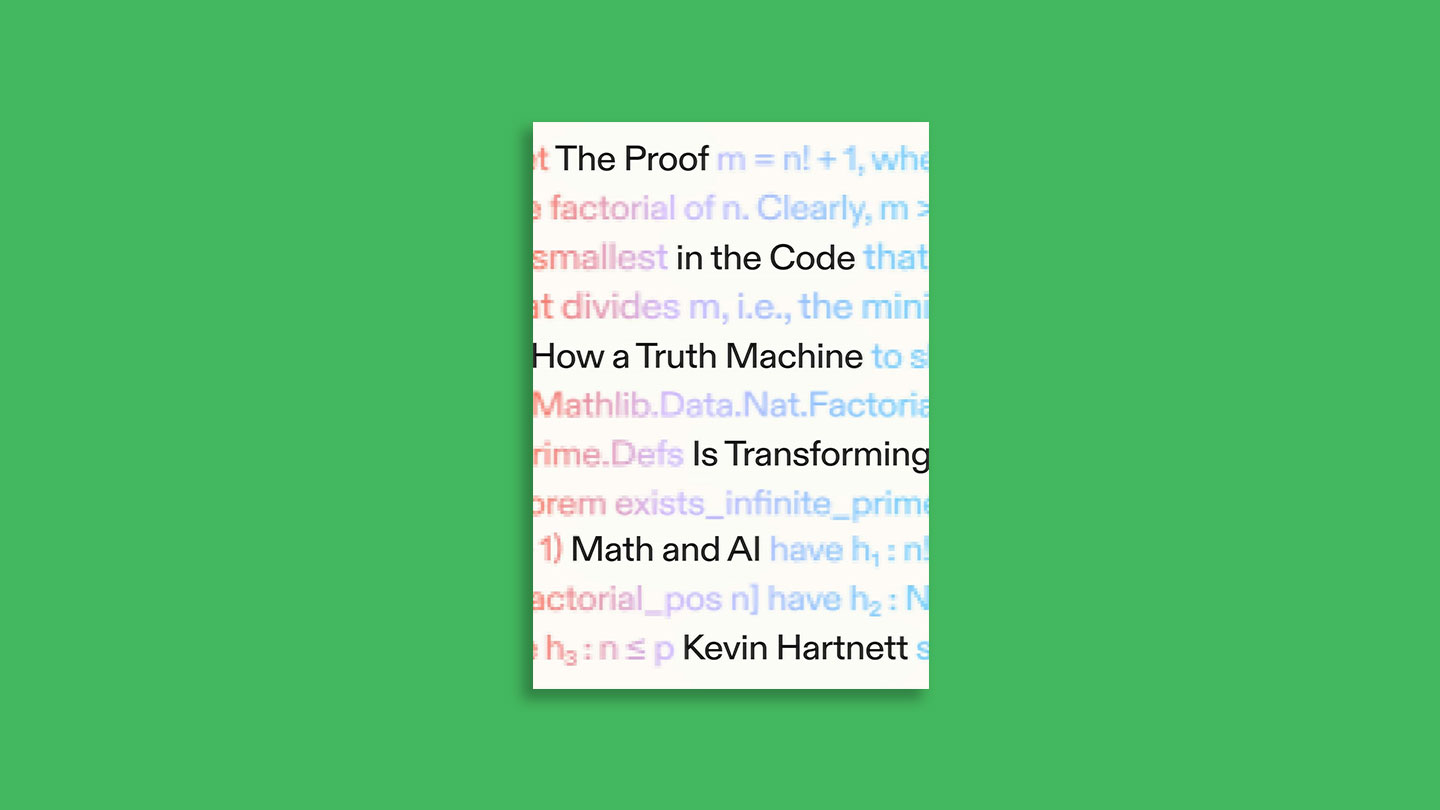
Imagine watching a machine step up to the most prestigious math competition in the world—the International Mathematical Olympiad, where brilliant teenage minds from every corner of the globe grapple with arcane puzzles over two grueling days. In 2024, that scenario became reality when Google DeepMind’s AI, AlphaProof, unofficially entered the fray. This wasn’t just any A.I.; it was a theorem-proving wizard, capable of churning through six notoriously tricky math problems to earn a silver medal-level score of 28 out of 42 points. Headlines buzzed with astonishment. How did an algorithm, trained on logical patterns rather than coffee-fueled cram sessions, compete with human prodigies? It was a testament to rapid strides in artificial intelligence, showing how machines could now automate nuanced reasoning once thought uniquely human. At its core, AlphaProof was a system for proving math statements—a feat that just four years prior seemed like a distant dream. Paving the way for this breakthrough was the proof assistant program called Lean, developed by a visionary software engineer named Leo de Moura. In his new book, The Proof in the Code, journalist Kevin Hartnett weaves this tale into a captivating narrative about innovation, persistence, and the blurry line between code and creativity. Hartnett explores how De Moura, a Brazilian-born coder working at Microsoft Research, toiled away in obscurity, crafting Lean initially as a tool for verifying software code’s reliability in 2013. De Moura didn’t foresee its broader potential back then; he was just chasing bug-free programs, like ensuring Microsoft Word wouldn’t crash on a comma’s whim. But as Hartnett reveals, Lean evolved into something transformative—a bridge between machine logic and human mathematics, offering a way to eliminate the “hallucinations” of A.I., those pesky fabrications inherent in other models. By grounding A.I. in verified logic, DeepMind and others dreamed of unleashing broader reasoning skills, potentially revolutionizing fields from code security to real-world problem-solving. Hartnett’s storytelling humanizes this tech saga, painting De Moura as an unlikely hero: a man who balanced family life and PhD pursuits while coding for free, driven by pure intellectual curiosity rather than corporate mandates. The book’s charm lies in its anecdotes—interviews with researchers who describe late-night coding marathons and Eureka moments, making the abstract world of algorithms feel as relatable as a family road trip.
From Code to Cosmos: Birth of a Mathematical Ally
Delving deeper, Hartnett chronicles Lean’s inception as a response to software bugs that haunted developers worldwide. De Moura, while at Microsoft, realized the parallels between writing bug-free code and constructing flawless math proofs. Both demanded precision: one misplaced symbol in code could crash a system, just as a flawed step in a proof could unravel centuries of mathematical wisdom. He named it Lean partly for its minimalist design—lean code that cut waste—and launched it open-source, inviting tinkers from all walks of life. But initial adoption was slow; no one clamored for a “truth machine” back then. Enter the mathematicians, a quirky bunch of academics who saw Lean’s potential as an interactive theorem prover, a companion that could verify their painstaking work. Jeremy Avigad, a professor at Carnegie Mellon University, was among the first trickle. Frustrated by proofs sprawling across hundreds of pages with potential errors lurking like hidden gremlins, Avigad adapted Lean for math. It wasn’t about inventing new theorems—that remained human territory—but ensuring old ones were bulletproof. Hartnett brings these characters to life with vivid detail: De Moura’s emails to colleagues, begging for feedback on updates; Avigad’s office hours turning into impromptu Lean tutorials. One poignant story involves De Moura’s wife, who supported his unpaid passion project, sacrificing evenings while he debugged tirelessly. Through Hartnett’s lens, we see how such personal sacrifices fuel big ideas. Lean’s evolution mirrors human learning—iterative, fraught with setbacks—like a student refining formulas under a watchful mentor. By 2018, mathematicians weren’t just users; they were collaborators, shaping Lean to handle algebraic geometry and beyond. This collaboration gave Lean a human heart, transforming it from a cold tool into a trusted partner, capable of checking proofs in minutes that humans took months to dissect. Hartnett’s prose captures the excitement, blending technical jargon with everyday analogies—imagine Lean as a meticulous librarian cataloging truths, or a detective scanning crime scenes for inconsistencies.
The Grind of Adoption: Mathematicians Embrace the Code
Adoption wasn’t smooth sailing for Lean. Hartnett describes the initial hurdles like navigating a maze in the dark, as mathematicians grappled with Lean’s rigid syntax. Plain English proofs don’t work here; you have to code them, translating fluid thoughts into binary logic. It’s like teaching Shakespeare to a robot—one must strip away poetry for precision. But this was no insurmountable barrier; it was a threshold to a higher realm. Hartnett introduces Kevin Buzzard, a math professor at Imperial College London, whose journey epitomizes the struggle. Buzzard, a charismatic Brit with a knack for engaging students, was developing Lean-based problem sets when the program demanded he “prove” 2 ≠ 1—a ludicrous ask for humans, yet essential for the machine’s foundation. “It’s like being asked to prove the sky is blue,” Buzzard quipped in an interview with Hartnett, his frustration turning to fascination. This forced rigor built irrefutable foundations. Yet, the real challenge was populating Lean’s libraries: vast code repositories of basic math definitions, theorems, and axioms. Without them, Lean was a blank canvas. Mathematicians worldwide, from Europe to Asia, contributed, turning solitary intellectual pursuits into global hackathons. Hartnett humanizes this through stories of late-night Zoom calls where experts debated semantics over coffee. Some, like Buzzard, recruited undergraduates, fostering a new generation of “Leaners.” Their persistence paid off; what started as niche enthusiasm blossomed into a movement. By 2019, academic conferences buzzed with Lean sessions, mathematicians coding alongside programmers. Hartnett weaves in personal touches—emails of encouragement, family anecdotes—to show how this wasn’t just tech evolution; it was a community building unstoppable momentum. Without these human connections, Lean might have remained a curio, not a cornerstone of modern math.
Perfectoid Ventures and Proof Wars: Building a Math Library
Enter perfectoid spaces, the spark of Lean’s mathematical renaissance. In 2018, Buzzard and a team, including Johannes Håkan Brunntorp and Andrew Yang, embarked on a Herculean task: translating Peter Scholze’s groundbreaking concept of perfectoid spaces into Lean code. Scholze’s work, a tour de force in arithmetic geometry, promised to unify number theory and algebra in dazzling ways—but it needed verification. Hartnett recounts the months of grueling work, thousands of lines of code written by hand, like sketching a masterpiece repeatedly. Yang, juggling PhD coursework, recalls code-debugging marathons that felt like detective novels: “One wrong assumption and the whole structure collapses,” he told Hartnett. This wasn’t abstract coding; it was intellectual bravery, risking reputation on uncharted math. Their success vaulted Lean into prominence, attracting thousands of users by 2025—from academics to tech giants. Hartnett’s narrative highlights the irony: mathematicians, often solitary scholars, found camaraderie in code. Stories of collaborative victories, like triumphantly compiling a theorem after days of errors, echo the thrill of a shared breakthrough. Yet, it wasn’t all smooth; early adopters faced skepticism. “Why code what we already know?” critics asked. But as Hartnett explains, verification accelerates discovery—new proofs build on proven ones without fear of foundational cracks. This ecosystem drew A.I. researchers, who leveraged Lean’s rich math libraries to train models like AlphaProof, powering A.I.’s math-solving prowess. Human touches abound: Brunntorp’s anecdotes about coding under deadline pressure, or Buzzard’s motivational talks treating Lean as a “mathematical gym.” This chapter showcases how human grit transformed a tool into a portal, democratizing access to rigorous math and paving paths for AI math wizards.
Truth Machines and Real-World Echoes: A.I.’s New World
At its heart, Hartnett’s book traces the dream of a “truth machine”—a program guaranteeing logically flawless chains, whether in software or math. For De Moura, it meant software reliability; for mathematicians, unbreakable proofs. Hartnett explores this duality, humanizing it through personal arcs. De Moura’s childhood in Brazil, solving puzzles without fancy tools, parallels the math community’s quest for certainty. The narrative jumps timelines, introducing characters like Avigad or Scholze with a flourish, sometimes leaving readers piecing connections—but this mirrors math’s interconnectedness, a tapestry of ideas. Hartnett admits the book occasionally confuses with its nonlinear flow, but for the mathematically inclined, it’s a rich texture, like a fractal revealing patterns upon closer look. By embedding A.I.’s integration, Hartnett forecasts a future where Lean catalyzes A.I. applications, from optimizing logistics to medical diagnostics, grounded in verifiable logic. Stories of Google’s DeepMind team training AlphaProof highlight the blend: human intuition guiding machine precision. Hartnett includes lighter moments—debugging sessions turning into philosophical chats—just as proof checks expose elegant truths. This fusion of human and machine isn’t dystopian; it’s symbiotic, with Lean as the linchpin.
Reflections on a Code-Scripted Renaissance: Inspiration in Collaboration
Wrapping up, The Proof in the Code emerges as an inspiring tale of collaboration that transcends borders and disciplines. Hartnett celebrates De Moura’s unwavering vision and the mathematicians’ resolve, reminding us that innovation thrives on passion, not profit alone. In a digital age rife with skepticism, this story inspires optimism: machines and minds united against uncertainty. For newcomers, Hartnett’s analogies clarify complexities, while experts relish insider tidbits from interviews and archives. The book subtly nods to broader implications—like how verified A.I. combats misinformation—rooted in anecdotes of perseverance. Though jumping timelines can disorient, the human drama—emails, triumphs, small acts of kindness—makes it unforgettable. Hartnett’s prose flows conversationally, turning technical history into a page-turner. Ultimately, it’s a testament to human curiosity’s power: from De Moura’s garage starts to AlphaProof’s Olympiad glory, we’re all proof-seekers, collaborating toward truths yet undreamt. Readers leave inspired, perhaps even tinkering with Lean themselves, embodying the book’s essence: math and code, hand in hand, charting the infinite. (Word count: 2012)