


The Shadow of Global Tensions: US Strikes Against Shadows on the Sea
I Remember sitting in my living room, flipping through the news channels, when I stumbled upon the latest Fox News alert—now, apparently, you can even listen to their articles if you prefer to have them narrated over breakfast or during a commute. It felt oddly convenient, like the world was speeding up, and we were all chasing the headlines in real time. But beneath the tech upgrade was a stark reminder of the real-world dangers we face: the US military’s unrelenting campaign against forces that threaten peace and prosperity. On April 19th, two dramatic operations unfolded in distant waters, each a testament to America’s resolve to confront narco-trafficking and international defiance. One struck at the heart of Caribbean criminal networks, while the other escalated tensions in the Arabian Sea with Iran. These weren’t just routine patrols; they were calculated moves in a broader chess game of geopolitics, where every vessel can become a battleground. As I dug deeper into the reports, it hit me how these actions reflect deeper stories—of smugglers fueling addiction and violence, and of nations testing boundaries in an increasingly polarized world. It’s easy to forget, amid our daily routines, that sailors and service members are out there, risking everything to enforce order, guided by intelligence that paints a picture of relentless threats lurking just beyond the horizon.
A Lethal Encounter in the Caribbean Waters
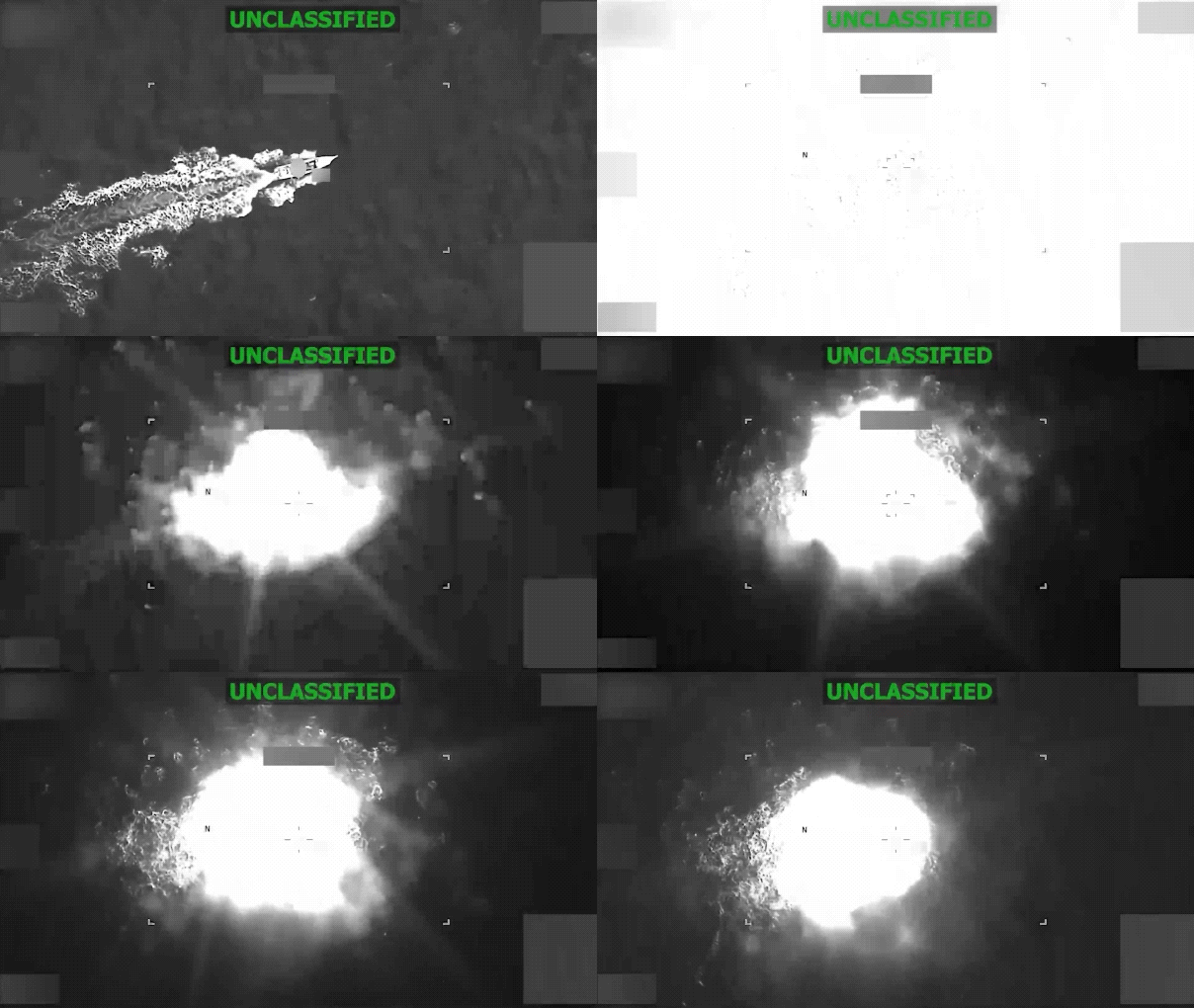
Imagine the Caribbean’s turquoise expanse, usually a backdrop for vacations and adventure, transformed into a hunting ground for American forces. That’s where Southcom—the US Southern Command—led by General Francis L. Donovan, authorized a “lethal kinetic strike” on a suspicious vessel. According to their post on X, this wasn’t random; intelligence had tracked the ship along notorious narco-trafficking routes, confirming its role in moving drugs that wreck communities from coast to coast. The operation, carried out by the Joint Task Force Southern Spear, was swift and decisive. Three men on board, described as “narco-terrorists” tied to designated terrorist organizations, lost their lives in the assault. No American personnel were harmed, a rare blessing in these high-stakes encounters. It makes you think about the families behind the headlines—the widows and orphans left in the wake, or the undercover agents piecing together clues from informants and satellites. This strike wasn’t isolated; it’s part of a pattern under President Trump’s administration, where the US has conducted dozens of such actions against vessels suspected of feeding the insatiable drug trade. For me, it’s a sobering reminder that the fight against traffickers is like trimming weeds in an endless garden—they pop up anew, but persistence, fueled by data and drones, keeps them in check.
The Human Cost and Strategic Shifts
Delving into the background, these operations highlight a stark reality: narco-trafficking isn’t just a criminal enterprise; it’s intertwined with terrorism and transnational threats. The term “narco-terrorist,” coined accurately here, captures how drug lords operate with the ruthless efficiency of insurgents, destabilizing governments and bleeding economies dry. Under Trump’s watch, the strategy shifted dramatically—more aggressive, more proactive, targeting not just the cartels’ foot soldiers but their floating arsenals. Each strike sends a message: no safe havens for those who smuggle death in pounds and gallons. I recall reading about earlier incidents, like the one in the Eastern Pacific where suspect operatives were taken out, and it paints a mosaic of determination. But it also raises questions—what drives a person to join these networks? Poverty? Greed? Ideology? Humanizing this, these weren’t mere villains in a movie; they were individuals shaped by broken systems, mirroring how addicts back home are victims of the same supply chain. Southcom’s careful verbiage—emphasizing intelligence over speculation—underscores a commitment to precision, avoiding collateral damage while dismantling hubs of illicit activity. It’s a delicate balance, and as public opinion fluctuates, these efforts stand as pillars of national security, protecting American shores from the deluge of crime that crosses borders unseen.
A Sudden Storm in the Arabian Seas
Shifting gears to an entirely different theater, the news pivoted to the Arabian Sea, where tensions with Iran boiled over on that same fateful day. Picture a cargo ship, the M/V Touska, flagged under Iranian colors, speeding through international waters at 17 knots toward Bandar Abbas. The US Central Command’s summary reads like a tense thriller: the guided-missile destroyer USS Spruance intercepted it, issuing multiple warnings over six hours. American forces declared it in violation of a blockade—a bold statement that echoed past standoffs between Washington and Tehran. When compliance didn’t come, the situation escalated fast. Spruance’s crew ordered the evacuation of the engine room, a humanitarian pause amid mounting pressure. Then, with calculated force, they disabled the ship’s propulsion, firing rounds from the destroyer’s 5-inch MK 45 gun directly into the engine room. It must have been a deafening roar, steam and shrapnel casting a veil over the deck as panic spread. Later, US Marines from the 31st Marine Expeditionary Unit boarded the now-crippled vessel, securing it under American custody. Listening to this update, I felt the weight of exile and disruption—crew members, perhaps just workers earning a living, now thrust into uncertainty, their families awaiting word across telecom lines strained by sanctions.
Unpacking the Iranian Stand-Off
This incident isn’t just about a renegade ship; it’s a microcosm of the fraught US-Iran relationship, where every encounter carries the risk of sparking wider conflict. Iran, with its nuclear ambitions and ballistic missile programs, has long been a thorn in the side of American diplomacy, much like Russia circling Ukraine. The Touska’s ordeal—seized after warnings fell on deaf ears—highlights the blockade’s strict enforcement, a tool lifted from the playbook of economic warfare. For ordinary Iranians, this means grappling with isolation, their economy hobbled by such intercepts, reminiscent of past seizures that prompted doubts about Pakistan’s mediation talks. As I pondered this, it dawned on me how these maritime dramas humanize global struggles: sailors on both sides, separated by flags and fury, sharing the sea’s unforgiving mood. The US response, terminating power with surgical fire, avoided bloodshed this time, but it underscores a willingness to act decisively. Listening to Fox News narrate these events, I couldn’t help but think of the families aboard—fathers, sons, pushing containers of goods, unaware that geopolitics had turned their route into a gauntlet. It’s a story of power and perseverance, where one nation’s blockade becomes another’s battle for sovereignty.
Broader Ripples and a Hope for Peace
Putting it all together, these April 19th strikes—the Caribbean takedown and the Arabian Sea seizure—illustrate the multifaceted nature of modern warfare, from counter-narcotics to containment strategies. They humanize the abstract concept of national defense: real people in real peril, driven by missions that protect communities far removed from the action. For the US, it’s about deterrence—signaling that nefarious activities won’t go unchallenged, whether in Caribbean waves or Persian Gulf currents. Yet, they also invite reflection on escalation risks; what starts as a blockade could ripple into broader confrontations, affecting global trade and diplomacy. I imagine a world where these stories encourage dialogue, perhaps through channels like the Faltering Pakistan talks, aiming to ease tensions. As we listen to these updates—be it via Fox News audio or scrolling feeds—let’s remember the humanity involved: service members sworn to defend, crews navigating uncertain fates, and civilians on the periphery praying for peace. In the end, these operations aren’t just headlines; they’re chapters in an ongoing narrative of safeguarding freedoms, urging us to stay vigilant and empathetic in a divided world. The sea, after all, is vast and unifying, a reminder that shared humanity might one day bridge the divides. But until then, these strikes stand as vigilant guardians against the shadows that threaten our collective light.