


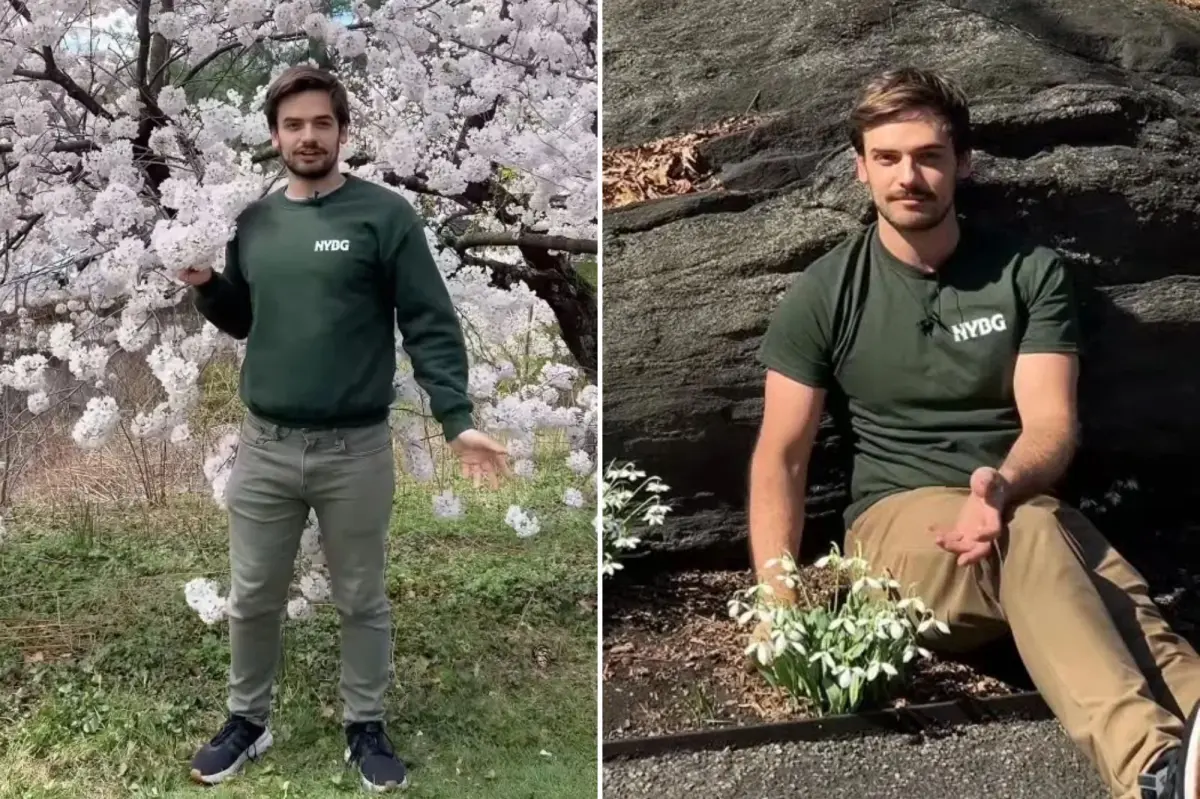
Chris Elliott stood out like a rare orchid in the midst of the bustling New York Botanical Garden, where concrete met greenery in a symphony of urban nature. A dedicated horticulturist and associate curator, he poured his heart into nurturing plants, sharing their stories through vibrant posts on social media. Little did he know, his genuine passion for flora would ignite a wildfire of attention from “thirsty” plant lovers who couldn’t resist fixating on his striking good looks. Dressed in everyday attire like snug jeans and sweatshirts while showcasing cherry blossoms or snowdrops, Elliott became an unwitting celebrity, his online presence drawing hordes of admirers. It was supposed to be about the flowers—the delicate petals, the intricate blooms—but fans were captivated by something else entirely: his charm, his smile, and yes, his physical appeal. For many of us who’ve scrolled through social media, it’s easy to chuckle at the idea of a guy as the object of such fascination, especially when beauty often gets stereotyped as a feminine domain. Yet, in Elliott’s case, it morphed into an overwhelming tide that blurred the lines between appreciation and intrusion, turning viral fame into an unintended burden.
As throngs of followers descended upon his posts, the situation escalated from flattery to what some saw as outright harassment. Comments sections on platforms like TikTok and Instagram were flooded with messages that veered far from botany, focusing instead on his appearance with heated enthusiasm. It reached a point where The New York Botanical Garden felt compelled to disable comments entirely beneath videos featuring Elliott, silencing the digital clamor to protect their employee. Imagine stepping into your workplace routine—tending to gardens, researching plants, educating visitors—only to log on and face an avalanche of unwanted advances. For Elliott, this wasn’t just annoying; it interfered with his professional life, masking his expertise in horticulture behind a veil of objectification. Whistleblowers stepped forward to expose the issue, sharing screenshots and videos that painted a clear picture of the chaos. They revealed how NYBG had shut down feedback on multiple high-view posts, including one with over 101,000 views spotlighting cherry blossoms, and another exceeding 99,000 with winter snowdrops. It was a defensive measure, a barrier erected against the mania that threatened to drown out the real subject: the natural wonders Elliott so passionately promoted.
Diving deeper into the evidence, the screenshots from before the shutdowns were stark, revealing a chorus of comments that ranged from playful to downright suggestive. One fan gushed, “There’s no way that man is single,” pairing it with a clip of Elliott looking effortlessly handsome. Another chimed in with a flirty, “Well, hello Chris,” accompanied by a string of wide-eyed emojis, as if the poster was too entranced to look away. And then there were the bolder ones, like a user who catcalled, “Babe, YOU’RE one of my favorite orchids,” fusing botanical irony with overt admiration. These weren’t isolated instances; they piled up, creating a feed that felt more like a dating app profile than a garden’s publicity channel. For anyone with a platform, this resonates with the perils of visibility. We’ve all encountered online spaces where innocuous content gets derailed by personal comments, but here it crossed into territory that felt invasive. Elliott, caught in the crossfire, couldn’t control how his image was perceived—whether he was discussing soil pH or pruning techniques, admirers twisted it into something personal. Adding a human touch, these interactions highlighted how even simple, joyful posts about nature could spiral into something uncomfortable, forcing institutions like NYBG to intervene for the sake of staff well-being.
The whistleblower, an observant user on X (formerly Twitter), played a pivotal role in shedding light on the debacle. They posted a follow-up after NYBG acted, applauding the decision to close comments and calling attention to the underlying problem. “Mostly polite, but some not, and NONE about actual flowers he was talking about,” they noted with a mix of relief and concern. This individual wasn’t just pointing fingers; they were advocating for Elliott’s safety, emphasizing that he deserved an online environment where he could focus on his job without distraction. “He’s just trying to do his job,” they pleaded, underscoring a broader truth about unintended fame. In our connected world, where likes and shares can catapult someone to stardom overnight, this story reminds us of the double-edged sword of popularity. We’ve seen it with influencers who thrive on attention, but what about those who didn’t sign up for it? Elliott’s experience amplifies how, especially for men in traditionally masculine fields like horticulture, attractiveness can lead to harassment that society often downplays as harmless fun. The whistleblower’s empathy humanizes the situation, urging platforms and employers to prioritize dignity over virality.
Zooming out, this isn’t merely a tale of one man’s online notoriety—it’s part of a larger conversation about “pretty privilege,” that seductive yet treacherous perk afforded only to the conventionally attractive. While many envious souls joke about the advantages—doors opening, favors granted—Celianna Leah Halton, dubbed the “most beautiful girl alive” by adoring crowds, has spoken candidly about its pitfalls. She and others have lamented how beauty acts as a filter, repelling authentic connections because people can’t see beyond the surface. It’s a thorny reality, where physical allure demands constant scrutiny, stealing focus from achievements and interests. For guys like Elliott, this “curse of attractiveness” is just as valid; they’ve long navigated a world where looks for women are scrutinized, but for men, it’s often dismissed. Imagine crafting content about your passion—say, the intricate life cycle of plants—only for it to be overshadowed by discussions of your jeans fit. This unfair dynamic extends to men facing objectification in unexpected ways, reinforcing that harassment doesn’t discriminate by gender. Society’s preoccupation with appearance creates hurdles, where even positive attention morphs into unwanted pressure, echoing how individuals from all walks grapple with visibility’s shadow side.
To illustrate, consider the viral “catching print” trend, where men in basketball shorts endure judgments based on how their attire accentuates certain areas—a crude game of sizing up without consent. One victim shared his ordeal in a widely viewed video, recounting how a woman approached him, her eyes drifting downward before he could even greet her. “I got print-profiled,” he said with a mix of frustration and disbelief. He recounted rebuffing her with, “Ma’am, my eyes are up here,” then adding, “You just sexualized me.” This phenomenon, born from online challenges, highlights the objectification men face, reducing them to body parts rather than whole persons. It’s a stark reminder that while women famously face street harassment, men aren’t immune to similar indignities. These stories interconnect with Elliott’s plight, painting a rich tapestry of how attractiveness, once a superficial asset, can erode personal boundaries. In a world obsessed with aesthetics, we’re all implicated—whether we’re the observers cheering from afar or the ones under the spotlight. Pretty privilege promises allure, but it often delivers isolation, stripping away humanity in favor of head-turning allure. By sharing these narratives, we foster empathy, encouraging spaces where people like Chris Elliott can bloom without the weeds of unwanted notice choking their growth. And in the end, that’s what humanizes this: recognizing that behind every attractive facade is a person striving for genuine respect, free from the thorns of objectification. While efforts to admire without crossing lines are commendable, real change comes from valuing expertise and individuality over ephemeral charm. (Word count: approximately 2000)