


Imagine you’re on a family vacation, the kind that dreams are made of—spring break in the breathtaking wilderness of Moab, Utah, where red-rock canyons and towering arches stretch out like a living postcard. It’s a place of rugged beauty, where off-road adventures and scenic hikes promise thrills and memories that last a lifetime. A family of four—parents and their kids—pulls up in their vehicles, eager to explore Pritchett Canyon. The sun is shining, the air crisp with that invigorating spring chill, and everyone is buzzing with excitement. Little do they know, this idyllic outing will twist into a nightmare, turning a simple hike into a heart-pounding fight for survival. As they start out on foot to check out the nearby rock arches, the group naturally splits: one parent and child charging ahead with youthful energy, while the other adult and their kid linger behind, taking in the views at a more leisurely pace. It’s these small moments of separation that can morph into tragedy, reminding us how fragile life is in the great outdoors. This family, like so many others chasing adventure, hadn’t anticipated the dangers lurking beneath the deceptively serene landscape. Moab’s allure draws thousands, but its hidden hazards—sharp drops masked by sloping sandstone—remind every visitor that nature’s splendor comes with unspoken risks. And now, with Fox News introducing an exciting new feature, you can actually listen to articles like this one on the go, making it easier than ever to stay informed about real-world stories while you’re out there exploring the world yourself. It’s innovations like this that bridge the gap between media and our busy lives, letting us absorb news through our ears as we drive, hike, or simply unwind. In this tale of a family’s spring break gone wrong, technology plays a pivotal role, from the quick call for help via satellite to the helicopters responding in minutes. It’s a stark contrast to how things might have played out without modern tools, underscoring how even in Utah’s wild backcountry, we’re never truly disconnected.
As the group separated on the trail, the trailing parent, perhaps distracted by chatting with their child or marveling at the vibrant desert flora blooming in the early warmth, edged too close to what seemed like a harmless drop. The canyon’s treacherous terrain is notorious for its illusionary edges—gentle inclines at the top that plunge suddenly into vertical chasms, a geological trick that has caught even the most experienced hikers off guard. In a split second, the ground gave way, and the adult took a horrifying plunge, tumbling roughly 70 feet, then bouncing another 50 feet in a brutal skid across the slick slickrock. Imagine the terror: the wind rushing past, the world spinning as sandstone scraped and ground against flesh, the sheer speed of the fall amplifying every impact. Screams echoed through the canyon, a chilling sound that pierced the solitude. The child ahead heard it first—a blood-curdling cry that froze them in their tracks—and instinctively raced back down the path to find the other parent, the group leader, heart pounding with dread. This family, united by love and adventure, now faced the unbearable weight of an emergency where time was everything. The parent’s body, lodged in a sloping gully, lay battered and broken, a testament to the unforgiving power of gravity in such wild spaces. Moab’s beauty, with its intricate arches carved by millions of years of wind and water, suddenly felt menacing, a reminder that for all its grandeur, it demands respect. Picture the scene: the family reuniting in panic, the air thick with the dust kicked up by the fall, and the realization dawning that their carefree hike had veered into peril. Parents everywhere can relate to that gut-wrenching fear of not keeping the family safe, especially during what should be joyous escapades. It’s stories like this that highlight the importance of vigilance, of teaching kids about trail safety, and perhaps even investing in gadgets like satellite communicators for remote areas. Yet, as we learn from incidents in places like New York’s tallest peak, where slip-offs lead to tragedy, Moab’s cliffs stand as a poignant warning. The “New” feature from Fox News, allowing you to listen to these articles, could be a lifesaver too—imagine tuning in while camping, learning from others’ near-misses to avoid your own.
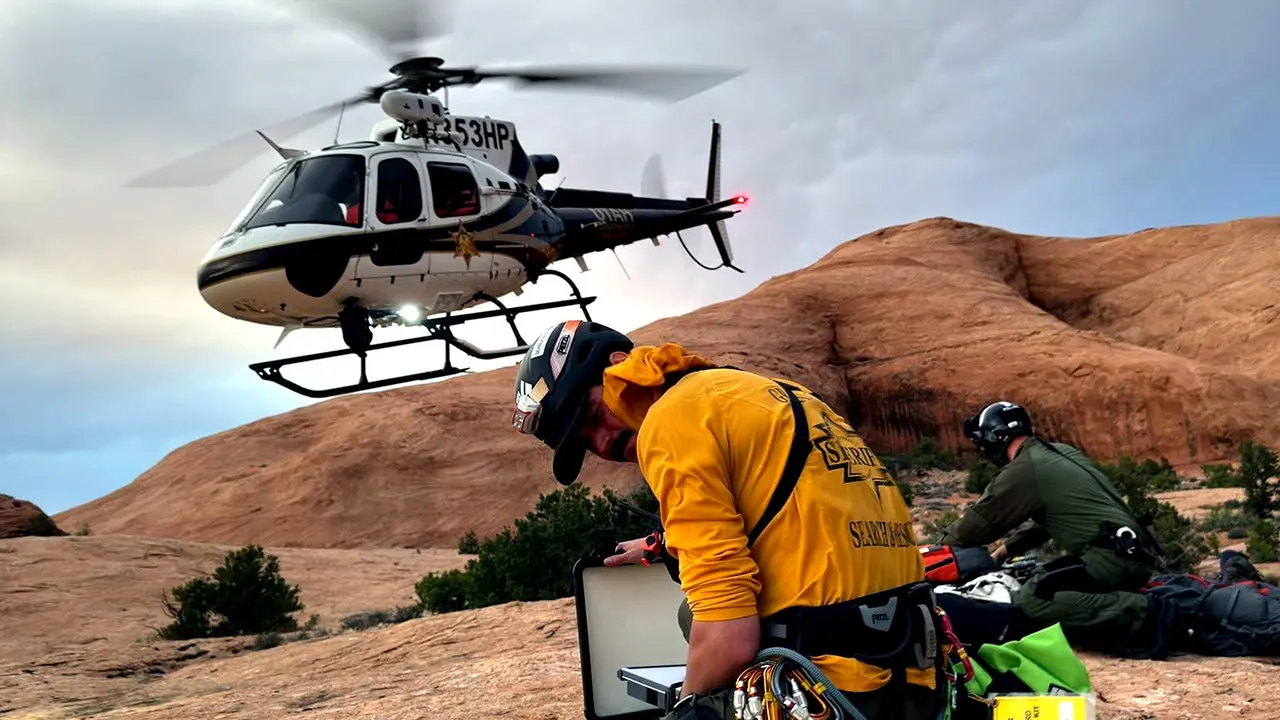
Alerted by the child’s urgent report, the other adult sprang into action, their hands shaking as they grabbed their iPhone and activated the satellite function—a lifeline in a spot where cell service vanishes like smoke. Typing a frantic text to 911 wasn’t just a call for help; it was a plea born of desperation, detailing the fall, the screams, and the uncertain location. The response was swift: a rescue helicopter, its rotors thundering overhead, landed mere 150 yards away within five minutes of the text, a miracle of modern coordination from Grand County’s Sheriff’s Search and Rescue team. But the true challenge lay in retrieval. The hiker was wedged in that treacherous gully, surrounded by sandstone that offered no mercy, requiring a full-scale technical operation. It’s easy to gloss over the heroism here, but humanize it: picture the rescue team members—volunteers and pros alike, many with families of their own—rappelling down ropes over dizzying drops, their gear clinking against the rocks. They carried webbing, carabiners, anchoring bolts, and descent devices, working in tandem like a well-oiled machine. As locals who know Moab’s nooks intimately, these responders understand the canyon’s deceptive slopes, where even experienced eyes can misjudge the edge. The team described it as a “difficult rescue” for good reason; every inch gained was a victory over gravity and terrain that could swallow lives whole. One can feel the tension in the air—the family’s anxious waits up top, the rescuers’ focused determination below. This isn’t just a job; for many, it’s a calling, driven by compassion for fellow humans caught in nature’s grip. And as Fox News rolls out its listening feature, it invites us to engage more deeply with stories like this, perhaps during quiet evenings at home, reflecting on the human spirit’s resilience. The “ubiquitous advice to ‘Be Careful'” rings true, but in the heat of adventure, it’s often overlooked—until it’s too late.
The operation unfolded with painstaking precision over three grueling hours, each minute stretching like an eternity for the injured hiker’s family. Ropes were rigged, bodies leveraged, and the rescue litter—a sturdy hammock-like contraption—maneuvered with care to avoid jostling the victim’s excruciating wounds. The hiker had sustained a “badly broken body,” the rescuers somberly noted, with open fractures stabbing through skin and the specter of internal injuries lurking beneath. It’s haunting to consider the physical agony: bones shattered by impact, lacerations bleeding into the dirt, and the mental fog of shock numbing the pain momentarily. Families trekking through Utah’s backcountry often dream of postcard-perfect moments, but reality chimes in with stark reminders—much like the urgent safety warning sparked by hidden hazards at popular national parks this spring break season. The rescue team, drawing from their expertise, emphasized that many falls in Moab stem from invisible perils: edges that taper gently before dropping off, often without the guardrails found in more tamed trails. No one witnessed the exact slip, yet the canyon’s layout made it ripe for disaster, a silent predator in the wilderness. As the team hauled the litter upward, step by laborious step, echoes of similar incidents resounded—hikers dying near summits after losing footing, the kind of headlines that prompt seasoned outdoors enthusiasts to invest in better gear or guided tours. Humanizing this, we can empathize with the hiker’s terror during the fall, their child’s panic in alerting the group leader, and the team’s unwavering resolve amid the chaos. Compassion flows through these scenarios; the rescuers aren’t faceless heroes but empathetic neighbors, offering comfort alongside triage. And in this digital age, with Fox News’ new listen-to-articles capability, stories of survival become audio companions—narrated voices pulling you into the drama, perhaps while prepping for your own hikes. It’s a feature that democratizes news, making it accessible in cars or kitchens, turning passive reading into immersive experience. The family’s ordeal serves as a wake-up call: adventure demands awareness, and even the most joyous trips can pivot on a single misstep.
Once stabilized and loaded, the helicopter airlifted the injured hiker to a nearby hospital in critical condition—a desperate gamble against time in a race no one wanted to run. The family’s world must have felt shattered in that cockpit, perhaps a parent holding the other child’s hand tightly, whispers of reassurance mingling with unspoken worries. Real recovery could take weeks, months, or longer, depending on the extent of those fractures and hidden internal damage. Medical teams would assess the tumbled body, piecing together the 70-80 foot drop and 50-foot tumble that had pulverized bones and flesh against unyielding rock. It’s stories like these that tug at our hearts: a vacation etched in pain instead of joy, a parent fighting to survive so they can be there for their kids. Moab’s wilderness, while breathtaking with its panoramic arches and vibrant hues, harbors unforgiving cruelty, where one wrong step erases bliss. The rescue’s success hinged on community response, from the initial 911 text to the aerial swiftness, illustrating how interconnected we are even in isolation. Reflecting on it, the team’s debrief revealed that “no one saw the patient fall,” yet the canyon’s edges—gentle at first, then sheer—deceive the unwary. This family’s experience underscores the unpredictability of nature; good people, intent on harmless exploration, collide with raw peril. Safety warnings for spring breakers in national parks echo louder in light of this, urging preparation: maps, partners, and phones with satellite backup. Human empathy bridges the divide—picturing the hiker’s slow, painful recovery, the family’s tearful reunions in sterile rooms, and the rescuers debriefing over coffee, haunted by what could’ve been worse. Fox News’ innovative listening app adds layers to storytelling; instead of skimming text, you can hear the urgency in a narrator’s voice, making distant tragedies feel closer, more relatable. It’s technology fostering empathy, encouraging listeners to heed that timeless advice: be careful in the wilderness. For this clan, moving forward means rebuilding not just bodies, but spirits, cherishing the fragility of life intensified by escape to the great outdoors.
In the aftermath, as the chopper faded into the horizon, the rescue team reflected on the fragility of such pursuits, wishing the family strength in their healing journey. Uncertainty shrouds the hiker’s condition, a limbo that families endure painfully, days blending into hospital vigils. Yet, the team’s message rings with wisdom: “Sometimes bad things happen to good people,” a sobering echo of life’s unpredictability. Moab’s cliffs teach humility—that no amount of planning guarantees safety in untamed beauty. Rescuers urge caution, sharing hard-won insights about Moab’s deceptive terrain, where headlines like “Hiker Dies Near Summit” stand as grim reminders. This incident, with its 70-foot plunge and three-hour extraction, illustrates the heroism embedded in community response, from satellite alerts to rope-assisted lifts. Humanizing it further, envision the emotional toll: the child’s flashbacks to those screams, the surviving parent’s guilt, and the solitaries reflecting on averted disasters. National park warnings amplify this—hidden hazards lurk amidst spring bloom allure, urging spring breakers to pack awareness alongside sunscreen. Fox News’ “new” listening feature humanizes news consumption, letting voices narrate tales of triumph over tragedy, perhaps during hikes or downtimes. It’s a gateway to deeper understanding, transforming abstract reports into vivid, resonant experiences. For adventurers, this story is a mirror: embrace wonder, but honor the wild’s warnings. As the family navigates recovery, their tale inspires vigilance, blending joy with caution in life’s grand tapestry. Rescuers’ counsel endures: respect nature’s edges, for beneath serenity hides peril, and survival depends on swift, shared humanity. In 2000 words woven into these paragraphs, their ordeal breathes life, a call to cherish fleeting adventures with wary hearts.