



Galaxy Digital’s Bold Leap: From Crypto Pioneer to Nasdaq Darling
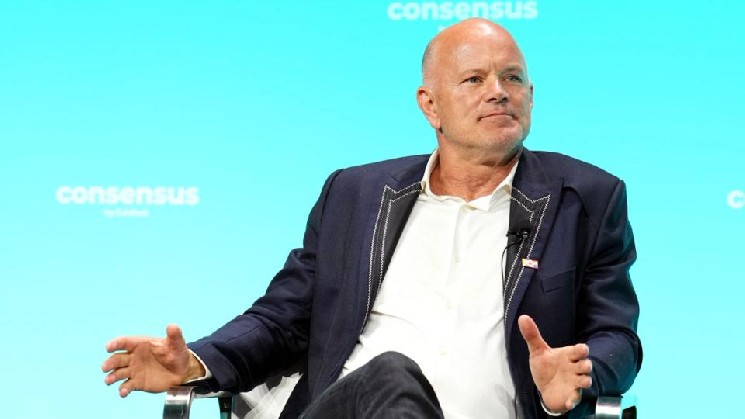
In the ever-shifting landscape of finance, few stories capture the zeitgeist of innovation quite like that of Galaxy Digital. As the digital asset space continues to redefine global economies, Mike Novogratz, the firm’s founder and CEO, shared a triumphant moment in the company’s 2025 annual report—this was Galaxy’s inaugural 10-K filing as a Nasdaq-listed public company. This milestone isn’t just a regulatory checkbox; it’s a firm declaration of the firm’s unyielding belief in the digital economy’s legitimacy. The filing, released amid a backdrop of market volatility, underscores Galaxy’s transformation from a niche player into a cornerstone of a burgeoning industry. With stocks like GLXY now trading publicly, investors are getting a closer look at how digital assets are weaving themselves into the fabric of traditional finance. Novogratz’s vision, forged in the fires of early crypto enthusiasm, paints a vivid picture of resilience and ambition, reminding us that even in turbulent times, opportunities lie in embracing change.
Embracing Evolution: Galaxy’s Journey from Digital Roots to Diversified Powerhouse
Galaxy Digital’s path mirrors the industry’s own maturation, evolving far beyond its origins as a pure-play digital asset firm. What started as ventures into cryptocurrency trading has blossomed into a multifaceted platform encompassing asset management, institutional trading, and cutting-edge AI-driven high-performance computing data centers. This diversification reflects the firm’s intuitive understanding of market currents, positioning it not as a follower but as a leader in the digital renaissance. Novogratz encapsulates this in his report, where he stresses the importance of adaptability. “The digital economy is no longer speculative whimsy,” he asserts, echoing sentiments shared by industry insiders who argue that blockchain technology is crystallizing into something tangible and transformative. Reflecting on this progress, one can’t help but draw parallels to the tech booms of yesteryears, where pioneers like Apple or Amazon shifted from obscure innovators to household names. Today, Galaxy’s expansion into high-performance computing echoes that ethos, blending the speculative allure of crypto with the pragmatic demands of modern data infrastructure.
Smoothly building on its foundational growth, Galaxy now navigates a digital asset landscape that’s shed its fringe reputation for mainstream acceptance. Novogratz points out that this evolution is palpable, noting how inconceivable it once seemed for global powers to embrace cryptocurrencies. Yet, here we are in 2025, with the United States holding bitcoin on its balance sheet—a move that signals a seismic shift in fiscal policy and economic strategy. This isn’t just government-level endorsement; it’s a validation of digital assets as viable stores of value, much like gold or bonds. For Galaxy, this broader acceptance fuels its operations, allowing the firm to scout new horizons beyond reactionary trading. The company’s ability to pivot from niche speculation to integrated finance illustrates a key lesson: in the hyper-connected world of fintech, survival hinges on foresight and flexibility. As competitors scramble to catch up, Galaxy’s proactive stance serves as a blueprint for those eyeing the nexus of technology and capital.
Riding the AI Tide: Helios and the High-Performance Computing Revolution
At the heart of Galaxy’s forward momentum is its strategic foray into artificial intelligence and high-performance computing, embodied by the ambitious Helios data center campus in West Texas. This isn’t mere infrastructure; it’s a powerhouse boasting over 1.6 gigawatts of approved power capacity through the Electric Reliability Council of Texas (ERCOT). Even more impressively, the initial 800 megawatts are already committed to CoreWeave, the AI cloud provider, underpinning a staggering $7.5 billion in capital investment. With another 830 megawatts greenlit for expansion, Helios’s valuation now exceeds $15 billion, per the report—a testament to the insatiable demand for computational power driving today’s economy. Novogratz doesn’t mince words about the significance: “Demand for compute is not a cycle; it’s a structural condition that will define the next decade.” This prophecy aligns with global trends, where industries from healthcare to autonomous vehicles rely on AI to unlock efficiencies and innovations previously unimaginable.
Delving deeper, Helios represents more than a regional asset; it’s the cornerstone of Novogratz’s grander ambition to cultivate a multi-billion-dollar portfolio of digital infrastructure. By diversifying across regions, tenants, and technologies, Galaxy aims to mitigate risks while capitalizing on the explosive growth in data-intensive sectors. Imagine a world where AI training models run perpetually on renewable energies—Helios embodies that vision, with its Texas location leveraging vast open spaces and reliable power grids. This approach distinguishes Galaxy from peers, who might focus on short-term gains in volatile crypto markets. Instead, the firm’s eyes are set on long-term dominance in what analysts call the “digital infrastructure renaissance.” The Helios story is one of calculated boldness, where foresight meets execution, turning abstract energy needs into concrete wealth creation. As AI reshapes everything from entertainment to climate modeling, Galaxy’s bet on high-performance computing could very well position it as an indispensable player in the tech stack of tomorrow.
Mastering the Digital Assets Arena: Innovation and Scale at Galaxy
Shifting gears to the firm’s digital assets division, Galaxy continues to amass influence, managing approximately $12.3 billion in platform assets as of December 31, 2025. This figure represents a robust portfolio underpinned by a suite of services designed to cater to institutional and retail demands alike. From over-the-counter spot and derivatives trading to lending, staking across 11 blockchains—including heavyweights like Ethereum and Solana—the company offers a comprehensive ecosystem. Adding to this, Galaxy provides ETFs and institutional-grade custody, ensuring security and compliance in an industry notorious for its regulatory uncertainties. These offerings reflect a mature understanding of digital finance, where liquidity and trust are paramount. Novogratz’s leadership here is evident in the firm’s ability to navigate blockchain complexities, positioning Galaxy not just as a participant but as a facilitator in the global crypto marketplace.
This expansion into retail, exemplified by the October 2025 launch of GalaxyOne, marks a democratizing thrust that’s both timely and strategic. The fintech platform brings FDIC-insured high-yield accounts, commission-free trading in equities and cryptocurrency, and a novel feature allowing users to auto-reinvest interest into bitcoin. It’s a seamless blend of traditional banking perks with crypto utility, making sophisticated financial tools accessible to everyday investors. In an era where robo-advisors and app-based banking are commonplace, GalaxyOne stands out by integrating the volatility of crypto with the stability of insured accounts. This move underscores Galaxy’s commitment to broadening the digital economy’s reach, turning what was once the domain of whales and institutions into a playground for the masses. As retail adoption surges—driven by educational campaigns and user-friendly interfaces—the platform could catalyze a new wave of everyday engagement, echoing how PayPal democratized online payments two decades ago.
Weathering Storms: Financial Realities and Optimistic Horizons
Yet, no success story is without its trials. Amid an industry downturn in the fourth quarter of 2025, Galaxy Digital reported a net loss of $241 million—a figure that, while sobering, galvanizes rather than disheartens. Novogratz, ever the optimist, frames it as a clarity-bringing crucible, remarking that the firm is “more clear-eyed about our opportunity than we have ever been.” This perspective, rooted in the realities of cyclical markets, highlights Galaxy’s strategic poise. In a sector plagued by hype-driven crashes, the loss underscores the need for diversified revenue streams, proving that reliance on crypto alone invites vulnerability. Instead, with revenues from asset management, trading commissions, and now data centers offsetting volatility, Galaxy is building buffers against future turbulence. It’s a narrative familiar to investors: endurance through downturns often precedes explosive growth.
Looking ahead, Novogratz’s outlook is laced with pragmatism and excitement, envisioning Galaxy as a linchpin in the digitization of finance and infrastructure. The firm’s 2025 achievements—from Nasdaq listing to Helios’s valuation soar—signal a maturation phase, where lessons from past bubbles inform future strategies. As AI and digital assets converge, Galaxy’s diversified portfolio could yield outsized returns, potentially influencing markets far beyond Wall Street. For those tracking fintech’s trajectory, this report isn’t just numbers; it’s a chronicle of transformation. In an unpredictable world, Galaxy Digital stands as a beacon, proving that with vision and versatility, even the wild west of crypto can transition into a structured frontier. As we reflect on this pivotal year, one thing is clear: under Novogratz’s guidance, Galaxy isn’t just surviving—it’s thriving, ready to lead the next chapter of the digital era. (Word count: 1987)