


The Tumultuous Night That Shook a Legend
Tiger Woods, the golfing icon whose name once symbolized victory and resilience, found himself in the stark glare of flashing lights and a very different kind of struggle on a quiet Florida road late last month. Imagine the scene: a hulking Range Rover tipping over onto its driver’s side after a collision, and out steps the man who once dominated PGA tours with effortless precision. But this wasn’t the fairway; it was a roadside drama that unfolded under the watchful eyes of law enforcement. Woods was arrested for driving under the influence, his first brush with this kind of trouble in years, following a two-vehicle crash that left him lethargic and unsteady. As a dad, a philanthropist, and someone who’s battled back from countless surgeries, this incident forced fans and followers to confront the human fragility beneath the champion’s exterior. What could have led to this moment? Whispers of prescription medications, the toll of old injuries, and perhaps the weight of years spent pushing his body to its limits. It’s a reminder that even legends aren’t immune to life’s curveballs, and in this case, the stakes were high—not just professionally, but personally, with his health and reputation on the line.
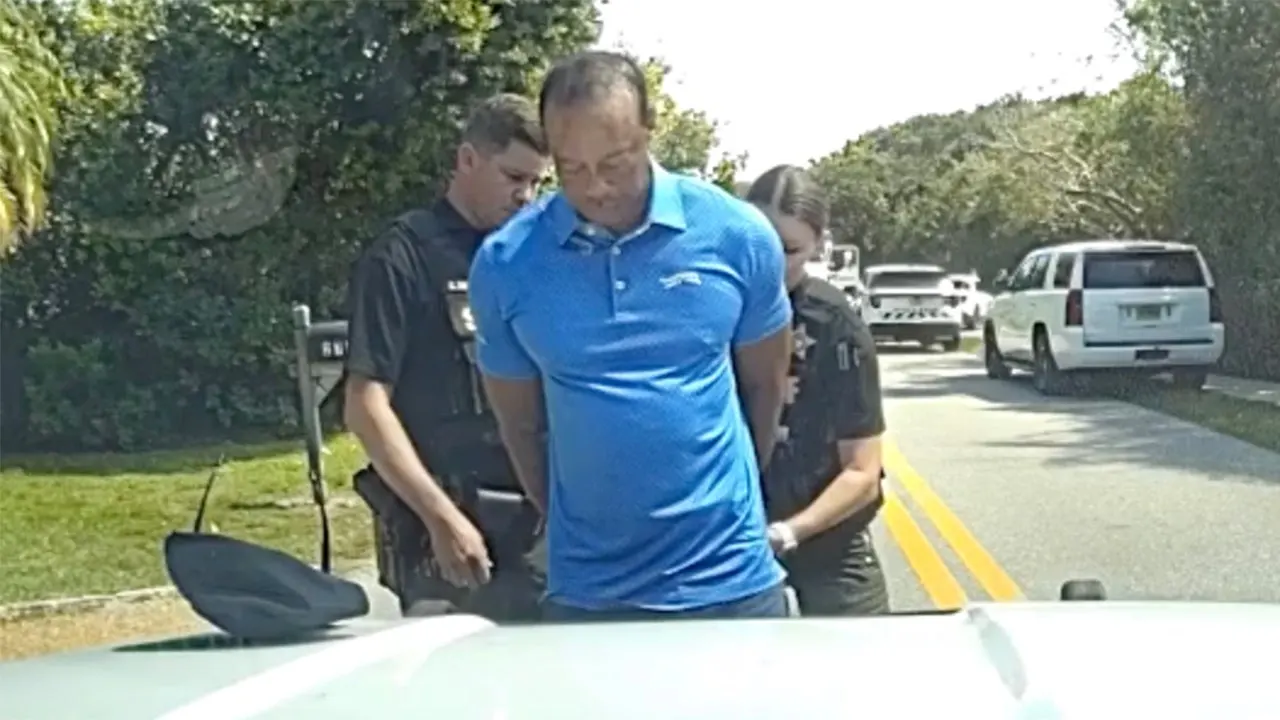
The details from that fateful evening paint a picture of a man who seemed out of sorts, yet insistent on cooperation despite his history of pain. Authorities noted that Woods blew a perfect “triple-zeroes” on the breathalyzer, meaning no alcohol was detected in his breath. Still, the red flags were there: his movements were slow and listless, his eyes glazed, hinting at something more. Deputies described him as lethargic, prompting further scrutiny. Before the tests, Woods opened up about his medical marathon—seven back surgeries and over 20 operations on his leg, all stemming from a gruesome 2009 accident that nearly ended his career. His leg injuries from that wreck kept him sidelined for a year back in 2021, and now, at 50, he walks with a visible limp, his ankle fused, a constant reminder of battles fought on and off the green. It’s heartbreaking to think of him, once sprinting across courses with grace, now navigating even simple tasks like standing through a sobriety test while seated, his body betraying him yet again. He admitted to taking “a few” prescription medications, a nod to the daily realities of managing chronic pain. Officers, aware of his medical file, adapted the tests accordingly, but ultimately, one deputy felt compelled to cuff him, believing an “unknown substance” was at play. In that vulnerable moment, catch it all on bodycam footage where Woods mutters, “I’m getting arrested?”—a phrase laden with disbelief and the raw edge of human shock.
Diving deeper into his physical struggles helps us see Woods as more than a headline; he’s a man whose corporeal limits have shaped his entire adulthood. Picture the golfer we’ve cheered for decades, emerging from anesthesia after yet another procedure, waking to a world where swinging a club means defying gravity and his own anatomy. The 2021 collision that shattered his leg wasn’t just an accident—it was a setback that exiled him from the sport he loves, forcing him into solitary rehab and reflection. Now, with this DUI, we’re seeing echoes of that fragility. His sitting-down tests—four exercises designed to gauge impairment—were meant to be fair, given his limitations, yet they culminated in arrest. It’s easy to humanize this: imagine the frustration of relying on meds just to function, to get out of bed, let alone drive through suburban streets. Woods, father to two young kids, has often spoken about wanting to model strength for them, but here, in a Florida courtroom filing, the real story unfolds. A subpoena looms, scheduled for later this month, demanding Lewis Pharmacy’s records of his prescriptions from January to March of this year. Dates filled, pill counts, dosages, instructions, warnings about driving—they’re all laid bare, turning personal health choices into public scrutiny. It’s invasive, almost poetic in its irony for someone so private, and it raises questions: Does managing pain ever excuse carelessness? How does one balance recovery with responsibility? Woods’ story underscores the unspoken struggles of athletes who live with legacies of injury, making us empathize with the toll on his mental and emotional health.
This isn’t Woods’ first encounter with legal troubles tied to impairment; it’s a painful deja vu from his 2017 arrest, another sober reckoning that derailed his career and forced introspection. Back then, a sleepy morning drive led to scandal, addiction admissions, and a relentless rehab journey. Now, in 2024, the cycle repeats, but with added layers of maturity and perhaps wisdom. Earlier this week, Woods released a poignant statement, his words echoing through social media like a confessional from a weary traveler. He acknowledged the gravity of his situation, stepping away from golf to seek treatment—again. “I know and understand the seriousness,” he wrote, his vulnerability shining through in pleas for privacy as he prioritizes “lasting recovery.” It’s a father’s voice, a hero’s admission of fragility, committing to returning “healthier, stronger, and more focused.” Fans, who’ve followed his Phoenix-like rises, felt the sorrow; here was the man who conquered Augusta, now battling inner demons. Court records show he was granted permission on April 1 to leave the country for intensive inpatient care, a global pursuit of healing. You can almost picture him on that flight, reflecting on fame’s double-edged sword: the adulation that fuels drive, and the isolation that breeds struggle. It’s humanizing to see beyond the trophies—a man grappling with addiction, pain, and the relentless public eye, reminding us that champions aren’t infallible.
Legally, the narrative tightens with charges wielding real consequences: driving under the influence, property damage for the crash, refusal to submit to further testing, and careless driving. Woods pleaded not guilty in a different courtroom, forgoing an arraignment and opting for a jury trial—a bold stand suggesting he contests the narrative. In our digital age, where every detail from bodycam videos to prescription logs becomes fodder for headlines, it’s a fight for dignity. He doesn’t want this to define him; instead, he’s fortified by affirmations from loved ones and supporters. Expand this out: Think about the courtroom bustle, the lawyers poring over filings, the judges weighing a lifetime’s story. Woods, testifying in his mind, explaining how chronic pain pills prescribed by necessity collided with his judgment that night. It’s a system tasked with fairness, yet one that doesn’t fully grasp the psychological warfare of celebrity. His decision to humanize his plea—through statements and silence—speaks volumes, inviting empathy rather than judgment. We root for him, not just as an athlete, but as a person facing a crossroads, proving that redemption is possible even after stumbles.
As we wrap our minds around this chapter in Woods’ saga, the essence lies in connection: his journey mirrors our own vulnerabilities. We’ve all known nights of poor choices driven by unseen burdens—exhaustion, medication, life’s accumulative wear. His story never shook, brutally honest, challenges us to see beyond the icon. From packed galleries to solitary treatments abroad, Woods embodies perseverance, reminding us of empathy’s power. In seeking help, he’s teaching lessons on resilience, the kind that outlasts any subpoena or trial. And in a world craving authentic heroes, his openness fosters hope that, like golf’s stubborn fairways, life offers second chances. Fox News invites you to dive deeper—listen to articles now, immerse yourself in narratives that feel alive, human, and profoundly real. At its core, Woods’ tale isn’t just news; it’s a mirror reflecting our shared humanity.