


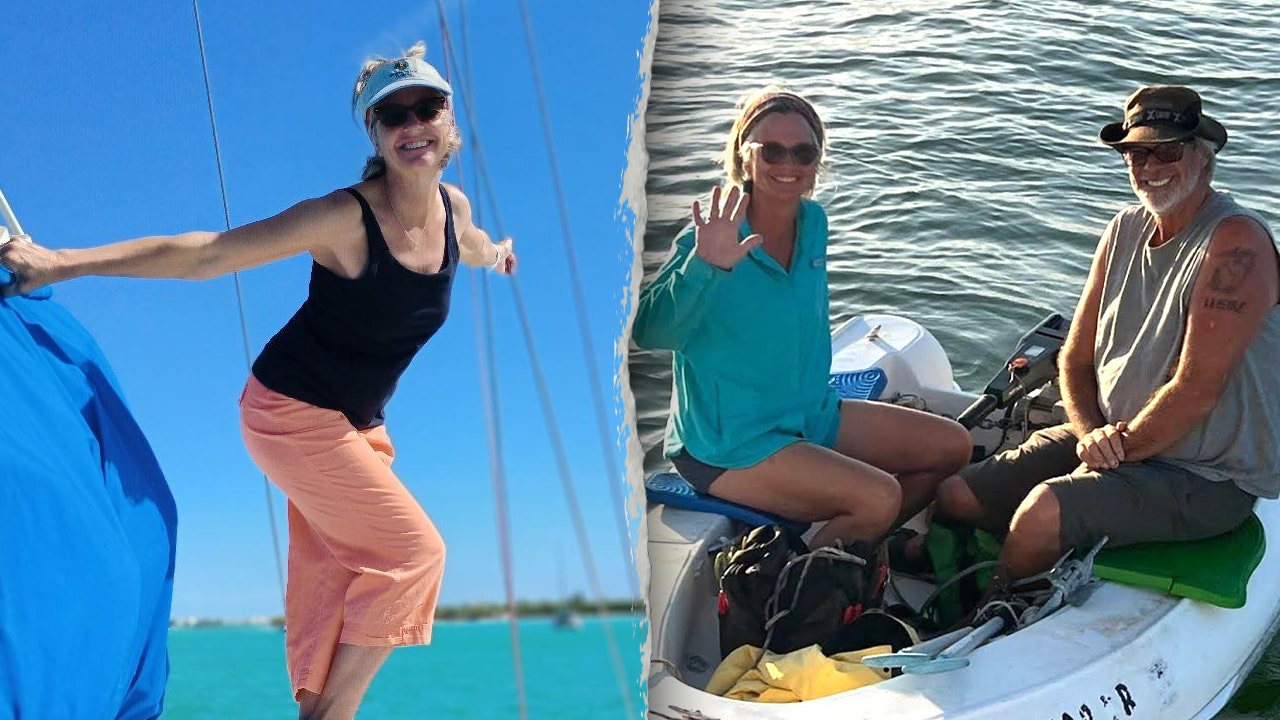
In the serene, sun-kissed waters of Hope Town, Bahamas, a tragedy unfolded that has shaken a family to its core and reminded us all of the unpredictable power of the sea. Lynette Hooker, a vibrant 55-year-old woman full of life and adventure, vanished on a fateful night last Saturday, leaving her husband Brian, 58, grappling with profound grief. Their love story, built on shared voyages and dreams of horizonless escapes, now hangs by a thread as Brian, for the first time, poured out his heart in a Facebook post. “I am heartbroken over the recent boat accident in unpredictable seas and high winds that caused my beloved Lynette to fall from our small dinghy near Elbow Cay,” he wrote, his words echoing the raw pain of a man who has lost his compass. Together, the Hookers had been staying at the Abaco Inn, a quaint haven where couples come to unwind away from the world’s hustle. That evening, around 7:30 p.m., the couple set out in their small dinghy, eager to reach their yacht anchored nearby—a routine outing that turned into nightmare. The air was thick with the humidity of the islands, and as they navigated the choppy waters, the high winds foretold trouble. Brian recounted how Lynette, in a sudden twist, tumbled into the dark, enveloping ocean, clutching the ignition key. In that instant, the engine died, and the current, like a merciless force, began to pull her away. Imagine the panic that must have surged through Brian’s veins as he watched his wife drift off into the abyss, her cries swallowed by the roaring waves. He described desperate attempts to reach her, but the elements conspired against them, driving the dinghy further apart. Alone, he paddled back through the stormy night to the marina at Marsh Harbor, arriving around 4:00 a.m. to report her missing to authorities. In that harrowing journey, Brian’s mind must have raced with memories of their 30-plus years of marriage—Picnics on deserted beaches, laughter over shared cocktails, the simple joys of holding hands as the sun set over the turquoise expanse. Lynette was more than his partner; she was his anchor, a pillar of warmth and wisdom who’d supported him through careers in medicine and education, raising a family that included two adult children now far away in the U.S. Their daughters, surely devastated, must be clinging to hope, knowing their mother adored the Bahamian escapades that brought her peace after years of nurturing others. Brian’s role as a father and grandfather added layers to his anguish, painting a picture of a life interrupted by sorrow. The local Bahamian community, known for its hospitality, became an immediate lifeline. Officials sprang into action, coordinating a massive search involving the Hopetown Volunteer Fire & Rescue team, the Royal Bahamas Police Force, and the Royal Bahamas Defense Force—ordinary heroes who dropped everything to comb the treacherous waters. Their tireless efforts, often under harsh conditions, reflect the human spirit’s refusal to abandon hope. Yet, as the days passed, Brian’s world narrowed to a singular focus: finding Lynette. He penned those words not just as a plea, but as a testament to their bond, urging prayers and support while vowing to keep searching. This incident highlights the fragility of life on the water, where a momentary lapse can shatter everything. For the Hookers, planned retirement voyages now seem cruelly ironic, a dream deferred by nature’s fickle temper. Brian’s gratitude flowed deeply for the helpers, who represent the kindness of strangers in crisis. Stories like this remind us of our own vulnerabilities, evoking empathy for those who face the unknown depths. As the search continues, we hold space for justice and reunion, praying for calm seas to reunite this loving couple.
The emotional tapestry of Brian Hooker’s life unravels further when we peek into the backdrop of their shared adventures, which now bleed into heartache. Lynette wasn’t just a widow-in-waiting; she was a dynamic force, a former lab supervisor whose intellect and compassion shaped lives far beyond her own. Brian, a retired biochemist, spoke fondly in interviews of their escapes—how the Bahamas offered sanctuary from life’s chaos, with Lynette’s laughter ringing like a melody against the backdrop of swaying palms. Their yacht, a symbol of freedom, became the stage for this unforeseen drama. That Saturday night, as they departed the Abaco Inn’s cozy confines, the couple likely chatted of lighter things: the day’s snorkeling, perhaps a shared joke about the unruly winds that often accompanied tropical evenings. But fate had other plans. Brian’s account details Lynette’s fall—a slippery deck, a gust of wind, and the key yanked from the ignition as she plunged. The water’s chill must have shocked her, her survival instincts kicking in amid the swirling currents. He tried valiantly to maneuver the boat, his arms aching from paddling against the tide, but the high winds mocked his efforts, pushing them astray. Paddling solo to Marsh Harbor under a moonlit sky, Brian’s solitude amplified his despair. Arriving at 4 a.m., disheveled and distraught, he alerted authorities, his voice steadied by duty but cracking with fear. Recalling this moment, one can’t help but humanize the scene: a man who once held hands with his love now clinging to hope, picturing her struggling in the vast ocean. The Bahamians’ swift response underscored their communal spirit; fishermen and volunteers joined the fray, using local knowledge of tides and currents. The Hopetown Volunteer Fire & Rescue team, often dealing with everyday island emergencies, pivoted to this international plea, proving that borders mean little in the face of human loss. Brian’s post wasn’t just a statement; it was a lifeline to strangers, inviting collective empathy. “We continue to search for her and that is my sole focus,” he emphasized, revealing a resilience born from love. For the family, this loss echoes personal histories—Lynette’s childhood in the Midwest, shaping her into a nurturer; Brian’s scholarly pursuits, blending with their mutual passion for travel. Their two children, scattered but united in grief, must grapple with unfinished conversations, longing for one more hug from their mother. This tragedy peels back the romance of sailing, exposing the raw underbelly of risk. Yet, it also celebrates resilience: the Hookers’ story inspires vigilance, encouraging safer practices for all water enthusiasts. As updates trickle in, we’re left with a profound respect for those who face the ocean’s wrath, turning prayer into action and sorrow into strength. The ongoing search, with US Coast Guard choppers hovering and boats scouring, fuels a global conversation about preparedness and compassion. In Brian’s gratitude, we see a man’s gratitude extended to nations—Bahamians for their swift aid, Americans for coast guard support—bridging divides in unity. Ultimately, this isn’t just news; it’s a mirror to our interconnected fates, urging us to cherish fleeting moments and support those in peril.
Diving deeper into the human element, Brian Hooker’s voice emerges as a beacon of vulnerability in his first public articulation, transforming cold facts into a poignant narrative of loss and hope. His Facebook message, shared on Wednesday, resonates with the intimacy of a personal diary entry, laying bare the emotional wreckage of that night. “Despite desperate attempts to reach her, the winds and currents drove us further apart,” he wrote, painting a visceral image of isolation amidst the elements. For Brian, a man who prided himself on controlling variables in his scientific life—from lab experiments to family logistics—this helplessness must feel like betrayal. Lynette’s disappearance strips away his assurances, leaving him to navigate grief without closure. One can imagine his solitary paddle back to Marsh Harbor as a metaphor for life’s unpredictability: each stroke a reminder of choices made and paths lost. Arriving at the marina in the predawn hours, shaken and soaked, reporting her missing to a presumably surprised guard or police officer, the exchange likely evoked raw vulnerability. “My wife’s gone,” he might have choked out, details spilling like waves. Authorities, empathetic figures in uniforms, mobilized swiftly, their actions echoing the Bahamian ethos of “many hands make light load.” The Hopetown Volunteer Fire & Rescue, a group of locals whose heroism includes mundane rescues and community events, donned gear for this high-stakes mission. Similarly, the Royal Bahamas Police Force and Defense Force coordinated with the precision of a well-oiled machine, deploying boats and divers into the tempestuous Elbow Cay waters. Brian’s thanks extend to the US Coast Guard, whose helicopters and search operations symbolize transatlantic solidarity. This international collaboration humanizes the event, showing how crises unite unlikely allies—from island fishermen with weathered hands to American servicemen dedicated to saving strangers. For Lynette, an avid traveler who found solace in the islands’ rhythms, her ordeal conjures empathy: Was she terrified in the dark waters, calling for Brian? Did memories of their children flash before her? Her absence amplifies Brian’s words, making his heartbreak a shared burden. As the family grapples, perhaps clinging to faith or rituals, we reflect on how such incidents ripple outward. Ambergrims—that eery disappearance code word for airlines—finds a nautical parallel here, urging safety checks. Yet, Brian’s focus remains unmistakably clear: the search. His post ends on a note of thanksgiving, a cultural bow to the helpers whose efforts bridge distances. It’s a reminder that in tragedy, humanity’s kindness can buoy the soul. This story, while breaking, invites contemplation of our own lives—do we express gratitude often enough? As operations persist, potentially involving sonar scans or rescue divers, we hold space for miracles, knowing that Brian’s resilience mirrors ours. The Hookers’ tale, unfolding in paradise turned perilous, calls for empathy, vigilance, and collective support in the face of life’s stormy unknowns.
Extending the narrative into the realm of personal resilience, Brian and Lynette Hooker’s story evokes the indomitable spirit of couples who’ve weathered storms both literal and metaphorical. Before that ill-fated dinghy ride, their life together was a testament to enduring love—marriages thrive on unspoken bonds, after all. Lynette, with her infectious energy and nurturing demeanor, was the glue that held their world. Brian, articulate and reflective in his post, credits the “unpredictable seas and high winds” as the culprits, a nod to nature’s whims. Yet, humanizing this, we see how such accidents stem from slight miscalculations: perhaps a momentary distraction, a wave cresting higher than anticipated. Brian’s desperate paddling symbolizes more than physical exertion; it’s the mental battle against despair, envisioning Lynette’s struggle in the inky water. His arrival back at the marina at 4 a.m., reporting the loss, must have been cathartic yet agonizing, transforming a private nightmare into a public plea. The Bahamian officials’ response—swift, coordinated—highlights human instincts for protection. The Hopetown Volunteer Fire & Rescue, volunteers whose day jobs range from farming to tourism, stepped up diligently, braving the elements for an American stranger. Their dedication speaks to the island’s soul, where community means everyone pulls together, whether for festive conch fries or traumatic losses. The Royal Bahamas Police Force’s involvement, often dealing with tourist incidents, added professionalism to the effort, while the Defense Force deployed resources with military precision. Brian’s heartfelt thanks for the US Coast Guard’s role underscores bilateral bonds; the Coast Guard’s reputation for rescues like this one paints a picture of selfless service. As the search intensifies—divers plunging into murky depths, spotlights piercing the night—we empathize with the Hookers’ ongoing limbo. Lynette’s daughters, perhaps remembering childhood Bahamas trips with Mom, face parental fears anew. This crisis tests faith: prayers whispered, vigils held virtually. Yet, Brian’s focus on searching reveals optimism, a refusal to succumb. It’s a lesson in prioritizes—what truly matters in life’s flux. For travelers, this invites caution: life jackets mandatory, vessel checks paramount. In human terms, the Hookers embody love’s endurance, reminding us that even in loss, hope anchors resolve. As updates emerge, potentially revealing twists like currents’ whims or survival signs, the story evolves. We, as readers, contribute through thoughts and prayers, humanizing tragedy into shared humanity. The Bahamian landscape, once a backdrop of bliss, now cradles sorrow, yet it cultivates strength. Brian’s post isn’t just closure-seeking; it’s a call to empathy, urging us to support families in fog. Ultimately, this narrative transcends news, becoming a meditation on fragility and fortitude, inspiring gratitude for everyday safe harbors.
The deeper emotional layers of this unfolding drama reveal the Hookers as embodiments of alpine dreams deferred, where the allure of tropical getaways clashes with precarious realities. Brian, in recounting the dinghy mishap, alludes to “desperate attempts” that couldn’t reunite them, evoking a hunter-gatherer’s forced retreat. Lynette’s fall, with the key in hand, encapsulates fate’s cruelty—a button pressed inadvertently leading to isolation. One imagines Brian’s eyes wide in the darkness, shouting her name as the current—a Bahamian force mirroring life’s relentless pulls—tugged her away. His solo paddle back was not just a physical feat but an emotional odyssey, each stroke a denial of finality. Reaching Marsh Harbor at 4 a.m., the act of reporting catalyzed an outpouring of support, humanizing the bureaucracy into kindness. Authorities, polite and professional, perhaps offered coffee or comfort as they activated networks. The Hopetown Volunteer Fire & Rescue’s involvement, with seasoned islanders swapping sea stories, adds warmth; they’ve likely rescued many before, their tents dotted with personal mementos. Royal Bahamas Police and Defense Force efforts infuse structure, their boat deployments a dance with destiny. US Coast Guard additions—with spotters and swimmers—bridge continents, a testament to global compassion. Brian’s gratified acknowledgment highlights interconnected humanity; helpers aren’t faceless but kindred spirits. For the family, this loss stretches personal histories—Lynette’s Midwest roots contrasting the Caribbean chaos, Brian’s analytical mind clashing with chaos. Their children, adult now, face parental inversions, whispers of “what ifs.” Yet, the ongoing search treats grief with purpose. Humanizing this means acknowledging strain: sleepless nights, fragmented thoughts. It also celebrates bonds: mutual support keeping Brian afloat. Travelers reflect on risks, urging regs like flares and GPS. This story’s resonance lies in universality—anyone could be Brian or Lynette. As seas calm or surge, hope lingers. Updates might bring closure or continuation, but empathy endures. The Hookers’ ordeal teaches valuing moments, forging from mourners into memorials. In Bahamas’ embrace, a somber lesson unfolds: life’s waves wash away much, but love’s echo persists.
Finally, weaving the threads of tragedy into a broader human canvas, Brian Hooker’s heartfelt message encapsulates a couple’s legacy threatened by the abyss, urging us to confront life’s ephemeral nature. His declaration of heartbreak over the “boat accident” personalizes the event, transforming statistics into sentiences. Lynette’s plunge with the key, Nancy-like in dramatics, symbolizes displacements—keys to doors future may never open. Brian’s rudderless paddle illuminates solitude’s sting, mental synap riffed with regrets. Reporting at 4 a.m. was a surrender to vulnerability, authorities becoming confidants in crisis. The Bahamian team’s mobilization—Hopetown’s volunteers swapping flip-flops for wetsuits, police coordinating grids—evokes grassroots heroism. Defense Force’s sorties and Coast Guard’s aerial Hunts embody unity’s might. Brian’s thanks forge imprints of gratitude, helpers’ kindness a balm. For Hookers, this echoes life’s patterns—childhoods morphed into adventures, now shadowed by voids. Offspring’s anguish, virtual embraces, amplifies stakes. Search’s persistence defies odds. This narrative humanizes risks: waves as wolves, preparations as prayers. It inspires empathy-driven actions, from safety seminars to support funds. As tides shift—possible recoveries or acceptance expeditions—we mourn and learn. The Hookers, once voyagers, now embody resilience, their story a mirror for safeguarding joys. In breaking op-eds or quiet vigils, we coalesce, turning sorrow into solidarity. Ultimately, Elbow Cay’s winds whisper warnings, but also of reunions ethereal. Lynette’s echo resonates, Brian’s focus a flame. Embrace the moment; love deeply. Updates await, but humanity precedes.