



The Hidden Haven Amid Chaos
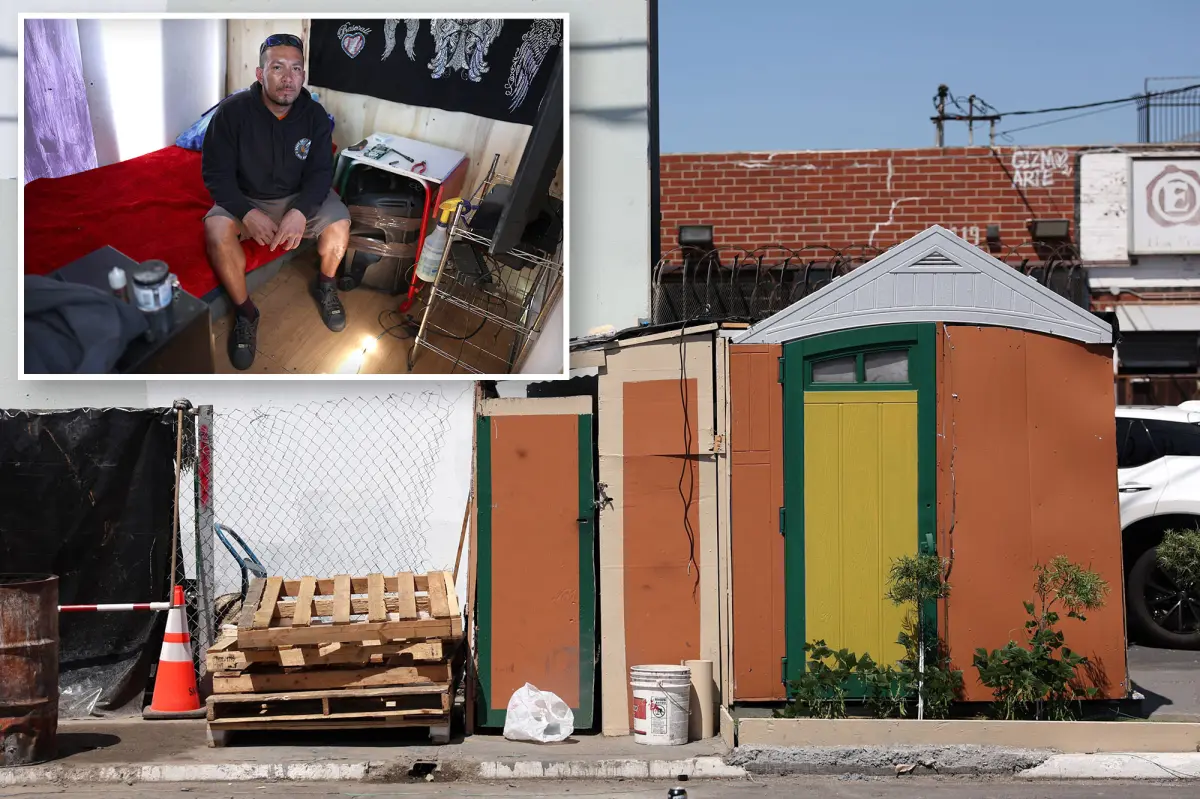
In the bustling heart of Los Angeles’ Fashion District, where gleaming storefronts and high-end boutiques line the streets, a quiet revolution is quietly unfolding beneath the city’s facade of glamour and wealth. Amid the billion-dollar homelessness crisis that plagues the City of Angels, a makeshift community has emerged—not as a scourge or a problem, but as a testament to human resilience and ingenuity. Here, the homeless aren’t just surviving; they’re thriving in their own way, constructing tiny homes from scavenged wood and discarded materials, turning abandoned lots into a rogue mini-town. These aren’t shanties of despair; they’re personalized shelters equipped with creature comforts like televisions and air conditioning, a stark contrast to the dangerous, drug-infested encampments that dot the LA River. One such dwelling, painted in vibrant hues of orange, green, and yellow, stands out like a splash of color in a monochrome world. It’s the home of Osvaldo, a 38-year-old man who’s beaten the odds to carve out a slice of dignity in the shadows of skyscrapers.
Osvaldo’s story is one of quiet determination and survival against the odds. No longer content with the dangerous tent he once inhabited just a block away, where fights erupted nightly and drugs ravaged lives, he decided to build something better. “Too much fighting… drugs… everything,” he recalls, his voice tinged with the weariness of someone who’s seen the worst of humanity’s underbelly. For six years, he wandered homeless in Orange County, scraping by before migrating to Los Angeles in search of work—any steady gigs to buy food and keep going. Now, he maintains his tiny home meticulously: mopping floors every day, creating a small oasis of cleanliness in an unclean world. Inside, it’s a surprising haven—a bed for rest, a TV for entertainment, even air conditioning to ward off the relentless LA heat. It’s not luxurious, but it’s his, a symbol of control when life’s been so uncontrollable.
But Osvaldo isn’t just building for himself; he’s become a quiet entrepreneur in this underground community, helping others escape the perils of tents and tarps. For about $100, he assembles wood-framed structures, offering a tangible step up in living standards. “I made like… almost 10 houses so far,” he says proudly, his hands calloused from hammering and sawing. His own home is a masterpiece of color and pride, fully painted and finished, standing as a beacon for what’s possible. Yet, many of the homes he builds are still works in progress—subdued tones, exposed wood, partial walls—raw reflections of lives piecing themselves back together. He dreams of painting more, finishing them off into permanent havens where people can truly call a place home, free from the impermanence of street living. It’s heartening to see this grassroots innovation, a DIY response to a system that often feels broken, turning desperation into creativity.
Just a short walk down the road, Kathryn, a 40-year-old woman who’s been homeless for decades, inhabits one of these unfinished shells. She leads a tour of her burgeoning space, calling one corner the “bedroom” and another the “bathroom.” It’s basic and bare, still evolving, but she points to an open area with hopeful eyes: “That’s where the living room will be.” Her words carry the weight of long-fought battles, a life of endless nights under stars that weren’t kind. Watching Kathryn, you can’t help but feel the human longing for stability—for walls that shield more than just wind, for corners that define a life, not just survival. In this mini-town, people like her are reclaiming agency, transforming barren lots into something resembling community, even if it’s makeshift.
Outside Osvaldo’s doorstep, another layer of life sprouts: small green plants, tiny green beans he planted with care. “I planted like… six, seven… little beans,” he shares, a smile breaking through his stoic demeanor. These aren’t mere decorations; they’re signs of hope, roots in the earth mirroring the roots he’s planting in his new life. In a city that often reduces the homeless to statistics, these simple acts—watering plants, building homes, sharing skills—humanize the crisis. They remind us that beneath the headlines of overdose deaths and filthy encampments (like the LA River tragedy we reported weeks ago), there are individuals with dreams, sorrows, and quiet joys. Osvaldo’s beans aren’t just beans; they’re symbols of growth in a landscape of neglect.
Yet, this self-made mini-town exists against the backdrop of a failing system, where Los Angeles has poured over $1 billion into homelessness programs, with little to show for it. The people we spoke to echoed a common refrain: no outreach from the Los Angeles Homeless Services Authority, no remembered visits from social services. Even a $300 million initiative to move people into housing only managed to relocate them temporarily; about 40% returned to the streets within months. It’s a bitter irony—endless funding cycles producing failure, while ordinary people like Osvaldo innovate with $100 and elbow grease. In this hidden world of the Fashion District, humanity’s spirit shines brightest where authority’s light falters, a mini-town of painted dreams standing as a rebuke to bureaucratic indifference. It’s a place where the homeless aren’t victims but creators, building lives one plank, one plant at a time, proving that dignity can bloom even in the cracks. As the city wrestles with its crisis, stories like these urge us to see the people behind the problem—to listen, to empathize, to perhaps even join in the quiet revolutions sprouting on the streets. After all, in a world that’s forgotten them, the homeless are reminding us what it means to live.