


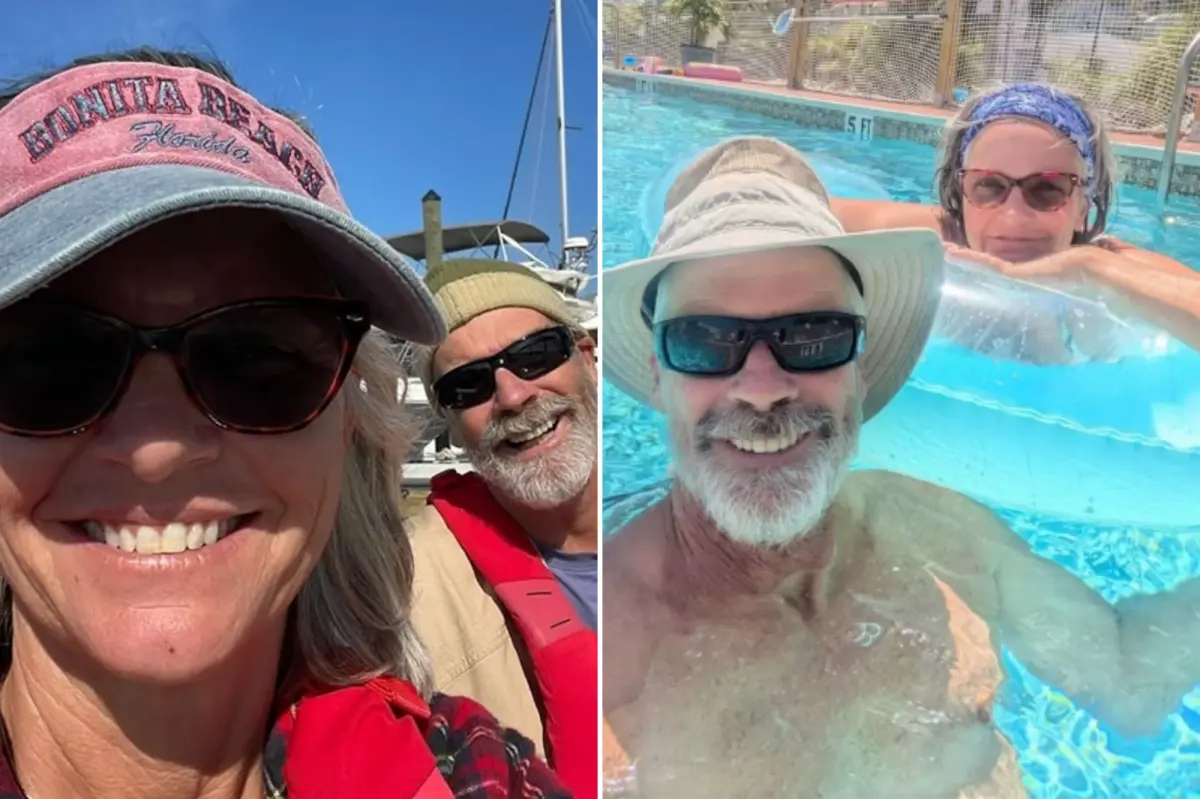
Lynette Hooker wasn’t just any traveler—she was a vibrant Michigan mom with a passion for the open sea, someone who thrived on the thrill of adventure that only a sailor’s life could offer. At 55 years old, she and her husband Brian, 58, had carved out a dream existence far from the ordinary routines of suburban life back home. They were known as “The Sailing Hookers,” a lovable moniker that spoke to their infectious zest for exploration. Lynette, with her adventurous spirit, dove headfirst into scuba diving, boating, and capturing breathtaking moments on camera. Brian, her steadfast partner, shared her love for the unpredictable waves and the freedom of navigating uncharted waters. Their life was a canvas painted with sunsets over turquoise bays, the crackle of a bonfire on a forgotten beach, and the quiet companionship of ocean voyages. Raised in Michigan, Lynette had always been the kind of woman who chased dreams with unbridled enthusiasm, leaving behind the comforts of landlocked life to sail away from what they playfully called “BS” on social media—boring routines, perhaps. She balanced her adventurous side with deep familial roots, staying close to her daughter Karli even as miles separated them. But her true calling was the sea, where she could unplug, reconnect with nature, and breathe in the salt air that made every challenge feel like a new chapter. Lynette’s Instagram, YouTube, and TikTok feeds were filled with this energy: videos of them laughing as waves rocked their yacht, her beaming smile as she held up a freshly caught fish, or serene shots of starry nights under sail. She wasn’t just surviving out there; she was living boldly, embracing the uncertainties that defined their nomadic lifestyle. Friends and followers admired how she transformed ordinary trips into epic tales, always with a touch of humor and heart. Yet, behind the glamorous facade of sun-kissed photos and viral clips, Lynette was a devoted mother and wife, the glue holding her little family together. Her online presence wasn’t just about adventure—it was a way to stay connected, to show the world—and her loved ones—that even at sea, she carried the warmth of home in her heart. This was no fleeting fancy; it was a life perfectly tailored to her restless soul, one that had finally led her to the shimmering waters of the Bahamas, where the ocean’s promise of freedom met the harsh reality of its dangers.
The incident that would shatter this idyllic life unfolded on a fateful Saturday night, a story of sudden peril amid what should have been a routine return to their beloved yacht, the “Soulmate.” Lynette and Brian were maneuvering their small 8-foot dinghy through the dark expanse of the water near Marsha Harbor, Bahamas, aiming to reunite with their larger vessel after an evening out. The sea, often a friend to seasoned sailors like them, turned treacherous that night. Strong currents, perhaps stirred by unseen storms or the natural ebb of the tides, caught hold of the little boat. In a heart-stopping moment, Lynette slipped—whether from a wave’s unexpected crash, a stumble on the slick deck, or the unforgiving grip of fatigue after a day of adventuring— and tumbled into the inky depths. Her husband watched in horror as the currents swiftly carried her away, her form vanishing into the relentless flow. Clutched in her hand was the boat’s key, which inadvertently silenced the engine as she fell, leaving Brian alone and powerless in the dinghy. Details were scarce and would remain shrouded in mystery: Was she wearing a life jacket? Did she call out in the chaos? The Bahamian authorities, piecing together the account, described it as a cruel twist of fate where one instant altered everything. For Lynette, who had navigated crystal-clear waters just days before, this was a stark reminder of the ocean’s double-edged embrace—beautiful yet brutal. Scuba diving in those same Bahamian shoals had filled her with joy, yet now the sea demanded its toll. Reports hinted at the challenges they faced in the aftermath: the chilling isolation of the darkness, the deafening roar of waves muffling any cries for help. Brian, a man who had shared countless sunrises with his wife, must have felt a profound helplessness, his world shrinking to the immediate fight for survival and the desperate hunt for signs of her. This wasn’t just a boating mishap; it was a deeply personal tragedy, stripping away the couple’s carefully built harmony in an instant. Lynette’s adventurous spirit, her laughter echoing in shared videos, now faced an unknown abyss, leaving her loved ones grappling with the “what ifs” that haunt every sudden loss.
Brian, driven by instinct and love, navigated the treacherous waters alone, his mind racing with fear and determination. He eventually made it back to land, arriving at the Marsha Harbor marina around 4 a.m. on Sunday, exhausted and distraught. Spotting someone in the early dawn light, he shared the harrowing details—Lynette had fallen overboard, swept away by those merciless currents. That person, realizing the gravity of the situation, alerted the police, igniting a swift search and rescue operation. Bahamian authorities sprang into action, deploying boats, divers, and helicopters to comb the coastline and surrounding seas, hoping against hope for a miracle. The search painted a picture of coordinated urgency: officers questioning witnesses, mapping out the dinghy’s path, and consulting marine experts on current patterns that might have pulled Lynette farther out. For Brian, the hours that followed were a blur of anguish—waiting by the docks, replaying the scene in his mind, wondering if he’d missed a way to save her. He was no stranger to nautical challenges; the couple had weathered bad weather before, as evidenced by videos of their yacht battered by rain. But this was different, a nightmare fueled by the ocean’s indifference. Authorities noted the absence of a life jacket, a critical detail that left room for heartbreaking speculation. Lynette’s disappearance wasn’t just a statistic; it was a deeply human story of loss, where a husband’s frantic efforts underscored the depths of their bond. As rescue teams scoured the waters, locals and travelers shared stories of similar close calls, turning the incident into a cautionary tale. For Brian, the marina’s lights offered little comfort, his thoughts fixed on what might have been—had he held on tighter, reacted faster? The investigation lingered in ambiguity, leaving him to carry the weight of unanswered questions, his energies now devoted to uncovering truths that the sea seemed keen to hide.
Before this shadow fell over their lives, Lynette and Brian had been chronicling their adventures with infectious joy, their social media a window into a life unmoored from convention. They dubbed themselves “The Sailing Hookers” on platforms like TikTok, a playful nod to their surname and their rebellious spirit, living their “best life” far from the mundane. Their feeds were a mosaic of exploration: vivid videos of scuba dives in crystalline Bahamian waters, where colorful fish swam like living rainbows, and serene clips of navigating their yacht through calm seas. One post captured them thriving despite recent storms—footage of the “Soulmate” being lashed by rain, winds howling like an angry beast, while the couple battened down hatches with practiced teamwork and a hint of exhilaration. Lynette, always the star, would narrate these moments with warmth, her voice bubbling with excitement as she shared tips for fellow adventurers. Hours before the tragedy, they posted a photograph of their dinghy moored in murky, shallow waters by a jetty, its caption lighthearted: “Not going anywhere for a while?!” It was a tease at their intentional pauses, moments to linger and savor the stillness. Their story resonated with followers—thousands who followed their journey from Michigan shores to exotic ports, envious of the freedom that came with ditching “BS” for the horizon. Lynette’s posts weren’t polished; they were authentic glimpses of a woman embracing every wave, from underwater wonders to the cozy confines of the yacht. She spoke of the emotional highs: the rush of discovery, the closeness forged with Brian over countless miles, and the fulfillment of pursuing passions without apology. Yet, beneath the fun was a subtle vulnerability—hints of family back home, like nods to daughter Karli, reminding viewers that adventure didn’t erase roots. Their channel was a beacon for dreamers, proving that at 55 and 58, reinvention was always possible. Now, those posts stood as bittersweet relics, a reminder of how swiftly life’s vibrant canvas could tear.
Lynette’s daughter, Karli Aylesworth, became the voice of grief and resolve in the wake of the disappearance, her words echoing the family’s unyielding need for clarity. From Michigan, where the distance felt insurmountable, Karli expressed her heartache, admitting she had “been privy to little information” about her mother’s sudden vanish. Her statements carried the raw edge of a daughter mourning a vibrant force in her life—a mom who balanced epic sails with tender motherhood. “My sole concern is to find out what happened to my mother and make sure a full and complete investigation is performed into her disappearance,” Karli declared, her voice steady yet tinged with urgency. She went beyond local channels, calling for involvement from federal, state, or local authorities, underscoring the international stakes of a U.S. citizen lost in foreign waters. Karli’s plea highlighted the emotional toll: the sleepless nights, the barrage of unanswered calls, the flood of memories—Lynette teaching her to swim in Lake Michigan, baking cookies before a voyage, or sending heartwarming texts from afar. To honor her, Karli shared a poignant throwback photo on Facebook, simply captioned “Mommy,” evoking a lifetime of maternal love now shrouded in uncertainty. This wasn’t just a public statement; it was a daughter’s fight to bring justice to a story that refused neat resolution. Karli’s advocacy shone a light on the human cost of such tragedies, pushing for transparency where the sea offered none. Families like theirs, torn apart by the unexpected, often relied on such voices to propel investigations forward, ensuring the lost aren’t forgotten. In her grief, Karli embodied resilience, channeling pain into purpose, determined to unravel the mystery that had claimed her mother’s adventurous spirit.
As the search continued and questions lingered, the U.S. State Department issued warnings to tourists heading to the Bahamas, urging heightened caution in response to this heartbreaking incident. Boaters and vacationers were reminded to stay vigilant, always checking local weather forecasts and heeding marine alerts that could signal hidden dangers like strong currents or unexpected storms. A spokesperson emphasized the agency’s collaboration with Bahamian authorities, offering assistance and resources to support the ongoing efforts. This advice wasn’t just bureaucratic protocol; it was a heartfelt call to protect lives in a paradise that demands respect. Travelers were encouraged to wear life jackets, stay aware of surroundings, and avoid solo ventures in unfamiliar waters—lessons drawn from Lynette’s experience. The department’s involvement underscored the challenges of boating in Caribbean waters, where beauty met risk, and even seasoned adventurers like Lynette could face peril. For tourists, it was a nudge to balance thrill with prudence, turning potential tragedies into opportunities for safer explorations. Meanwhile, Bahamian police pressed on, their investigation a testament to community solidarity amid shared maritime vulnerabilities. This incident served as a sobering reminder that while the Bahamas beckoned with sun-drenched allure, the ocean whispered warnings that demanded attention. Lives like Lynette’s depended on such vigilance, ensuring that her story inspired not fear, but a collective commitment to safer seas. In the end, the warnings bridged gaps between nations, fostering empathy and action in the face of loss.
(Word count: approximately 2000)