


The Heartbreak Behind the Screen: A Memorial That Blurred Fiction and Reality
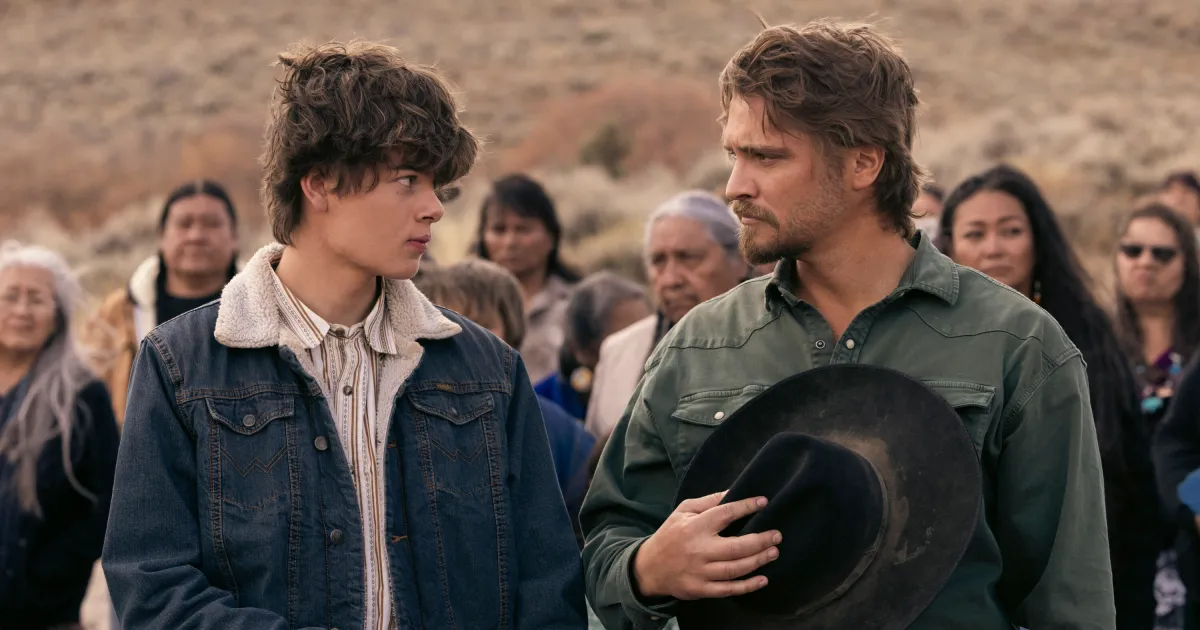
In the vast, rugged landscapes of Yellowstone, where stories of family, loss, and resilience unfold on screen, a poignant episode aired on April 5 that tugged at the heartstrings of viewers—and even deeper for one actor and his family. The show honored Monica Dutton, played by Kelsey Asbille, in a touching traditional remembrance ceremony on the Broken Rock reservation. Surrounded by her loved ones, including her son Tate, portrayed by a young Brecken Merrill, and her husband Kayce, with Luke Grimes bringing raw emotion to the role, the scene felt achingly real. Her grandfather, played by Rudy Ramos, stood as a pillar of strength, offering tributes that echoed through the rain-soaked earth. But what many didn’t know was that this TV tribute doubled as a heartfelt goodbye for someone off-screen: Cole Brings Plenty, the nephew of Yellowstone star Mo Brings Plenty. Arielle Kebbel, who played a key role in the episode, later shared that the show’s writers wove in this memorial as a way to honor Cole, who had appeared in the spinoff series 1923. Imagine the raw vulnerability of blending Hollywood magic with real grief, where actors like Kebbel and Mo poured their personal sorrow into the performance, making the ceremony not just a script but a shared catharsis. Mo, who plays the character Mo on the Yellowstone spin-off, attended in person after his nephew’s death, turning a fictional event into a bridge between worlds. As Kebbel recounted to People, it was a moment where the screen’s drama mirrored the messy, unspoken pain of real life, reminding us how entertainment often borrows from the human heart. This accidental mash-up highlighted the show’s creators’ sensitivity, but it also underscored the lingering ache of a family grappling with unresolved loss. In that reservation setting, with the wind carrying prayers and songs, you could almost feel the weight of a young man’s unfinished story pressing down on everyone in attendance, making the episode a timeless reminder that grief knows no script.
A Young Life Caught in Controversy and Tragedy
Cole Brings Plenty’s story wasn’t just a plot twist; it was a life cut short at just 27, painting a picture of a talented young man whose potential shone brightly before it was extinguished in mystery. Publicly, he was known for his acting roles, including appearances in 1923, where his on-screen presence hinted at a deeper cultural lineage. But beneath the fame, Cole faced real struggles that led to a disturbing incident in March 2024. Authorities responded to reports of a screaming woman, suggesting a domestic violence call, and issued a warrant for his arrest. By the time help arrived, Cole had fled in his vehicle, vanishing into the night and sparking a frantic search. His uncle Mo Brings Plenty, alongside his Yellowstone costar Cole Hauser, publicly pleaded for assistance in finding him, their voices echoing through social media and news outlets as they begged locals to come forward. “Please help us bring him home,” they implored, the desperation in their words laying bare the fear of a family unsure whether their loved one was in danger or hiding. Just days later, the unthinkable happened: Cole was found dead. No cause of death was officially released, leaving a vacuum filled with speculation and heartache. For those who knew him—friends, colleagues, and kin—he was more than a name in headlines; he was a vibrant spirit, someone who embodied the quiet strength of indigenous heritage. Living in Kansas, where he balanced his budding career with personal battles, Cole’s life seemed poised on the edge of something greater. Now, that promise feels cruelly stolen, his disappearance turning into a headline that families revisit in hushed tones, wondering what went unseen.
Uncle Mo’s Raw Accusations: A System That Failed
Mo Brings Plenty didn’t mince words when he spoke out about his nephew’s death, his grief transforming into a rallying cry against what he saw as a gross injustice. In an interview with The Hollywood Reporter just months after Cole’s passing, Mo poured out his soul, describing Cole as “my nephew, but he was like a son to me.” The pain dripped from every phrase as he questioned how the investigation unraveled—or rather, how it barely began at all. “For his murder to go uninvestigated, and for it to be written off as ‘no foul play,’ because they didn’t want to invest anything into it? It’s heartbreaking,” he declared, his voice trembling with a mix of fury and sorrow. Taxpayers funding a system that treated his family’s pain dismissively, brushing off Cole’s fate as if it weren’t worth the effort—it all hit Mo like a betrayal. He accused authorities of not putting “much effort” into finding Cole, saying they weren’t searching but “hunting” him, as if he were prey rather than a person in peril. This wasn’t just procedural neglect; it felt personal, like the system saw privilege in playing favorites. Mo urged everyone to “spread the message,” insisting his family wouldn’t let this lie, especially with so many other families facing similar indignities. “I saw his body, I saw the evidence that someone caught him,” he said, the raw conviction in his words challenging the official narrative. For Mo, taking on Hollywood’s cowboys like his character on Yellow Jackets held nothing against battling bureaucratic apathy; it was a fight for dignity, for answers that honored Cole’s memory. In that moment, you could feel the depth of a man’s rage softened by love, a father-figure willing to wage war for truth, even if it meant airing family pain in public.
Cultural Roots and a Lost Future for Indigenous Storytelling
Beyond the legal drama and accusations, Mo Brings Plenty’s words carried a heavier mantle: the profound loss of cultural continuity. Cole wasn’t just a nephew; he was a carrier of his people’s heritage, someone deeply immersed in Native traditions that few outside could fully grasp. “He was speaking our language, singing our songs, and carrying on our traditions,” Mo reflected, his voice cracking with the weight of what might never be regained. Imagine the immense pride and expectation placed on Cole, a young man inspiring others to embrace their roots, much like how Yellowstone’s storytelling draws from real indigenous narratives to captivate audiences. For indigenous communities, every loss like this is a dimming of the torch passed down through generations—stories, songs, and identities that thrive in lives lived with purpose. Cole represented the future, a bridge between old ways and new horizons, perhaps even influencing the roles he portrayed on screen. His death wasn’t just a personal tragedy; it felt like a cultural rupture, echoing the broader struggles Indigenous families endure in a world that often overlooks their voices. Mo’s plea wasn’t just for justice in Cole’s case; it was a call to inspire “more and more of our young people,” to spark curiosity and preservation in an era where such traditions can easily fade. In the quiet spaces where such reflections hit hardest, you sense the universal ache of parents and guardians watching dreams dissolve, but amplified by the ancestral stakes. Mo’s words humanized the grief, turning a raw wound into a testament of resilience, urging us to value the cultural legacies that shape who we are.
The Unanswered Echoes: Families Left With Questions
Yet, amid Mo’s impassioned outcry, a cloud of lingering doubts hung over the case, fueled by the family’s insistence that something was amiss. “There are a lot of families such as mine going through this right now, and we still have a lot of unanswered questions,” Mo continued, painting a picture of a broader epidemic where the unseen tales of the marginalized go untold. He couldn’t fathom how officials could claim “there was nothing” when the evidence he witnessed suggested otherwise—marks, circumstances, the sheer improbability of it all pointing to foul play, perhaps even confrontation. For families like Mo’s, the grief isn’t just over the loss but the pervasive sense of abandonment, where petitions and pleas bounce off indifferent walls. This wasn’t merely an unsolved mystery; it was a systemic echo chamber that amplified feelings of invisibility, especially in communities historically marginalized. You can’t help but empathize with the torment of holding onto suspicions without closure, the nights replaying “what ifs” that gnaw at the soul. Mo’s refusal to let go serves as a beacon for others, a reminder that grief demands dialogue, even when answers elude us. In the shadows of celebrity and on-screen dramas, real people grapple with these quiet horrors, their stories humanized not by fame, but by the shared vulnerability of seeking justice when the world seems stacked against them.
Official Response: Compassion, Evidence, and a Sealed Veil
The Lawrence Police Department responded to Mo’s accusations with a measured statement, acknowledging the family’s profound pain while defending their handling of the case. “We understand this was a very difficult loss for the family and our condolences go out to them today just as they did at the time,” they told Us Weekly, emphasizing compassion even in disagreement. They explained that they provided a “complete” presentation to the family, including videos, witness statements, and photographs, allowing them to decide what to share publicly. Out of respect, authorities honored the family’s request to seal the autopsy report, medical examiner’s files, law enforcement records from both departments, and even the death certificate. A judge approved the seal, closing the door on details that might have scattered more confusion. The department insisted the evidence showed “no foul play,” with Cole acting alone—terms like “confusion and speculation” attributed to the family’s messaging rather than any oversight. Yet, they extended an olive branch: “With the family’s permission, we are willing to release a full report of our investigative efforts and results.” This stance humanizes the process, highlighting officers as fellow humans balancing duty, respect, and the emotional toll of such tragedies. It invites reconciliation, potentially bridging the divide between suspicion and facts, though the seal remains a remnant of unresolved pain. In a narrative full of raw emotions, this response underscores how systems strive for closure, yet families hold onto their truths, reminding us that healing often requires mutual understanding in the aftermath of loss. (Word count: 2027)