

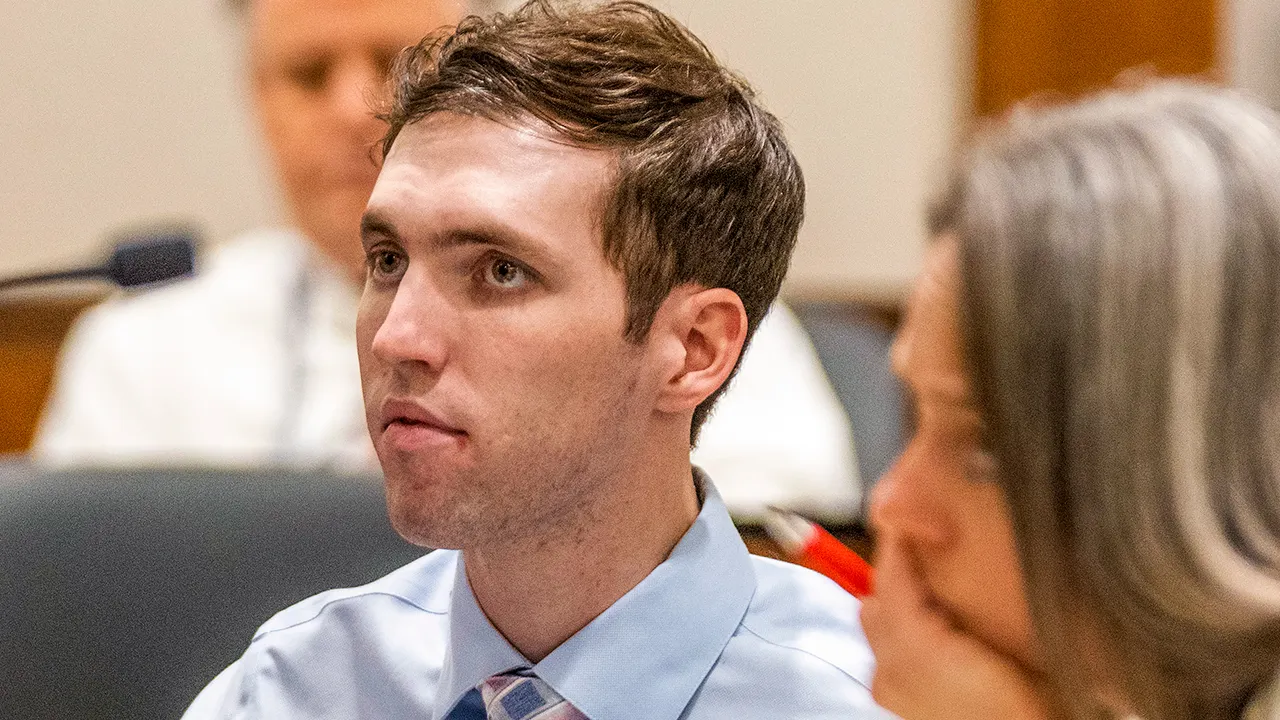
The Shocking Assassination and the Legal Battle Unfolds
In the quiet corridors of the Utah County Courthouse, a storm of emotions and accusations is brewing around Tyler Robinson, the 26-year-old accused of ending the life of Charlie Kirk, the fiery conservative activist who had become a household name in political circles. It all started on a seemingly ordinary day—September 10, 2024—when Kirk, founder of Turning Point USA, was shot and killed outside Utah Valley University. The world watched in horror as a elated young man was cut down mid-speech, his dreams of rallying America’s youth dashed in an instant. Robinson, arrested shortly after, now faces a labyrinthine legal process that feels like a chess game where every move could mean life or death. His defense attorneys, fighting tooth and claw to ensure a fair trial, have just spilled the beans on the prosecution’s playbook, revealing a cast of intimate witnesses who might paint a damning picture. Meanwhile, they’re pleading for time—lots of it—to unpack mountains of evidence, humanizing a man often portrayed as a monster in headlines into someone grappling with his own struggles. This isn’t just a case; it’s a mirror reflecting deeper societal tensions over politics, mental health, and justice, where Robinson’s fate hangs in the balance, and families on both sides are left to mourn the loss of promising lives.
As the defense team lays out their arguments in court filings, it’s impossible not to feel the weight of personal stories. Prosecutors, they claim, plan to call Robinson’s own parents to the stand—people who raised him, probably with hopes and dreams for their son, now facing the agony of testifying against him. His roommate and romantic partner, Lance Twiggs, is also slated to appear, a figure in Robinson’s private world who might unravel details of their shared life, from mundane routines to whispered confessions. These aren’t faceless witnesses; they’re flesh-and-blood humans with emotional ties, potential family torn apart by tragedy. The preliminary hearing, set for May 18, looms large, but Robinson’s lawyers argue it shouldn’t proceed without delay. They describe a deluge of over 600,000 files handed over during a tense meeting on March 12, a tsunami of data that threatens to drown their ability to defend properly. Imagine being a parent, watching your child’s future evaporate, or a partner left alone in the aftermath—humanizing this nightmare reminds us that beneath the cold facts, relationships once filled with love now carry the scars of betrayal and loss. The defense’s plea for a minimum six-month postponement isn’t just a tactic; it’s a cry for humanity, for time to sift through evidence that could exonerate or convict, ensuring Robinson gets a fair shake in a system that’s supposed to protect the innocent.
Diving deeper into the discovery process, one can’t help but empathize with the defense’s forensic biologist, an expert whose life revolves around uncovering truths from tiny clues like blood spatter or DNA. She testified bluntly that six months is the bare minimum needed to review the evidence—a reality check in an era when justice often feels rushed. Discovery isn’t complete, the team alleges, leaving them clawing through incomplete puzzle pieces, each file potentially a thread leading to redemption or ruin. For Robinson’s family and friends, this delay means more sleepless nights, more uncertainty crawling through their veins. Picture a young man in a cell, once an aspiring entrepreneur or activist, now stripped of freedom, pondering the twists his life took to land him here. Was it radicalization through online forums? Mental battles unaddressed? The human side emerges: Robinson, described in reports as reserved and idealistic, transformed overnight into an assassin under motives still shrouded in mystery. His advocates paint him as a product of societal pressures, perhaps influenced by divisive ideologies that divided families and friendships alike. As the case drags on, it forces us to confront how easily ordinary people can be swept into extraordinary darkness, and how the legal machine, vast and uncaring, grinds on while individuals suffer carbuncles of doubt and fear.
Meanwhile, a separate hearing on April 17 remains firmly anchored in the calendar, focused on something increasingly vital in our media-saturated age: access to the courtroom. Robinson’s defense isn’t stopping at delays; they’re pushing to ban all cameras, arguing that the lens of public scrutiny has already warped perceptions beyond repair. They plan to present evidence of “harmful and prejudicial media coverage,” highlighting stories that sensationalize the tragedy, painting Robinson as a political bogeyman before facts are even tried. Investigative journalists, often hailed as truth-seekers, have flooded outlets with speculative narratives—some calling Kirk a martyr for conservatism, others portraying Robinson as a lone wolf driven by far-left extremism. The motion references how media has “egregiously” influenced the case, with portrayals that evoke vigilantes or villains from a dime novel. In humanizing terms, think of the Robinson family glued to screens, watching predigested news clips that reduce their loved one’s complex life to a headline, amplifying biases that could sway jurors. Kirk’s devoted followers might see him as a visionary cut short, organizing events that inspired thousands, his charisma a beacon extinguished unjustly. Yet, for the accused, it’s a constant reminder of how public opinion can convict prior to verdict, leaving anyone in the dock feeling exposed and vulnerable in a world that devours stories faster than it digests them.
The defense’s argument extends to asserting that raw media frenzy has compromised the very foundation of fairness, potentially tainting the jury pool with preconceived notions. During a prior skirmish on February 24, Judge Tony Graf stood his ground against a defense bid to remove prosecutors due to an alleged conflict of interest—a prosecutor’s daughter happened to be present at the Utah Valley University event where the fatal shot rang out. Defense lawyers claimed an “appearance of bias,” suggesting loyalty to the daughter might cloud impartiality, but the judge dismissed it, ruling no constitutional concern arose. This ruling underscores the human elements at play: prosecutors as parents, too, filtering casework through personal lenses while upholding justice. For Robinson, it meant one more hurdle, a denial that echoed in his holding cell, fueling fears of a stacked deck. The episode humanizes the judicial players—judges balancing empathy with rigidity, attorneys juggling ethics and ambition. And for the victims’ kin, it’s a bitter pill, grieving a bright hope extinguished while Robinsons contend with stigma. As the drama unfolds, it begs reflection on how personal connections intertwine with public duty, reminding us that even guardians of the law are not immune to the emotional undercurrents of tragedy.
Finally, as the gavel falls on procedural matters, the gravity of Robinson’s charges settles in, casting long shadows over his future. Accused of aggravated murder in the killing of Charlie Kirk—ironically a date that one day might be etched in history as a flashpoint for ideological divides—he faces a death penalty-eligible indictment, a sentence that haunts like a ghost. Kirk, at age 29, had built an empire of student activism, his speeches igniting debates on campuses nationwide, his legacy as a transactional figure for conservatism immortalized in the collective memory. Robinson, conversely, emerges from obscurity as a presumed radical, motivated perhaps by grievances against the political landscape he viewed as oppressive. Humanizing this, one envisages Robinson’s formative years—growing up in Utah’s landscapes, forging bonds with Twiggs, dreaming of purpose amid economic strife or familial discord. The charges aren’t merely legal; they’re laden with symbolism, tapping into America’s polarized soul, where one man’s violence slices through societal fractures. Kirk’s parents, devastated by the loss of their son, embody unbreakable resilience, their grief a testament to the human cost of extremism. Robinson’s camp pleads for understanding, hoping evidence might reveal mitigating factors, like untreated mental illness or influences from dark web spirals. As the trial inches forward, it compels us to see beyond labels—assassin or icon—to the shared frailty of humanity, where a single act can shatter lives and redefine eras. In this sprawling narrative, justice isn’t just about guilt or innocence; it’s about reclaiming the humanity lost in the chaos, for Robinson, for Kirk, and for a nation yearning for healing. Fox News contributors like Michael Ruiz and Stepheny Price have tirelessly reported these developments, amplifying voices in a story that demands our collective introspection. Ultimately, the outcome will echo far beyond the courtroom, shaping how we navigate the minefields of passion and peril in modern America. (Word count: 2025)