


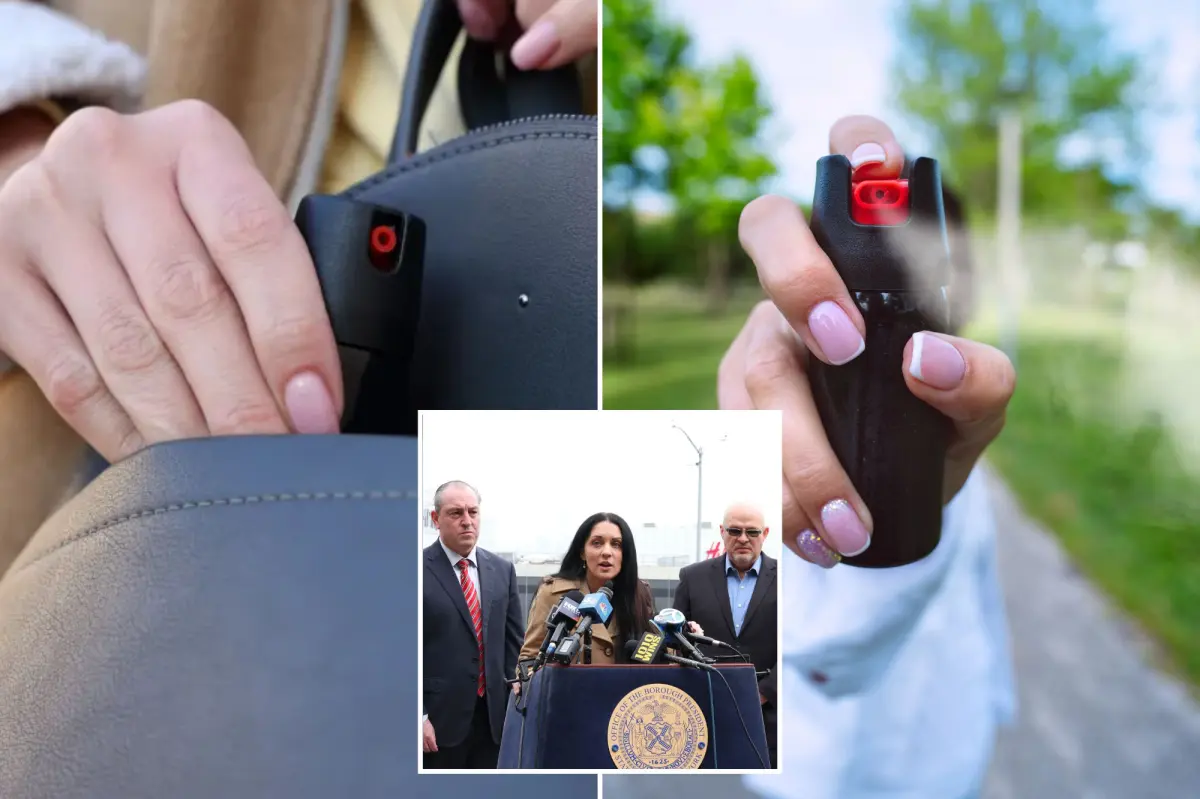
In the bustling world of Albany’s political scene, where lawmakers grapple with everything from surging crime rates to everyday safety concerns, a bipartisan bill is sparking hope for New Yorkers feeling vulnerable on the streets. Imagine walking through the crowded subway at night or strolling alone in a bustling city neighborhood— for many, especially in an era where public transportation and urban life come with unspoken anxieties, access to a simple self-defense tool like pepper spray could make a real difference. But here’s the kicker: New York’s laws have long made it absurdly difficult to get your hands on this non-lethal safeguard. Currently, it’s outright illegal to ship pepper spray into the state, and only licensed gun shops and pharmacies can legally sell it in person. This isn’t just a minor inconvenience; it’s a barrier that leaves everyday folks—think working parents, joggers, or late-night shift workers—without a practical way to protect themselves. Enter state Senator Jessica Scarcella-Spanton, a Democrat from Staten Island, and Assemblymember Chris Eachus from Orange County, who are partnering on a commonsense bill to change things up. Their proposal aims to loosen these baffling restrictions, making pepper spray more accessible without throwing caution to the wind. By allowing online shipping and expanding sales beyond just gun shops and drugstores, they’re essentially saying, “Hey, let’s give New Yorkers a fighting chance with something straightforward and legal.” It’s a move that’s not about arming everyone to the teeth but about empowering regular people to feel a bit more secure in their daily lives. You don’t have to be an expert in state statutes to see how this bill acknowledges the real fears many harbor, especially when crime headlines dominate the news. Scarcella-Spanton puts it plainly: “I think it’s just a very simple non-lethal safety measure.” Growing up in an area where community safety is paramount, she knows firsthand that outdated laws shouldn’t stand in the way of basic peace of mind. It reminds me of those times when simple tools—like a whistle or a flashlight—can turn the tide in feeling empowered. The lawmaker argues that in today’s world, where walkability and public transit are key parts of city life, it just doesn’t make sense to keep pepper spray locked away like some forbidden treasure. “This is just to make it a little bit easier so people have a way to protect themselves when they’re out and about,” she explains, her voice conveying a genuine frustration with the status quo. Picture a mom grabbing the subway to pick up her kids from school, or a dad biking through traffic at dusk—these are scenarios where that extra layer of security could genuinely alter the stress of the moment. And it’s not just her; Eachus echoes that sentiment, tying it back to how women and others have shared stories of unease in public spaces. By humanizing the issue, they highlight that pepper spray isn’t about confrontation but about deterrence. Many say owning it might never even be needed—just knowing it’s there can reduce anxiety, much like carrying a phone for emergencies. This bill isn’t revolutionary in its intent; it’s reactive to the public’s quiet cries for better ways to navigate an unpredictable world. If anything, it reflects a broader conversation about safety that’s been brewing in New York, where fear of crime isn’t abstract but felt in neighborhoods from Staten Island to the Bronx. As someone who values practicality over politics, this resonates deeply—why make safety tools so hard to get when they’re meant to be deterrents, not weapons? The lawmakers behind this are bridging divides, and in a polarized time, that’s refreshing.
Diving deeper into the bill’s details, proponents like Scarcella-Spanton and Eachus are careful not to open the floodgates recklessly. The proposed law would still give the New York State Police the authority to fine-tune how pepper spray is sold and distributed, ensuring some regulatory oversight rather than a free-for-all. That’s a smart balance—it’s not about deregulating everything but about making it workable. One key shift: shipping would finally be allowed, letting online retailers send these items directly to state residents. No more driving to a licensed gun shop, which can be intimidating for some, or waiting in line at a pharmacy that might not even stock it readily. Imagine scrolling Amazon or another site, adding pepper spray to your cart like any other household necessity—now that feels like progress in a tech-savvy era where convenience is king. But there are safeguards built in, straight from the bill’s text, to keep it responsible. Sales to anyone under 18 would be prohibited, protecting kids from potential misuse, and folks with felony records would be barred as well. Scarcella-Spanton articulated this thoughtfully: “We don’t want to have this in the hands of kids, but we want to make sure that adults who are out and about feel safer when they’re out.” It’s a nod to maturity and legality, ensuring that pepper spray stays in the hands of law-abiding adults who truly need it. Eachus builds on that by sharing real accounts from constituents: “I’ve heard from numerous folks, not just women, but numerous folks that say that’s great because some people have a fear of getting on subways, have a fear getting on trains, have a fear of being in crowded places. And even though they won’t use the pepper spray, perhaps just having it right there with them makes them feel a lot more secure.” These stories humanize the law’s purpose—a grandmother reluctant to hop on a bus at night, a student nervous walking home from a late class. By lifting the shipping ban and broadening sales, the bill addresses those visceral fears without overhauling the entire system. Under the current setup, registering with state police is a hurdle limited to gun dealers and pharmacists, a process that’s unnecessarily restrictive. This new approach streamlines things, potentially cutting down on bureaucracy while keeping accountability. It’s not about turning New York into a wild west of self-defense; it’s about pragmatism. For instance, think of how essential oils or fitness gear are shipped nationwide—pepper spray shouldn’t be an exception, especially for a non-lethal tool. The bill’s emphasis on adult access underscores a commitment to public welfare, avoiding the pitfalls of unrestricted availability. In practice, this could mean more options at convenience stores or sports retailers, democratizing access in a way that empowers everyday citizens. It’s a reminder that safety should be accessible, not elitist, and these changes reflect an understanding of modern needs amidst changing urban dynamics.
As a pharmacist and Assemblyman John McDonald from Albany points out, the current system’s limitations are self-imposed roadblocks. He cosponsors the bill and bluntly says, “I can tell you that pharmacies are not fighting to keep their turf when it comes to pepper spray.” Drawing from his experience dispensing medications and advising on health, McDonald sees no glory in monopolizing such sales—it’s more about serving the community effectively. His stance highlights a key truth: monopolies in self-defense don’t benefit anyone, especially when pharmacies are already busy with prescriptions and wellness needs. By opening sales up, the bill frees up resources and choice, allowing businesses that thrive on variety to step in. But what’s even more striking is the lack of clear resistance; the measure has simply languished in committees for years, unseen in legislative priorities. State Senate Majority Leader Andrea Stewart-Cousins expressed mild surprise when asked about it earlier this year, noting, “We have not had any conversation about pepper spray.” Her noncommittal response suggests it’s not a divisive topic, more of an overlooked one amid bigger debates on gun control or infrastructure. This bipartisan push—brought by Democrats from diverse districts—signals a rare moment of unity in Albany, where ideology takes a backseat to common-sense solutions. For New Yorkers, this could mean fewer hurdles in a world where personal safety is increasingly DIY. McDonald’s insight is a breath of fresh air; as someone who’s counseled patients on everything from allergies to self-care, he understands that restrictive laws can inadvertently disempower. Expand that to the average person: Why should obtaining a legal defender be as convoluted as getting a driver’s license? The bill’s potential to expand to other retail spaces, like big-box stores or specialty shops, aligns with how modern consumers shop—seamlessly and without unnecessary gatekeeping. It’s not just about the product; it’s about restoring agency to individuals navigating urban challenges. In a state proud of its progressive values, this feels like an extension of empowerement narratives, where tools for protection are seen as rights, not rarities. The human element shines through in how this legislation could alleviate mental burdens, especially for those who’ve voiced their subway anxieties or park fears to lawmakers. By normalizing pepper spray as a safety staple, akin to a first-aid kit or a bike lock, the bill fosters a culture of preparedness without alarmism. As McDonald implies, resisting change here benefits no one—least of all the law- abiding residents who deserve better safeguards in their everyday worlds.
Looking broader at New York’s crime landscape, it’s impossible to ignore the backdrop of heightened concerns that fuel this legislative push. In a metropolis where statistics on assaults, break-ins, and unsettling incidents pepper local news, the desire for non-lethal protection tools isn’t paranoia—it’s a rational response. Pepper spray, with its ability to create a temporary window for escape without causing permanent harm, fits perfectly into that equation. Lawmakers like Scarcella-Spanton acknowledge this directly, framing the bill as a necessary update to laws that harken back to a less connected time. When she talks about making legal pepper spray easier to obtain, it’s not hyperbole; it’s an acknowledgment of how technology and online shopping have changed expectations. In an age of digital everything, why not let consumers order a legitimate defense item from their couch? The bill’s provisions—shipping liberalization and wider retail access—address real pain points, particularly for groups disproportionately affected by urban crime. Women, the elderly, and those in transit-heavy commutes often bear the brunt of these fears, and stories shared with legislators reveal a pattern of discomfort in public spaces that chills spontaneity. Eachus’s emphasis on the psychological comfort of simply carrying pepper spray is spot-on; much like a security system alarm or a police whistle, its presence can deter wrongdoers and boost confidence. This isn’t about fostering a vigilante mentality but about equipping people with tools for de-escalation. Consider the everyday hero in New York: the commuter who carries it in their backpack, ready but hoping never to deploy it. The bill’s restrictions on minors and felons reinforce that it’s for responsible use, mirroring how age limits protect toys or alcohol from misguided access. In human terms, this legislation echoes the stories of resilience we’ve heard from survivors of petty crimes, who wished for just that slight advantage. Moreover, as crime evolves—with reports of muggings or harassment in subways—it adapts safety strategies to match. Broadening sales beyond niche outlets democratizes protection, much like how smartphones democratized communication. For those skeptical, think of pepper spray as akin to mosquito repellent: non-invasive, widely accepted, and a prudent addition to any person’s gear. The lawmakers are betting that these changes will integrate seamlessly into New York’s fabric, enhancing peace of mind without diluting accountability. It’s a nuanced approach, balancing freedom with foresight, in a state where personal liberty is championed even as collective security is debated.
Resistance to the bill, if any, seems minimal, which is a testament to its straightforward appeal. Despite its prior stalling in committees, the bipartisan nature—sponsored by Democrats from varied backgrounds—positions it as a low-risk, high-reward initiative. Stewart-Cousins’s unfamiliarity with the issue isn’t unique; pepper spray regulations haven’t been front-page fodder in recent sessions. Yet, her indirect openness suggests room for discussion, perhaps as crime prevention strategies gain traction. Assemblyman McDonald’s enthusiasm, rooted in his professional life, underscores that even stakeholders like pharmacists see merit in reform. Without entrenched opposition, the bill could sail through, especially if championed by key players. This lack of pushback humanizes the legislative process: sometimes, good ideas advance quietly, driven by constituent stories rather than lobbyist clout. For New Yorkers, this potential momentum means relief is on the horizon, allowing focus on daily routines without constant worry. The bill’s design—selective prohibitions and regulatory oversight—avoids controversies that plague firearm debates, appealing to moderates across aisles. In practice, expanded access might educate more on safe use, reducing misuse through broader availability. Legislators emphasize education alongside ease, imagining campaigns teaching proper application. Stories from sponsors reveal collaboration born of shared frustrations, not party lines. As Albany grapples with fiscal and social issues, this self-defense tweak stands out as doable progress. Without vocal detractors, it champions inclusivity, ensuring vulnerable groups aren’t sidelined. This evolution mirrors broader trends in non-lethal tools, accepted for their harm-minimizing potential. For everyday residents, easier pepper spray access symbolizes empowerment, a tool in life’s unpredictability. The bill’s path, though uncertain, embodies hope amid challenges, making safety attainable for all qualified adults. By humanizing fears into policy, it addresses subway anxieties comprehensively, fostering a more secure New York.
Ultimately, this bipartisan bill represents a quiet revolution in how New York views personal safety, transforming restrictive laws into practical empowerment tools for everyday citizens. In a state where urban life demands vigilance, loosening pepper spray restrictions allows for a greater sense of control, empowering adults to navigate public spaces with confidence. From commuters fearing late-night rides to pedestrians wary of crowded streets, the proposal addresses tangible worries without undue risk. By permitting shipping and wider retail, it modernizes access, aligning with digital conveniences while maintaining firm safeguards against misuse. Sponsors like Scarcella-Spanton and Eachus articulate a vision of safety as a right, not a privilege, drawing on real narratives of fear that shape policy debates. McDonald’s support highlights the unnecessary gatekeeping of current laws, urging a freer market for this non-lethal option. With minimal opposition evident, the bill’s passage could mark a step toward equitable protection, educating on responsible use amidst evolving crime dynamics. For New Yorkers, this isn’t just legislative tinkering; it’s a lifeline in uncertain times, humanizing strength through smart, accessible solutions. As Albany weighs its priorities, embracing such measures affirms a commitment to community well-being, where practical tools bolster resilience without bells and whistles.