


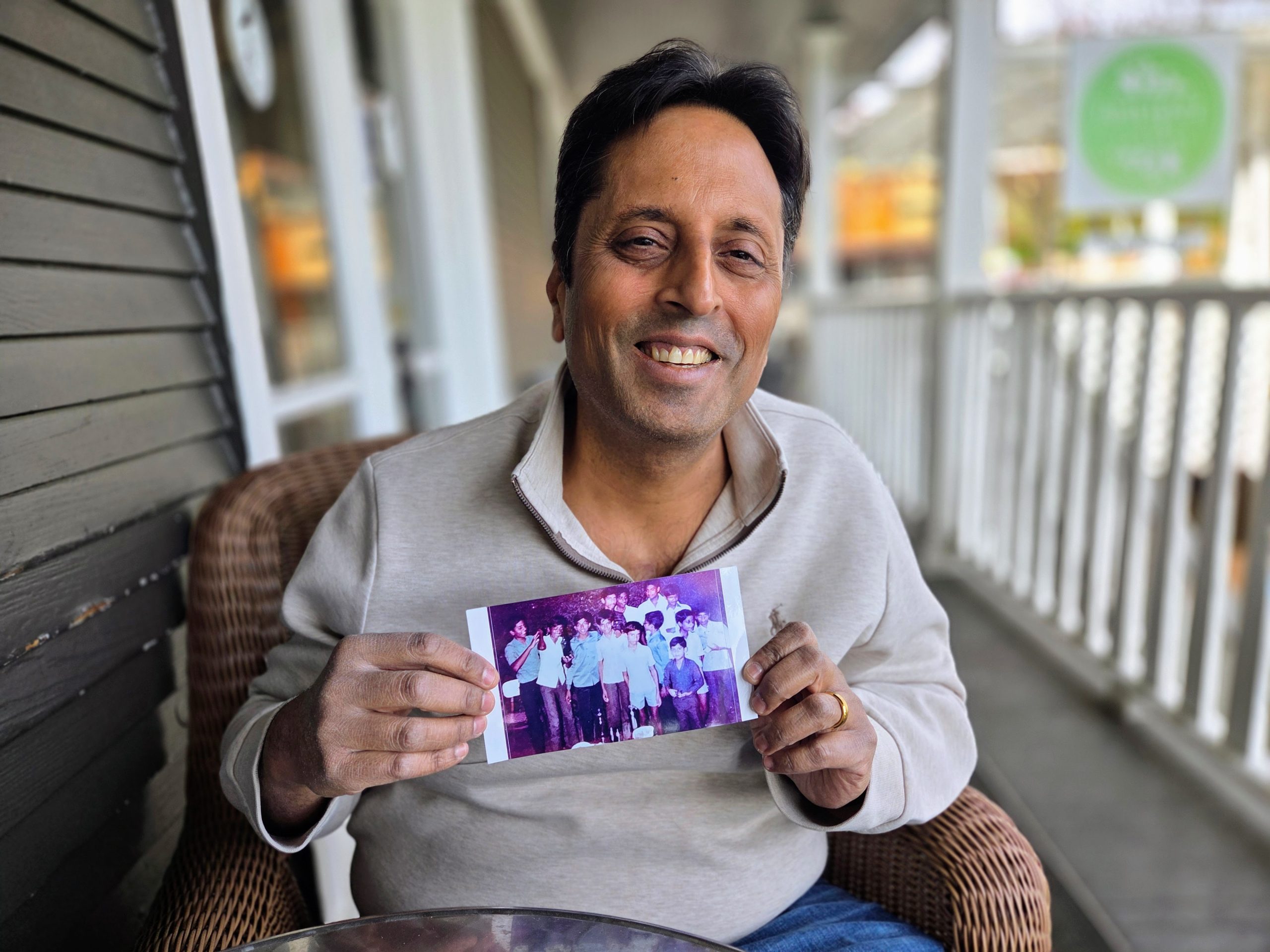
Ravi Vedula sat in a cozy coffee shop in Seattle, flipping through a faded photograph that transported him back to his carefree days in a government housing colony in Panjagutta, Hyderabad. Taken over 40 years ago, the snapshot captured him and his childhood buddies—boys who started out sharing simple joys like cricket and dreams in a modest Indian neighborhood. Little did they know, these same kids would grow up to lead influential lives at giants like Microsoft, Coca-Cola, Rivian, and beyond. Ravi, now a corporate vice president at Microsoft, felt the pull of nostalgia as he recounted how those humble beginnings shaped him into the leader he is today, reminding us that the roots of our aspirations often lie in the unexpected places where we first learned to chase dreams and build communities. As he held the photo, you could see the warmth in his eyes, a testament to the unbreakable bonds forged in childhood that extend far beyond fancy titles and corporate boardrooms.
One of Ravi’s fondest early memories isn’t from a grand achievement, but from a Sunday ritual with his friends that felt like winning the lottery. They pored over the Jumble puzzle in the Deccan Chronicle, scribbling answers on postcards and mailing them in week after week. The thrill of seeing his name published as a winner? Priceless. The prize was a measly 25 rupees, but to these kids who had so little, it was a fortune. They pooled the money to buy cricket wickets, turning that shared purchase into hours of laughter and camaraderie on makeshift pitches. Ravi’s mother, ever the nurturing figure, would cook meals for swarms of family and guests, never sitting to eat until everyone else was done, scraping together what remained in the pan. These scenes from Hyderabad weren’t just playful anecdotes; they were the code of values—resilience, generosity, teamwork—that Ravi carried into his tech world, where even a small win can propel you forward in ways that money can’t measure.
Today, Ravi leads Microsoft’s IDEAS organization, overseeing data and analytics for massive products like Microsoft 365, Copilot, Office, Windows, and security initiatives, having spent 25 years at the company starting as the first engineering manager for Microsoft Exchange Online. But beneath his professional armor lies a deeply personal battle: Ravi is a heart transplant survivor, having lived with heart failure since 2001 without telling almost anyone at work. By 2015, hospitalization led to 18 months on a mechanical heart assist device before his life-saving transplant in January 2017. During that uncertain time, Ravi wasn’t plotting his next move in tech; he was scribbling stories from his past on medical leave, unsure if he’d even see tomorrow. It’s this vulnerability that makes him so relatable—a man who’s faced the fragility of life head-on, emerging stronger to charge into AI’s fast lane with tools like Copilot, all while holding onto the human lessons from his Indian roots.
Through these reflections, Ravi crafted “Hyderabad Days: The Code We Lived By Before We Coded,” a memoir published by 8080 Books, available for preorder until its March 31 release. The book paints vivid pictures of colony life: Sunday mornings huddled around a tiny TV watching the epic Mahabharata, or boys pooling pitiful pocket change for a cricket ball. Each chapter unveils a slice of that world, followed by “postscripts” where Ravi, like the adult narrator in TV’s The Wonder Years, ties these memories to modern wisdom on leadership, engineering, and life itself. It’s not a dusty trip down memory lane; it’s a bridge from the simplicity of playing cricket outdoors to navigating the complex world of AI and data. In writing it, Ravi found purpose, turning personal narratives into shared lessons that resonate with anyone who’s ever looked back to understand their path forward.
Take the story of the fishing trawler incident—a real-life drama that tested Ravi’s mettle. While managing Exchange Online, a trawler severed an undersea cable, crashing Microsoft’s Dublin data center into chaos. Panic ensued, but Ravi drew on his childhood cricket captain, Parimal, who kept the team steady even when games spiraled out of control. Parimal wasn’t the star player, but his calm composure saved the day more than any flashy shot. “Did I miss the class about fishing trawlers?” Ravi joked, realizing his computer science education didn’t cover every curveball. Instead, he embodied Parimal’s level head, guiding his team through the crisis without needing to know it all. This humanizes Ravi, showing he’s not just a tech titan, but a guy who leans on playground lessons to fix global outages, reminding us that true leadership often comes from the playgrounds of our past.
As AI weaves into everyday creativity, Ravi had his own experiment with technology in shaping his book. The preface acknowledges AI’s role in assisting the telling—primarily for proofreading, formatting, and serving as a “thought partner” to spot weaknesses. For instance, AI suggested comparing Hyderabad’s pesarattu breakfast to pancakes and eggs to help Western readers connect emotionally, an idea Ravi vetted with real people before adopting. He ensured his authentic voice shone through, collaborating with human proofreaders and editor Greg Shaw (who worked on Satya Nadella’s Hit Refresh). Yet, the disclosure sparked questions about whether such transparency chips away at the work’s perceived authenticity more than the AI use warrants. Meanwhile, those childhood friends from the photo—now executives at chocolate giants like Barry Callebaut and CEOs in India— rallied in their WhatsApp group, teasing Ravi about untold crushes and omitted tales, turning book buzz into the same spirited debates as their cricket days. To Ravi, those “nothing” days were really everything, a value system propelling him and his pals into futures where their bonds from India echo in boardrooms worldwide, proving that the greatest codes are the ones etched in heart and shared stories.
The journey from Hyderabad’s colony streets to Microsoft’s tech hub isn’t just Ravi’s story; it’s a tapestry of human connection in an increasingly digital age. His book urges us to remember the codes of childhood—resourcefulness, humility, unshakeable bonds—and carry them into an AI-driven future. By humanizing tech giants as people who won 25 rupees for cricket gear or faced heart transplants, Ravi reminds readers that success blooms from simple joys and crises alike. Preorder “Hyderabad Days” now, and let it inspire you to dig up your own memories, perhaps even share them in a WhatsApp group with old friends, turning ordinary lives into extraordinary legacies. In Ravi’s words, it’s not about昨日; it’s about the values lighting the way forward, whether you’re coding algorithms or coaching a cricket team. (Word count: 1923)