


The Frustration of Flyers and the Flight of Senators: A Shutdown Saga Unveiling Political Irony
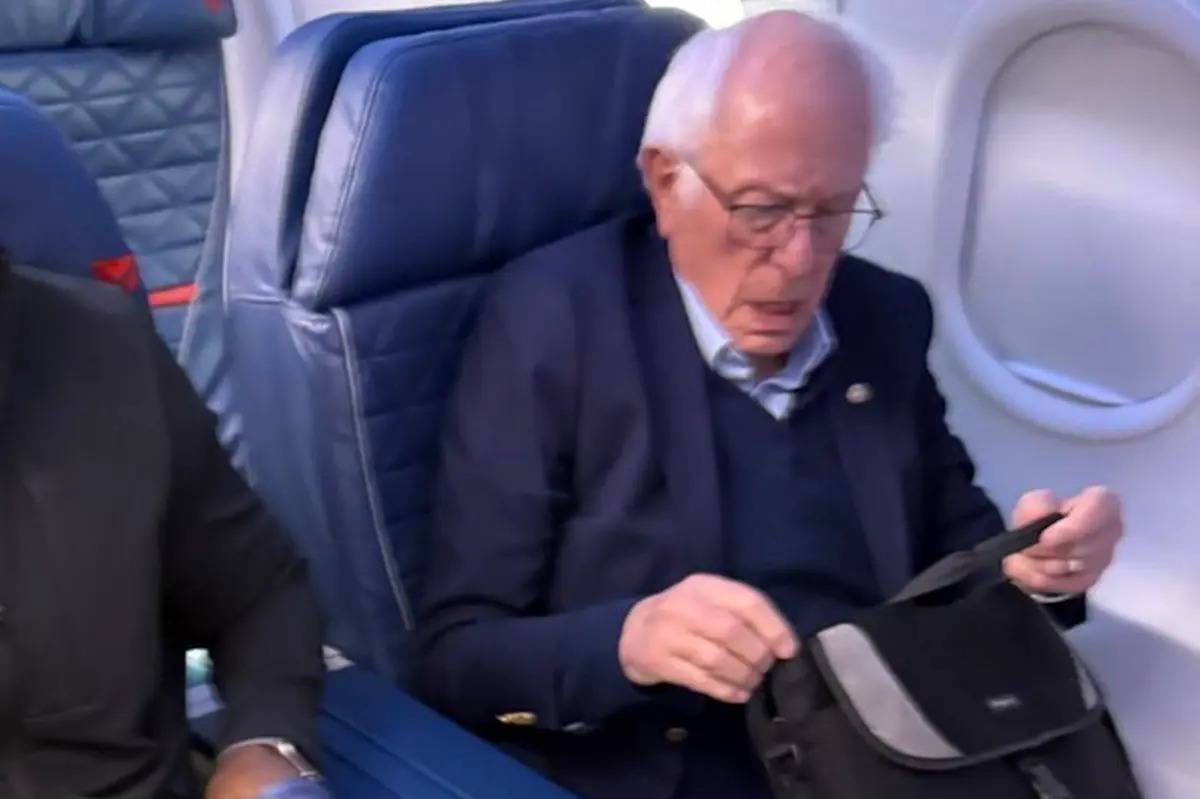
Imagine waking up one crisp winter morning, coffee in hand, only to realize your meticulously planned weekend getaway is teetering on the edge of chaos. That’s the reality for millions of Americans as a partial government shutdown grinds on, turning major airports into nightmarish bottlenecks. Flights delayed, TSA agents stretched thin, and passengers stewing in outrage—this isn’t just a logistical hiccup; it’s a human drama playing out in real time, with families feeling the pinch and businesses reeling from the uncertainty. At the heart of this turbulence is the Department of Homeland Security (DHS), an agency tasked with safeguarding our borders and skies, now partially funded and limping along. Travelers share stories online of missed connections, stranded loved ones, and the sheer exhaustion of waiting in lines that stretch for hours, all while pundits debate the shutdown’s “political theatre.” Enter Vermont Senator Bernie Sanders, a fiery 84-year-old advocate for the working class, who was caught on camera jetting out of Washington, D.C., in the comfort of a first-class seat. As airports braced for more mayhem—security checkpoints overrun, weary employees holding down the fort—Sanders, along with a slew of other lawmakers, chose to skip town. It’s a moment that reeks of irony, highlighting the disconnect between elite politicians and everyday folks grappling with the fallout. For many, this isn’t just a news bite; it’s a personal slap, evoking memories of that time you spent an extra night in a hotel because of canceled flights or comforted a frazzled child amid the airport madness. The shutdown, sparked by disagreements over DHS funding, isn’t new, but its timing amid holiday bustle amplifies the human toll. Regular Americans, the ones who make up Sanders’ voter base, are left to shoulder the burden while the very leaders fighting for “sweeping changes” in the agency enjoy cushy rides out of Dodge. As the drama unfolds, it begs the question: who holds the power to fix this, and why does it feel so out of touch?
Dipping deeper into the personal side, Bernie Sanders embodies a paradox that many find infuriating. Here he is, the self-proclaimed champion of the 99%, boarding a plane in elite comfort as the rest of us navigate the hellish reality of underfunded airports. The photo, snapped by TMZ on a Friday afternoon, shows him looking every bit the seasoned traveler—perhaps engrossed in a book or checking emails—while outside, the world is a mess. Sanders, who caucuses with Democrats, is steadfast in his stance: he wants the administration to agree to sweeping changes before funding DHS, which encompasses critical elements like the Transportation Security Administration (TSA). It’s admirable, in a way, this commitment to reform, but it doesn’t erase the optics. He’s not alone; numerous lawmakers have headed home, leaving behind a Capital in crumples. For families like the Johnsons—parents with young kids who boarded a delayed flight only to miss holiday gatherings—the sight of a senator gliding past without a backward glance feels like betrayal. We all have those “why them and not me” moments, right? Sanders’ journey back to Vermont, likely for a breather or family time, underscores a larger truth: politics often rewards the powerful with plush perks, while the powerless endure the grind. Think about the TSA screener, working double shifts to keep skies safe, paid sporadically, or the single mom hustling to catch a connection for a job interview. Humanizing this, Sanders’ actions echo age-old tales of privilege, where even the progressive icon is shielded from the very disruptions his politics amplify. It’s not just about the shutdown; it’s about empathy in leadership. As he touches down in Burlington, one wonders if he pauses to reflect on the exasperated faces at the checkpoints, the dreams deferred for ordinary travelers.
The exodus doesn’t stop with Sanders; it’s a bipartisan parade of departures that adds layers to this unfolding saga. Take Senator Ted Cruz from Texas, spotted in media photos arriving at the Conservative Political Action Conference (CPAC) in his home state, grinning amidst supporters as if the shutdown were mere background noise. Or Senator Marsha Blackburn from Tennessee, jetting off despite the funding turmoil that has federal workers on pins and needles. These snapshots, plastered across newsfeeds, paint a picture of detachment that resonates deeply with everyday Americans. Cruz, charming audiences with his oratory, and Blackburn, advocating for conservative values, are far removed from the fray—entertaining crowds while airports trend #ShutdownMadness on social media. It’s human nature to seek normalcy, to escape the grind, but for politicians, whose decisions directly impact livelihoods, it rings hollow. Consider the airline pilot, union member, or ground crew employee juggling pay cuts and moral dilemmas, or the elderly couple whose Medicare processing hangs in limbo due to partial shutdowns—people whose lives hinge on policies debated in air-conditioned chambers. This mass retreat isn’t villainy; it’s a symptom of a broken system where urgency fades into recess. Humanizing them, Cruz might claim it’s about rallying the base, Blackburn perhaps reconnecting with constituents, but for voters, it evokes a sense of abandonment. We empathize with the lonely traveler at the gate, scrolling through memes of absentee lawmakers, and it stirs that collective outrage: why fly out when flights are grounded for so many? It’s a narrative of privilege that, for better or worse, fuels cynicism in an era of division.
Delving into the political machinery behind the mayhem, the shutdown stems from senators like Sanders who refuse to fund DHS outright until their demands for sweeping reforms are met. In the early hours of Friday morning, the Senate passed a bill that would bolster TSA agents and other Homeland programs, excluding ICE—an agency tangled in immigration debates that’s become a lightning rod for controversy. This legislative dance, aimed at prioritizing travel safety over enforcement, seemed a pragmatic step amid the airport nightmare: miles-long lines, canceled domestic flights, and international travelers facing visa quandaries. But it wasn’t enough to quell the turmoil. Lawmakers negotiated with fervor, trading barbs in chambers that echo with the weight of human stories—Victor, a first-generation immigrant delayed at JFK, pleading with gate agents; Maria, a nurse racing home on furlough days that stretch the soul. The bill’s passage was hailed as a glimmer of bipartisanship, yet it exposed fractures: Sanders’ camp views ICE funding as a non-starter without concessions on detention policies and family separations, policies that haunt communities nationwide. For the average person, this isn’t abstract; it’s the difference between a safe holiday and one marred by fear. As senators retreated, the Senate’s compromise felt like a Band-Aid on a bleeding wound, failing to address the root causes of travelers’ despair. It’s a reminder that policy, while crafted in ivory towers, lives in the hearts of those waiting in limbo—families torn apart by borders, workers uncertain of tomorrow.
The House of Representatives, fed up with the piecemeal approach, threw a wrench into the works, refusing to take up the Senate’s bill and opting for a different path. Friday night, they passed a short-term funding measure for the entire DHS, negotiated with Senate GOP leaders, ensuring the agency remains operational—even during a two-week recess. It was a bold move, prioritizing stability over partial fixes, but not without its detractors. House Speaker Mike Johnson labeled the original Senate bill a “joke” and “unconconscionable,” a stinging rebuke that underscored the partisan divide. Johnson’s words, delivered with characteristic bluntness, encapsulate the frustration many feel: why chip away at solutions when the whole system needs bolstering? For travelers, this back-and-forth amplifies the anxiety—imagine boarding a flight only to learn of another potential lapse, or dealing with the psychological toll of unpredictability. Humanizing Johnson, he’s emerged as the voice for resolution, pushing against his own party’s holdouts, yet facing personal attacks in the process. Mavericks like the Freedom Caucus balked, demanding more, leaving vulnerable populations in the lurch. Stories abound of retirees unable to access social services or veterans delayed in care due to the broader shutdown ripples. The House’s decision, though pragmatic, highlights a chess game where human lives are pawns: the teacher calling in sick because funding delays school programs, or the frontline worker clocking endless hours without pay. It’s a call to empathy—if only lawmakers could swap seats with weary flyers, perhaps compromises would come easier. As recess looms, the human drama persists, a testament to policies that cut deeply into daily aspirations.
In a swift effort to alleviate the crisis, President Trump stepped in, signing an executive order directing DHS to redirect existing funds to pay TSA agents, a makeshift lifeline amid the uncertainty. This move, announced amidst the turmoil, offers immediate relief for airport operations, ensuring security personnel get their due and flights regain some semblance of normalcy. Yet, it doesn’t erase the underlying tensions or the human cost that’s already incurred—countless stories of resilience from stranded commuters, volunteers aiding at airports, and communities rallying amid the discord. For Bernie Sanders and others who’ve criticized the administration, this order might feel like a Band-Aid, a delay in the push for real change. Humanizing Trump, his actions reflect a hands-on approach, prioritizing American mobility in a time of need, even as political battles rage. But for everyday people, it’s bittersweet: relief mixed with wariness for future standoffs. Reflect on the single father juggling work and child care, finally reaching his destination after a grueling delay, or the power outage in a critical airport that stranded thousands—each anecdote a thread in the larger tapestry of national frustration. The shutdown saga, with its flurry of lawmakers departing and proxy solutions, reveals a system often alienating the very populace it serves. As we move forward, may this spark a deeper empathy, urging leaders to prioritize humanity over hubris, and reminding us all that behind every policy is a person waiting to soar. The words, ideas, and debates here form a mosaic of human experience, where chaos in the skies mirrors the unrest on the ground. Understanding this, perhaps, is the first step to mending what feels irreparably broken.