


A Night to Remember: The Heartwarming Rescue of an Innocent Owl
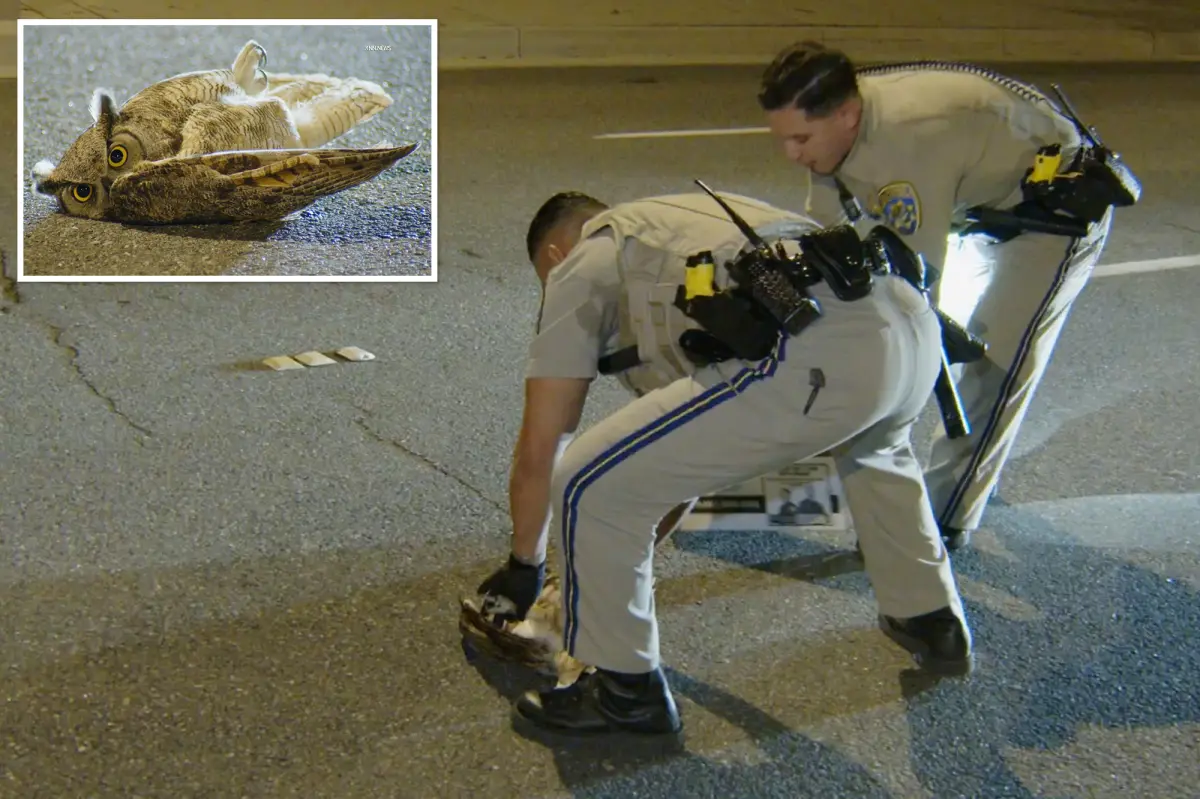
On a brisk Thursday evening in the heart of Southern California’s bustling valley, where the rhythms of the busy Stevenson Ranch freeway hummed like a distant heartbeat, an unexpected drama unfolded on a forgotten stretch of road known as The Old Road. This narrow three-lane artery, winding north of Stevenson Ranch Parkway in the Santa Clarita area, was usually just another conduit for commuters racing home after a long day. But on this particular night, around 10:14 p.m., it became the stage for a tale of vulnerability and compassion that would touch the lives of a few weary highway patrol officers. The air was crisp, carrying the faint scent of eucalyptus from nearby hills, as headlights pierced the darkness. Officer Luis Quintero, a seasoned veteran with the California Highway Patrol (CHP), was on his routine patrol when his eyes caught something unusual amidst the asphalt barrage. It was no ordinary roadside hazard—it was a living creature, small and intriguing, embodying the wild unpredictability that often collides with human progress. As he approached, a sense of urgency mixed with concern washed over him; here was nature’s fragility laid bare on America’s unimpeachable tarmac, a reminder that even in our engineered landscapes, the wild persists. The owl, with its beige feathers and those wide, expressive eyes that seemed to plead for understanding, wasn’t just an accident statistic; it was a story waiting to be told, one that spoke to the invisible threads connecting urban sprawl and the creatures that call it home. In the quiet moments before the rescue, Quintero reflected on how often animals like this are the unseen casualties of a world speeding forward without pause. Perhaps this bird had ventured too close to the headlights of a passing car, or maybe a sudden gust of wind had disoriented it during a nocturnal hunt. Whatever the cause, its plight humanized the reality of wildlife in suburban chaos, turning a routine patrol into a mission of mercy that would linger in his memory long after the shift ended.
The owl lay there, helpless and exposed, in the left lane of The Old Road—a position that could have ended tragically under any vehicle’s tires. Its beige plumage, speckled with the dust of the day, contrasted sharply with the black pavement, making it look almost ethereal amid the glare of emergency lights. Those wide eyes, so characteristic of night-dwelling raptors, darted about in confusion and fear, reflecting the confusion of an animal accustomed to silent forest perches suddenly thrust into the clamor of human civilization. Wings that were meant for soaring through moonlit skies now fluttered weakly against the ground, a desperate bid for balance that only highlighted its distress. As Quintero and his fellow officers approached cautiously, the scene tugged at their hearts; this wasn’t just any bird—it was a symbol of innocence, perhaps a young Barred Owl or a Great Horned Owl, its fluffy down suggesting juvenility and naivety. The officers, hardened by years on the road dealing with accidents and emergencies, felt a rare pang of empathy. They imagined how terrifying it must be for the owl, surrounded by towering patrol cars and the rumble of traffic, its world turned upside down on its back. In those moments, the owl’s struggle became a mirror to human vulnerabilities—how we all can find ourselves stranded in life’s busy lanes, fighting against forces beyond our control. Quintero knelt down, speaking softly to calm the frightened creature, marveling at its resilience in the face of such odds. It was as if the bird’s wide-eyed gaze was silently thanking them, or perhaps questioning why its peaceful night had gone so wrong. This encounter bridged the gap between predator and protector, reminding the officers of the delicate balance between development and preservation, and how one small act could restore a piece of that harmony.
As the officers assessed the situation, they knew swift and gentle action was paramount. Two patrol members, working in tandem, carefully scooped up the injured owl, mindful not to cause further harm. They had been trained for such scenarios, but the tenderness in their movements spoke of genuine care rather than routine protocol. The owl’s wings, though weakened, still carried the potential for escape, so they constructed a makeshift enclosure from an open-air box procured from their vehicle. It wasn’t ideal, but in the urgency of the moment, it provided a safe haven away from the roadway’s perils. Placing the bird inside, they watched it settle, its eyes now fixed on the stars visible through the box’s gaps—a small window to the freedom it craved. The officers placed the box gently in the back seat of their patrol car, securing it with care to prevent any jostling on the drive. As they drove, Quintero kept an eye on their precious cargo, sharing stories with his partner about past animal rescues—perhaps that orphaned deer they once helped or the stray cat that crossed their path. The car became a temporary sanctuary, the owl’s soft breathing a quiet counterpoint to the patrol car’s radio chatter. This role reversal, where highway enforcers turned wildlife saviors, added a layer of humanity to their job; it wasn’t just about tickets and safety anymore, but about protecting the overlooked lives that shared their world. The owl, in its box, symbolized hope—a chance at recovery away from the danger, reminding them of their power to make a difference, no matter how small.
The journey to the CHP office in nearby Newhall wasn’t long, but it felt momentous under the night’s canopy. Arriving at the station around midnight, the officers handed over the owl to a team from Castaic Animal Control, who had been alerted and were waiting eagerly. The exchange was seamless, with control officers greeting the bird as an old friend, their expertise evident in the way they quickly assessed its condition. One of them, a seasoned wildlife rehabilitator named Maria, murmured encouragements as she inspected the owl’s wings and eyes, noting minor injuries but a strong will to survive. The police officers lingered a moment longer, exchanging stories with the control team about similar incidents, building a community of caregivers united in service. As the owl was loaded into the control vehicle’s more advanced carrier—equipped with heating and ventilation—it seemed to sense the shift toward care, its wide eyes closing slightly in tentative trust. The police watchman at the station even voiced his amusement at the “owl shenanigans,” lightening the mood while underscoring the spontaneity of such rescues. This handover wasn’t just procedural; it was a testament to interagency collaboration, ensuring the owl received the specialized attention it needed at wildlife sanctuaries equipped for overnight monitoring and treatment. Reflecting on the night, Quintero felt a quiet pride, knowing their actions had turned a potential tragedy into a story of survival, reinforcing how emergency services often extend beyond human aid to include the voiceless beings we share our planet with.
In the hours that followed, as the owl began its path to healing under professional care, the incident sparked conversations among the officers about broader implications. Was this just a fluke encounter, or a growing trend of wildlife intrusions into urban spaces? They pondered how climate change and habitat loss were pushing creatures like owls closer to human territories, making such rescues more common. For Quintero, personally, the experience added a new dimension to his patrols—he now scanned the roads with a keener eye for feathers or fur amidst the tire tracks. It humanized the job, transforming routine nights into opportunities for compassion, and reminded him of his own family’s stories of family pets and lost animals. The owl’s redemptive arc—from helpless road victim to a creature on the mend—mirrored human tales of second chances, inspiring thanks for the wildlife experts who dedicate their lives to reunion and rehabilitation. Social media buzzed with shared videos from passersby who had witnessed the rescue, turning the event into a viral feel-good moment that united strangers in admiration for the CHP’s quiet heroism. Yet, it also highlighted the need for awareness: drivers to slow down in rural stretches, communities to preserve green spaces, and all of us to recognize our shared responsibility for the environment. The owl’s wide eyes had become a metaphor for vigilance, urging people to look beyond the busy lanes of life.
Ultimately, this unforgettable rescue on The Old Road encapsulated the beauty of unexpected kindness in a hectic world. The owl, once stranded and vulnerable, was now in capable hands, its story a beacon of hope amidst the chaos of Southern California’s highways. For Officer Quintero and his team, it was more than a shift’s end; it was a reminder that heroism comes in many forms, often quietly, under the cover of night. As dawn broke the next morning, the valley awoke to another day of traffic and toil, but for those involved, the memory of that beige-feathered owl persisted—a symbol of nature’s tenacity and humanity’s capacity for empathy. In sharing this tale, we honor the unsung bonds between wildlife and people, encouraging us all to slow down, look closer, and act with heart when the wild and the built worlds inevitably intersect. The owl’s journey from peril to promise serves as an enduring lesson: in the vast tapestry of life, even the smallest creatures can inspire the greatest acts of care.